Direct Answer
The working space required by a mini excavator depends on its overall dimensions, tail swing radius, boom and bucket movement, attachment configuration, digging area, and surrounding obstacles.
A mini excavator needs more than enough room to enter a job site.
It also needs sufficient clearance to:
- Rotate safely
- Move the boom
- Position the bucket
- Dig and remove material
- Move or reposition the machine
- Maintain safe distance from surrounding obstacles
The required space varies by machine and application. Buyers should use the manufacturer’s dimensional drawings and operating information rather than relying on one universal clearance measurement.
1. What Determines Mini Excavator Working Space?
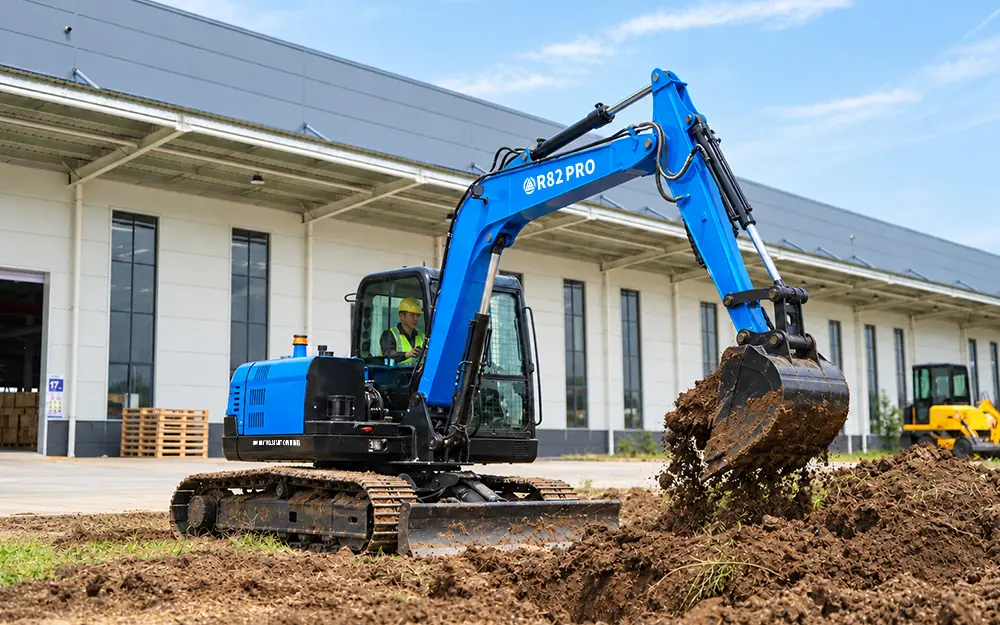
Several factors affect the working envelope.
Overall Machine Dimensions
The machine’s length, width, and height determine its physical footprint.
Tail Swing Radius
The rear of the excavator may move beyond the track width during rotation.
Zero or reduced tail swing designs can help in confined environments.
Boom and Arm Movement
The boom and arm extend beyond the undercarriage during digging.
The operator needs enough room to perform the required movement without striking surrounding structures.
Bucket and Attachment Size
A larger bucket or attachment may change the machine’s working envelope.
Machine Position
The space required can change depending on whether the machine is working parallel or perpendicular to a wall, fence, or trench.
2. How Much Space Does an Excavator Need to Rotate?
There is no single clearance requirement for all mini excavators.
The necessary space depends on:
- Tail swing radius
- Track width
- Machine position
- Counterweight dimensions
- Boom position
- Attachment configuration
When working near a wall or building, the operator should consider the entire rotation path rather than only the machine’s parked width.
3. Does Zero Tail Swing Reduce Required Working Space?
Yes, it can reduce the rear clearance needed during rotation.
A zero-tail-swing design is intended to keep the rear upper structure within or close to the undercarriage width.
This can be useful for:
- Residential landscaping
- Narrow construction sites
- Work between buildings
- Roadside projects
However, zero tail swing does not eliminate all clearance requirements.
The boom, bucket, tracks, and attachments still need sufficient room.
4. How Much Space Is Needed for Trenching?
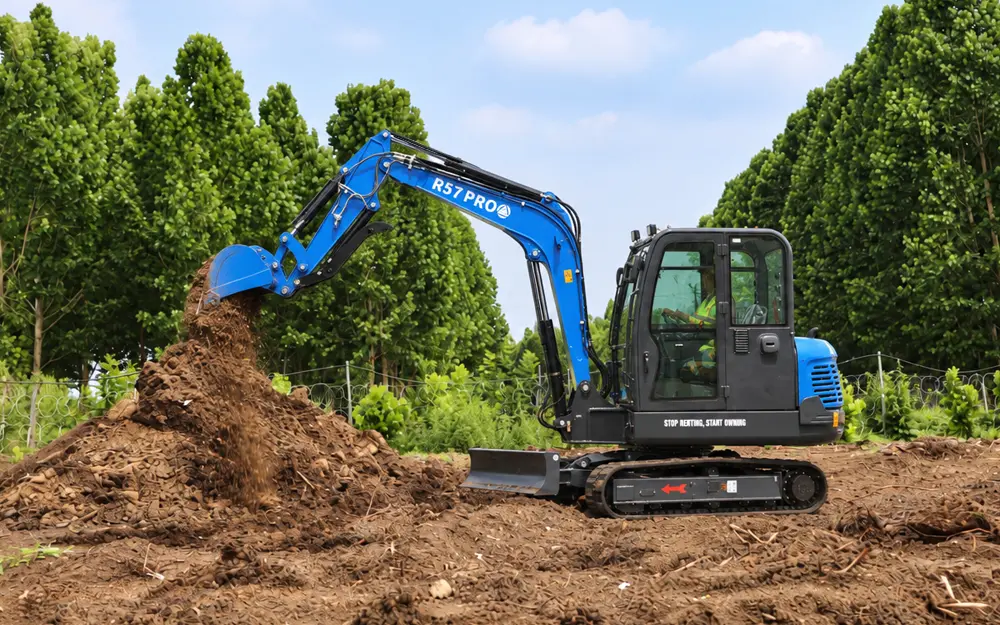
Trenching requires both machine clearance and a suitable working area for excavated soil.
The operator should plan:
- Excavator positioning
- Trench alignment
- Bucket movement
- Soil placement
- Access for other workers
- Space for materials and pipes
The machine should not be positioned too close to an excavation edge unless ground stability and the applicable safe working requirements have been evaluated.
5. How Much Space Does a Mini Excavator Need for Residential Landscaping?
Residential landscaping often involves restricted environments.
Common obstacles include:
- Garden fences
- Buildings
- Trees
- Patios
- Driveways
- Existing landscaping
A compact excavator with suitable dimensions and tail swing characteristics may be advantageous.
Before bringing the machine to the site, measure the access route and evaluate the space needed for actual digging operations.
6. How Do You Calculate the Working Area?
A practical assessment should include three areas.
Access Area
The space needed to move the machine into the work site.
Machine Operating Area
The space needed for rotation, boom movement, and bucket operation.
Material Handling Area
The space needed to place excavated soil, move attachments, and manage other equipment.
These three areas are related but not identical.
A machine may fit through a gate but still lack sufficient room to complete the excavation safely.
7. What About Overhead Clearance?
Overhead obstacles are frequently overlooked.
Check for:
- Tree branches
- Roof overhangs
- Power lines
- Pipes
- Covered structures
The machine’s boom and attachments may extend higher than its parked transport height.
Overhead utility hazards require appropriate identification and safety controls before work begins.
8. How Can Contractors Choose a Suitable Mini Excavator?
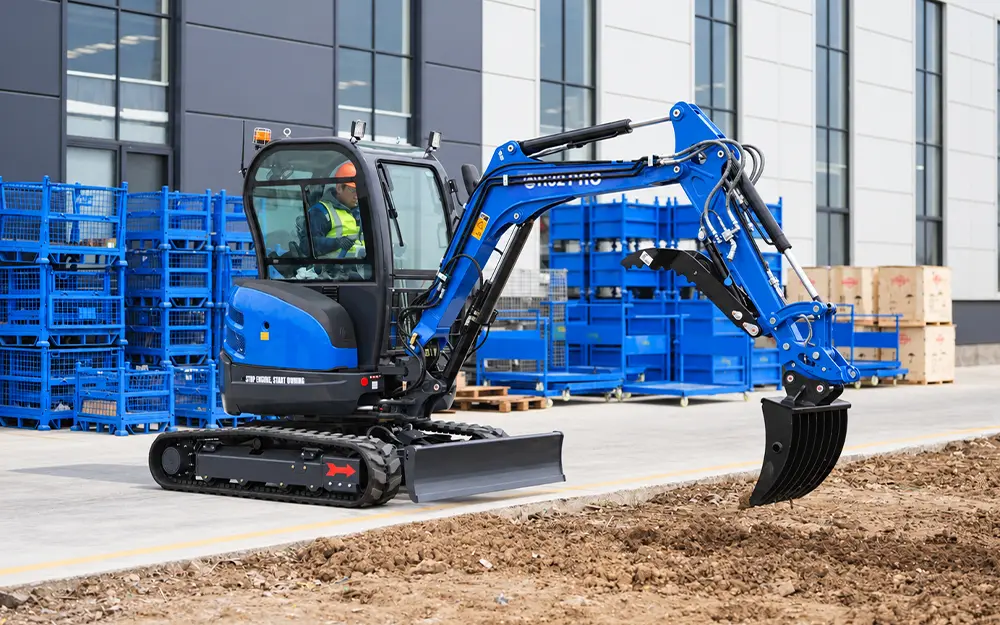
Contractors should evaluate:
- Overall width
- Tail swing radius
- Boom reach
- Digging depth
- Operating weight
- Attachment dimensions
- Transport requirements
A smaller machine may be useful for confined sites, while a larger compact excavator may be more productive where greater working capability is required.
The correct choice balances access and performance.
9. What Should Equipment Rental Companies Consider?
Rental companies should understand that different customers have different working-space requirements.
For example:
- Residential landscapers may prioritize narrow access.
- Utility contractors may prioritize trenching performance.
- Commercial contractors may prioritize productivity.
- Farms may need suitable clearance across uneven working areas.
A rental fleet can benefit from offering different machine sizes and configurations when local demand supports them.
10. What Should Equipment Dealers Explain to Buyers?
Dealers should distinguish between:
- Machine dimensions
- Gate access
- Tail swing clearance
- Boom working envelope
- Excavation safety clearance
These measurements answer different questions.
A good equipment recommendation considers the entire job site rather than only whether the machine can physically enter the property.
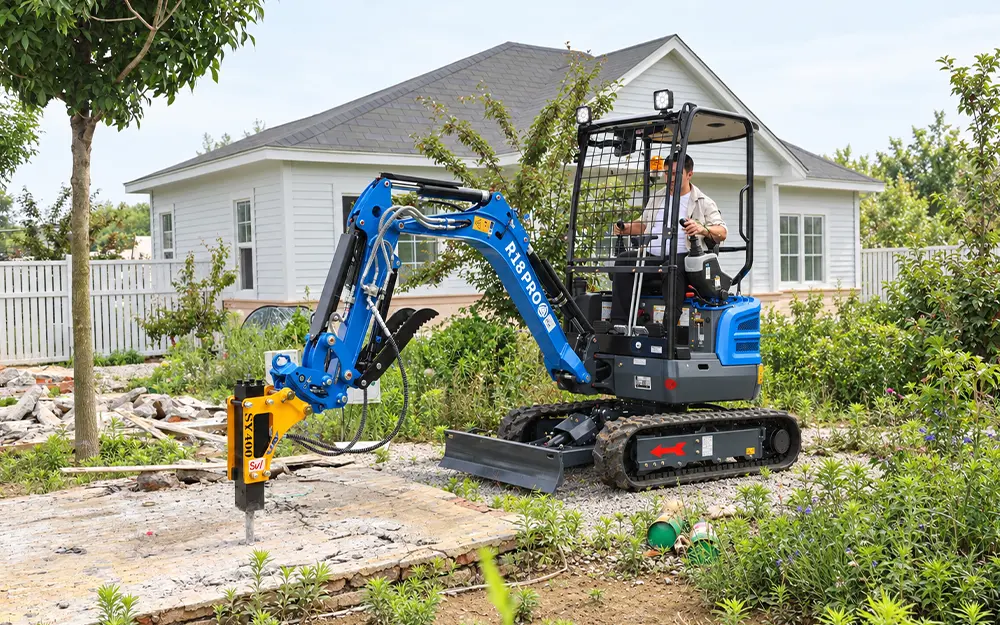
RIPPA’s compact excavator lineup provides different machine configurations for buyers to evaluate. Exact working dimensions and clearances should be confirmed from the technical documentation for each model.
Frequently Asked Questions
How much space does a mini excavator need to turn?
It depends on the machine’s tail swing radius, track dimensions, and configuration. Check the manufacturer’s operating dimensions.
Can a mini excavator work between two buildings?
Potentially, if the machine and its working envelope fit the available space and the site is suitable for safe excavation.
Does a smaller excavator always need less working space?
Usually it has a smaller physical footprint, but boom reach, attachment size, and working geometry still matter.
Is zero tail swing better for tight spaces?
It can reduce rear clearance requirements, but does not remove the need for space around the boom and bucket.
Can a mini excavator dig directly next to a wall?
It depends on the machine’s reach, attachment, ground conditions, and safe working requirements. The site should be assessed before excavation.
Conclusion
A mini excavator needs enough space not only to enter a site but also to operate safely and complete its work.
Before choosing a machine, evaluate:
- Access width
- Overall dimensions
- Tail swing
- Boom and bucket movement
- Attachment size
- Excavation area
- Material placement
- Overhead hazards
For contractors, landscapers, rental businesses, and equipment dealers, understanding working clearance helps select the correct compact excavator and avoid costly site-access problems.
 Home
 Products
 Email
 WhatsApp

