Why Fleet Planning Matters for Contractors
A skid steer loader can support a wide range of construction, landscaping, property maintenance, and material-handling tasks. However, owning several machines does not automatically make a contractor’s operation more efficient.
The real challenge is matching equipment capacity with the company’s workload.
Some contractors handle multiple small projects across different locations. Others work on larger construction sites where equipment needs to remain available throughout the day. These different operating patterns require different fleet arrangements.
When evaluating a Chinese skid steer loader for a contractor fleet, buyers should consider project schedules, task frequency, transportation requirements, attachment needs, and equipment utilization rather than focusing only on the number of machines.
1. Start With Actual Project Requirements
Before deciding how many skid steer loaders to purchase, review the company’s recent and expected projects.
Create a list of recurring jobs, such as:
- Material loading and movement
- Landscaping and ground preparation
- Site cleanup
- Property maintenance
- Agricultural material handling
- Snow removal, where applicable
For each task, identify how often it occurs, how long the machine is required, and whether multiple projects overlap.
For example, a contractor handling several landscaping projects may need equipment at different locations on the same day. A contractor working on one large site may prioritize continuous machine availability and task coordination.
The objective is to understand the actual workload before committing to additional equipment.
2. Calculate Equipment Utilization
Equipment utilization helps contractors understand whether their current fleet is being used effectively.
A basic calculation is:
Equipment Utilization Rate = Actual Operating Hours ÷ Available Working Hours × 100%
For example, if a machine operates for 30 hours during a 40-hour available workweek, its utilization rate is 75%.
This figure should be interpreted alongside maintenance time, transportation, operator availability, and project scheduling.
A low utilization rate may indicate that the fleet is larger than current demand requires. However, a high utilization rate across every machine may leave little flexibility when unexpected projects or maintenance requirements arise.
Contractors should review utilization over several weeks rather than making purchasing decisions based on a single busy period.
3. Match Machines to Different Jobsite Conditions
Not every project requires the same equipment arrangement.
A contractor working on paved surfaces may prioritize a different machine setup from one handling soft ground or uneven terrain.
Consider these factors:
Ground conditions: Evaluate whether the work area is paved, compacted, muddy, sandy, or uneven. Tire or track selection should match the working environment and manufacturer guidance.
Access limitations: Narrow entrances, low-clearance areas, and confined workspaces can affect which machine can reach the job.
Material requirements: Consider the type of materials being moved and whether the selected machine and attachment are suitable for the task.
Working environment: Indoor or noise-sensitive projects may have additional requirements that should be checked before selecting equipment.
Matching the machine to the work environment helps contractors avoid using unsuitable equipment simply because it is available.
4. Plan Attachments Around Real Workload
Attachments can make a skid steer loader useful across different types of projects. However, purchasing every available attachment is not necessarily a good investment.
Contractors should identify the tools used most frequently and prioritize them based on actual demand.
Common examples include:
- General-purpose buckets for material handling
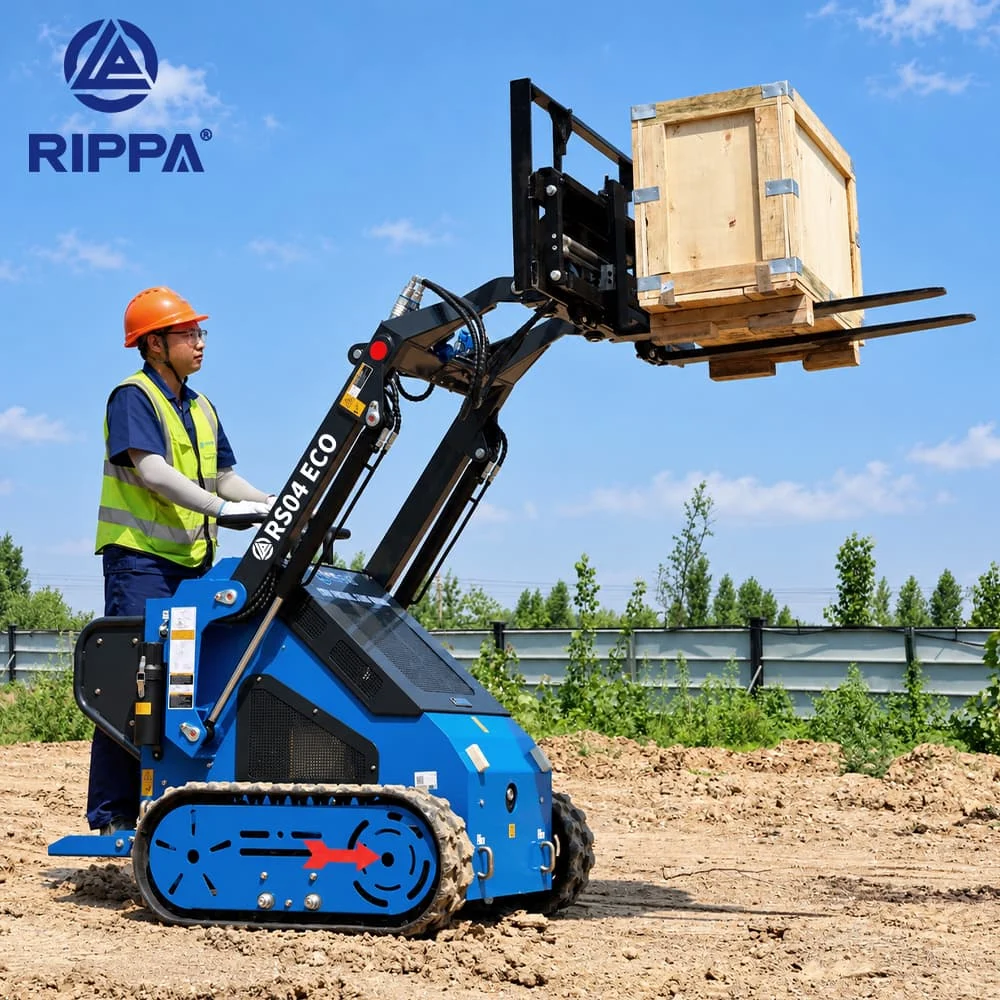
- Pallet forks for moving palletized goods
- Grapples for handling irregular materials
- Augers for drilling applications
- Snow removal attachments for seasonal work
Before purchasing an attachment, verify its compatibility with the machine, hydraulic requirements, mounting system, and intended application.
For contractors managing several projects, it is also important to decide whether attachments should be assigned to individual machines or shared between compatible machines.
A clear allocation plan can reduce unnecessary purchases and make equipment scheduling easier.
5. Consider Transportation and Jobsite Scheduling
A fleet may appear sufficient on paper but still create operational problems when machines cannot reach the required locations on time.
Contractors should consider:
- Distance between active jobsites
- Available transportation equipment
- Loading and unloading arrangements
- Site access restrictions
- Project start and completion dates
- Whether machines need to move between jobs during the day
Transportation planning is especially important for contractors managing multiple small projects in different locations.
Before purchasing additional machines, review whether scheduling changes or better equipment allocation could solve existing availability problems.
6. Build a Maintenance and Backup Plan
Fleet planning should account for maintenance, not just daily production.
Every machine requires inspections and scheduled maintenance according to its manufacturer’s instructions. Contractors should consider how equipment availability may change when a machine is undergoing service.
A practical fleet plan should include:
- A regular inspection routine
- Maintenance records for each machine
- A process for reporting equipment problems
- Access to suitable replacement parts
- A plan for reallocating work when a machine is unavailable
For businesses with overlapping project schedules, some operating flexibility is important. The goal is not necessarily to purchase extra machines immediately, but to understand how equipment downtime affects project commitments.
7. Compare the Cost of Adding Equipment With Operational Benefits
When a contractor considers purchasing another Chinese skid steer loader, the decision should be based on expected business use.
Review the following costs:
- Machine purchase price
- Transportation and delivery expenses
- Attachment purchases
- Routine maintenance
- Parts and service
- Operator labor
- Insurance and other ownership expenses
Then compare these costs with the expected benefits, such as reduced project delays, less equipment rental from external providers, improved scheduling, or the ability to accept additional work.
A machine that remains unused for long periods may create unnecessary ownership costs. On the other hand, insufficient equipment capacity may limit the number of projects a contractor can complete.
The right decision depends on the company’s actual workload and financial planning.
8. Review Fleet Performance Regularly
Fleet planning should be an ongoing process rather than a one-time purchasing decision.
At the end of each month or project cycle, review:
- Operating hours for each machine
- Time spent waiting for equipment
- Maintenance frequency
- Attachment usage
- Transportation costs
- Project delays related to equipment availability
These records can reveal whether the fleet needs additional capacity, a different attachment allocation, improved scheduling, or a revised maintenance plan.
Frequently Asked Questions
How many skid steer loaders does a contractor need?
There is no universal number. It depends on project volume, overlapping schedules, jobsite locations, operating hours, and maintenance requirements. Contractors should evaluate their workload before deciding how many machines to purchase.
Is it better to buy one machine or build a larger fleet?
A smaller fleet may be more practical for businesses with limited or inconsistent workloads. A larger fleet may be justified when several projects require equipment at the same time. Utilization and total ownership costs should guide the decision.
Can one skid steer loader handle multiple types of work?
Yes, a skid steer loader can perform different tasks when paired with suitable compatible attachments. However, contractors should confirm that the machine and attachment are appropriate for each application.
Why is equipment utilization important?
Utilization helps contractors understand how frequently their machines are working. It supports decisions about equipment purchases, scheduling, and maintenance planning.
What should contractors consider before purchasing a Chinese skid steer loader?
They should evaluate the intended applications, machine suitability, attachment compatibility, operating requirements, supplier documentation, parts availability, and the overall cost of ownership.
Conclusion
Effective skid steer loader fleet planning starts with understanding the work a contractor actually performs. Project schedules, equipment utilization, jobsite conditions, attachments, transportation, and maintenance all influence the number and type of machines required.
For contractors considering a Chinese skid steer loader, the most practical approach is to evaluate equipment according to real operating needs and long-term business plans. A well-organized fleet can help improve scheduling, manage ownership costs, and support more reliable project delivery.
 Home
 Products
 Email
 WhatsApp

