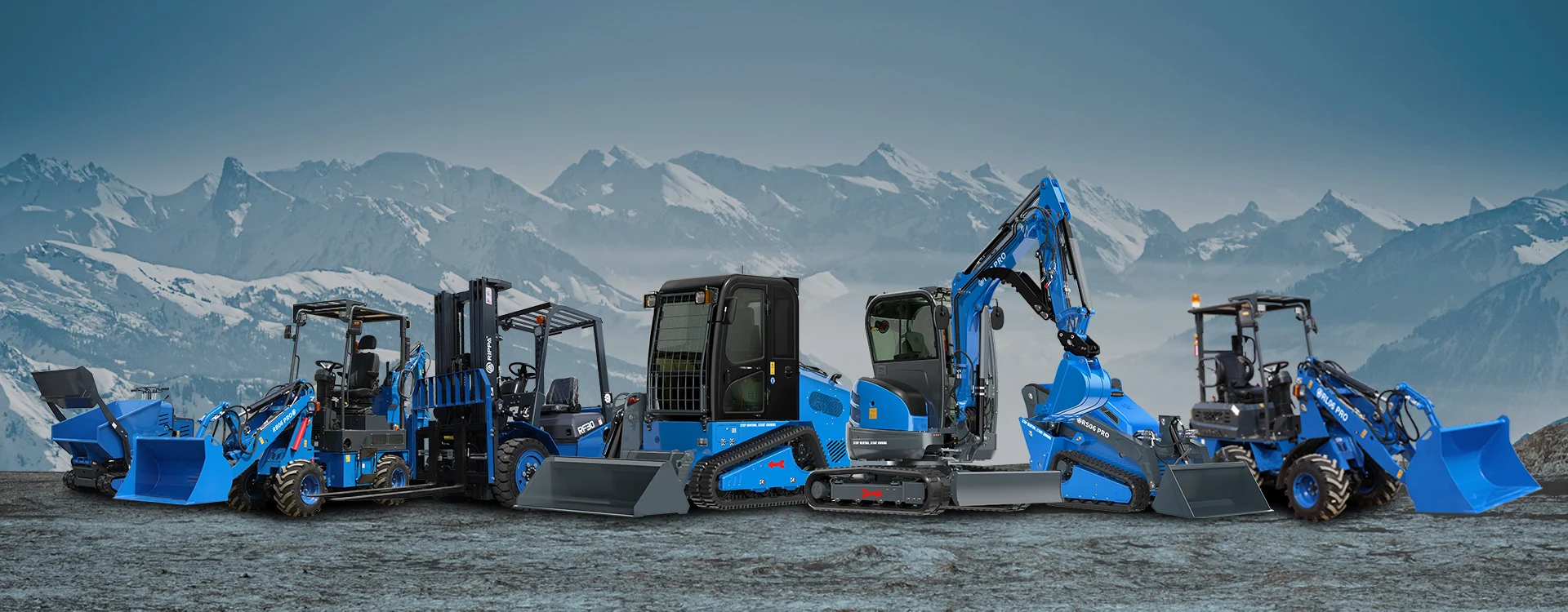
New Tracked Skid Steer Loader: What Should Buyers Check Before Purchasing?
A new tracked skid steer loader can be a practical choice for contractors, landscapers, agricultural businesses, and construction equipment dealers working in challenging ground conditions.
However, choosing a tracked machine involves more than comparing purchase prices. Buyers should evaluate the undercarriage, hydraulic configuration, attachment compatibility, maintenance requirements, and the type of work the machine will perform.
A machine that works well on one job site may not be the most economical choice for another.
This guide explains what to check before purchasing a new tracked skid steer loader and how to evaluate whether a particular configuration matches your business needs.
1. Evaluate the Ground Conditions Where the Machine Will Work
The first question is not which tracked skid steer has the lowest price. It is whether a tracked configuration is appropriate for your working environment.
Tracked skid steer loaders are commonly considered for:
- Soft or uneven ground
- Muddy construction sites
- Landscaping and ground preparation
- Agricultural work
- Projects where ground pressure is an important consideration
- Jobs involving frequent movement across loose materials
Rubber tracks distribute machine weight across a larger contact area than conventional tires of comparable machines. This can help reduce ground pressure and improve flotation in suitable conditions.
However, tracked equipment is not automatically the best option for every site.
If your work mainly involves concrete floors, paved surfaces, or frequent travel over hard ground, tire-equipped machines may be worth considering.
Before purchasing, describe your actual working conditions to the manufacturer.
2. Check the Track and Undercarriage Design
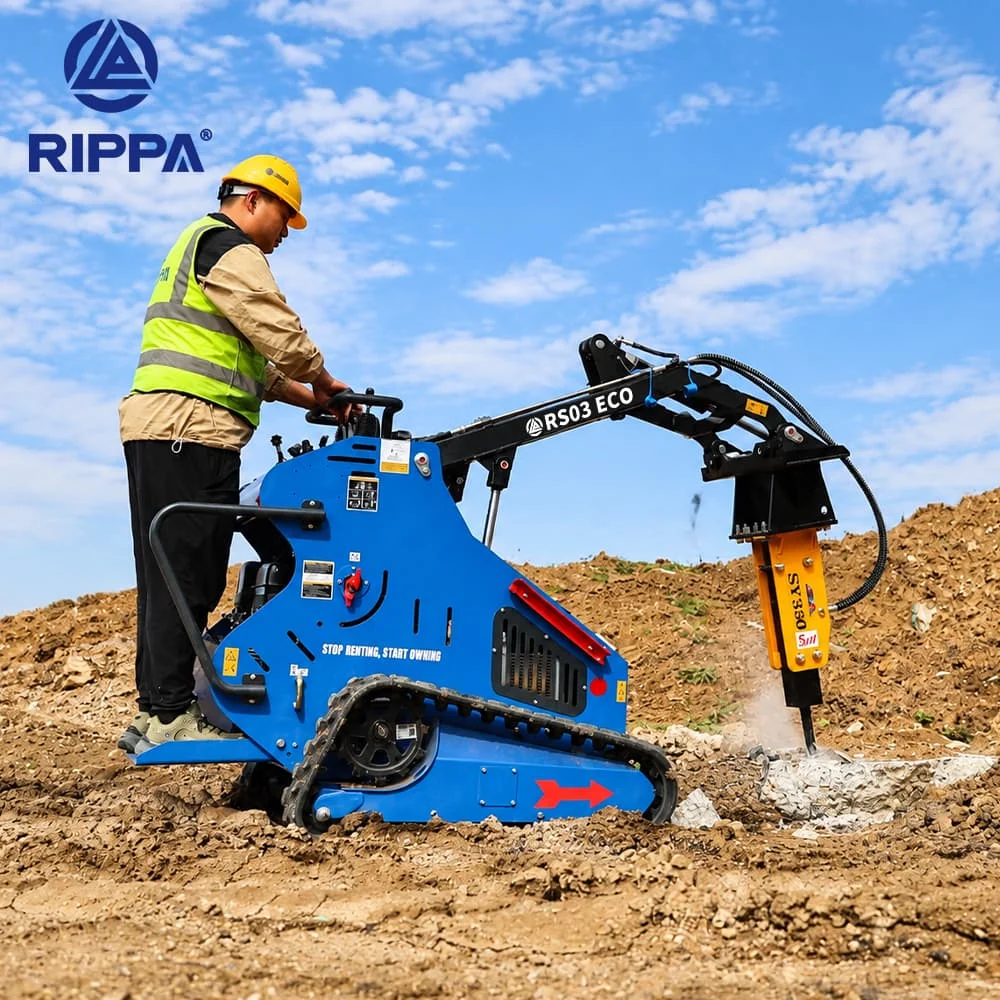
The undercarriage is one of the most important areas to evaluate on a tracked skid steer loader.
It directly affects how the machine travels, handles different surfaces, and requires maintenance.
Buyers should ask about the following components:
Rubber Track Construction
Check the track design and available replacement options. Ask the manufacturer about the recommended inspection and maintenance procedures.
Track Rollers
Understand the roller arrangement and how the components should be inspected during regular maintenance.
Sprockets and Drive Components
Ask how the drive components are maintained and which replacement parts are available.
Track Tension
Incorrect track tension can contribute to unnecessary wear or operational problems. Request the manufacturer’s recommended inspection procedure.
Replacement Parts
Before ordering, confirm whether replacement tracks and relevant undercarriage components can be supplied for your selected model.
For equipment dealers, access to replacement parts is particularly important because it affects how they support customers after the initial machine sale.
3. Evaluate the Hydraulic System Before Selecting Attachments
A tracked skid steer loader is often purchased because it can operate multiple attachments.
However, not every attachment is compatible with every machine configuration.
Before choosing a machine, identify the tasks you need to perform.
| Work Requirement | Attachment to Consider |
|---|---|
| Moving soil and loose materials | General-purpose bucket |
| Handling palletized materials | Pallet forks |
| Handling branches and irregular materials | Grapple |
| Drilling holes | Auger |
| Breaking hard surfaces | Hydraulic breaker |
| Cleaning working areas | Sweeper |
The attachment list is only a starting point.
You should also confirm:
- Hydraulic flow requirements
- Hydraulic pressure compatibility
- Auxiliary hydraulic connections
- Mounting system compatibility
- Attachment weight
- Machine operating limitations
A manufacturer should confirm whether the selected attachment is suitable for the specific machine rather than relying on appearance or mounting dimensions alone.
4. Match the Machine to Your Daily Workload
A new tracked skid steer loader should be selected according to the actual workload.
Consider these factors:
Material handling: What materials will the machine move, and how frequently will it operate?
Working space: Does the machine need to pass through narrow gates, buildings, or restricted access areas?
Operating hours: Will it be used occasionally or for regular daily operations?
Travel conditions: Will it work mainly on soft ground, uneven terrain, or mixed surfaces?
Attachment use: Will operators frequently change between buckets, forks, breakers, or other tools?
A machine that is too small may not meet the workload. A larger machine may increase purchasing and operating costs unnecessarily.
The objective is to find a suitable balance between machine capability and actual work requirements.
5. Understand the Difference Between Purchase Price and Ownership Cost
The initial purchase price is only one part of the total cost of owning a tracked skid steer loader.
Buyers should consider the following expenses:
| Cost Category | What to Evaluate |
|---|---|
| Machine purchase | Base configuration and included equipment |
| Attachments | Additional tools required for the job |
| Track replacement | Expected inspection and replacement requirements |
| Routine maintenance | Service intervals and consumables |
| Hydraulic maintenance | Fluid, filters, and system inspection |
| Transportation | Delivery to the final destination |
| Spare parts | Availability and purchasing arrangements |
Track replacement and undercarriage maintenance deserve particular attention.
The actual service life of these components depends on operating conditions, maintenance practices, ground surfaces, and machine usage.
Ask the manufacturer for the maintenance guidance applicable to your selected model.
6. Review the Manufacturer’s Product Information
Before buying a new tracked skid steer loader, request detailed information from the manufacturer.
A useful product review should include:
- Model identification
- Machine specifications
- Engine information
- Hydraulic system details
- Track configuration
- Available attachments
- Maintenance documentation
- Applicable conformity documents
- Warranty terms
Do not assume that every model has the same standard equipment or optional features.
For example, RIPPA’s RS Series includes several compact skid steer loader models. Buyers should review the individual model information and confirm the exact tracked configuration available for their intended purchase.
If CE documentation is important for your destination market, request the applicable documents for the exact model and configuration. Do not rely solely on a general advertising statement.
7. Questions to Ask Before Placing an Order
Before confirming a purchase, ask the supplier:
- Which tracked configuration is available for the selected model?
- What maintenance is recommended for the undercarriage?
- Which replacement track components are available?
- Which attachments are compatible?
- What hydraulic requirements must attachments meet?
- What product documents are provided?
- Which warranty conditions apply?
- What parts and technical support arrangements are available?
- What are the packaging and shipping arrangements?
- Which costs are included in the final quotation?
Getting written answers makes it easier to compare suppliers and reduces the risk of misunderstandings.
8. Explore RIPPA Tracked Skid Steer Loaders
RIPPA is a construction machinery manufacturer based in Jining, Shandong, China.
Its skid steer loader range includes multiple RS Series models, with tracked and wheeled configurations available on selected models.
For buyers comparing a new tracked skid steer loader, the most useful starting point is to identify the required working application, preferred configuration, and attachment needs.
Visit the RIPPA skid steer loader product range to review available models and contact the team for product information.
Frequently Asked Questions
Is a tracked skid steer loader better for muddy ground?
Tracked machines generally offer better flotation and traction in many soft-ground conditions. Actual performance depends on machine design, ground conditions, track condition, and operating practices.
Do tracked skid steer loaders require more maintenance?
They have undercarriage components that require regular inspection and maintenance. Track wear, tension, rollers, and drive components should be checked according to the manufacturer’s guidance.
Can a tracked skid steer loader operate multiple attachments?
Yes, provided the machine has compatible mounting and hydraulic connections. Buyers should confirm attachment compatibility before purchasing.
What should I check before buying a new tracked skid steer loader?
Review the working conditions, undercarriage design, hydraulic system, attachment compatibility, machine specifications, spare parts availability, and warranty terms.
Can I buy a tracked skid steer loader directly from a manufacturer?
Yes. Buyers can contact manufacturers directly to discuss machine configurations, product information, quotations, and export arrangements.
Conclusion
Choosing a new tracked skid steer loader requires careful evaluation of the working environment, undercarriage, hydraulic system, attachments, and long-term maintenance requirements.
For contractors and equipment dealers, the right machine is not necessarily the cheapest one. It is the machine whose configuration matches the intended workload and whose maintenance and parts requirements can be managed effectively.
Explore the RIPPA skid steer loader range and contact the team to discuss the available tracked configurations.
 Home
 Products
 Email
 WhatsApp

