مقدمة
Starting a mini excavator dealership does not always mean building a completely new company.
Many successful equipment businesses begin by expanding from an existing customer base.
A tractor dealer may add compact excavators.
A rental company may move from equipment rental into equipment sales.
A used machinery dealer may add new equipment products.
A trailer company may discover that its contractor customers also need mini excavators.
A landscaping equipment business may expand into compact construction machinery.
For these companies, becoming a mini excavator dealer is not about starting from zero.
It is about using existing business advantages to enter a new but related market.
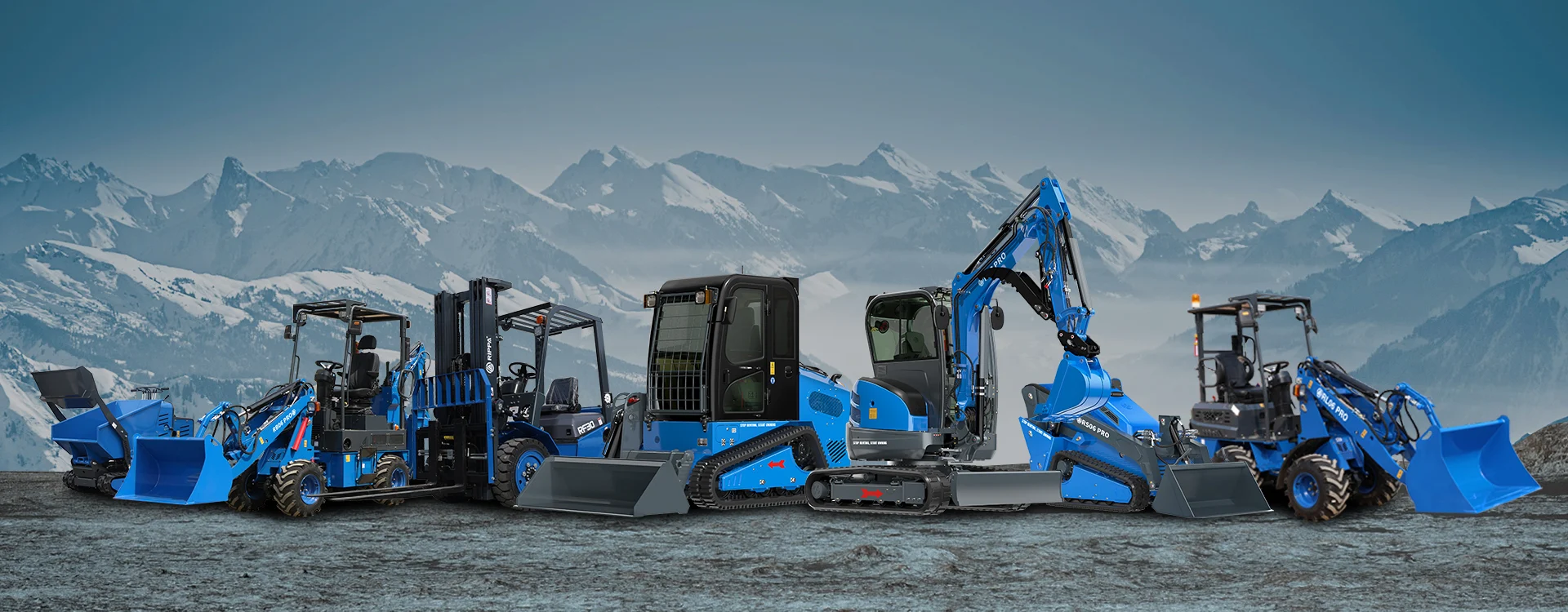
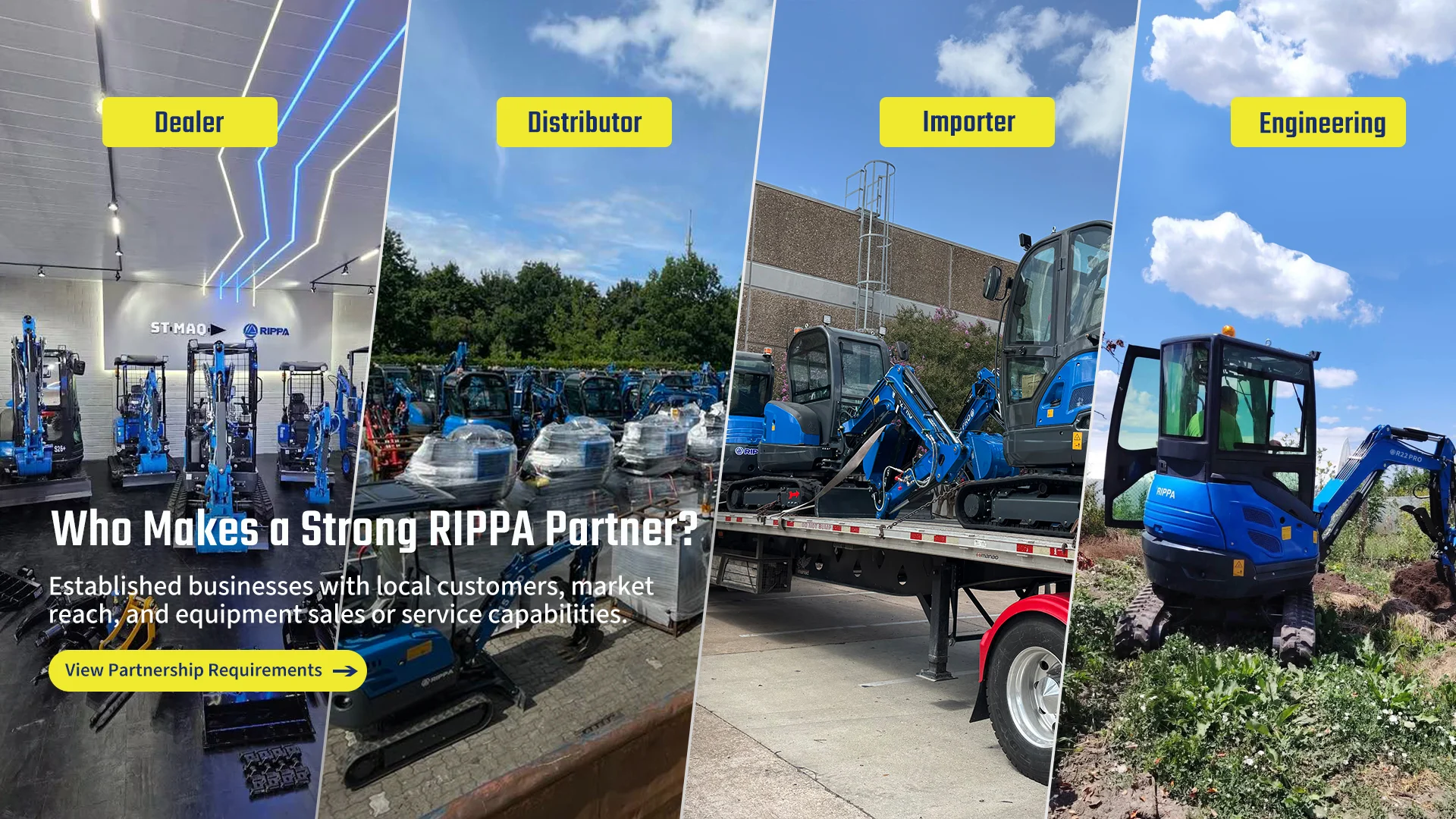
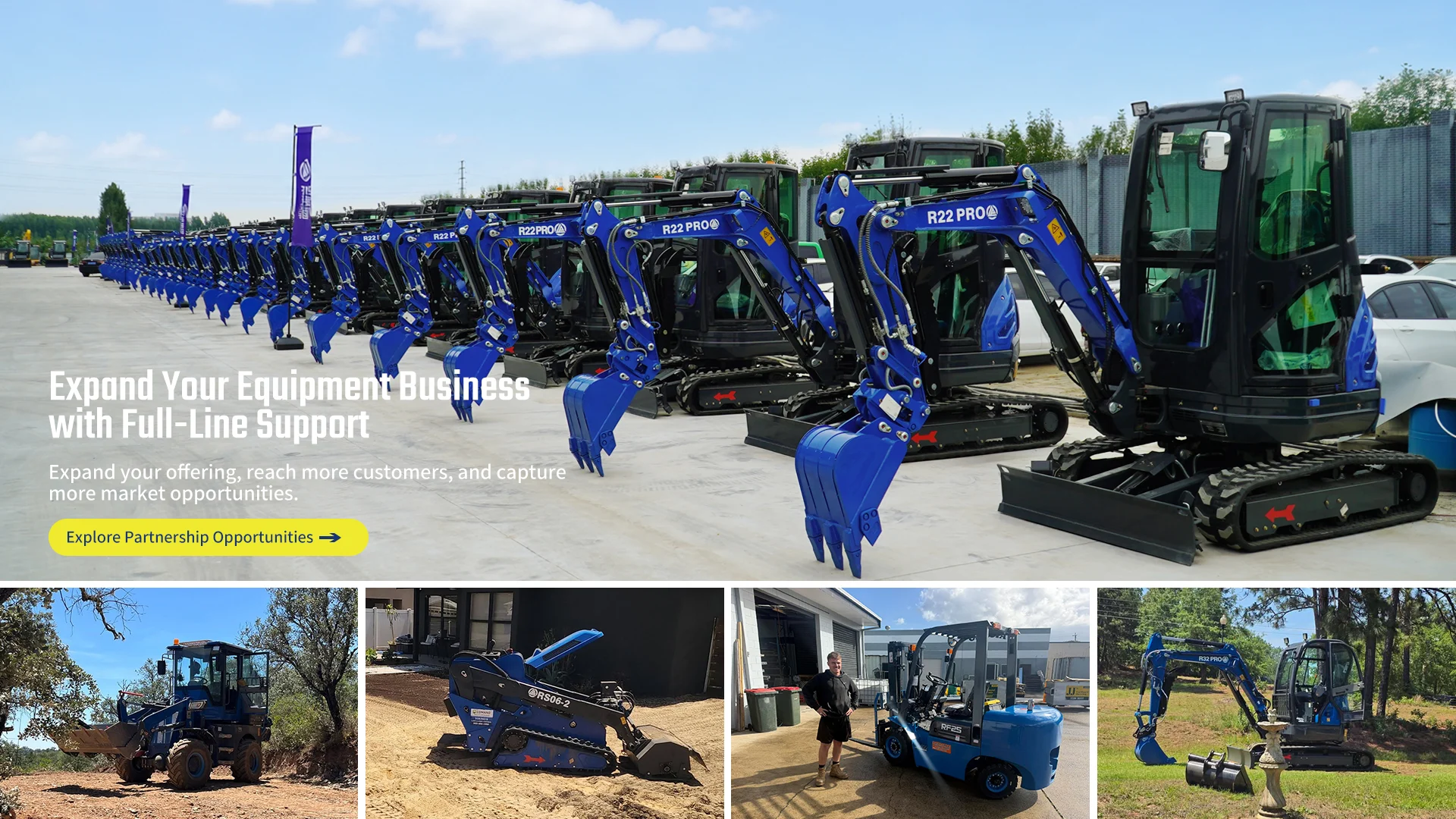
RIPPA currently works with machinery dealers, rental companies, importers, and equipment businesses that want to develop compact equipment markets. Its dealer program highlights areas such as market capability, service capability, product support, training, and flexible stocking options.
Why Existing Businesses Have an Advantage in Mini Excavator Sales
A new equipment dealer needs to build several things:
- Customers
- Brand awareness
- Sales channels
- Local reputation
- Service capability
- Market knowledge
An existing business may already have many of these assets.
For example:
A tractor dealer already knows farmers.
A trailer dealer already knows contractors.
A rental company already knows equipment users.
A used equipment dealer already knows machinery buyers.
This existing customer access can significantly reduce the difficulty of entering the compact equipment market.
Step 1: Identify Your Existing Customer Overlap
The first question for any potential dealer is:
Do my current customers already need mini excavators?
Potential customer overlap includes:
المقاولون
They may need mini excavators for:
- حفر الخنادق
- Drainage
- Site preparation
- مشاريع تنسيق الحدائق
- Property improvement
المزارعون
They may need mini excavators for:
- Drainage
- Ditch cleaning
- Fence preparation
- Rural property maintenance
مصممو الحدائق
They may need mini excavators for:
- زراعة الأشجار
- Hardscape preparation
- Root removal
- Yard renovation
شركات التأجير
They may need mini excavators for:
- Fleet expansion
- Contractor demand
- Seasonal projects
If your existing customers already have these needs, adding mini excavators becomes a natural business extension.
Step 2: Decide Which Business Model Fits You
Not every company needs to become the same type of dealer.
There are several possible models.
Model 1: Retail Equipment Dealer
The company sells directly to:
- المقاولون
- المزارع
- مصممو الحدائق
- Businesses
This model requires:
- Sales capability
- Product knowledge
- Customer support
Model 2: Rental + Sales Business
A rental company may combine:
- Equipment rental
- Equipment sales
- Fleet replacement sales
This creates multiple revenue channels.
A customer may first rent a mini excavator.
Later, that customer may purchase one.
Model 3: Regional Distributor
A larger business may focus on:
- Importing
- Warehousing
- Supplying smaller dealers
This requires stronger logistics and distribution capability.
Model 4: Existing Product Expansion
A company may simply add mini excavators to its current catalog.
Examples:
- Tractor dealer + mini excavator
- Trailer dealer + mini excavator
- Forklift dealer + mini excavator
- Landscaping dealer + mini excavator
This is often the easiest transition because the customer base already exists.
Step 3: Evaluate Your Current Resources
A potential dealer should evaluate five important resources.
1. Customer Resources
Do you already have:
- Contractor customers?
- Farming customers?
- Landscaping customers?
- Rental customers?
- Commercial buyers?
Customer access is one of the most valuable dealership assets.
2. Sales Resources
Do you have people who can:
- Communicate with B2B customers?
- Understand applications?
- Follow up with leads?
- Build relationships?
Equipment sales require more than sending prices.
3. Location Resources
Do you have:
- Display space?
- Storage area?
- Equipment yard?
- Customer access?
- Delivery capability?
A compact equipment business needs practical operating space.
4. Service Resources
Customers will ask:
- How do I get parts?
- Who supports maintenance?
- What happens if there is a problem?
A dealer needs a clear support plan.
This does not always require a large workshop immediately.
Possible solutions include:
- Internal technicians
- Local service partners
- Supplier technical support
5. Financial Resources
Capital may be needed for:
- Initial inventory
- المرفقات
- Parts
- Marketing
- النقل
- Operations
A dealership should be built with realistic financial planning.
Step 4: Choose Your First Mini Excavator Product Range
A common mistake for new dealers is trying to stock everything.
A better approach is:
Start with machines that match your customers.
For example:
Contractor Market
Focus on:
- General-purpose mini excavators
- توافق المرفقات
- Reliable support
Landscaping Market
Focus on:
- Compact access
- Transportability
- Flexible attachments
Farm Market
Focus on:
- Drainage
- صيانة العقارات
- Rural applications
Rental Market
Focus on:
- Broad usability
- Easy maintenance
- Fleet consistency
RIPPA’s current mini excavator lineup includes multiple compact models covering different customer applications, allowing dealers to select products according to local market demand rather than one fixed machine type.
Step 5: Build an Attachment Strategy
Mini excavator customers often buy based on the job they need to complete.
Attachments can increase dealer opportunities.
Possible attachments include:
- Digging buckets
- Grading buckets
- المثاقب
- الملاقط
- Hydraulic thumbs
- Breakers
- Quick couplers
Examples:
Fence Contractor
May need:
- Auger-related solutions
Landscaper
May need:
- جرافة تصنيف
- Thumb
Contractor
May need:
- دلو
- قاطع
Farm Customer
May need:
- دلو
- الخطاف
A dealer that understands attachments can provide a more complete solution.
Step 6: Prepare After-Sales Support
Equipment sales do not end after delivery.
Customers may need:
- Parts
- Maintenance information
- الدعم الفني
- Warranty assistance
Before becoming a dealer, understand:
- How parts are ordered
- How technical questions are handled
- How warranty communication works
- What documentation is available
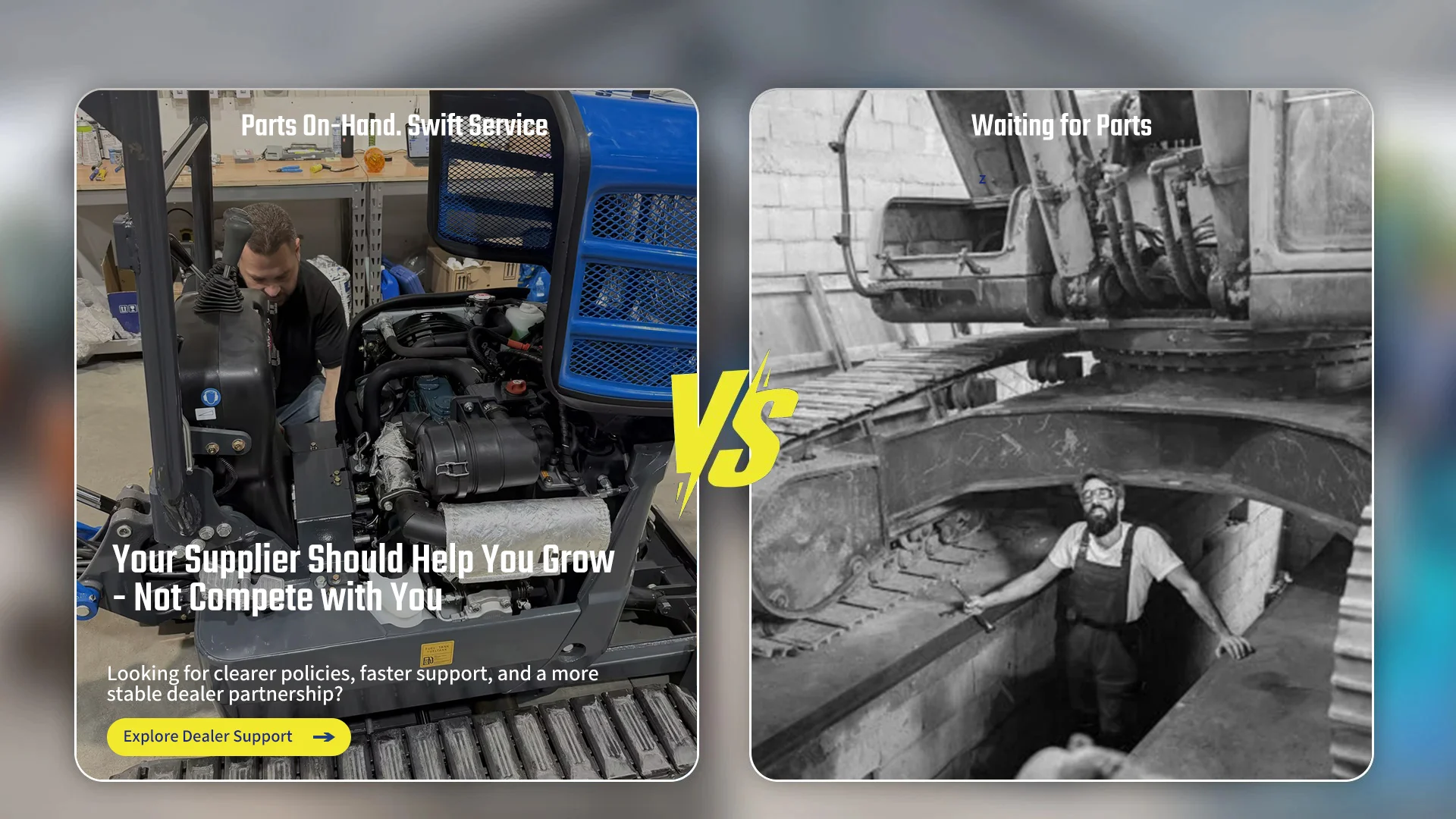
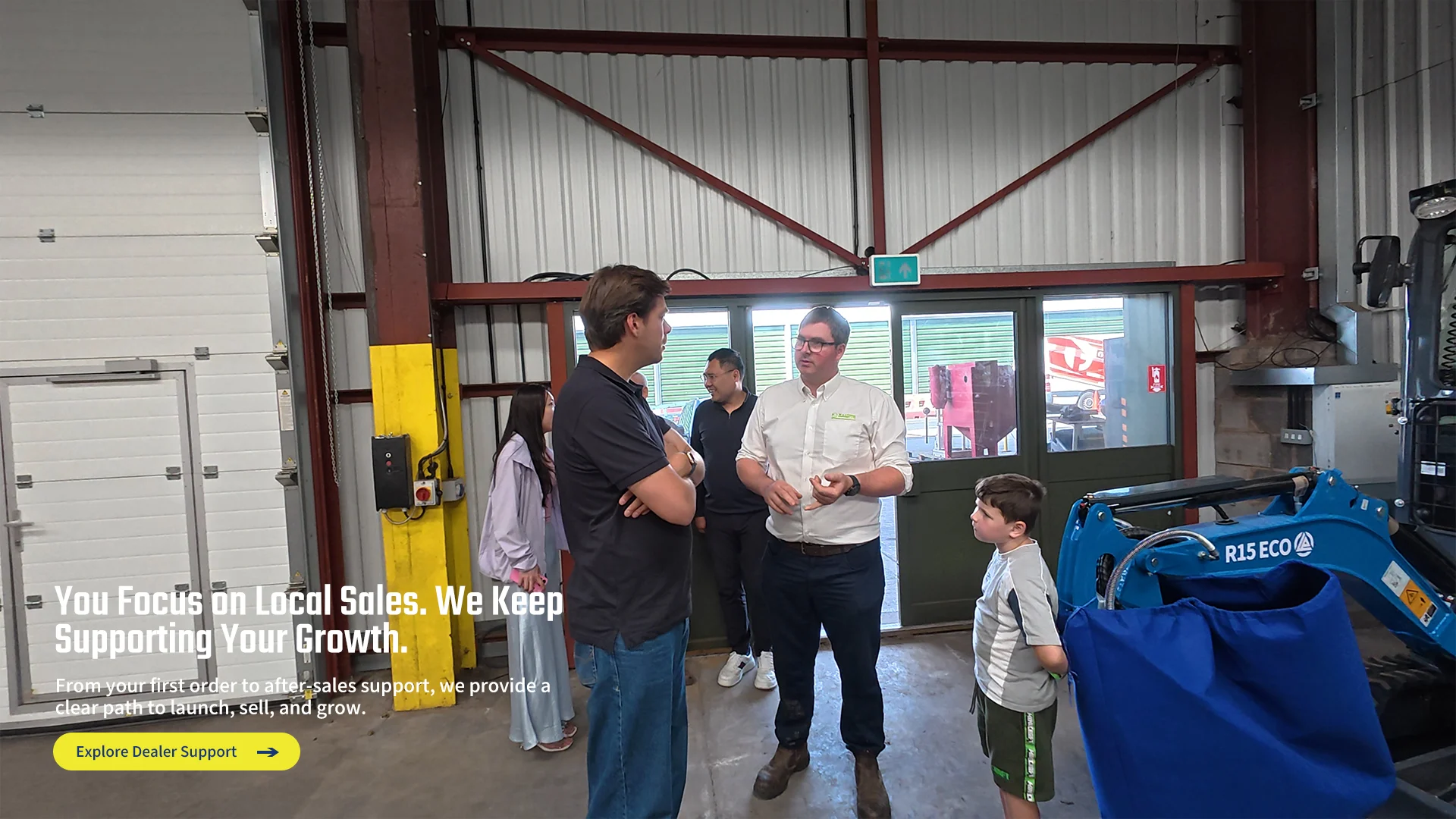
RIPPA’s dealer information highlights support areas including sales training, technical training, parts support, and marketing assistance for qualified dealer partners.
Step 7: Build a Local Marketing Strategy
A dealer should not wait for customers to discover the business.
Potential marketing channels include:
- Website content
- Google SEO
- Local advertising
- Contractor outreach
- Demonstration events
- Trade shows
- Customer referrals
Useful content topics include:
- Mini excavators for contractors
- Mini excavators for farms
- Mini excavators for landscaping
- Mini excavator buying guides
- Mini excavator attachments
These topics attract customers already considering equipment purchases.
Step 8: Start Small and Scale
A new dealer does not necessarily need:
- Large inventory
- Multiple locations
- Many product categories
A practical growth path may be:
Stage 1
Sell mini excavators.
Stage 2
Add attachments.
Stage 3
Develop parts support.
Stage 4
Add complementary equipment.
Stage 5
Expand territory or dealer network.
The goal is sustainable growth.
What Businesses Are Strong Candidates for Mini Excavator Dealerships?
Potential candidates include:
- Tractor dealers
- Trailer dealers
- شركات التأجير
- Used equipment dealers
- Landscaping equipment dealers
- Forklift dealers
- Machinery importers
- Contractor suppliers
- Regional distributors
- Experienced entrepreneurs
The strongest candidates usually already have:
- Customers
- Local reputation
- Sales capability
- Business infrastructure
الأسئلة الشائعة
Do I need to already sell excavators?
No. Existing customer relationships and business capability can also create dealership potential.
Is a rental company suitable for becoming a dealer?
Yes. Rental companies already understand equipment demand and customer applications.
Can a tractor dealer sell mini excavators?
Yes. Tractor dealers often serve rural customers who may also need drainage and property maintenance equipment.
How much inventory should a new dealer buy?
There is no universal answer. Inventory should match market demand, financial capability, and supplier support.
Do I need a service department?
You need a support plan. The exact structure can include internal service, partners, or supplier support.
الخاتمة
Starting a mini excavator dealership does not always require creating a completely new business.
Many strong candidates already exist:
- Tractor dealers
- Trailer companies
- شركات التأجير
- Used machinery dealers
- Landscaping suppliers
- Importers
The key question is not:
“Do I already sell excavators?”
The better question is:
“Do I already have customers who need equipment, and do I have the resources to serve them professionally?”
For businesses with the right foundation, mini excavators can become a practical path into compact equipment distribution.
 الصفحة الرئيسية
 المنتجات
 البريد الإلكتروني
 واتساب

