Direct Answer
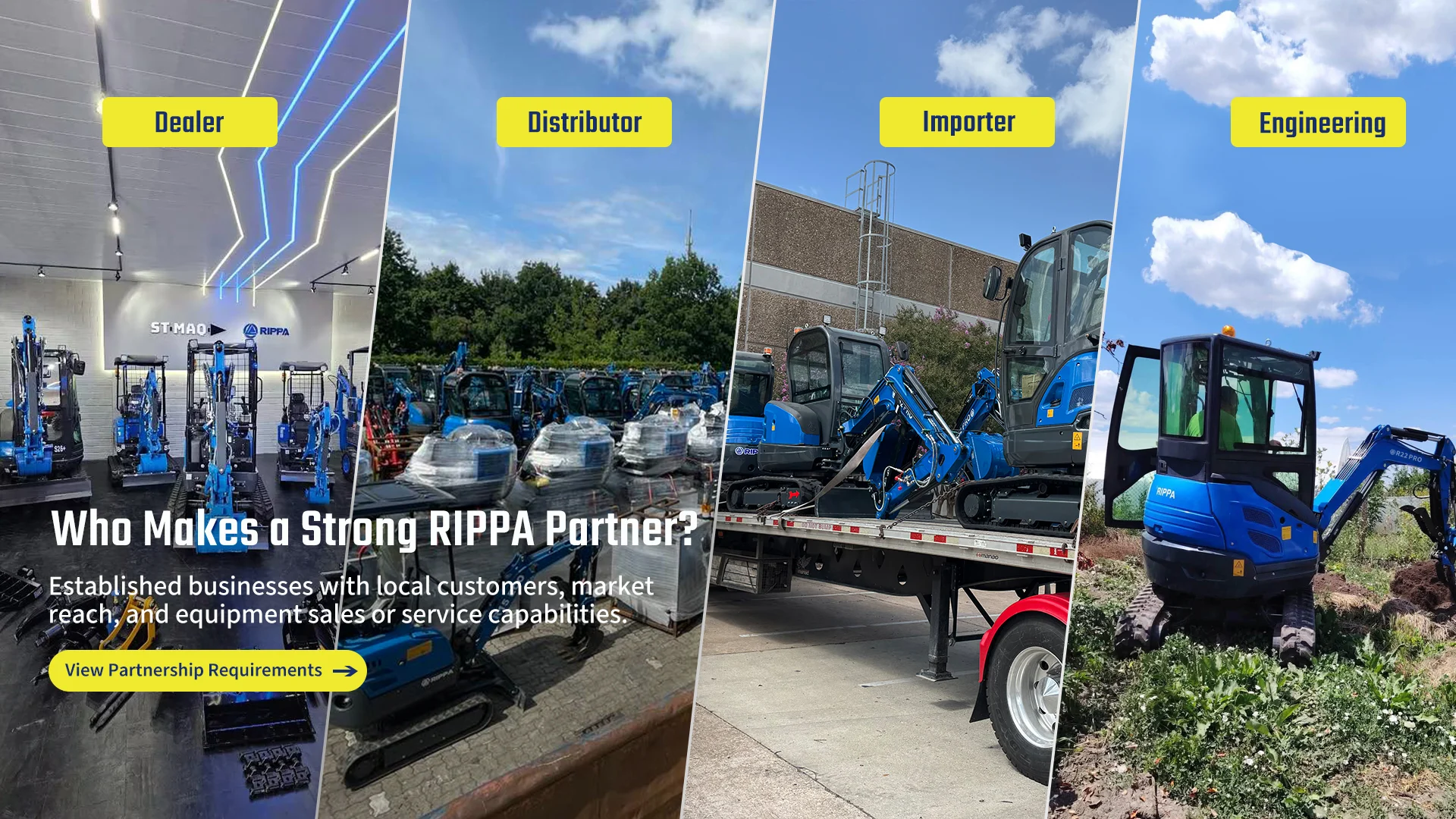
A mini excavator dealer usually should not choose between 100% stocking and 100% order-based sales. A more practical model is to keep a small number of high-demand mini excavators available for demonstration and immediate delivery while selling less common sizes, configurations, and attachments by order.
For a new dealership, the goal is not to have the largest equipment yard.
The goal is to have enough inventory to:
- Let customers see and test machines
- Serve buyers who need equipment quickly
- Generate local visibility
- Close common sales without long delays
while avoiding excessive capital tied up in machines that may remain unsold.
A practical inventory structure can be:
Core stock + demo unit + special-order models + basic parts inventory.
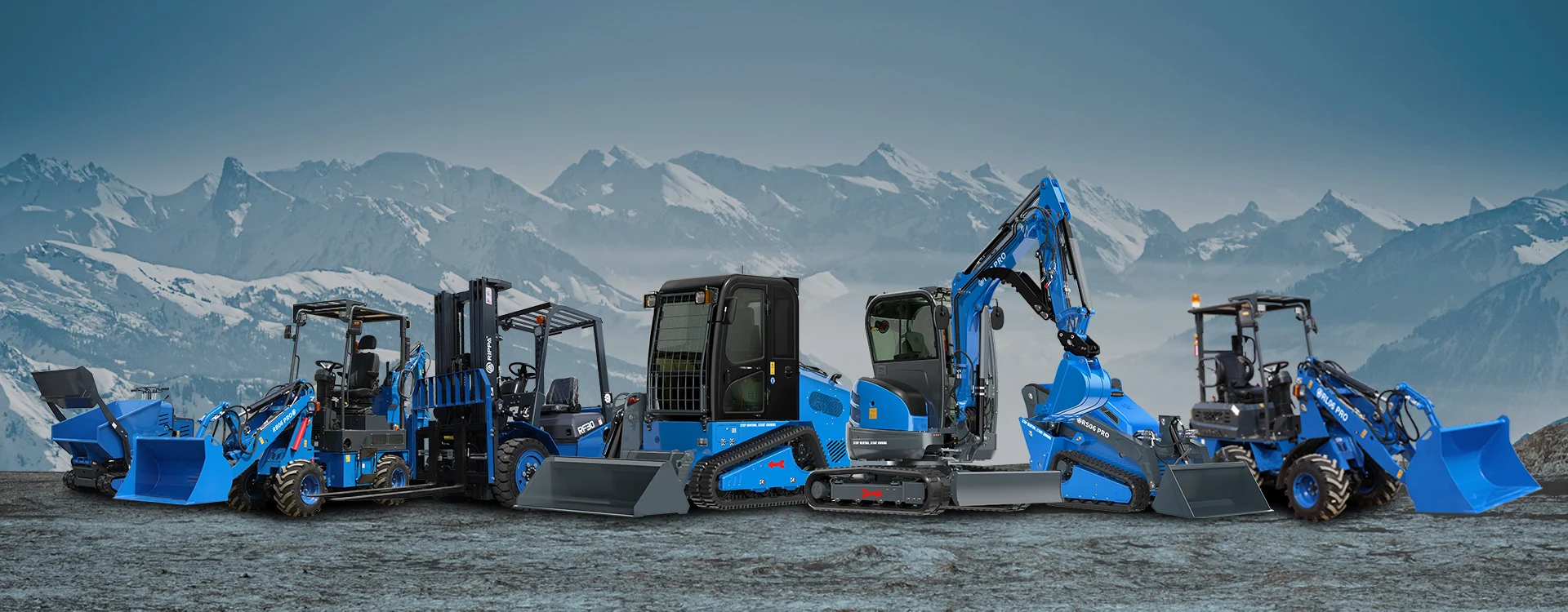
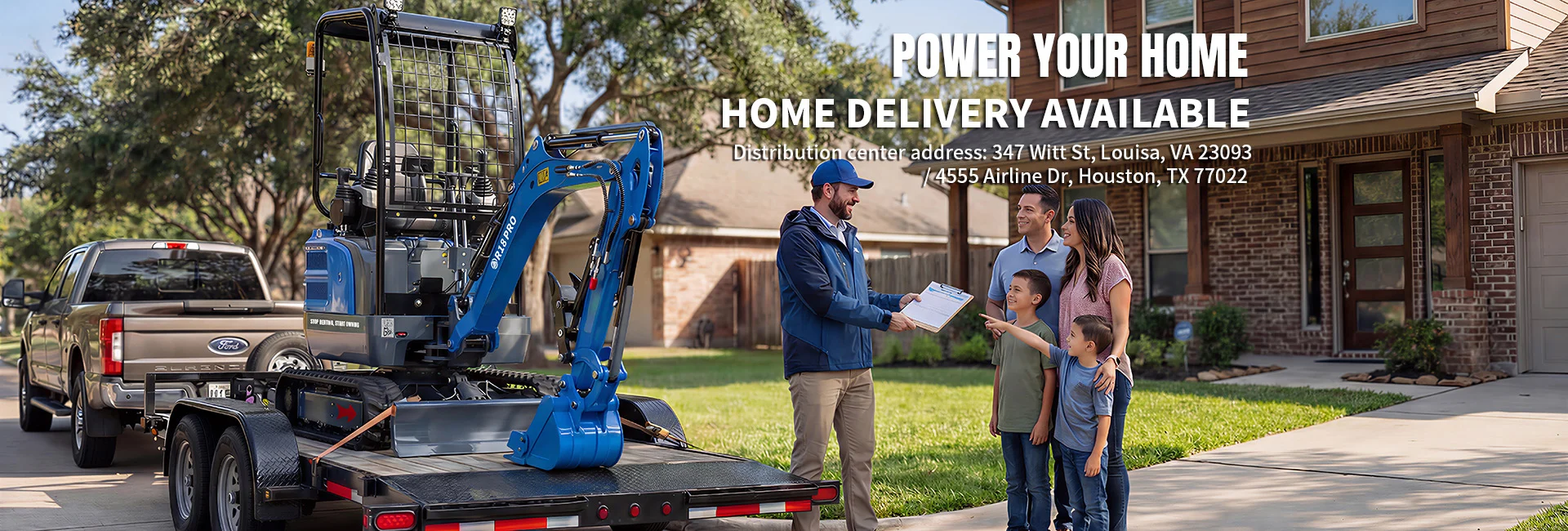
RIPPA’s current dealer materials specifically describe a flexible stocking approach in which dealers can begin with a demo machine and basic parts inventory and increase stock as local demand develops. Current commercial conditions should still be confirmed directly for the relevant market.
Why Does Mini Excavator Inventory Matter?
Equipment customers do not all buy in the same way.
Some buyers are planning months ahead.
Others already have a project scheduled and want a machine immediately.
A contractor may contact the dealership because:
- A project starts next week
- Its rental costs are increasing
- Another excavator is unavailable
- A new crew needs equipment
For that customer, an in-stock machine can be a major advantage.
But another buyer may need:
- A specific operating weight
- Particular hydraulic requirements
- A certain attachment package
- A particular configuration
For this buyer, ordering the correct machine may be more important than immediate availability.
That is why a hybrid inventory model can work well.
What Does “Stocking Mini Excavators” Mean?
Stocking means the dealership owns machines before the final customer has purchased them.
Those machines may be used for:
- العرض
- Demonstrations
- Immediate delivery
- Local marketing
- Customer comparison
Stock gives customers confidence that the dealership is active and prepared to sell equipment.
However, every stocked machine also represents working capital.
If a machine does not sell, that money cannot easily be used for:
- Another fast-selling excavator
- Spare parts
- Advertising
- المرفقات
- Service equipment
- Operating expenses
Inventory therefore needs to be managed carefully.
What Does “Sell by Order” Mean?
Order-based selling means the dealer confirms customer demand before placing the machine order.
This approach may be suitable for:
- Less common excavator sizes
- Specialized configurations
- Unusual attachments
- Customers willing to wait
- Fleet orders with specific requirements
It reduces the dealer’s inventory exposure.
But it can also create a problem:
Some buyers do not want to wait.
If another dealer has a suitable machine available locally, the customer may purchase there instead.
What Are the Advantages of Keeping Mini Excavators in Stock?
1. Customers Can See the Machine
Equipment is a physical product.
Many buyers want to:
- Sit in the operator station
- Inspect maintenance access
- See the machine size
- Compare controls
- Look at attachments
- Understand transport requirements
A machine on the dealership lot makes the product more tangible.
2. Dealers Can Offer Demonstrations
A demonstration can be especially useful for:
- First-time excavator buyers
- مصممو الحدائق
- Contractors comparing sizes
- Rental companies evaluating fleet equipment
Customers can better understand the difference between:
- A very compact machine
- A mid-size mini excavator
- A larger compact excavator
A demonstration can therefore support both education and sales.
3. Immediate Delivery Can Win Sales
Some customers are willing to wait.
Others are not.
A contractor with an active job may choose a machine that is available now rather than a theoretically perfect machine available much later.
For this reason, stocking one or more broadly useful configurations can help capture urgent demand.
4. In-Stock Machines Improve Local Visibility
Equipment displayed outside a dealership can attract:
- المقاولون
- مصممو الحدائق
- المزارعون
- Rental operators
- Local business owners
This matters particularly for businesses that are entering machinery sales from adjacent industries such as:
- Tractor dealerships
- Trailer dealerships
- شركات التأجير
- Used equipment businesses
The physical machines make the new product line visible.
What Are the Risks of Stocking Too Many Mini Excavators?
The biggest risk is capital becoming trapped in slow-moving inventory.
Suppose a dealer purchases:
- Several small excavators
- Several mid-size excavators
- Multiple larger configurations
- Numerous attachment packages
before understanding the local market.
If customers primarily want only two of those configurations, the rest may sit in inventory.
The dealer may then lack capital to reorder the models that actually sell.
What Mini Excavators Should a Dealer Stock?
The best stock machines are usually products with:
- Broad applications
- Frequent customer inquiries
- Multiple potential customer groups
- Reasonable transport requirements
- Repeat sales potential
- Useful attachment options
The exact size depends on the territory.
RIPPA’s current mini excavator catalog includes several compact weight classes, from very small machines through larger compact excavators, giving dealers multiple size options to match different customers.
However, a dealer does not need every model physically in stock.
Should Dealers Stock the Smallest Mini Excavators?
Very small excavators may appeal to:
- Residential landscaping businesses
- Tight-access contractors
- Property maintenance companies
- Buyers prioritizing transportability
They can be valuable if those customer groups are strong locally.
However, if most customers are commercial contractors requiring greater digging capability, very small machines may generate inquiries without becoming the dealership’s highest-volume sales category.
The dealer should use actual sales data.
Should Dealers Stock Mid-Size Mini Excavators?
Mid-size compact excavators can be attractive because they may serve several customer types.
Potential buyers include:
- المقاولون
- مصممو الحدائق
- أساطيل المركبات المؤجرة
- المزارع
- Property maintenance companies
This broad application range can make them useful core inventory candidates where local demand supports them.
Should Dealers Stock Larger Compact Excavators?
Larger compact excavators may be relevant for:
- Professional contractors
- Commercial projects
- شركات التأجير
- Customers needing more capability
But larger machines also tie up more inventory capital.
If local demand is limited, it may be more efficient to sell these machines by order.
What Is a Good Hybrid Inventory Model?
A new mini excavator dealership might structure inventory like this:
1. Demo Unit
Purpose:
- Customer demonstrations
- Sales training
- Local events
- Content creation
- Lead generation
2. Core Stock Machines
Purpose:
- Serve common customer applications
- Provide immediate-delivery options
3. Special-Order Models
Purpose:
- Serve customers requiring less common sizes or configurations
4. Attachment Inventory
Purpose:
- Support common customer applications
5. Basic Parts Inventory
Purpose:
- Support machines already operating locally
This creates a more balanced use of capital.
How Many Mini Excavators Should a New Dealer Stock?
There is no universal number.
A new dealer should consider:
- Local population of contractors
- Landscaping industry size
- Rental demand
- Available working capital
- Supplier lead time
- Storage space
- Customer pipeline
- Expected sales volume
RIPPA’s current dealer materials state that initial stocking can be adjusted according to dealer capacity and market potential rather than using one rigid minimum quantity.
That type of flexible approach can be useful for new dealers that are still validating their local market.
Should a Dealer Start with One Demo Machine?
For some new dealers, yes.
A demo unit can help the company learn:
- Which customers show interest
- Which applications customers discuss
- Which attachments they request
- What objections appear
- Which machine sizes they compare
The dealer can then increase inventory based on actual demand.
This is generally safer than building a large product yard before understanding customer behavior.
How Can Dealers Decide Which Models Deserve Stock?
Track five things.
1. Qualified Inquiries
Not all website leads are equal.
Separate:
- General price questions
- Serious contractor inquiries
- Fleet buyers
- شركات التأجير
- Potential resellers
2. Quotes
Which models generate actual quotations?
This shows stronger intent than website traffic alone.
3. Sales
Which models actually convert?
A machine receiving many inquiries but few sales should not automatically receive more inventory.
4. Days in Inventory
How long does each machine remain unsold?
Slow inventory ties up capital.
5. Repeat Demand
Do customers return asking for the same size or configuration?
Repeat patterns can justify deeper stock.
Should Dealers Stock Attachments?
Yes, but selectively.
Common attachment categories may include:
- Digging buckets
- Grading buckets
- المثاقب
- الملاقط الهيدروليكية
- الملاقط
- القاطعات
- Quick couplers
A dealer should stock attachments that customers request repeatedly.
Less common tools can be handled by order.
Always confirm compatibility with the exact excavator model and hydraulic configuration.
Should Dealers Stock Spare Parts?
Yes, particularly routine and high-turnover items.
RIPPA’s current official dealer-support material describes a tiered parts approach in which dealers keep common wear items locally while regional warehouses and factory inventory support less common components.
A new dealer may therefore prioritize items such as commonly requested service and wear components rather than trying to stock every possible part.
Current parts availability and recommended local stocking should be confirmed for the dealer’s territory.
What Happens When a Dealer Stocks Too Little?
Too little inventory can also create problems.
The dealer may lose customers who:
- Need equipment immediately
- Want to inspect a machine
- Want to demonstrate equipment before buying
- Prefer local availability
The dealership can appear less established if every product exists only in a catalog.
The solution is not zero inventory.
It is focused inventory.
What Happens When a Dealer Stocks Too Much?
Overstocking can lead to:
- Excess capital tied up
- Higher storage requirements
- Discounting pressure
- Older inventory
- Reduced cash available for parts and marketing
For a growing dealership, cash flexibility can be more valuable than displaying every model.
Should Dealers Stock Machines or Sell by Order During Market Entry?
During the first stage, a practical approach may be:
Step 1
Stock a demo machine or a very small number of core models.
Step 2
Generate leads and demonstrations.
Step 3
Record which sizes customers request.
Step 4
Sell specialized machines by order.
Step 5
Increase stock only for products with proven turnover.
This approach lets demand determine inventory.
When Should a Dealer Increase Inventory?
Increase stock when:
- Core machines sell repeatedly
- Customers regularly request immediate delivery
- Supplier lead time causes lost sales
- Rental companies begin purchasing multiple units
- The dealer has sufficient working capital
- Parts and service capability can support a larger installed machine base
Inventory should grow together with the dealership’s operational capability.
When Should a Dealer Reduce Inventory?
Reduce stock when:
- Machines remain unsold for long periods
- Inquiries do not convert
- Customer demand shifts to another size
- Too much capital is tied up
- Specialized products are rarely requested
The dealership should not keep ordering a product simply because it sold well in another region.
Local demand matters.
Can Equipment Dealers Use Pre-Orders?
نعم.
For customers with clear specifications and less urgent timelines, pre-orders or customer-specific ordering can reduce dealer inventory exposure.
This may work particularly well for:
- Multiple-unit fleet orders
- Specialized configurations
- Less common machine sizes
- Equipment packages with specific attachments
Terms should be documented clearly and aligned with the supplier’s current ordering process.
How Should a Dealer Explain Stock vs Special Order to Customers?
Be transparent.
For example:
In-stock machine:
Suitable for customers who need equipment sooner and whose application matches the available configuration.
Special order:
Suitable for customers requiring a specific machine size, configuration, or attachment setup.
This avoids pressuring every customer toward the same solution.
Should Mini Excavator Dealers Also Stock Skid Steers and Loaders?
Only when customer demand supports them.
Mini excavators remain the core product for digging and trenching.
If existing customers repeatedly ask for:
- جاري التحميل
- Grading
- التنظيف
the dealer may evaluate skid steer loaders.
If customers repeatedly move:
- Gravel
- Soil
- Sand
- Mulch
compact wheel loaders may become relevant.
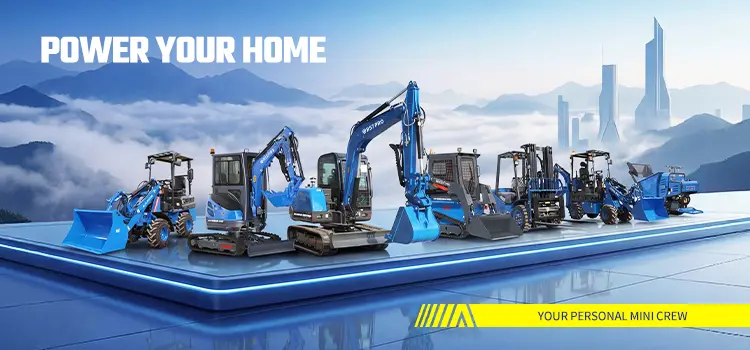
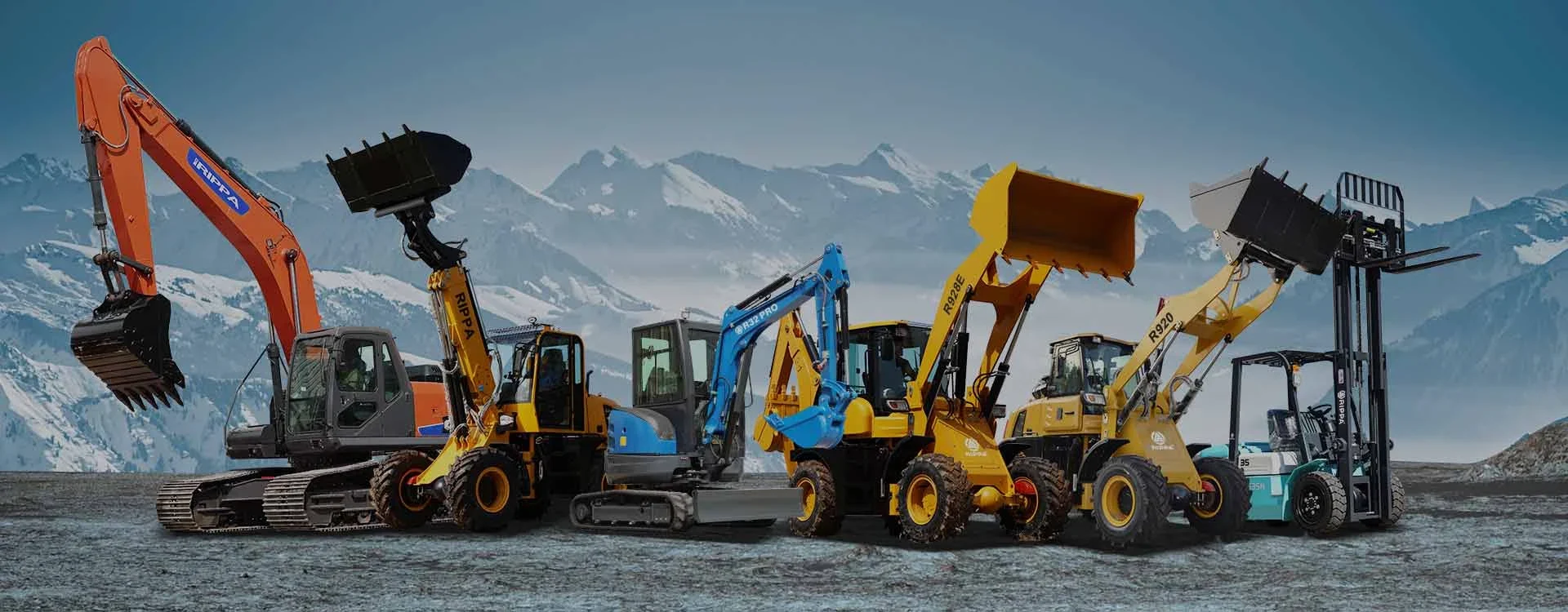
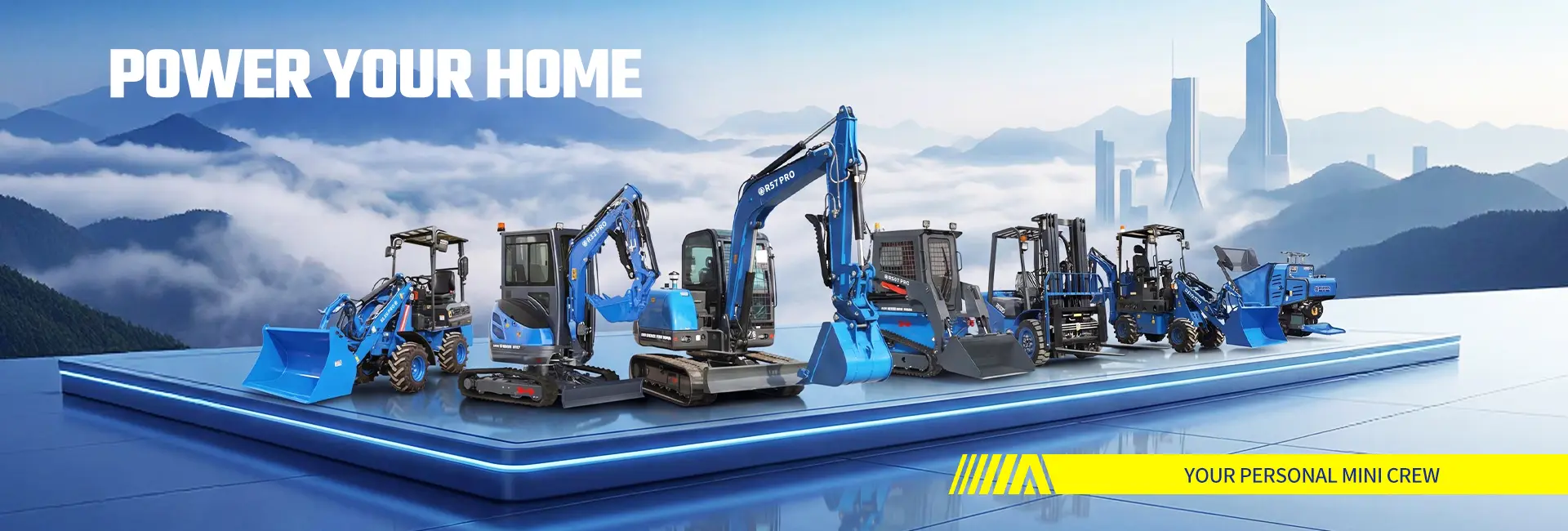
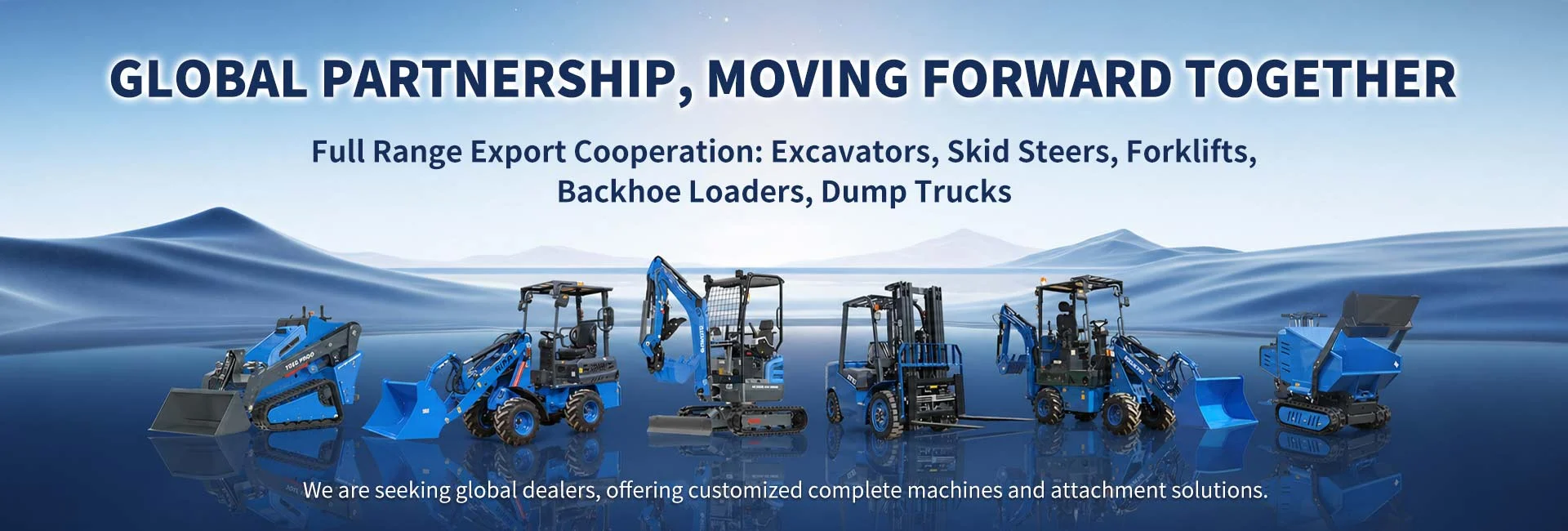
RIPPA’s current catalog includes mini excavators, skid steers, wheel loaders, forklifts, and other machinery categories.
The product range allows expansion, but dealers do not need to stock every category immediately.
Mini Excavator Dealer Inventory Framework
| Inventory Type | Purpose | Stocking Approach |
|---|---|---|
| Demo machine | Demonstrations and lead generation | Strong early priority |
| Core mini excavators | Immediate sales | Stock based on proven demand |
| Specialized excavators | Specific customer applications | Often order-based |
| Popular attachments | Increase machine applications | Selective stock |
| Rare attachments | Specialized work | Order-based |
| Routine parts | Customer uptime | Local stock |
| Major components | Lower-frequency demand | Regional/factory support where available |
الأسئلة الشائعة
Should a mini excavator dealer keep machines in stock?
Usually some stock is useful for demonstrations, immediate delivery, and customer confidence. The amount should depend on local demand and available capital.
Can a dealer sell mini excavators only by order?
Yes, but the business may lose customers who require immediate availability or want to inspect a machine locally.
How many mini excavators should a new dealer buy?
There is no universal number. A small initial stock or demo unit can be used to validate demand before expanding.
Which models should dealers keep in stock?
Prioritize models with broad applications, strong qualified inquiries, proven conversions, and reasonable inventory turnover.
Should dealers stock attachments?
Stock frequently requested attachments and order specialized tools when needed.
Should dealers stock spare parts?
Routine and high-turnover parts are usually the most important local items. Current recommended stocking levels should be confirmed with the supplier.
Does RIPPA require dealers to stock many machines?
RIPPA’s current published dealer materials describe flexible initial stocking based on dealer capacity and market potential rather than one rigid fixed quantity. Exact current terms should be confirmed directly.
ملخص
A الحفارة الصغيرة dealer does not need to choose between “stock everything” and “stock nothing.”
A stronger model is often:
demo unit + core stock + special orders + common attachments + essential parts.
Stock machines when:
- Demand is proven
- Buyers want fast delivery
- Demonstrations support sales
- Inventory turns efficiently
Sell by order when:
- Demand is less frequent
- The machine is specialized
- Customers require a specific configuration
- The dealer wants to protect working capital
The objective is not the largest equipment yard.
It is having the right machines available for the customers most likely to buy them while keeping enough capital to support future growth.
 الصفحة الرئيسية
 المنتجات
 البريد الإلكتروني
 واتساب

