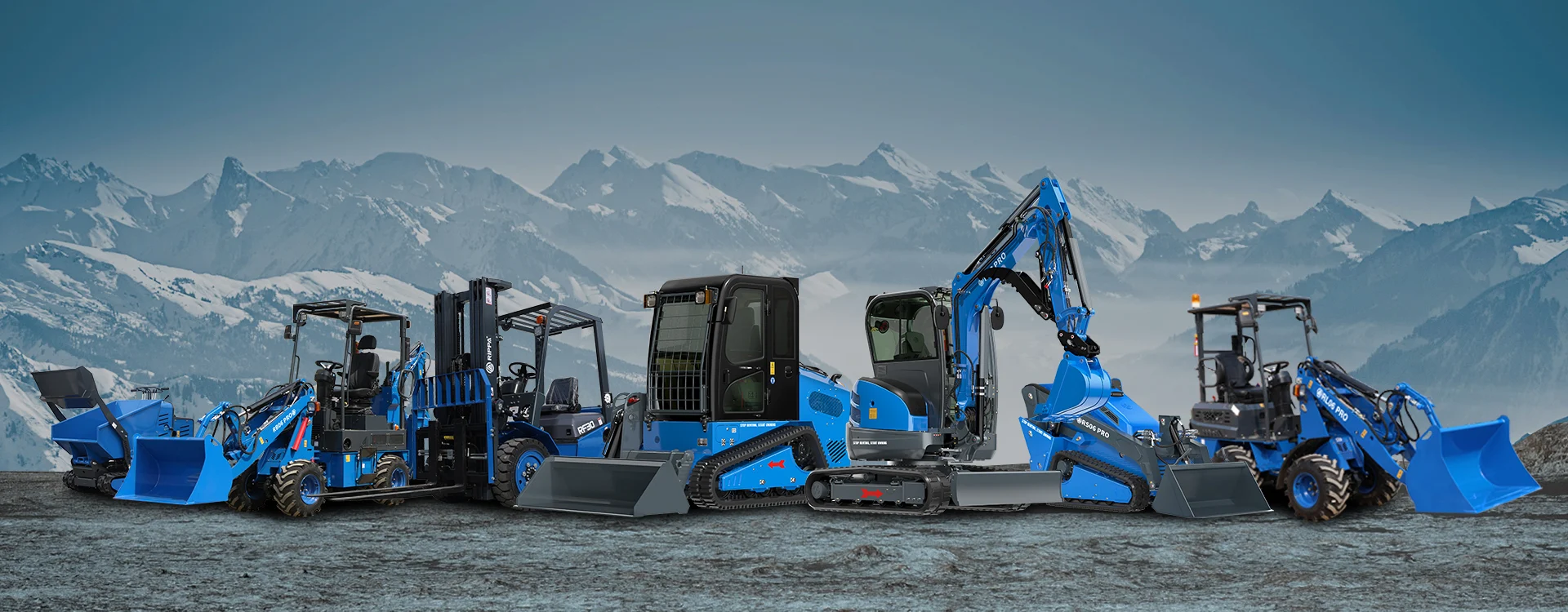
Compact construction equipment plays a critical role in modern construction, landscaping, and agricultural operations. Two of the most popular machines in this category are skid steer loaders и compact track loaders.
Although these machines look similar and often use the same attachments, their performance characteristics and ideal applications can differ significantly.
Understanding the differences between skid steer loaders and track loaders can help contractors choose the right equipment for their specific jobsite conditions.
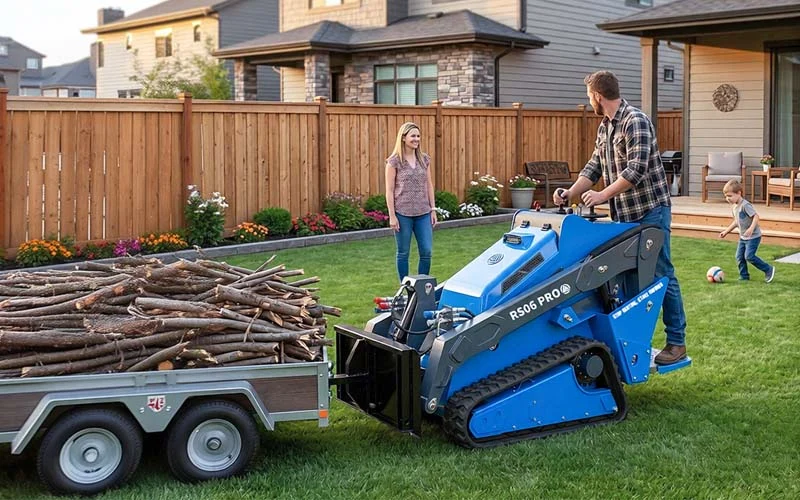
Какво е плъзгащ се товарач?
A Шлифовъчен товарач is a compact machine equipped with four wheels. It uses a skid steering system, meaning the wheels on each side move at different speeds to allow the machine to turn within its own footprint.
Key advantages of skid steer loaders include:
-
excellent maneuverability
-
lower purchase cost
-
fast travel speed
-
simple maintenance
Skid steers are widely used in:
-
construction sites
-
warehouse yards
-
road maintenance
-
landscaping projects
Because they are lightweight and agile, skid steer loaders are ideal for hard surfaces such as concrete and asphalt.
Какво представлява компактният верижен товарач?
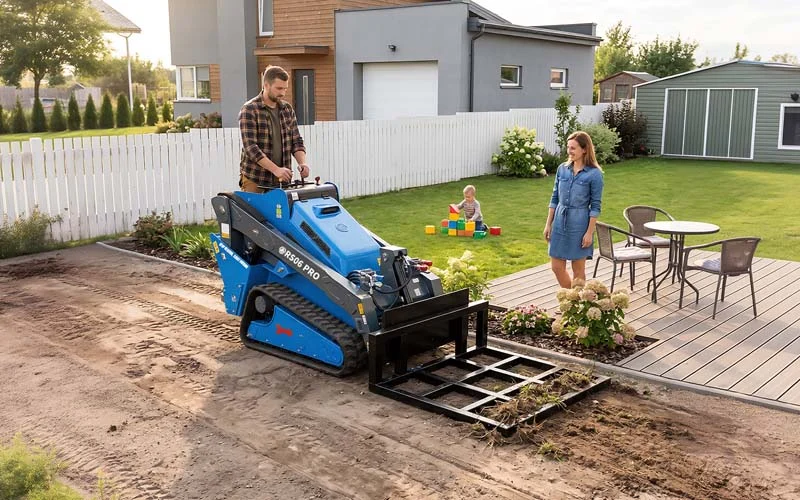
A compact track loader is similar in size and structure to a skid steer loader but uses rubber tracks instead of wheels.
Tracks distribute the machine’s weight over a larger surface area, which provides several advantages:
-
better traction
-
lower ground pressure
-
improved stability on uneven terrain
Track loaders are commonly used in:
-
muddy construction sites
-
forestry operations
-
agricultural fields
-
soft soil environments
They perform particularly well in conditions where wheeled machines might sink or lose traction.
Key Differences Between Skid Steers and Track Loaders
1. Ground Pressure
Track loaders exert significantly lower ground pressure, making them better suited for soft soil and muddy environments.
Skid steer loaders apply more pressure to the ground, which is beneficial on hard surfaces where traction is not an issue.
2. Operating Cost
Skid steer loaders typically have lower operating costs because wheels are less expensive to replace than rubber tracks.
Track loaders, while offering better traction, usually require higher maintenance and replacement costs.
3. Speed and Efficiency
Skid steers generally travel faster and are more efficient when moving between multiple work areas on paved surfaces.
Track loaders move more slowly but provide superior pushing and digging performance.
4. Terrain Capability
If the jobsite includes mud, sand, snow, or loose soil, track loaders perform better due to their increased traction.
For urban construction or paved environments, skid steers are often the more practical choice.
Which Machine Should You Choose?
Choosing between a skid steer and a track loader depends largely on the type of work and jobsite conditions.
Choose a skid steer loader if you need:
-
lower equipment cost
-
faster travel speed
-
work on hard surfaces
-
simple maintenance
Choose a track loader if you need:
-
superior traction
-
performance on soft ground
-
increased stability
-
heavy pushing power
Заключение
Both skid steer loaders and compact track loaders are versatile machines capable of handling a wide range of tasks with the right attachments.
Skid steers excel in speed, affordability, and urban jobsite efficiency, while track loaders provide better traction and stability in challenging terrain.
By evaluating jobsite conditions, budget, and operational needs, contractors can determine which machine will deliver the best performance and return on investment.
 Начало
 Продукти
 Имейл
Имейл
 WhatsApp

