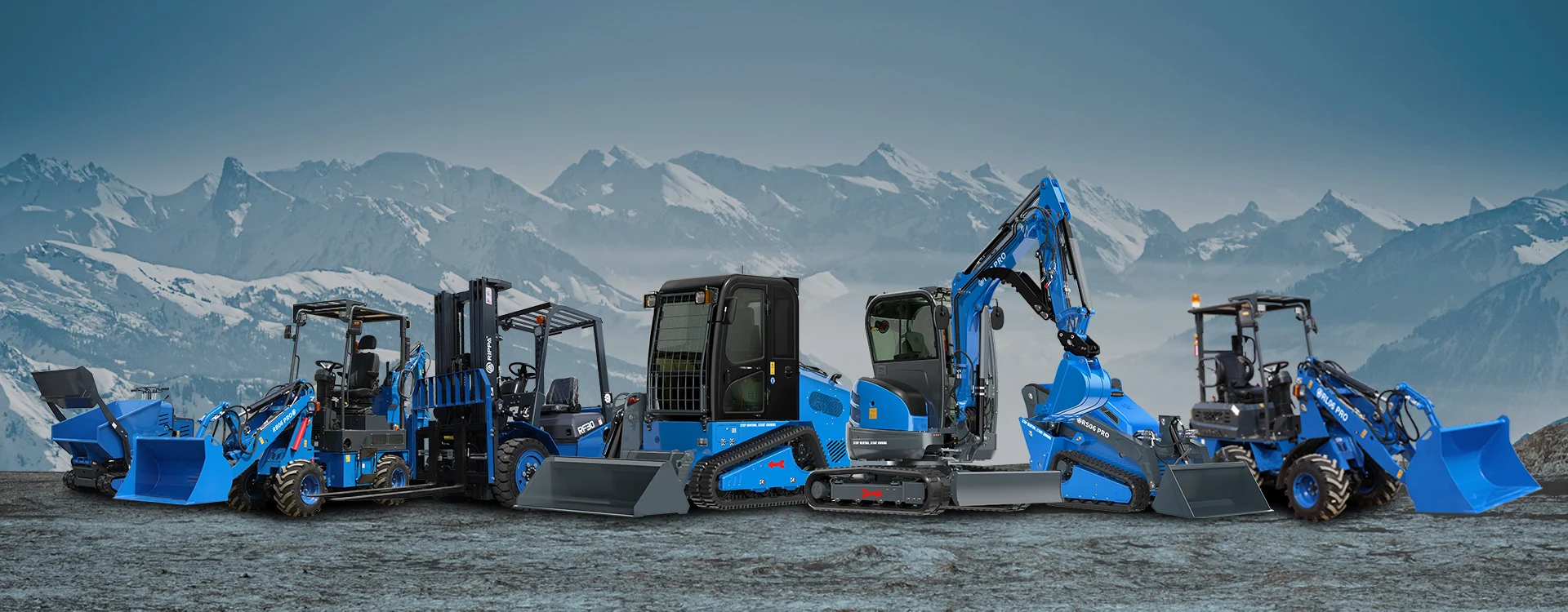
Chinese mini skid steers for sale attract interest from equipment importers and distributors seeking additional sourcing options for their markets. However, purchasing directly from China requires careful evaluation of the manufacturer, product specifications, export arrangements, and long-term support.
For B2B buyers, the objective is not simply to identify a low-priced machine. A suitable manufacturing partner should provide clear product information, consistent quality, realistic delivery schedules, and commercial terms that support repeat business.
The following considerations can help importers evaluate potential suppliers more systematically.
1. Define Your Target Market and Product Requirements
Before contacting manufacturers, establish the type of customers your business intends to serve.
Some markets may have demand for compact loaders used in landscaping and property maintenance. Others may prioritize equipment for construction preparation, agricultural applications, or material handling.
Your intended customers will influence the machine configurations, attachments, and support services you need.
Prepare a list of essential requirements, including the preferred undercarriage, working capacity, dimensions, attachment compatibility, and applicable safety or emissions requirements.
Importers should also verify the regulations that apply in their destination market. Requirements can vary by jurisdiction and product configuration.
A clear purchasing brief helps manufacturers recommend appropriate products and makes quotations easier to compare.
2. Verify the Manufacturer’s Actual Role
Not every company advertising Chinese mini skid steers manufactures the machines it sells.
Some businesses operate production facilities, while others assemble products, source machines from third parties, or act as trading companies.
These arrangements can all serve legitimate commercial purposes, but buyers should understand the supplier’s actual role.
Ask for information about the production facility, assembly process, quality inspection procedures, and responsibility for after-sales support.
Where practical, request a video meeting, factory tour, or independent inspection. Review company documentation and confirm that the entity receiving payment matches the agreed contract.
Understanding the supply chain can help importers evaluate production control, communication channels, and the supplier’s ability to support future orders.
3. Assess Product Quality and Consistency
A manufacturer’s product catalog is a starting point, not proof of consistent quality.
Buyers should request detailed specifications, operating manuals, maintenance instructions, and relevant inspection records.
Pay attention to the consistency of product information across the quotation, technical documents, machine labels, and order confirmation.
For larger orders, consider a pre-shipment inspection or another appropriate verification procedure. The inspection scope should be agreed upon before production or shipment.
If you intend to purchase the same model repeatedly, document the agreed configuration carefully. This can reduce the risk of unexpected changes in components or equipment supplied with later orders.
Reliable product consistency makes it easier for distributors to prepare sales materials, maintain inventory records, and support customers after delivery.
4. Compare the Full Cost of Importing
The factory quotation is not necessarily the final cost of placing equipment in your market.
Importers may need to account for packaging, freight, insurance, customs duties, taxes, port charges, local transportation, and unloading.
The exact expenses depend on the destination, shipment method, and agreed delivery terms.
Request a quotation that clearly distinguishes the equipment price from additional charges. Confirm which party is responsible for export documentation, transportation arrangements, and other contractual obligations.
For distributors, the landed cost should be compared with a realistic local selling price and the expenses associated with sales and after-sales service.
A low factory price is useful only when the complete purchasing arrangement remains commercially viable.
5. Review Export Experience and Documentation
International orders require clear communication and accurate documentation.
Ask manufacturers about their experience shipping equipment to your target market and whether they can provide the documents required for the transaction.
Depending on the shipment and jurisdiction, these may include commercial invoices, packing lists, transport documents, product manuals, and relevant conformity or compliance records.
Do not assume that a document or certification accepted in one country automatically satisfies another country’s requirements.
Verify applicable regulations with the relevant authorities or qualified specialists before ordering.
Importers should also establish a process for resolving document discrepancies and handling changes to shipping schedules.
6. Examine Spare Parts and After-Sales Arrangements
After-sales support is an important consideration when sourcing equipment from overseas.
Ask the manufacturer how replacement parts are identified, ordered, packaged, and shipped. Confirm whether technical manuals and troubleshooting guidance are available and how warranty claims are handled.
The actual warranty terms should be documented, including the scope of coverage, exclusions, claim procedures, and responsibilities for shipping parts.
For distributors, a reliable parts supply can help reduce customer inconvenience and strengthen the reputation of the business.
It is also worth considering which components should be held locally based on the machines sold and the service needs of your customers.
7. Evaluate Minimum Orders and Long-Term Cooperation
Minimum order quantities, payment terms, and production schedules can affect whether a manufacturer is suitable for your business.
Ask suppliers about initial purchasing requirements and whether future orders can be arranged according to a realistic sales forecast.
If you intend to develop a dealer network, discuss product availability, sales documentation, marketing resources, and technical training.
These arrangements should be confirmed rather than assumed.
A supplier that communicates clearly about production constraints and commercial conditions can help distributors plan more effectively. Long-term cooperation is most useful when both parties understand their responsibilities and business objectives.
8. Request a Comparable Supplier Quotation
When shortlisting Chinese mini skid steer manufacturers, provide each company with the same basic purchasing requirements.
| Evaluation area | Questions to ask |
|---|---|
| Manufacturing | Who produces or assembles the machine? |
| Product | Which configurations and attachments are available? |
| Quality | What inspection procedures are used? |
| Pricing | What is included in the quotation? |
| Logistics | What are the delivery terms and estimated lead times? |
| Compliance | Which destination-market documents can be supplied? |
| Support | How are spare parts and warranty claims handled? |
| Cooperation | What are the minimum order and repeat-order conditions? |
Comparing suppliers against the same criteria helps reveal differences that a simple price comparison may overlook.
Conclusion
Chinese mini skid steers for sale can be a sourcing option for equipment importers and distributors, but supplier selection requires careful preparation.
Buyers should verify manufacturing capabilities, confirm product specifications, calculate landed costs, review export documentation, and establish clear after-sales procedures before committing to an order.
A structured evaluation process can help businesses identify a supplier that meets their product requirements and supports sustainable distribution.
Looking for a Chinese mini skid steer manufacturer? Share your target market, estimated order quantity, preferred configurations, and delivery destination to request a quotation tailored to your business needs.
 Home
 Products
 Email
 WhatsApp

