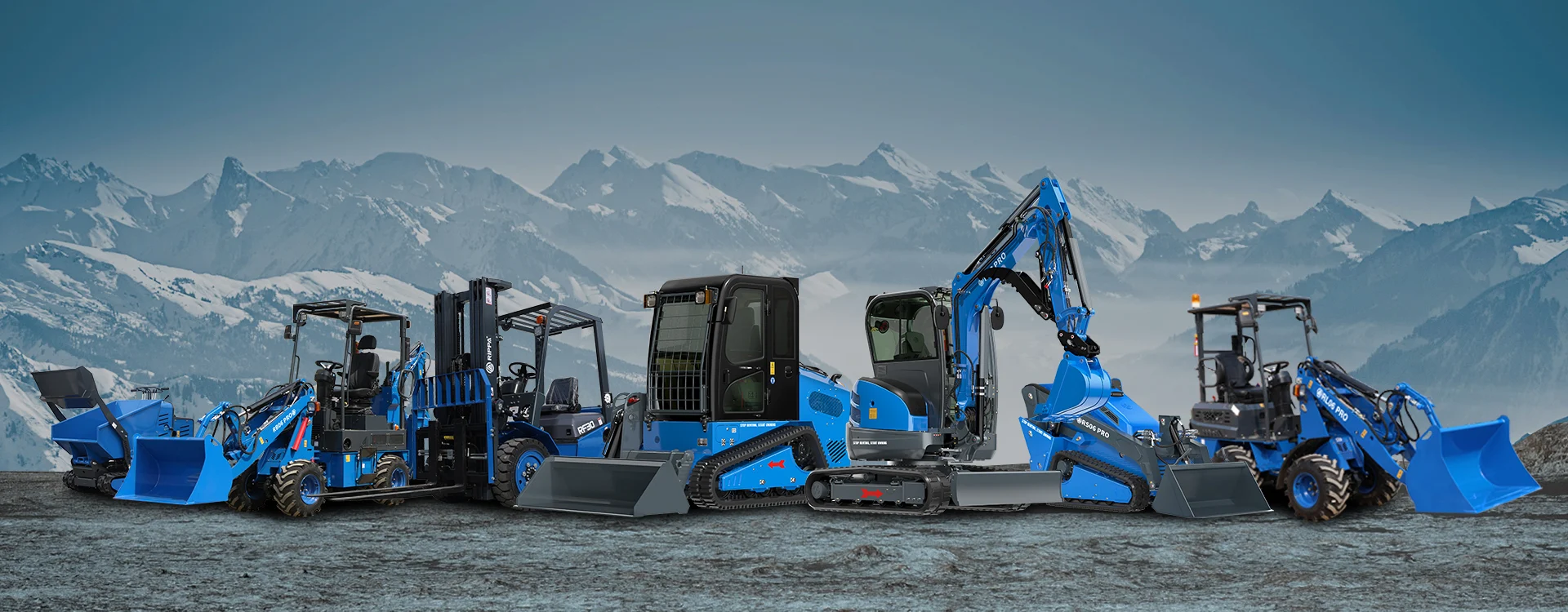
Choosing the right mini excavator is not only about machine size or price. A good buying decision should be based on real work needs, customer applications, transport conditions, attachment options, parts support, maintenance access, and long-term business value.
Mini excavators are widely used by contractors, farms, landscaping businesses, rental companies, property owners, and equipment dealers. However, the same machine may not be suitable for every customer. A contractor may care about digging depth and job-site access. A farm may care about drainage and ditch cleaning. A landscaper may care about grading and planting. A rental company may care about uptime and maintenance. A dealer may care about customer fit and resale potential.
RIPPA mini excavators can be considered by customers who need practical compact digging equipment for construction, farming, landscaping, rental fleets, property maintenance, and resale. Before purchase or promotion, buyers should confirm current machine configuration, attachment compatibility, spare parts support, warranty policy, delivery arrangement, documentation, and service terms through official RIPPA channels.
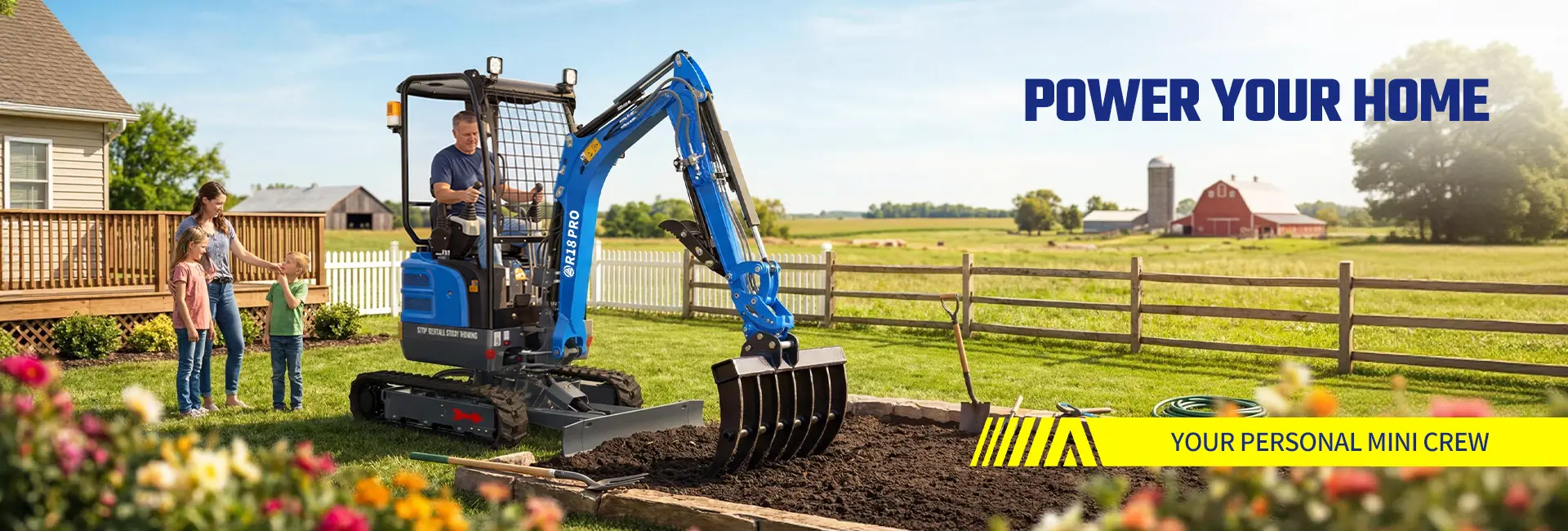
Start with the Real Application
The first step in choosing a mini excavator is understanding what the machine will actually do. A customer should avoid choosing only by model name, price, or appearance. The machine must fit the job.
Common mini excavator applications include:
- Trenching
- Drainage preparation
- Ditch cleaning
- Příprava plotu
- Výsadba stromů
- Driveway repair
- Hardscape preparation
- Farm path repair
- Root removal
- Údržba nemovitostí
- Small construction work
- Landscaping preparation
- Utility preparation where suitable
A contractor and a farmer may both need a mini excavator, but they may use it differently. The machine should be selected based on the most frequent applications.
Mini Excavators for Construction Work
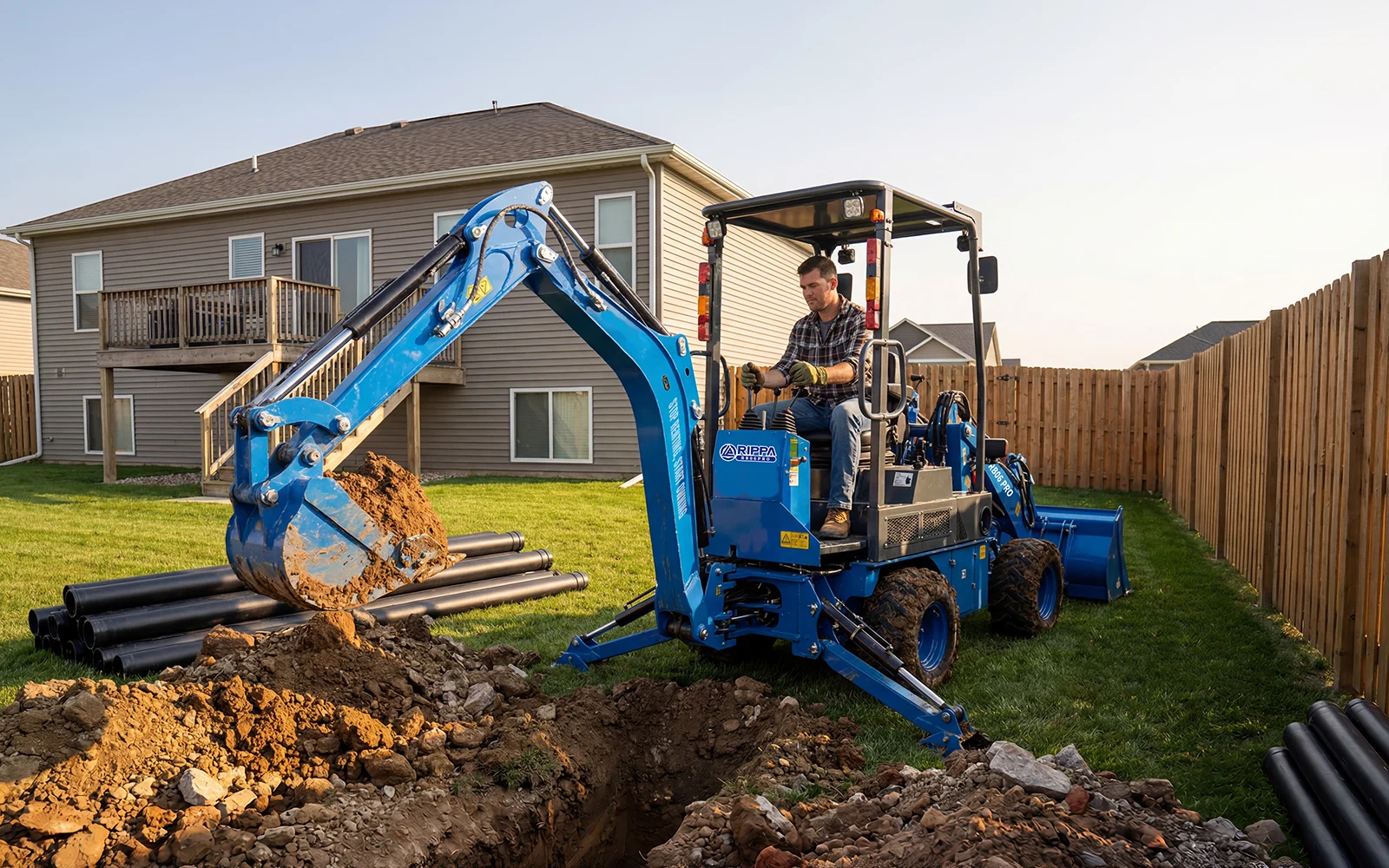
Contractors often use mini excavators for small and medium outdoor jobs. These may include trenching, driveway repair, site preparation, foundation support, paving preparation, and property improvement.
Construction buyers should consider:
- Job-site access
- Digging depth requirements
- Reach requirements
- Transport between sites
- Attachment needs
- Ground conditions
- Maintenance support
- Operator comfort and control
- Project frequency
For contractors, ownership may make sense when compact excavation work appears frequently. If a contractor often rents machines or waits for subcontractors, owning a mini excavator may help improve schedule control. However, if excavation work is only occasional, renting may still be more practical.
Mini Excavators for Farming and Rural Work
Farms and rural properties often need compact digging equipment for land maintenance. A mini excavator can complement tractors by handling jobs that require digging, trenching, and shaping.
Farm applications may include:
| Zemědělský úkol | Mini Excavator Use |
|---|---|
| Drainage preparation | Digs trenches and supports water flow |
| Ditch cleaning | Removes soil, mud, and debris |
| Příprava plotu | Supports post lines and clearing work |
| Výsadba stromů | Prepares holes and moves soil |
| Farm path repair | Helps reshape damaged access areas |
| Root cleanup | Helps remove roots and small obstacles |
| Rural maintenance | Supports repeated property work |
Farm buyers should consider machine access, soil conditions, drainage needs, attachment options, and parts support. For farm equipment dealers, mini excavators can become a natural extension because many tractor customers already need compact digging machines.
Mini Excavators for Landscaping
Landscaping businesses often need compact equipment for drainage, grading, planting, hardscape preparation, and outdoor renovation. A mini excavator can help landscapers handle higher-value projects and reduce dependence on outside excavation support.
Landscaping applications may include:
- Yard grading
- Drainage preparation
- Výsadba stromů
- Root removal
- Pohyb půdy
- Hardscape preparation
- Old yard renovation
- Příprava plotu
- Outdoor structure preparation
- Property cleanup
Landscape buyers should consider whether the machine can access residential yards, work around structures, support suitable attachments, and handle repeated project needs.
For landscape equipment dealers, mini excavators can help expand beyond mowers and small lawn equipment into compact construction equipment.
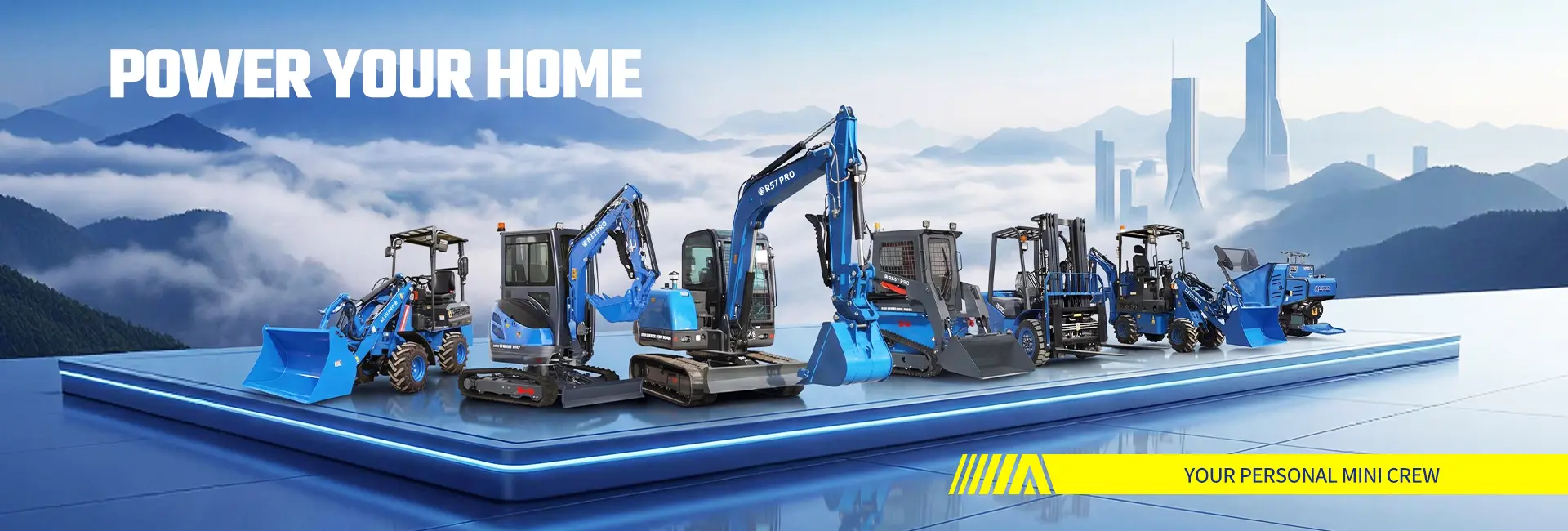
Mini Excavators for Rental Fleets
Rental companies should choose mini excavators differently from individual users. A rental machine must serve many customers and many job types. It must also be easy to maintain, inspect, and support.
Rental companies should evaluate:
- Local rental demand
- Common customer applications
- Uptime requirements
- Dostupnost náhradních dílů
- Maintenance access
- Kompatibilita příloh
- Return inspection process
- Operator guidance
- Záruční podmínky
- Technická podpora
A rental company should not choose only based on purchase price. A machine that is difficult to maintain or support can reduce rental profitability.
Mini Excavators for Dealers and Resellers
Dealers and resellers should choose mini excavators based on customer demand and after-sales capability. A machine that is easy to sell but difficult to support can create long-term customer problems.
Dealers should ask:
- Who are the target customers?
- Are they contractors, farms, landscapers, rental companies, or property owners?
- What jobs will they use the machine for?
- What attachments will they request?
- What spare parts should be prepared?
- What warranty policy applies?
- Can the dealer provide technical communication?
- Is the machine suitable for local transport and working conditions?
- What documentation is needed for resale or import?
- Can the dealer build repeat business from this product?
A successful dealer strategy should focus on application fit, support, and customer education.
Why Machine Size and Access Matter
Mini excavators are valued because they can work in areas where larger machines may not fit. However, buyers still need to confirm machine size, access, and transport requirements.
Important questions include:
- Can the machine enter the work area?
- Is the job site narrow or open?
- Does the customer need to transport the machine often?
- What trailer or transport method is available?
- Are there weight restrictions?
- Are there soft ground conditions?
- Is the machine suitable for the intended work environment?
A machine that performs well in one environment may not be ideal in another. Buyers should match machine size to real job conditions.
Why Attachments Should Be Planned Early
Attachments can expand the value of a mini excavator, but they should not be treated as an afterthought.
Common attachment directions include:
- Lopata na kopání
- Třídicí lopatka
- Šnek
- Hydraulický palec
- Hrablo
- Chapač
- Vypínač
- Rychloupínací spojka
A contractor may need a digging bucket and breaker. A farm customer may need an auger for fencing or planting where compatible. A landscaper may need a grading bucket, rake, or thumb. A rental company may need several attachment packages.
Attachment compatibility should always be confirmed according to the current machine model and official product information.
Parts Support and Maintenance Are Critical
A mini excavator must be supportable over time. This is especially important for dealers and rental companies, but it also matters for contractors and farms.
Buyers should confirm:
- Common spare parts
- Parts identification process
- Maintenance information
- Záruční podmínky
- Technická podpora
- Service communication
- Documentation
- Recommended spare parts planning
A low purchase price can become less attractive if parts are difficult to obtain or maintenance support is unclear.
What Buyers Should Confirm Before Choosing RIPPA Mini Excavators
Before choosing a RIPPA mini excavator, buyers should confirm:
| Položka k potvrzení | Proč je to důležité |
|---|---|
| Current configuration | Keeps product information accurate |
| Application suitability | Matches the machine to real work |
| Digging depth and reach | Supports project requirements |
| Machine size and access | Affects usability on job sites |
| Transport requirements | Important for contractors and rental fleets |
| Kompatibilita příloh | Expands machine applications |
| Spare parts support | Reduces downtime risk |
| Maintenance access | Supports long-term ownership |
| Záruční podmínky | Clarifies after-sales responsibility |
| Technická podpora | Helps solve problems faster |
| Podmínky dodání | Supports purchase planning |
| Documentation | Helps resale, import, and customer education |
These details should be confirmed before purchase, resale, rental fleet planning, or public promotion.
How RIPPA Mini Excavators Can Fit Different Buyers
RIPPA mini excavators can be considered by several types of B2B and end-use customers:
- Contractors needing compact digging equipment
- Farms needing drainage and land maintenance tools
- Landscapers moving into higher-value outdoor projects
- Rental companies building compact equipment fleets
- Dealers expanding equipment categories
- Resellers targeting practical machinery demand
- Rural property maintenance businesses
- Small construction companies
Other RIPPA machines, such as skid steer loaders, compact wheel loaders, forklifts, and attachments, may support related business needs. But for digging, trenching, drainage, and compact excavation, mini excavators should remain the main product focus.
Často kladené otázky
How do I choose the right mini excavator?
Start with the job application. Confirm digging needs, access, transport, attachment compatibility, parts support, warranty policy, maintenance, and long-term use.
What size mini excavator should I buy?
The right size depends on the job site, digging depth, transport needs, access limits, and application. Buyers should confirm current machine configuration and suitability before purchase.
Are mini excavators good for farms?
Yes. They can support farm drainage, ditch cleaning, fencing, planting, path repair, root cleanup, and rural property maintenance.
Are mini excavators good for rental companies?
Yes. They can be strong rental machines if local demand, uptime, parts support, maintenance, attachments, and technical support are properly planned.
What attachments are useful for mini excavators?
Common attachment directions include digging buckets, grading buckets, augers, thumbs, rakes, grapples, breakers, and quick couplers. Compatibility must be confirmed by model.
What should buyers confirm before purchasing a RIPPA mini excavator?
Buyers should confirm current configuration, application suitability, attachment compatibility, parts support, warranty policy, delivery arrangement, documentation, and technical support.
Závěr
Choosing the right mini excavator requires more than comparing prices. Buyers should begin with the real application: construction, farming, landscaping, rental fleet use, property maintenance, or resale. They should then evaluate machine size, access, transport, attachments, parts support, warranty policy, maintenance, and documentation.
Mini excavators are valuable because they serve many practical jobs, including trenching, drainage, ditch cleaning, planting, fence preparation, driveway repair, landscaping, and small construction work. For dealers and rental companies, they can also become a repeatable product category with long-term business potential.
RIPPA mini excavators can be considered by customers who need compact digging equipment for real work applications. Before purchase, resale, rental use, or promotion, all current product, support, attachment, warranty, delivery, documentation, and service details should be confirmed through official RIPPA channels.
 Home
Home
 Produkty
 E-mail
 WhatsApp

