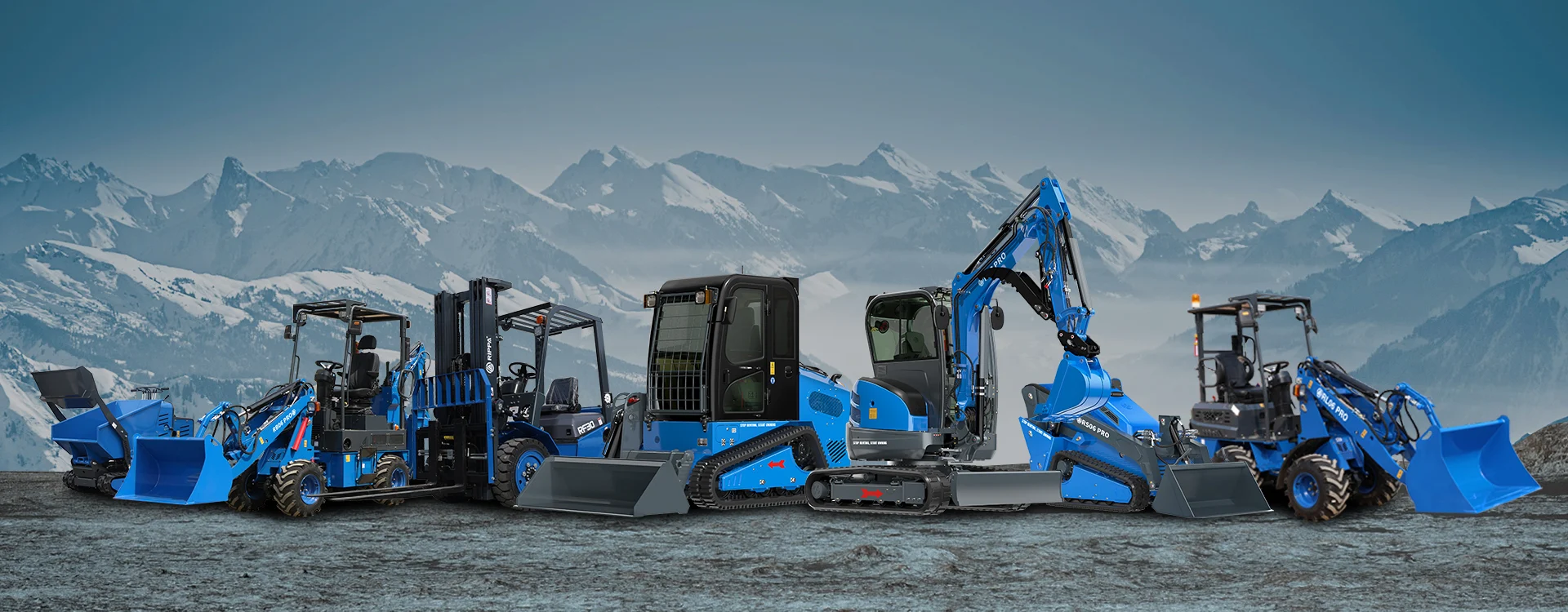
Selling one mini excavator can create revenue.
Building a customer relationship around mini excavators can create a business.
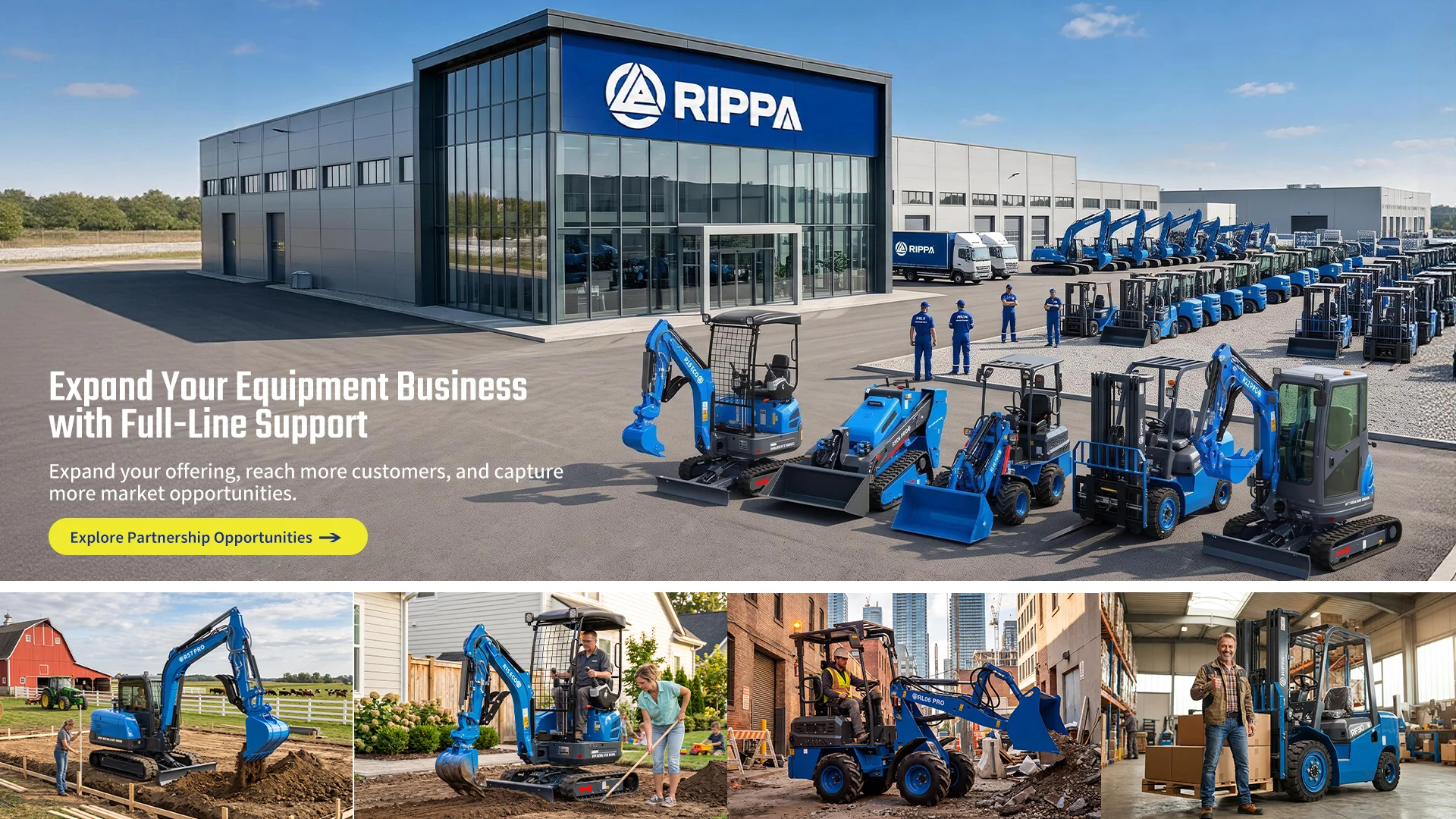
For equipment dealers, long-term B2B growth depends on more than adding machines to inventory. Dealers need to attract the right customer groups, understand applications, provide attachments and parts, answer technical questions, support repeat purchases, and expand the product line when customer demand justifies it.
Mini excavators are well suited to this strategy because they can serve several B2B industries from one central product category.
Potential customers include contractors, rental companies, farms, landscape equipment businesses, rural contractors, used machinery dealers, and resellers.
For RIPPA dealers and B2B buyers, mini excavators can form the core of a compact equipment business while attachments and complementary machines are added over time.
Start with the Customer, Not the Excavator Model
A common equipment sales mistake is to begin with specifications.
A customer may hear:
- Machine weight
- Digging depth
- Engine information
- Hydraulic specifications
These details are important, but the sales conversation should begin earlier.
Ask:
- What type of business do you operate?
- What jobs do customers request?
- What equipment do you rent?
- Which jobs are subcontracted?
- What machine do you already own?
- What attachments do you use?
- How often will the excavator operate?
Only then should the dealer match the machine to the customer.
Build a Contractor Customer Base
Contractors can become long-term equipment accounts when their businesses grow.
A contractor may initially buy one mini excavator for:
- Trenching
- Drainage
- Site preparation
- Property work
- Landscaping excavation
If the machine helps the contractor accept more work, future requirements may include:
- Another mini excavator
- Larger or different excavator configuration
- Skid steer loader
- Vedhæftede filer
- Spare parts
For dealers, contractor customers should therefore be viewed as accounts with evolving equipment needs.
Develop Rental Companies as Fleet Customers
Rental companies can be especially valuable B2B customers because equipment requirements may grow with fleet utilization.
A rental business may begin with a small number of mini excavators.
If customer demand increases, it may later need:
- Additional units
- Different machine sizes
- Vedhæftede filer
- Spare parts inventory
- Minilæssere
- Compact loaders
Dealers should understand rental-specific needs such as:
- Machine uptime
- Vedligeholdelse
- Return inspection
- Tilgængelighed af reservedele
- Attachment management
- Customer instructions
This is different from selling one machine to an owner-operator.
Reach Farm Equipment Dealers Through Existing Customer Relationships
Farm equipment dealers already serve machinery buyers.
Their existing customers may need mini excavators for:
- Drainage
- Ditch cleaning
- Forberedelse af hegnet
- Træplantning
- Reparation af markvej
- Vedligeholdelse af ejendomme
This means the dealer can introduce a new product without necessarily finding an entirely new customer base.
The mini excavator complements existing agricultural equipment by providing dedicated excavation capability.
Reach Landscape Equipment Dealers as Their Customers Grow
Professional landscapers often begin with smaller machinery.
As their businesses expand, they may need equipment for:
- Hardscape preparation
- Drainage
- Root removal
- Træplantning
- Yard renovation
A landscape equipment dealer can use mini excavators to serve customers moving into larger project work.
This allows the dealer’s own product line to grow with the customer’s business.
Use Applications to Build Search and Sales Demand
Dealers should not market mini excavators only with generic phrases such as “mini excavator for sale.”
Potential customers search around problems.
Useful content directions include:
- Mini excavator for contractors
- Mini excavator for farm drainage
- Mini excavator for landscaping
- Mini excavator for rental companies
- Mini excavator for fence work
- Mini excavator for rural property maintenance
Application-focused content connects the machine with customer intent.
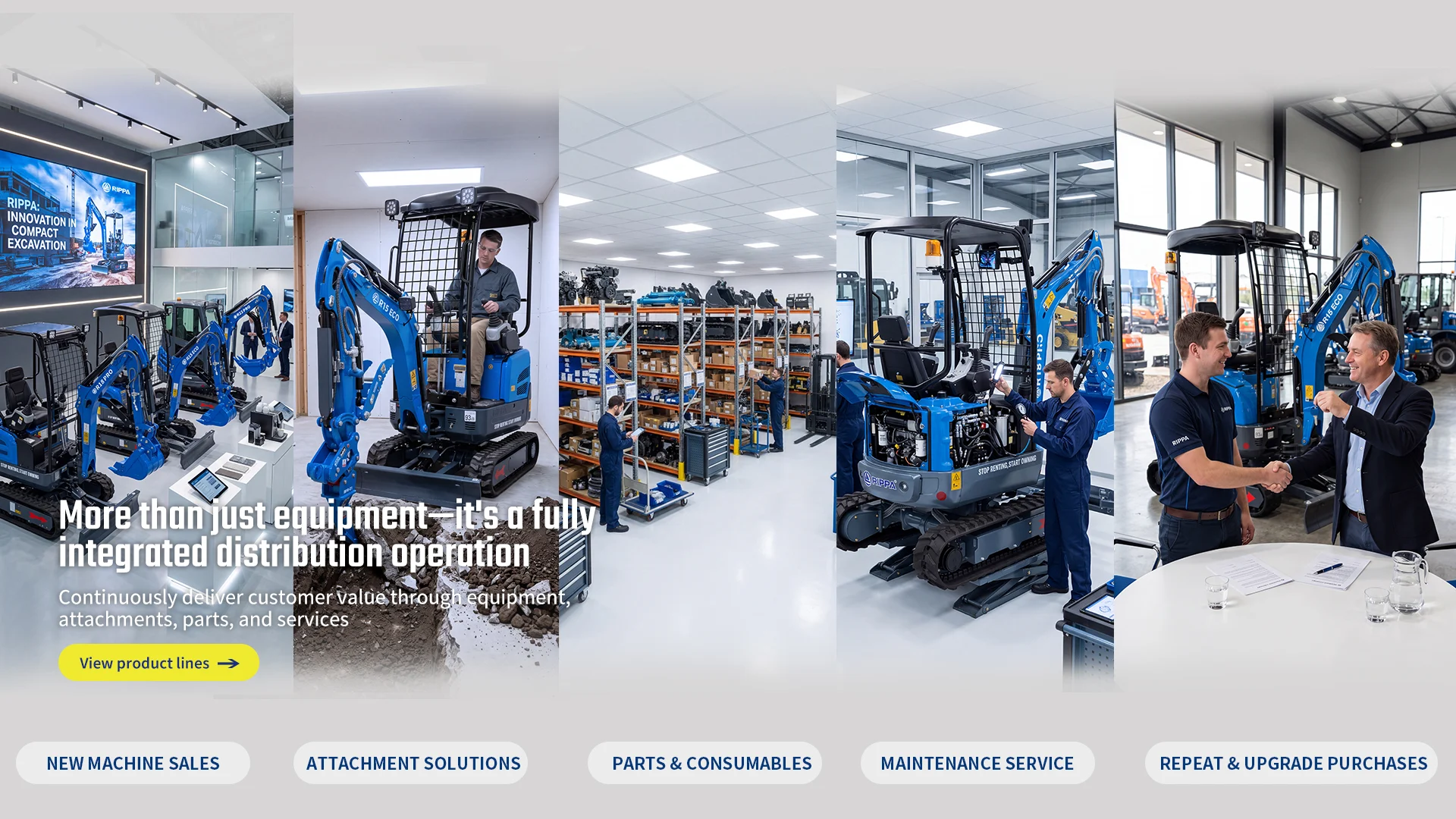
Build an Attachment Business Around the Core Machine
Attachments can extend the value of each excavator customer.
Potential categories include:
- Digging buckets
- Grading buckets
- Skruer
- Gribere
- Hydraulic thumbs
- Breakers
- Rakes
- Quick couplers
A customer may not buy every attachment with the machine.
That is not a problem.
The relationship can develop over time.
A contractor may add a breaker later.
A farm may add an auger.
A landscaper may add a grading bucket.
A rental company may expand attachment inventory according to renter demand.
This creates repeat business without requiring the customer to purchase another machine immediately.
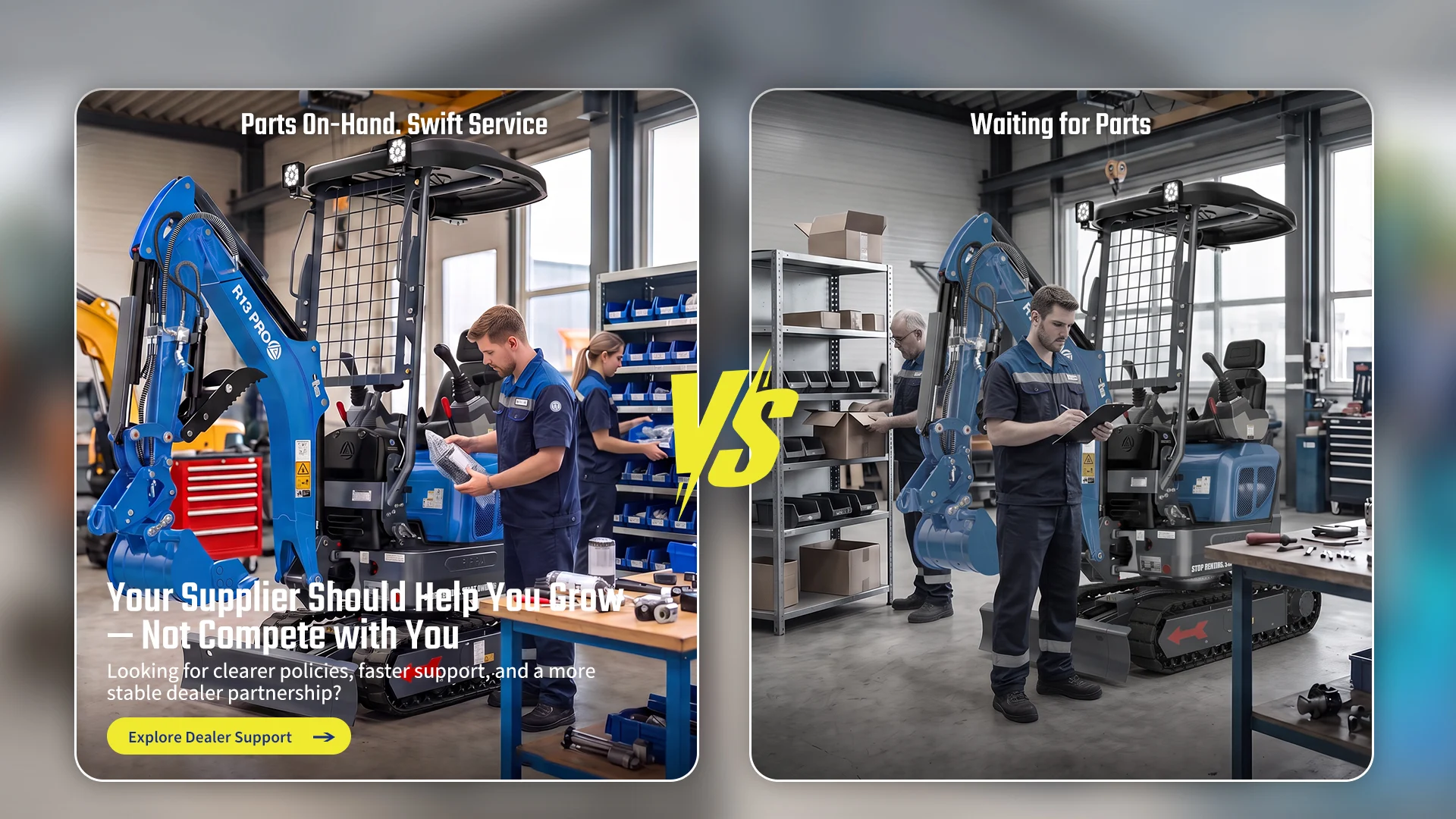
Use Spare Parts to Strengthen Customer Retention
A dealer that sells equipment but cannot help customers obtain routine parts may struggle to retain B2B accounts.
Parts support can include planning for:
- Filters
- Wear components
- Service items
- Hydraulic components
- Replacement parts
Dealers with increasing machine populations should consider how parts will be identified, ordered, stored, and supplied.
The objective is not simply selling parts. It is helping customers keep machines working.
Build Customer Confidence Through Technical Support
B2B customers may eventually need help with:
- Vedligeholdelse
- Troubleshooting
- Attachment setup
- Parts identification
- Warranty communication
- Product documentation
Dealers should establish a clear process for handling these requests.
When the answer requires supplier input, the dealer should know how to escalate the issue.
Good support can differentiate one dealership from another even when they sell similar categories of machinery.
Know When to Add Skid Steer Loaders
Excavator customers may later develop loading and cleanup requirements.
A skid steer loader may complement the mini excavator in applications such as:
- Material movement
- Surface grading
- Job-site cleanup
- Debris handling
On a contractor site:
Mini excavator: digging and trenching.
Skid steer loader: loading, grading, and cleanup.
Dealers should add this category when real customer demand appears rather than expanding inventory only for catalog size.
Know When to Add Compact Wheel Loaders
Farm customers, landscaping businesses, and material yards may require more loose-material movement.
Compact wheel loaders may support:
- Soil
- Gravel
- Sand
- Mulch
- Stockpile movement
- Trailer loading
A customer that first purchased a mini excavator may later need a wheel loader when material handling volume increases.
This is a natural account-development opportunity.
Develop a Customer Growth Path
Dealers can think about the relationship in stages.
Stage 1 — First Machine
Customer buys:
- Mini excavator
Stage 2 — Application Expansion
Customer adds:
- Spand
- Snegl
- Gribeklo
- Afbryder
- Other compatible attachment
Stage 3 — Business Expansion
Customer buys:
- Second excavator
- Skid steer loader
- Compact wheel loader
Stage 4 — Fleet or Dealer Growth
Customer needs:
- Multiple units
- Parts inventory
- More attachments
- Broader equipment categories
This creates a more sustainable sales model than focusing only on one-time machine transactions.
Do Not Force Cross-Selling
Long-term B2B growth depends on solving real customer problems.
A mini excavator buyer does not automatically need:
- A loader
- A forklift
- Every attachment
- Multiple machines
The dealer should understand the customer’s next operational problem before recommending another product.
Useful questions include:
- What work is still outsourced?
- What material do you move regularly?
- Are you adding another crew?
- Are customers asking for additional services?
- Are you renting another type of machine repeatedly?
These questions help identify legitimate expansion opportunities.
What Dealers Should Confirm with a Supplier
Before building a mini excavator business, dealers should confirm:
| Area | Information Needed |
|---|---|
| Product range | Current models and configurations |
| Specifications | Accurate technical information |
| Vedhæftede filer | Compatibility |
| Spare parts | Support and ordering process |
| Vedligeholdelse | Service information |
| Garanti | Current policy and procedure |
| Teknisk support | Communication process |
| Documentation | Customer and dealer materials |
| Delivery | Logistics arrangements |
| Cooperation | Current B2B terms |
A dealer should avoid promising customers information that has not been confirmed.
Why Mini Excavators Can Support Long-Term Dealer Growth
Mini excavators combine several characteristics useful for B2B development:
- Multiple customer industries
- Repeated applications
- Attachment opportunities
- Parts demand
- Rental potential
- Additional equipment opportunities
- Repeat machine purchases
This makes the category suitable for a dealer strategy focused on customer lifetime value rather than only immediate sales.
Ofte stillede spørgsmål
How can equipment dealers make more than one sale from a mini excavator customer?
By supporting attachments, parts, technical needs, repeat excavator purchases, and complementary machinery when the customer’s business grows.
Which customers should dealers target?
Potential B2B customers include contractors, rental companies, farm equipment dealers, landscaping businesses, rural service companies, and machinery resellers.
What equipment can be added after mini excavators?
Depending on customer demand, dealers may add skid steer loaders, compact wheel loaders, forklifts, attachments, or additional excavators.
Why are parts important to dealer growth?
Parts help support machine uptime and create stronger long-term customer relationships.
Should dealers sell every product category?
No. Product expansion should follow real customer demand and dealer support capability.
Konklusion
Equipment dealers can build long-term B2B growth around mini excavators by treating the machine as the beginning of the customer relationship rather than the end.
The strongest model combines:
- Application-based selling
- Vedhæftede filer
- Spare parts
- Teknisk support
- Repeat purchases
- Carefully selected complementary equipment
Mini excavators can remain the core product, while the dealership grows outward according to what customers actually need.
 Hjem
Hjem
 Produkter
 E-mail
 WhatsApp

