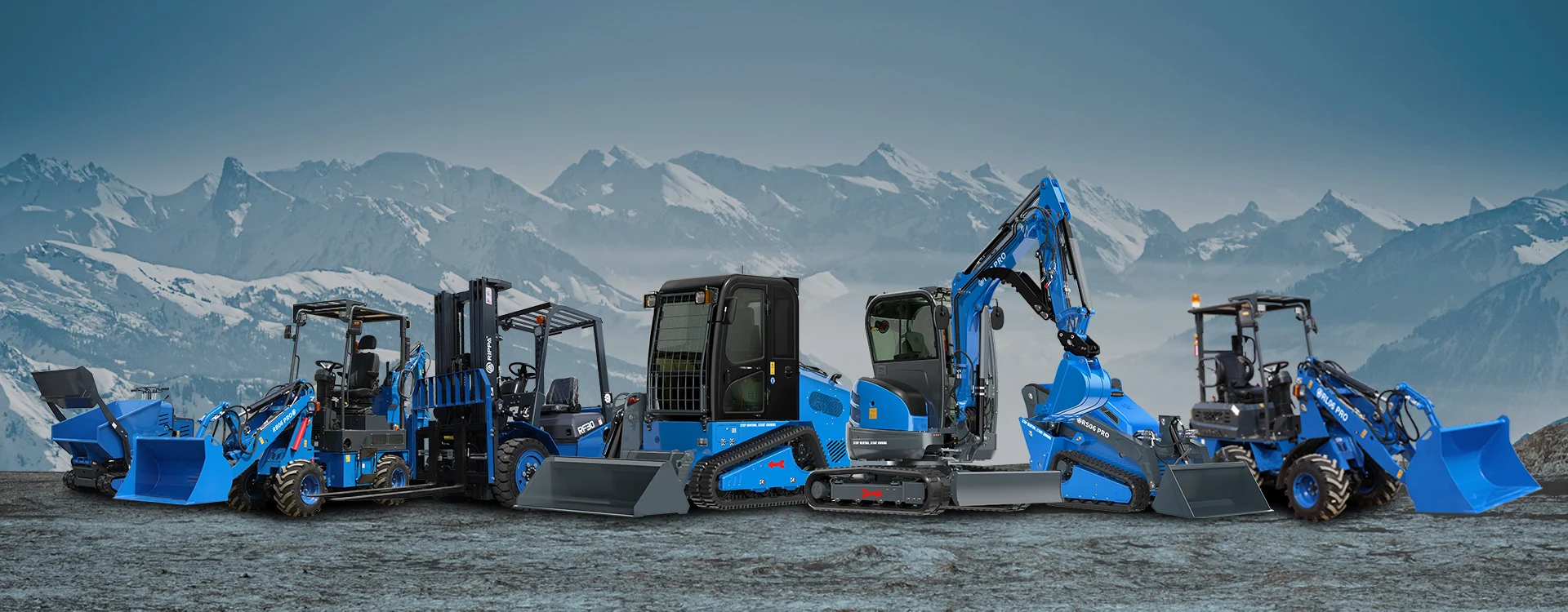
Choosing a mini skid steer supplier is a business decision that affects product quality, inventory planning, customer satisfaction, and operating costs. For equipment dealers and importers, a supplier must offer more than competitive quotations. The ability to deliver consistent products and provide reliable support is equally important.
Businesses searching for mini skid steers for sale often compare machines first. However, professional buyers should also evaluate the company behind each product. A structured supplier assessment can help reduce purchasing risks and create a more stable supply chain.
1. Determine Whether You Need a Manufacturer or a Distributor
Manufacturers and distributors can serve different purchasing needs.
Working directly with a manufacturer may be suitable for businesses seeking repeat orders, a broader product selection, or long-term cooperation. Depending on the supplier, buyers may also have opportunities to discuss product configurations, packaging, branding, and production schedules.
A local distributor may offer advantages when a buyer needs readily available stock, local service, or a simpler purchasing process.
Neither option is automatically better. The right choice depends on order volume, delivery expectations, service requirements, and the level of support needed after purchase.
Before contacting suppliers, establish whether your business needs occasional equipment purchases or a relationship designed to support regular wholesale orders.
2. Verify Manufacturing and Quality Control Capabilities
A supplier’s product catalog provides an initial overview, but it does not fully demonstrate manufacturing capability.
Business buyers should request information about production facilities, assembly procedures, component sourcing, inspection standards, and final testing.
Where practical, request a factory video tour or arrange an independent inspection. Product photos alone may not establish whether a supplier manufactures the equipment, assembles machines using external components, or resells products from other companies.
Quality control should also be discussed in concrete terms. Ask how machines are inspected before shipment, how inspection records are maintained, and how nonconforming products are handled.
For importers serving multiple customers, consistency between orders matters. Differences in components, documentation, or product configurations can complicate maintenance and customer support.
3. Compare Products by Application
A reliable mini skid steer supplier should be able to explain the intended applications of its products.
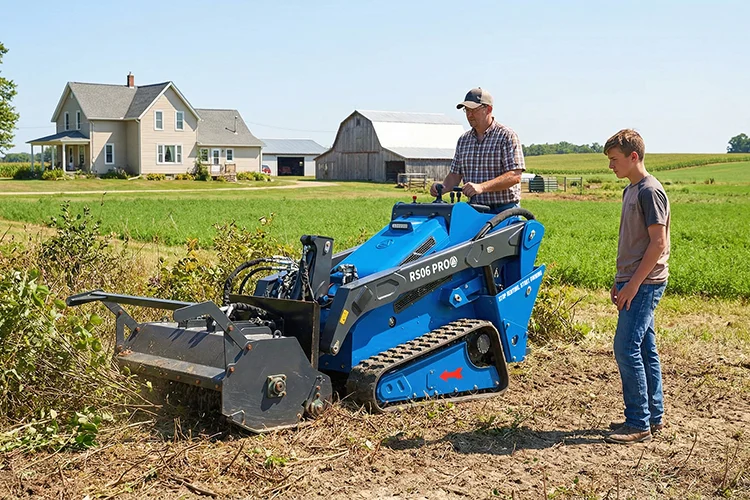
For example, tracked loaders may suit certain landscaping and ground preparation tasks, while wheeled configurations can be useful on suitable hard surfaces. Different machines may also support different attachments and hydraulic requirements.
Ask suppliers to provide clear product specifications and explain the limitations of each configuration.
The information should cover dimensions, rated operating capacity, attachment compatibility, maintenance requirements, and applicable safety documentation. Buyers should verify that specifications are consistent across the quotation, product manual, and final order.
If your business serves several customer segments, a supplier with complementary models may help simplify procurement and inventory management.
4. Assess Spare Parts and Technical Support
Parts availability is a key consideration for equipment distributors. A machine that cannot be serviced promptly may create additional costs for the dealer and inconvenience for the end customer.
Ask suppliers which replacement components are regularly available, how parts orders are processed, and what technical information accompanies each machine.
It is also useful to establish a clear contact for troubleshooting and warranty-related questions. Confirm the actual warranty terms in writing rather than relying on general marketing statements.
For international buyers, clarify how parts are packaged, shipped, identified, and invoiced. If replacement components have long lead times, consider how your business will handle customer requests during that period.
A dependable support process can be just as important as the original equipment purchase.
5. Review Export and Delivery Arrangements
International purchasing involves more than agreeing on a machine price.
Before ordering, establish the production lead time, shipment method, delivery terms, required documents, insurance responsibilities, and customs-related obligations.
Buyers should confirm which party is responsible for export documentation and which costs are included in the quotation. Import duties, local taxes, unloading, and inland transportation may be additional expenses.
For repeat orders, request a realistic production schedule and agree on how delays will be communicated.
A supplier with experience serving overseas markets should be able to explain its normal export process clearly. Buyers should independently verify any certifications or regulatory documents required for their destination market.
6. Evaluate Commercial Terms and Communication
Price comparisons are useful only when the quotations cover comparable products and conditions.
Review payment terms, minimum order quantities, lead times, packaging, spare parts, and after-sales responsibilities together. A lower unit price may not provide the best overall value if other costs are substantially higher.
Communication quality also deserves attention. Are questions answered clearly? Are changes documented? Can the supplier provide a complete quotation without repeatedly changing essential details?
These factors become more important as order volume increases.
For distributors, clear commercial terms help establish expectations on both sides and make future transactions easier to manage.
7. Start With a Clearly Defined Purchasing Plan
Before requesting quotations, prepare a short purchasing brief containing your target market, intended applications, preferred machine configurations, estimated order quantity, and delivery destination.
Ask shortlisted suppliers to respond using comparable information. This makes it easier to identify differences in product scope, service commitments, and total purchasing costs.
If you are testing a new product category, discuss a realistic initial order and a possible schedule for future purchases. Avoid committing to large quantities before confirming market demand and supplier performance.
Konklusion
Choosing a mini skid steer supplier requires a balanced assessment of manufacturing capability, product suitability, quality control, parts support, delivery arrangements, and commercial terms.
For equipment dealers and importers, a reliable supplier should be able to support both the initial purchase and the ongoing needs of the business. A documented evaluation process makes supplier comparisons more objective and helps create a stronger foundation for long-term cooperation.
Planning to source mini skid steers for your business? Request a product catalog, wholesale quotation, inspection information, and details of the supplier’s export and after-sales procedures before making a purchasing decision.
 Hjem
 Produkter
 E-mail
 WhatsApp

