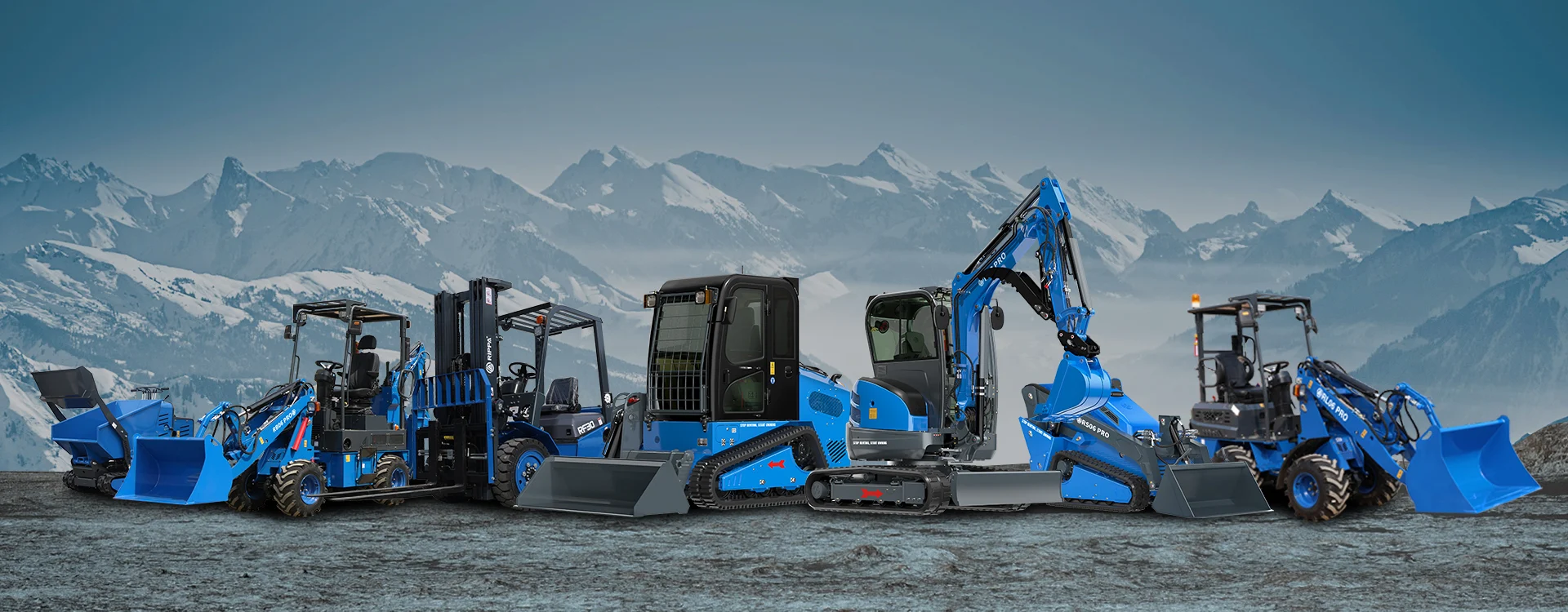
The Minilæsser is one of the most versatile and compact pieces of powered equipment in modern construction, agriculture, and landscaping. They have revolutionized material handling and site preparation with their impressive flexibility and adaptability.
This “Ultimate Guide” aims to provide in-depth knowledge for prospective buyers, operators, and engineering professionals. We will focus on dissecting the core operating principles of the Minilæsser, the key differences in lift types (vertical vs. radial), and the essential purchasing considerations you must evaluate before making an investment.
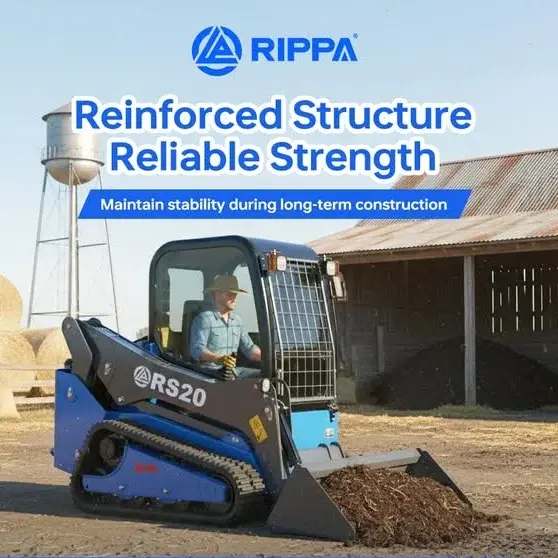
I. Core Operating Principles of the Skid Steer Loader
Understanding how a skid steer operates is fundamental to effective use and maintenance. Unlike traditional vehicles that use front-wheel steering, the Skid Steer Loader’s steering mechanism is unique:
- No Steering Wheel Design: The operator uses two joysticks or control levers to control the equipment.
- Differential Steering: The wheels (or tracks) on the left and right sides are driven independently.
- Zero-Turn Radius: When one set of wheels drives forward and the opposite set drives backward, the machine can rotate 360 degrees in place. This dramatically increases maneuverability in confined spaces.
While this “skid” steering method is highly efficient, it requires operators to be mindful when working on soft or delicate surfaces to avoid excessive ground disturbance.
II. Key Types Analyzed: Vertical Lift vs. Radial Lift
The design of the Skid Steer Loader’s boom system determines which tasks it performs best. There are two primary categories:
1. Radial Lift Skid Steer Loader
- Operating Path: The boom travels in an arc shape as it rises and extends outward.
- Advantages and Applications: Radial lift designs are generally simpler in structure and lower in cost. They excel in digging, dozing, and grading operations (earthmoving) because their maximum lift leverage usually occurs closer to ground level.
- Ideal Scenario: If your primary work involves digging foundations or scooping soil with the bucket, a radial lift model is a more cost-effective choice.
2. Vertical Lift Skid Steer Loader
- Operating Path: The boom maintains a relatively vertical path during elevation, minimizing forward reach.
- Advantages and Applications: Vertical lift designs offer higher maximum lift heights and consistent load capacity throughout the lift range. The operator has better visibility and stability when loading materials into high-sided trucks, hoppers, or stacking materials high.
- Ideal Scenario: If your primary work involves loading trucks, stacking pallets, or requiring maximum lift height, the vertical lift model is the premium choice.
III. Skid Steer Loader Buying Essentials and Key Parameters
Selecting the right Skid Steer Loader requires balancing budget, project needs, and operating environment. Here are core purchasing points:
| Purchasing Parameter | Consideration Factors |
|---|---|
| Rated Operating Capacity (ROC) | Measures the weight the machine can safely lift. Choose based on the heaviest material you need to move. |
| Horsepower & Hydraulic Flow | Determines the machine’s power and which attachments it can drive. High-flow hydraulics support more demanding attachments. |
| Tires vs. Tracks | Tires are suited for hard surfaces; tracks (CTLs, Compact Track Loaders) offer better flotation and grip on soft terrain. |
| Cab Configuration | Consider comfort, AC/Heat (depending on climate), and certified safety structures (ROPS/FOPS). |
| Kompatibilitet med tilbehør | Ensure the machine has a standard quick coupler system and a wide ecosystem of supported attachments. |
Konklusion
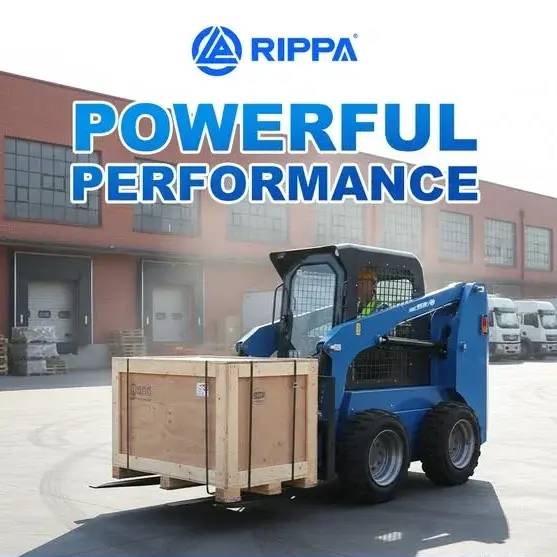
The Skid Steer Loader is a powerful piece of compact equipment and a valuable asset to modern engineering projects. Whether opting for a radial lift model for basic earthworks or a vertical lift model for efficient loading, the right choice will significantly boost your productivity.
When faced with extremely demanding tasks, such as dealing with hard rock or concrete demolition, the Skid Steer Loader can be fitted with specialized heavy-duty attachments. For example, integrating an efficient rippa machine (rock splitter or crushing bucket) can easily handle extreme conditions where conventional buckets struggle, further expanding the application boundaries of this versatile machine.
 Hjem
Hjem
 Produkter
 E-mail
 WhatsApp

