The productivity of a mini skid steer depends heavily on the attachments used with it. A bucket can turn the machine into a compact material handler, while an auger, trencher, grapple or grading tool can open opportunities in landscaping, fencing, agriculture, construction and property maintenance.
However, an attachment should not be selected only because it appears to fit the machine. Buyers must confirm the mounting interface, hydraulic requirements, operating limits and actual business demand before placing an order.
Why Attachments Matter
A mini skid steer is designed as a compact tool carrier. Changing attachments allows one machine to complete several stages of a project and reduces the need to transport multiple specialized machines.
For contractors, this can improve equipment utilization. A landscaping company may use a bucket to move soil in the morning and change to an auger for planting or fence work later in the day. Rental companies can serve a wider range of customers by offering several approved attachment packages.
The commercial value comes from selecting attachments that are used regularly. Purchasing many tools that remain in storage increases capital costs without creating additional revenue.
Common Mini Skid Steer Attachments
Spande
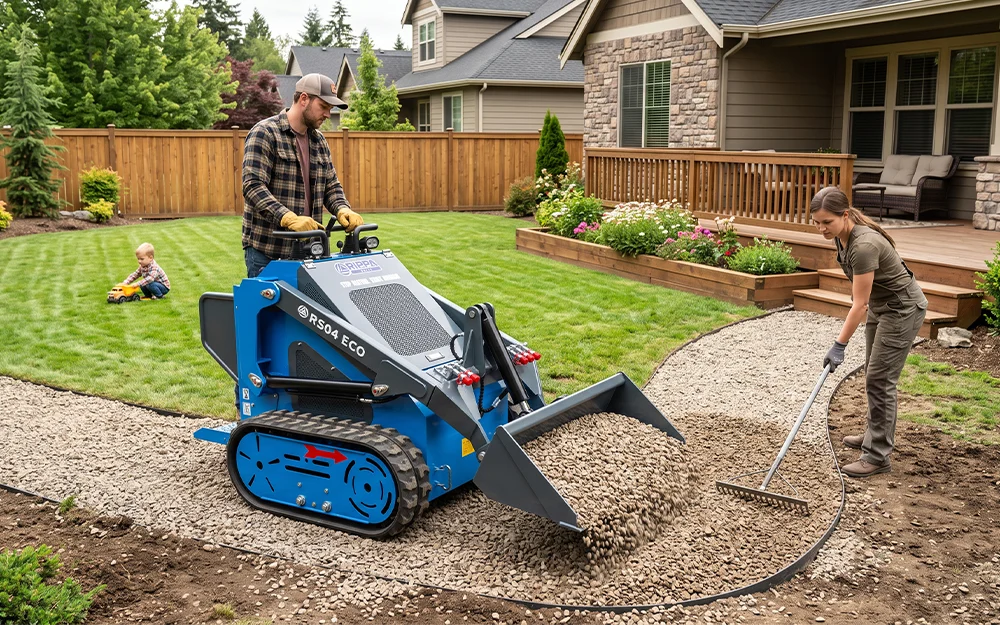
Buckets are commonly used for handling soil, mulch, gravel, sand and construction debris. Different bucket designs may suit general loading, grading or light-material applications.
Buyers should consider the type and density of material rather than choosing a bucket based only on width. The attachment and load must remain within the machine’s documented operating limits.
Skruer
An auger can support fence installation, tree planting and foundation-related preparation. Ground conditions strongly affect drilling performance. Soft soil, compacted ground, clay and rocky areas may require different auger configurations.
Operators should identify underground utilities and follow local safety requirements before drilling.
Skyttegrave
Trenchers are used for irrigation, drainage, cable and utility preparation. Required trench depth, width and soil condition should be considered before choosing a tool.
A trencher can place continuous demand on the hydraulic system. Compatibility must therefore be confirmed using information for the exact carrier and attachment.
Grapples and Forks
A grapple may help handle branches, landscaping waste and irregular materials. Fork attachments can support suitable pallet and material-handling work.
Both attachments change the machine’s load position and stability. Operators must account for load shape, visibility and travel surface instead of relying only on the stated weight of the material.
Confirm Attachment Compatibility
Physical connection is only the first compatibility check. The attachment interface must match the carrier correctly, and locking components should engage as designed.
Powered attachments also require suitable hydraulic connections and operating flow. An attachment may connect physically but still perform poorly or create equipment risk if its hydraulic requirements do not match the machine.
Buyers should review both the machine manual and attachment documentation. When mixing products from different suppliers, written compatibility confirmation is preferable to assumptions based on photographs or marketplace descriptions.
Plan Attachments Around Real Demand
Contractors should rank attachments according to job frequency, expected revenue and time saved. A frequently used bucket or auger may provide a faster return than a highly specialized tool used only a few times each year.
Rental businesses should analyze customer inquiries and local project patterns. Clear attachment identification, inspection procedures and operator instructions can reduce misuse.
Dealers should build packages around the needs of local landscapers, farmers and construction companies. Offering the correct machine-and-attachment combination is more valuable than simply presenting a long attachment list.
Maintenance and Safe Attachment Changes
Hydraulic couplers should be kept clean to reduce the risk of contamination. Hoses, locking points, cutting edges and wear components should be inspected according to the manufacturer’s instructions.
Attachments should be stored on stable ground where they are protected from unnecessary damage. Operators should lower the attachment and place the machine in the specified safe condition before leaving the platform or changing tools.
Choosing the Best Attachment Package
The best mini skid steer attachment package combines frequently used tools with verified mechanical and hydraulic compatibility. Buyers should begin with their most profitable applications and expand the package as demand develops.
RIPPA provides compact loader and attachment solutions for contractors, rental companies and equipment dealers. Buyers can request the current compatible-attachment information for the selected machine before ordering.
 Hjem
Hjem
 Produkter
 E-mail
 WhatsApp

