Wheel loaders and front end loaders move, load, carry, and stockpile materials, but these terms are not always used in the same way. A wheel loader is normally a purpose-built articulated machine, while “front end loader” may also refer to a loader fitted to a tractor. The right choice depends on the material, working environment, duty cycle, and support requirements.
Wheel Loader or Front End Loader: What Is the Difference?
A dedicated wheel loader is designed for repeated loading operations. Articulated steering helps it work efficiently in construction sites, farms, recycling facilities, warehouses, and material yards. Its frame, hydraulic system, loader linkage, and counterweight are designed around lifting and carrying work.
A tractor equipped with a front loader can be practical when one machine must handle cultivation, towing, mowing, and occasional bucket work. However, for continuous truck loading or stockpile handling, buyers should compare its stability, visibility, maneuverability, lifting performance, and structural durability with those of a purpose-built wheel loader.
Match the Loader to the Material and Site
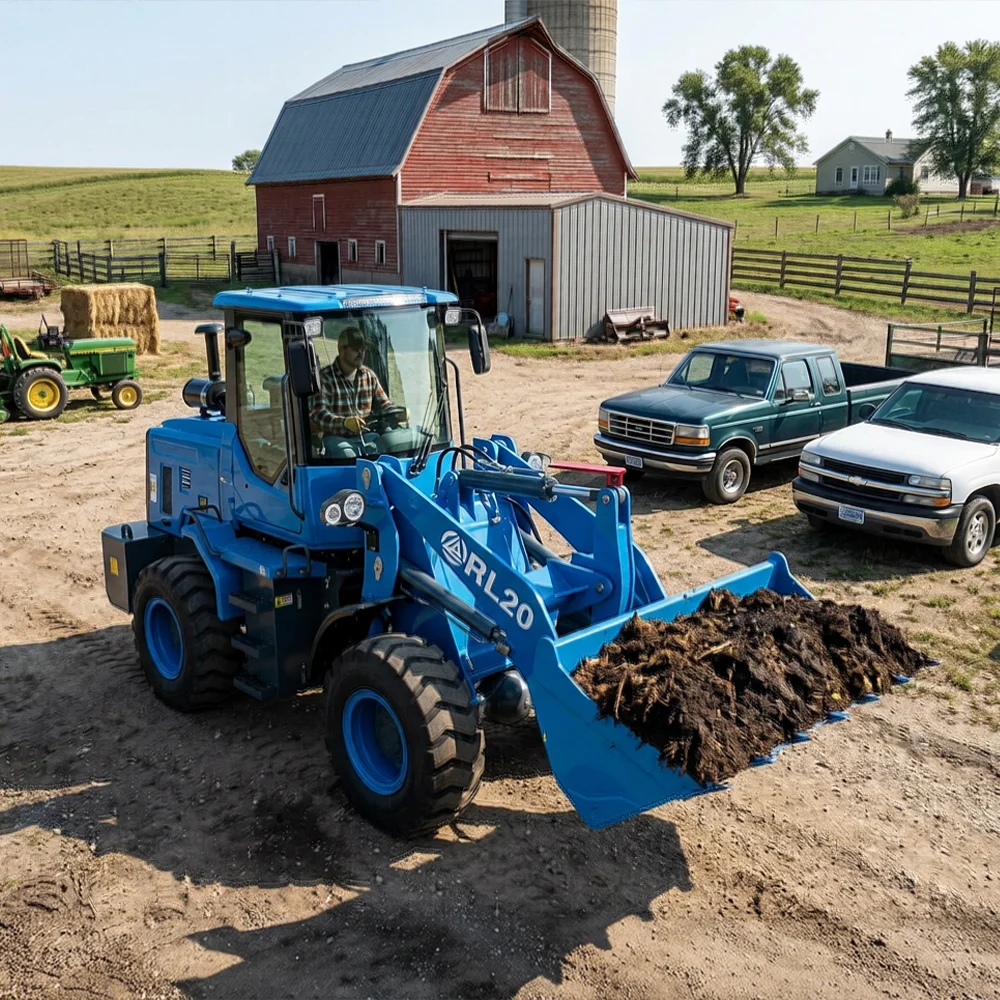
Start with the material rather than machine size alone. Soil, gravel, grain, fertilizer, snow, timber, and demolition waste have different densities. Bucket capacity must therefore be evaluated together with the machine’s rated load. A bucket suitable for light materials may overload the machine when filled with dense aggregate.
Compact wheel loaders are suitable for narrow yards, agricultural buildings, landscaping projects, rental fleets, and urban construction. Larger machines are normally selected for higher-volume bulk handling and infrastructure work.
Before purchasing, check:
- Access and working width
- Turning space
- Required dumping height
- Truck or hopper side height
- Ground conditions and gradients
- Distance between loading and discharge points
- Daily operating hours
These details help the supplier recommend a suitable machine instead of simply offering the largest available model.
Attachments and Operating Costs
A wheel loader becomes more versatile with the right attachments. Depending on the application, buyers may require general-purpose buckets, light-material buckets, pallet forks, grapples, snow tools, or other material-handling equipment.
Confirm the coupler type, hydraulic requirements, auxiliary lines, attachment weight, and operator visibility for the exact machine. Attachment compatibility should not be assumed based only on appearance or connection dimensions.
Purchase price is only one part of the decision. Fuel consumption, tire wear, maintenance, replacement parts, transport costs, downtime, and resale value all influence total operating cost. Accessible inspection points can shorten routine maintenance, while operator training helps reduce overloading, tire damage, and unnecessary fuel consumption.
Buying Wheel Loaders & Front End Loaders from RIPPA
RIPPA Machinery supplies wheel loader solutions for contractors, equipment dealers, rental businesses, farms, and material-handling operations. B2B buyers can discuss applications, attachment requirements, order quantities, logistics, spare-parts preparation, and after-sales arrangements before requesting a quotation.
When contacting RIPPA, provide the material type, expected load, working hours, site dimensions, required dump height, destination country, and preferred attachments. This information allows the sales team to recommend a more appropriate configuration and prepare a targeted B2B quotation.
Product specifications, availability, certification, warranty coverage, and regional compliance may vary by model and destination market. All details should be confirmed in the latest product documents and final sales agreement.
 Hjem
Hjem
 Produkter
 E-mail
 WhatsApp

