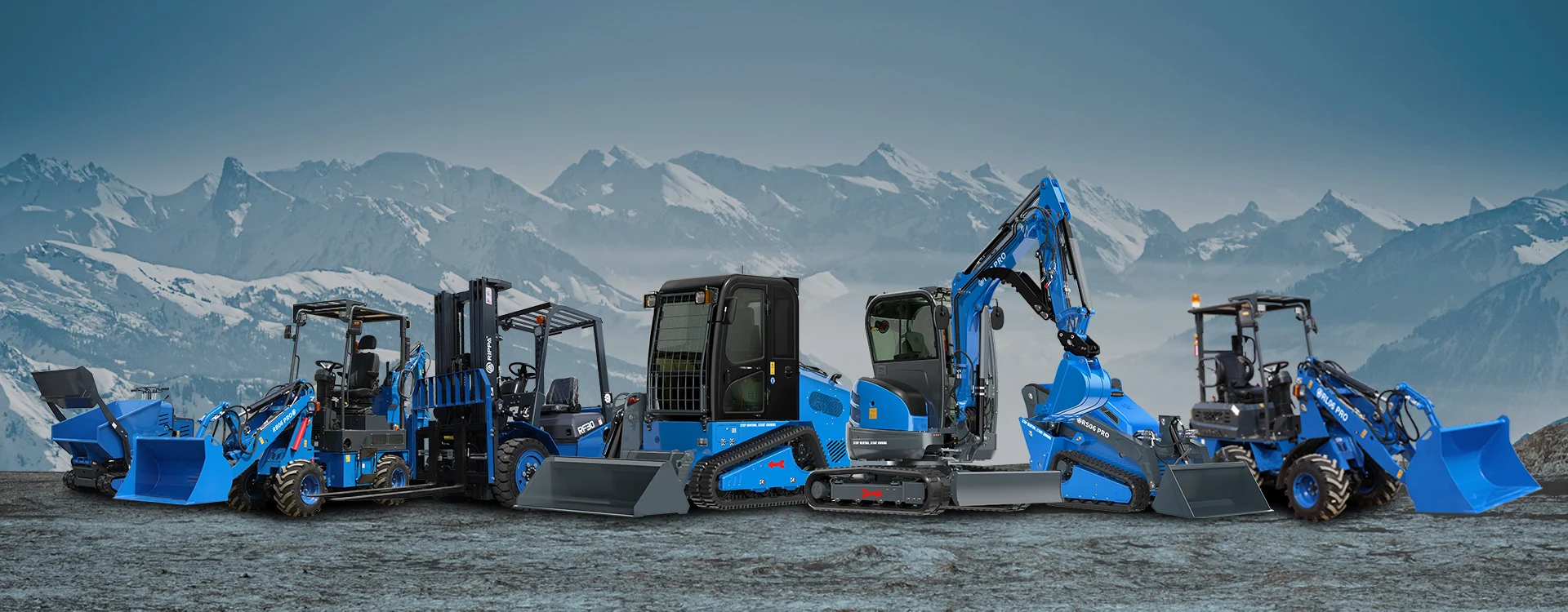
Choosing among Chinese skid steer loader suppliers requires a consistent evaluation process. A quotation alone cannot show whether a supplier can deliver suitable equipment, provide the required documentation, or support customers after delivery.
For importers, dealers, and construction businesses, the goal should be to identify a supplier whose products and commercial arrangements match the company’s operating needs.
Compare Product Suitability First
Start by defining the work the machine is expected to perform. Construction site preparation, landscaping, agriculture, and material handling can involve different requirements.
Review available machine configurations, attachment compatibility, operating documentation, and maintenance requirements. Ask the supplier to explain which product is suitable for your application and request supporting documentation.
Avoid selecting a machine based only on its appearance, headline price, or a general claim that it suits every job.
Evaluate Quality Control
Product quality affects customer satisfaction, maintenance costs, and the long-term reputation of a dealer.
Ask suppliers to explain their inspection procedures, including assembly checks, operational testing, and pre-shipment inspection. Find out whether inspection records are available and how the supplier handles defects or missing components.
For a significant purchase, consider arranging an independent inspection before shipment. Agree on the acceptance criteria in writing so that both parties understand what constitutes an acceptable delivery.

Calculate the Total Purchasing Cost
The purchase price is only one part of the total cost. International buyers may also need to account for inland transport, export handling, ocean or other freight, insurance, customs duties, taxes, port charges, and local delivery.
Create a comparable cost sheet for each supplier. Confirm which expenses are included in the quotation and which remain the buyer’s responsibility.
A slightly higher quotation may offer better overall value if it includes more appropriate packaging, clearer documentation, or more dependable support. These benefits should be verified rather than assumed.
Check Spare Parts and Technical Support
Parts availability becomes especially important when a dealer sells equipment to customers who depend on it for daily operations.
Ask how replacement parts are identified and ordered, whether parts diagrams and maintenance documents are available, and how technical questions are handled.
Clarify warranty coverage, exclusions, claim procedures, and responsibility for shipping replacement components. Obtain the answers in writing before confirming the order.
Assess Communication and Delivery Planning
Reliable suppliers should communicate clearly about production progress, document preparation, and shipping arrangements.
Ask for an estimated production schedule and identify the events that may affect delivery. Confirm the shipping method, delivery responsibilities, packaging standards, and the documents needed for import clearance.
For repeat orders, review whether the supplier can accommodate your anticipated purchasing schedule.
Compare Suppliers Using a Scorecard
A simple scorecard can help a purchasing team make a more objective decision.
| Evaluation category | What to verify |
|---|---|
| Product suitability | Application, configuration, attachments |
| Quality control | Inspection process and records |
| Total cost | Equipment, freight, and import expenses |
| Ersatzteil-Support | Availability and ordering process |
| Service nach dem Verkauf | Technical help and warranty procedure |
| Export readiness | Documentation and shipping experience |
| Commercial terms | Payment, lead time, and order conditions |
Assign internal scores according to your business priorities and retain the supporting evidence for each evaluation.
Schlussfolgerung
The best Chinese skid steer loader supplier is the one that matches your product requirements, budget, logistics needs, and after-sales expectations. Comparing suppliers systematically helps reduce uncertainty and supports better purchasing decisions.
Before placing an order, obtain written quotations, product documents, inspection details, shipping terms, and service conditions. A clear comparison process can help your business build a more dependable supply chain.
 Startseite
 Produkte
 E-Mail
 WhatsApp

