Finding a suitable Chinese mini skid steer manufacturer is an important step for dealers, distributors, importers, and equipment businesses looking to expand their compact machinery product range.
China has a large manufacturing base for construction and agricultural equipment, giving international buyers access to many potential suppliers. However, manufacturers can differ significantly in their production capabilities, export experience, product range, dealer support, and approach to long-term cooperation.
For a business planning to sell mini skid steers in a local market, the key question is not simply where to find a Chinese factory. It is how to identify a manufacturer that can support a sustainable dealer business.
What Is a Chinese Mini Skid Steer Manufacturer?
A Chinese mini skid steer manufacturer is a company that designs, produces, assembles, or manages the production of mini skid steer equipment in China.
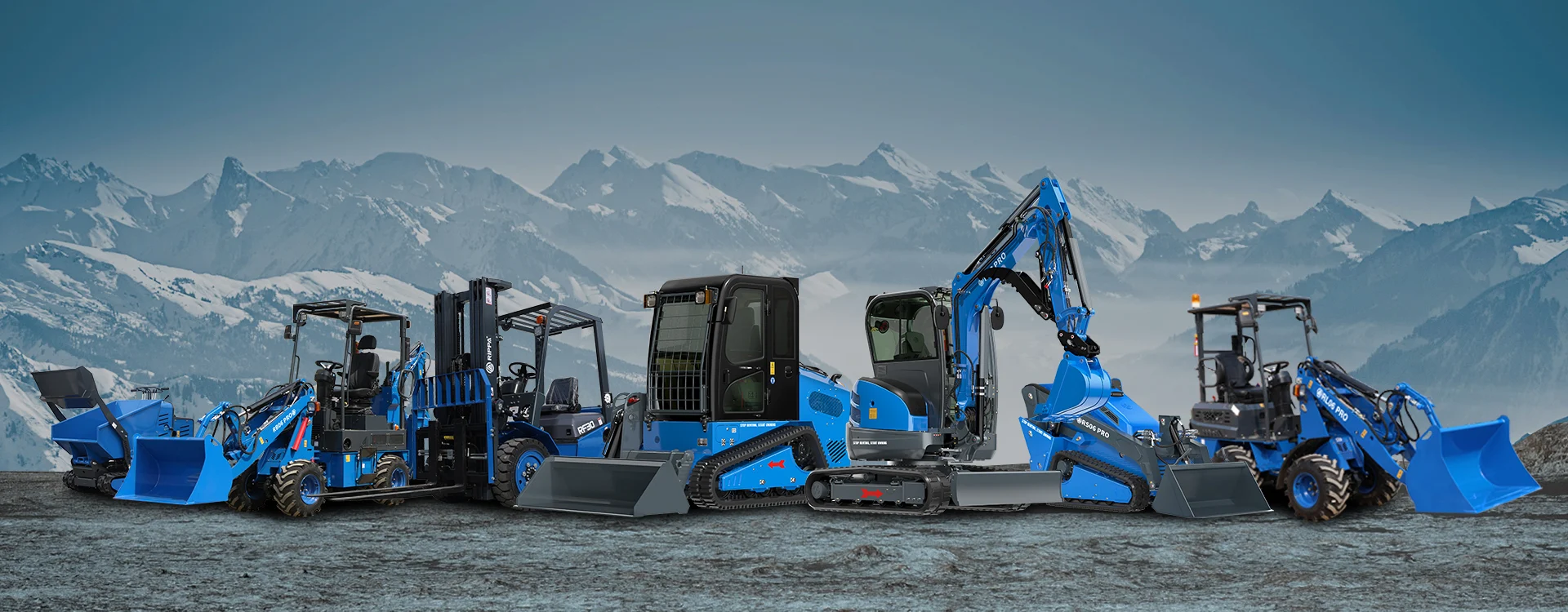
Some manufacturers focus mainly on compact machinery, while larger construction equipment companies may offer several categories, such as:
- Mini skid steers
- Kompaktlader
- Compact excavators
- Radlader
- Baggerlader
- Forklifts
- Attachments and related equipment
For dealers, a manufacturer with a broader product portfolio may provide opportunities to expand the local product range over time.
However, the most important factor is whether the manufacturer can provide the products, communication, logistics, and support required by the dealer’s target market.
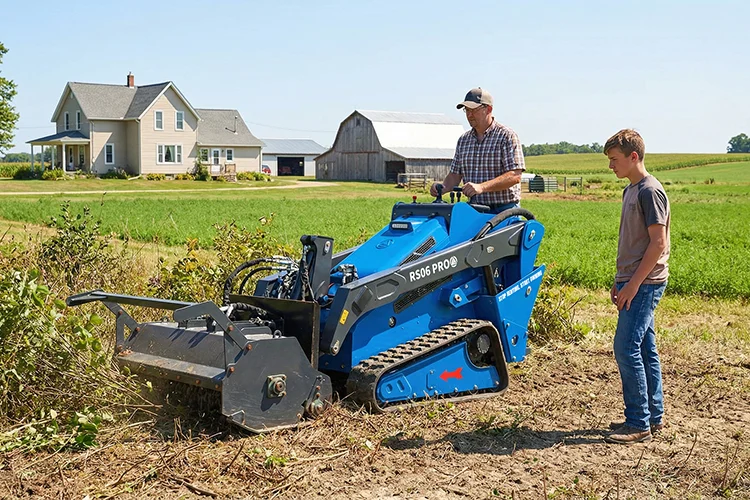
Why Do Dealers Work Directly With Chinese Manufacturers?
Dealers have several options when sourcing compact equipment.
They can purchase from a local distributor, work with an international trading company, or communicate directly with a Chinese manufacturer.
Direct factory cooperation can provide a more direct communication channel between the dealer and the production company.
For B2B buyers, this can be useful when discussing:
- Product selection
- Wholesale orders
- Export arrangements
- Dealer cooperation
- Replacement parts
- Product information
- Marketing-Materialien
- Long-term purchasing plans
A direct manufacturer relationship does not automatically solve every purchasing challenge. The supplier still needs to demonstrate that it has the organizational and export capabilities required to support overseas customers.
How to Identify a Chinese Mini Skid Steer Manufacturer
The first step is to distinguish manufacturers from other types of suppliers.
A company website can provide useful information, but buyers should look beyond product photographs.
Look for evidence of:
Manufacturing Facilities
Check whether the company provides information about its factory, production facilities, engineering teams, or manufacturing operations.
A manufacturer should be able to explain how its equipment is produced and how production is organized.
Product Development
Product development is another useful indicator.
A manufacturer that develops and updates its own equipment may have engineering resources supporting product improvements and market requirements.
For dealers, this can become important when customer requirements change.
Product Portfolio
Review the complete product range instead of looking at one machine.
If your business plans to become a long-term equipment dealer, consider whether the manufacturer can support additional categories in the future.
This may allow a dealer to expand from mini skid steers into other compact construction machinery without building several unrelated supplier relationships.
What Should Dealers Ask a Chinese Mini Skid Steer Manufacturer?
Before beginning a dealership relationship, prepare specific questions.
1. Do You Work With Overseas Dealers?
Not every manufacturer has the same approach to international distribution.
Ask whether the company already works with:
- Dealers
- Distributors
- Importers
- Vermietungsunternehmen
- Equipment retailers
You can also ask about its experience in your target country or region.
2. What Is Your Export Experience?
A manufacturer selling equipment internationally needs to understand more than production.
Ask about its experience with international orders, shipping documentation, packaging, customs coordination, and communication with overseas customers.
This is particularly important for first-time importers.
3. How Does Dealer Cooperation Work?
A dealer should understand how the relationship will operate before placing an order.
Questions can include:
- How do dealers apply?
- How are orders handled?
- What marketing materials are available?
- Is territory cooperation available?
- How does the manufacturer communicate with dealers?
- What support is available for new dealers?
Clear communication at this stage can make future cooperation more efficient.
Evaluate the Manufacturer’s Product Range
A dealer should not evaluate a manufacturer based on a single product page.
Look at the broader portfolio.
For example, if a company supplies mini skid steers as well as compact excavators and loaders, the dealer may eventually be able to develop a broader compact equipment business.
This can be useful for dealers that already have customers across landscaping, agriculture, construction, property maintenance, and rental.
A broader product portfolio can also simplify supplier management because the dealer can communicate with one manufacturer for multiple equipment categories.
Quality Management and Production Consistency
For a dealer, product consistency matters because the equipment represents the dealer’s business in the local market.
When evaluating a manufacturer, ask how production quality is managed.
Relevant areas may include:
- Incoming component inspection
- Production procedures
- Assembly inspection
- Final equipment inspection
- Documentation
- Quality control processes
The exact quality system will vary between manufacturers, so buyers should request appropriate documentation and discuss how quality is maintained throughout production.
The objective is to understand the manufacturer’s process rather than rely solely on marketing claims.
Parts Support Should Be Part of the Evaluation
Parts support is an important consideration when choosing a Chinese mini skid steer supplier.
A dealer may sell equipment months or years after the original purchase order. Customers may then require replacement components or technical assistance.
Before establishing a supplier relationship, discuss:
- How parts are identified
- How parts are ordered
- How parts are shipped
- How technical questions are handled
- What product documentation is available
- How dealers communicate service requirements
A manufacturer that has a clear process for parts and technical communication can make it easier for dealers to support their own customers.
Export and Logistics Capability
A Chinese mini skid steer manufacturer may produce suitable equipment but still require an experienced export process.
International dealers should therefore evaluate the manufacturer’s logistics experience.
Discuss:
Order preparation
How are machines prepared for international transportation?
Export documentation
What documents does the manufacturer provide?
Shipping
Can the supplier coordinate with the buyer’s logistics provider or shipping partner?
Delivery
How are shipping schedules and documentation communicated?
These questions become increasingly important as order volume grows.
Factory Direct Does Not Mean “Buy Without Research”
The term factory direct is attractive to many importers because it suggests a direct relationship with the manufacturer.
However, buyers should not assume that every factory-direct supplier is automatically suitable.
A proper supplier evaluation should still include:
- Company verification
- Product review
- Manufacturing capability
- Export experience
- Communication
- Ersatzteil-Support
- Dealer cooperation
- Commercial terms
- Logistik
The purpose of factory-direct sourcing is to establish an efficient supply relationship, not simply to find the lowest quotation.
Compare Manufacturers Based on Your Business Requirements
Different dealers need different suppliers.
For example, a small regional equipment business may need a manufacturer that can support a focused product range and flexible purchasing plan.
A larger distributor may require broader product coverage, regular inventory, marketing cooperation, and a structured dealer relationship.
Therefore, there is no single supplier evaluation checklist that works identically for every company.
Instead, create your own requirements before contacting manufacturers.
A useful framework is:
| Bereich | Questions to Consider |
|---|---|
| Produkte | Does the product range fit your market? |
| Manufacturing | Does the company have established production capabilities? |
| Export | Does it have international shipping experience? |
| Unterstützung der Händler | Can it support your sales operation? |
| Parts | Is there a clear parts ordering process? |
| Communication | Can your teams communicate efficiently? |
| Marketing | Are product and promotional materials available? |
| Long-term supply | Can the relationship support repeat orders? |
This approach makes supplier comparisons more practical without relying solely on price.
Rippa as a Chinese Construction Machinery Manufacturer
RIPPA is a Chinese construction machinery manufacturer based in Shandong, China, serving international markets through dealers, distributors, and other B2B customers.
Its equipment portfolio covers multiple construction machinery categories, allowing international equipment businesses to explore more than one product category through the same manufacturer.
For a company researching Chinese mini skid steer manufacturers, the next step should be a direct discussion about its target market and business requirements.
Dealers can explain their market, customer base, sales channels, purchasing plans, and desired product categories.
This allows both sides to determine whether the proposed cooperation model is suitable.
Questions to Ask Before Placing Your First Order
Before confirming a wholesale order, dealers should have clear answers to several basic questions:
- Who is the actual manufacturer?
- Where is the equipment produced?
- What other products does the company manufacture?
- Which international markets does it serve?
- Does it work with dealers and distributors?
- How are wholesale orders handled?
- How are parts ordered?
- What technical support is available?
- How are export and shipping arrangements handled?
- What marketing resources are available to dealers?
The answers provide a clearer picture of whether the manufacturer can support your business beyond the first shipment.
Choosing a Chinese Mini Skid Steer Manufacturer for Long-Term Supply
A suitable manufacturer should be evaluated as a potential business partner rather than simply as a product source.
For dealers and importers, manufacturing capability is only one part of the decision. Export experience, product range, communication, parts support, logistics, and dealer cooperation can all affect the long-term relationship.
When researching Chinese mini skid steer manufacturers, take time to verify the company, understand its production capabilities, communicate your market requirements, and discuss the complete purchasing process before placing an order.
For businesses planning to develop a local compact equipment business, a direct relationship with an experienced Chinese manufacturer can provide a foundation for future wholesale and dealer cooperation.
Looking for a Chinese mini skid steer manufacturer for your market? Contact RIPPA to discuss wholesale supply and dealer opportunities.
 Startseite
 Produkte
 E-Mail
 WhatsApp

