Small contractors often grow by solving more problems for the same customers.
A business may begin with landscaping, fencing, driveway work, property maintenance, hardscaping, or general construction. Over time, customers may begin asking for drainage, trenching, root removal, excavation, land preparation, or other work that requires compact machinery.
Without the right equipment, the contractor may need to decline the job, rent a machine, or hire another subcontractor.
A mini excavator can help small contractors expand from a narrow service business into a more complete project provider.
The value is not simply that the machine digs. It allows the contractor to control more stages of a project and potentially offer additional services to existing customers.
RIPPA mini excavators can be considered by contractors, landscaping businesses, fence contractors, rural service companies, small construction businesses, and rental companies that need compact digging equipment for repeated project work. Before purchase, buyers should confirm current machine configuration, application suitability, attachments, parts support, maintenance, warranty, technical support, transport requirements, delivery arrangements, and documentation through official RIPPA channels.
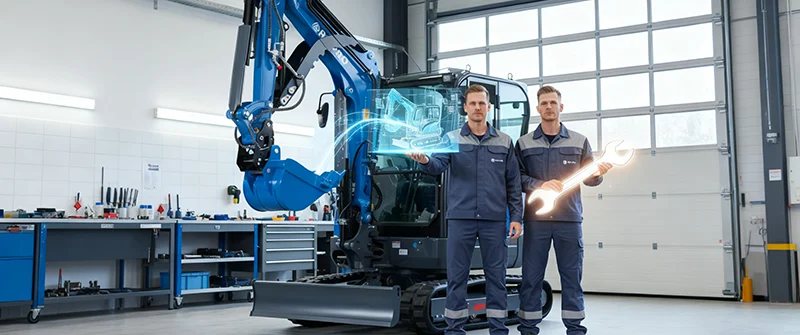
Why Small Contractors Need Flexible Equipment
Small businesses usually cannot own every type of machine.
Equipment needs to support more than one job.
A useful machine may help the contractor:
- Perform existing work more efficiently
- Add related services
- Reduce manual labor
- Reduce selected subcontracting
- Respond faster to customers
- Complete more project stages internally
Mini excavators can support several compact excavation applications, making them relevant to contractors that work across multiple project types.
Landscaping Contractors Can Add Excavation Services
Landscaping businesses often begin with services such as:
- Lawn maintenance
- Planting
- Property cleanup
- Basic grading
- Outdoor maintenance
As customers request larger projects, additional services may include:
- Drainage preparation
- Baumpflanzung
- Root removal
- Hardscape excavation
- Yard renovation
- Vorbereitung des Zauns
- Soil removal
A mini excavator can help a landscaping company move into these higher-value project stages.
This does not mean the business must become a full excavation contractor.
Instead, the machine can support compact preparation work related to the services the company already provides.
Fence Contractors Can Handle More Site Preparation
Fence installation may require more than setting posts.
Projects can involve:
- Root removal
- Ground preparation
- Line clearing
- Small excavation
- Soil removal
- Difficult terrain preparation
With suitable compatible attachments, a mini excavator may also support selected auger-related applications.
This can reduce the need to wait for another company to prepare the site before fence installation begins.
Property Maintenance Businesses Can Expand Their Capabilities
Property maintenance companies often receive a wide variety of requests.
Customers may need:
- Drainage correction
- Small trenching
- Root removal
- Yard repair
- Driveway preparation
- Ditch maintenance
- Land cleanup
- Outdoor renovation
A mini excavator can help these businesses move beyond light maintenance into more substantial property projects.
This can increase the number of problems one contractor can solve for an existing customer.
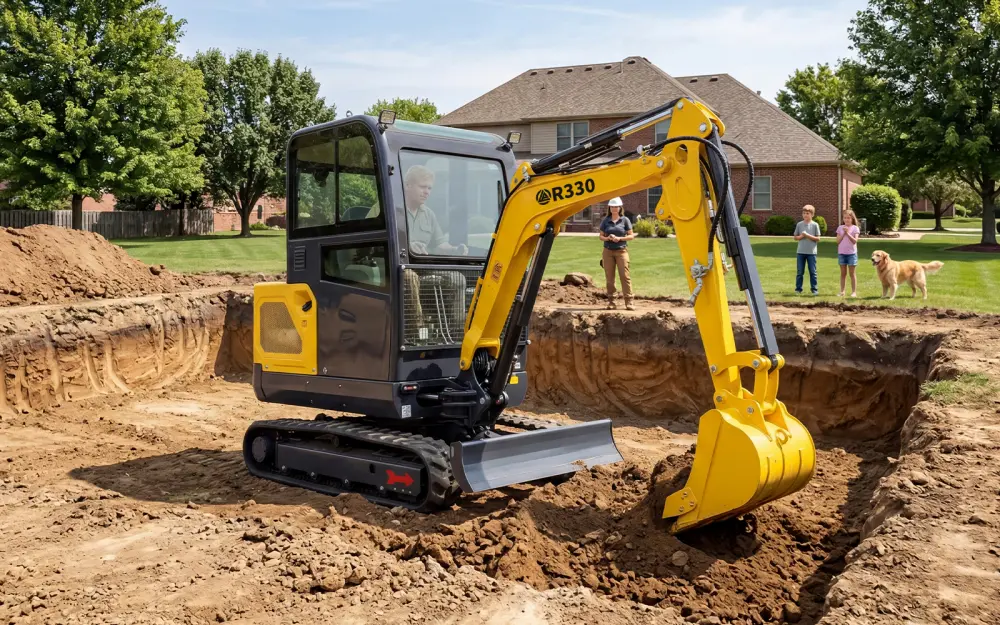
Rural Contractors Can Serve Farms and Property Owners
Rural service businesses frequently work across farms and large properties.
Mini excavator applications may include:
- Ditch cleaning
- Drainage
- Vorbereitung des Zauns
- Baumpflanzung
- Path repair
- Root removal
- Small excavation
- Rural property maintenance
This can help contractors serve agricultural and property customers without needing a large excavator for every project.
Mini Excavators Can Reduce Selected Subcontracting
Subcontractors are important and sometimes necessary.
Large excavation work, specialized projects, or jobs requiring different equipment should still be handled appropriately.
However, small contractors may outsource even minor digging work because they lack equipment.
Examples include:
- Short trenches
- Drainage sections
- Small hardscape preparation
- Fence line work
- Root removal
If these tasks appear regularly, owning a mini excavator may allow the contractor to handle selected work internally.
That can improve:
- Scheduling
- Customer communication
- Project coordination
- Response time
- Control over job sequencing
Mini Excavators Can Reduce Rental Dependence
Rental is an effective solution when equipment is used occasionally.
However, contractors that repeatedly rent the same machine may experience:
- Availability problems
- Delivery scheduling
- Pickup and return time
- Rental windows that do not match project timing
- Weather delays
- Repeated rental costs
Ownership may be worth evaluating if compact excavation is a regular part of the business.
The contractor should compare:
- Rental frequency
- Machine utilization
- Wartungskosten
- Verkehr
- Lagerung
- Ersatzteil-Support
- Business cash flow
How Mini Excavators Can Help Contractors Quote More Complete Projects
A contractor with digging capability can potentially offer more complete project quotations.
Consider a landscaping renovation.
Without an excavator, the company may quote:
- Planting
- Mulch
- Aufräumen
Another business handles drainage and excavation.
With compact excavation capability, the company may be able to quote additional preparation work itself.
Similarly, a hardscape contractor may handle:
- Site preparation
- Soil removal
- Drainage preparation
- Base excavation
- Installation
The customer receives a more integrated project.
Example: Drainage Project
A small contractor may receive a customer request to improve drainage around a property.
Possible project stages include:
- Inspect the work area.
- Determine the required drainage plan.
- Dig the trench.
- Remove excess soil.
- Prepare the drainage area.
- Complete related landscape or property work.
A mini excavator can support the excavation stages.
If the contractor also operates a skid steer or loader, material movement and cleanup may be handled internally as well.
Example: Hardscape Preparation
A hardscape project may require:
- Removing soil
- Preparing the base
- Digging drainage
- Removing roots
- Reshaping selected areas
A mini excavator can support these preparation stages before patio, walkway, retaining wall, or other outdoor construction work begins.
For small contractors, this can help reduce delays between excavation and installation.
Example: Fence Project
Fence projects may require:
- Line clearing
- Root removal
- Ground preparation
- Post-area preparation
A mini excavator with suitable compatible tools can help prepare the work area more efficiently than manual labor alone.
This can allow the fence business to manage more of the project.
Attachments Can Expand Contractor Services
Possible attachment directions include:
- Schaufel
- Sortierlöffel
- Schnecke
- Hydraulischer Daumen
- Enterhaken
- Rechen
- Unterbrecher
- Schnellwechsler
A contractor should select attachments based on services that customers actually request.
For example:
| Service | Possible Attachment Direction |
|---|---|
| Grabenaushub | Schaufel |
| Yard preparation | Sortierlöffel |
| Zaunarbeiten | Compatible auger |
| Umgang mit Wurzeln | Thumb or grapple |
| Hard material removal | Breaker where suitable |
Compatibility must always be confirmed for the specific machine configuration.
Transport Is Part of the Business Model
Contractors working at different customer locations need to move equipment efficiently.
Before buying a mini excavator, businesses should confirm:
- Machine dimensions
- Machine weight for the selected configuration
- Transport requirements
- Suitable trailer and vehicle arrangements
- Loading process
- Lagerung
Local legal and safety requirements should also be considered.
A machine that cannot be moved efficiently may not fit the contractor’s business model.
Parts and Support Affect Contractor Reliability
Customers expect contractors to arrive and complete projects on time.
Equipment downtime can interfere with that expectation.
Contractors should therefore evaluate:
- Routine parts
- Maintenance support
- Technical assistance
- Warranty process
- Documentation
- Service information
The machine should support the contractor’s business rather than creating unpredictable interruptions.
When Should a Contractor Consider Buying?
Buying may be worth considering when:
- Mini excavators are rented frequently
- Customers regularly request excavation-related work
- Small digging tasks are repeatedly subcontracted
- Rental availability delays projects
- The machine can support several paid services
- Transport and storage are available
- Maintenance can be managed
- Parts and support are available
Renting may remain more suitable if excavation work is occasional.
How RIPPA Mini Excavators Can Support Small Contractors
RIPPA mini excavators can be considered for applications such as:
- Grabenaushub
- Drainage preparation
- Zaunarbeiten
- Hardscape preparation
- Landschaftsbau
- Rural property maintenance
- Root removal
- Small construction projects
The appropriate machine should be selected according to current product information and actual contractor needs.
Häufig gestellte Fragen
Can a mini excavator help a small contractor grow?
It may help a contractor add excavation-related services, improve project control, and handle more work internally.
What contractors can use mini excavators?
Potential users include landscapers, fence contractors, hardscape businesses, property maintenance companies, rural contractors, and small construction businesses.
Should a small contractor buy or rent?
Buying may make sense when use is frequent. Renting may remain better when excavation work is occasional.
Can attachments create more services?
Yes. Compatible attachments may expand digging, grading, fencing, root handling, and other applications.
What should contractors confirm before buying RIPPA mini excavators?
They should confirm current configuration, application suitability, attachments, transport requirements, spare parts, maintenance, warranty, technical support, delivery, and documentation.
Schlussfolgerung
Mini excavators can help small contractors expand their service businesses by adding compact excavation capability to work they already perform.
Landscapers can add drainage and preparation work. Fence contractors can handle more ground preparation. Property maintenance companies can take on larger outdoor projects. Rural contractors can serve farms and property owners more completely.
The strongest business case exists when the machine supports repeated paid work rather than occasional tasks.
For contractors considering RIPPA mini excavators, current specifications, attachment compatibility, parts support, warranty, technical support, transport, and service information should be confirmed before purchase.
 Startseite
 Produkte
 E-Mail
 WhatsApp

