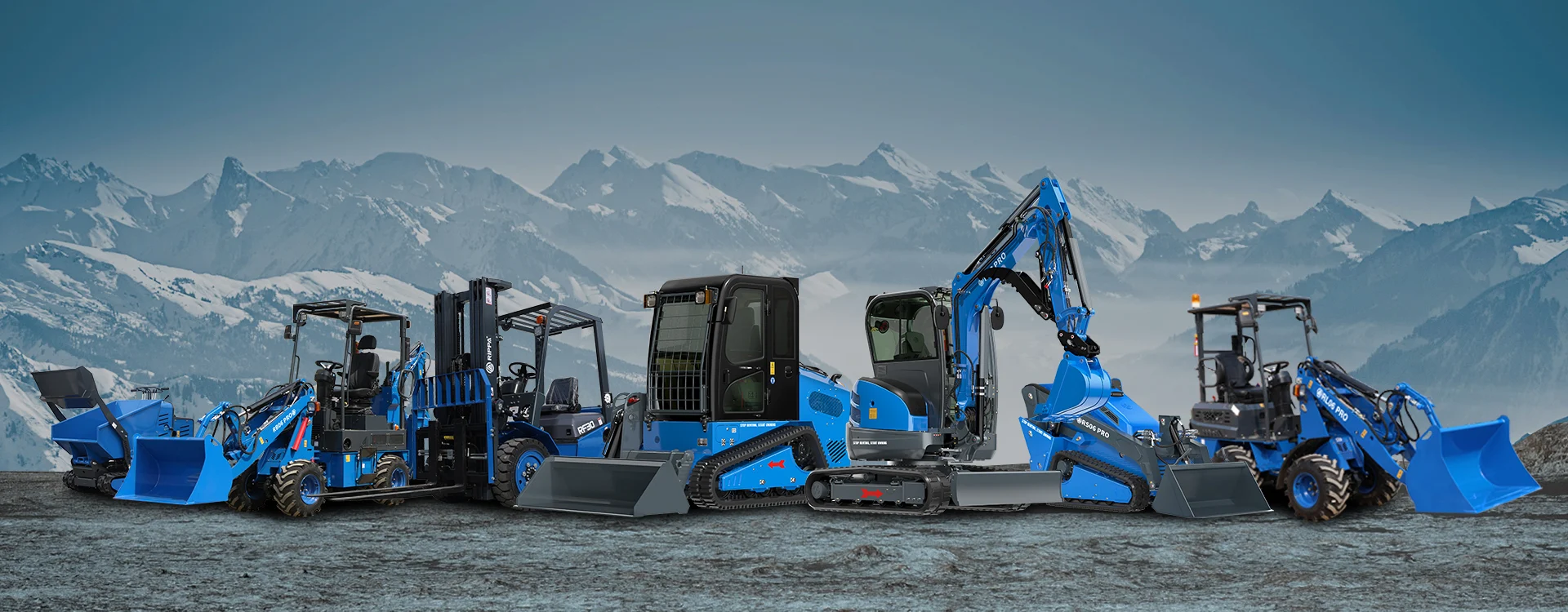
A mini excavator can be an important business asset for contractors, but buying one should be based on more than the idea that owning equipment is better than renting.
For contractors, the real question is:
Will this mini excavator be used frequently enough and productively enough to support the business?
A contractor may benefit from ownership when digging work appears regularly, customers request excavation-related services, rental availability delays projects, or subcontracting small excavation work becomes inefficient.
However, ownership also brings responsibilities involving transport, maintenance, storage, attachments, spare parts, operator readiness, and capital.
Before adding a mini excavator to a fleet, contractors should calculate how the machine will actually generate value.
RIPPA mini excavators can be considered by contractors, landscaping businesses, fence companies, property maintenance businesses, rural service contractors, and other B2B customers. The correct machine should be selected according to real work requirements, and current configuration, attachments, parts support, warranty, technical support, delivery, and documentation should be confirmed through official channels.
Start with Rental Frequency
One of the easiest calculations is to review how often the business currently rents mini excavators.
Ask:
- How many times did we rent one in the last 12 months?
- How many rental days did we pay for?
- How often was delivery required?
- How much time was spent collecting and returning machines?
- Were projects delayed because equipment was unavailable?
If rental is rare, ownership may be unnecessary.
If rental occurs repeatedly, ownership may deserve closer evaluation.
Calculate More Than the Rental Rate
Rental costs can include more than the advertised daily or weekly rate.
Possible costs include:
- Equipment rental
- Delivery
- Pickup
- Fuel
- Damage waiver or related charges
- Additional rental days caused by delays
- Employee time spent coordinating rentals
The contractor should compare the full rental cost against ownership costs.
This produces a more realistic comparison.
Identify Work That Is Currently Subcontracted
Some contractors outsource excavation because they do not own suitable equipment.
Examples include:
- Short trenches
- Drainage preparation
- Root removal
- Προετοιμασία της γραμμής περίφραξης
- Hardscape excavation
- Yard renovation
Ask:
- How much excavation work did we subcontract last year?
- How much did those subcontractors cost?
- Did their schedules delay our projects?
- Could we perform some of this work safely and efficiently ourselves?
Not all subcontracting should be eliminated.
Large or specialized projects may still require dedicated excavation companies.
The goal is to identify repeated compact work that fits the business.
Estimate How Many Paid Services the Machine Can Support
A mini excavator is more useful when it supports several services.
Potential contractor applications include:
- Εκσκαφή τάφρων
- Drainage
- Hardscape preparation
- Διαμόρφωση τοπίου
- Fence work
- Root removal
- Property renovation
- Small construction work
For example, a landscaping contractor may use one machine for:
- Drainage trenches
- Φύτευση δέντρων
- Root removal
- Patio preparation
This can improve utilization compared with buying a machine for only one narrow task.
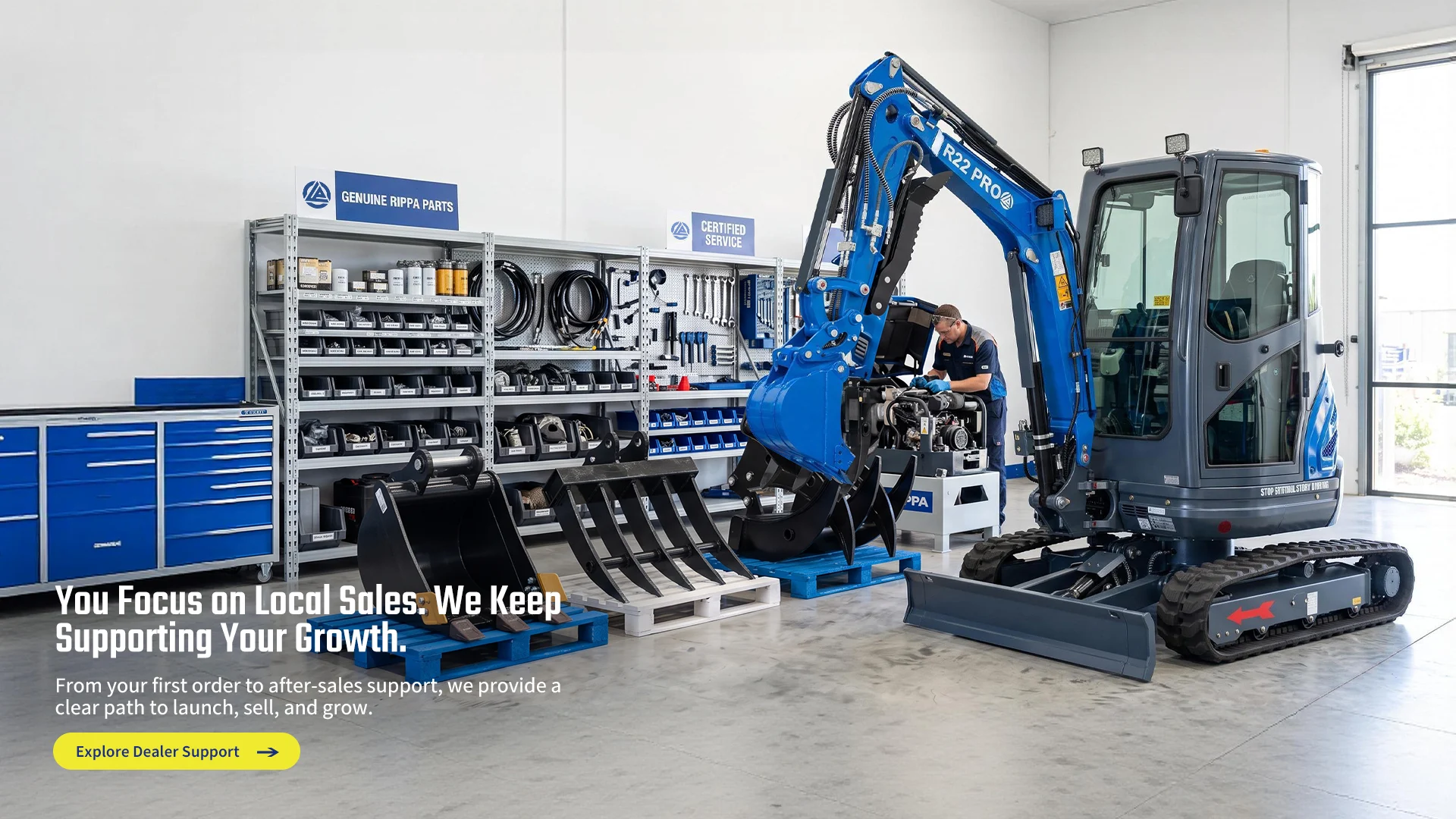
Calculate Expected Machine Utilization
Contractors should estimate how often the machine will actually work.
Possible questions include:
- How many jobs per month need excavation?
- How many hours would the machine operate?
- Are these jobs seasonal?
- Can multiple crews use the machine?
- Would the machine sit unused for long periods?
A machine does not need to operate every day to be useful.
However, the expected workload should be high enough to justify ownership.
Consider Revenue Expansion
A mini excavator may create value not only by reducing rental expense but also by allowing the contractor to sell additional services.
For example:
A landscaping company may currently sell:
- Planting
- Καθαρισμός
- Συντήρηση
With excavation capability, it may also quote:
- Drainage
- Root removal
- Hardscape preparation
- Προετοιμασία του χώρου
The value of the machine may therefore include new revenue, not simply cost reduction.
Calculate Project Control Value
Some ownership benefits are harder to express as a simple number.
For example:
A contractor may lose time because a rental excavator is unavailable until Thursday.
If the contractor owns a machine, work may begin Monday.
That can affect:
- Project completion
- Crew scheduling
- Customer satisfaction
- Number of jobs completed
Equipment availability can therefore have operational value.
Calculate Transport Requirements Before Buying
A mini excavator that cannot be moved efficiently may create more problems than it solves.
Contractors should confirm:
- Machine dimensions
- Machine weight for the selected configuration
- Trailer suitability
- Tow vehicle capability
- Loading process
- Αποθήκευση
- Local transport requirements
Transport should be part of the financial calculation.
Potential costs may include:
- Trailer purchase
- Tow vehicle requirements
- Registration or compliance costs where applicable
- Fuel
- Συντήρηση
These should not be discovered after the excavator has already been purchased.
Calculate Attachment Needs
Attachments can increase machine capability, but they also increase investment.
Possible attachments include:
- Κουβάς εκσκαφής
- Κουβάς διαλογής
- Αυγερός
- Υδραυλικός αντίχειρας
- Γάντζος
- Διακόπτης
- Τσουγκράνα
- Ταχυσυνδετήρας
Contractors should classify attachments into three groups.
Required Immediately
Needed for existing paid work.
Useful Later
Could support business expansion.
Low-Priority
Interesting, but not supported by current customer demand.
This helps avoid overspending on tools that may rarely be used.
Calculate Maintenance Responsibility
Ownership creates maintenance responsibilities.
Contractors should account for:
- Φίλτρα
- Lubrication
- Fluid checks
- Routine inspections
- Track maintenance
- Wear components
- Scheduled service
- Repair downtime
Maintenance should be treated as a normal operating cost rather than an unexpected problem.
Estimate Spare Parts Needs
Before buying, ask:
- Which service parts will be needed regularly?
- How are parts identified?
- How are parts ordered?
- What parts should be kept locally?
- What is the support process?
A machine that generates revenue needs a plan for keeping it operational.
Include Operator Readiness
A machine only creates value when it can be operated appropriately.
Contractors should consider:
- Who will operate it?
- Does the company have trained or experienced operators?
- Is additional training needed?
- Are safety procedures understood?
- Can more than one employee operate the machine when needed?
Operator availability can directly affect utilization.
Storage Also Has a Cost
Equipment needs secure storage when not in use.
Contractors should evaluate:
- Yard space
- Security
- Weather protection where appropriate
- Attachment storage
- Trailer storage
A business operating from a small location may discover that storage is a meaningful constraint.
Buying vs Renting: A Practical Comparison
| Παράγοντας | Buying | Renting |
|---|---|---|
| Machine availability | Greater control | Depends on rental availability |
| Initial cost | Υψηλότερο | Κάτω |
| Συντήρηση | Owner responsibility | Mainly rental provider responsibility |
| Αποθήκευση | Required | Usually not long-term |
| Transport | Owner must plan | May be delivered |
| Frequent use | Can become attractive | Repeated costs increase |
| Occasional use | May be inefficient | Often practical |
| Attachment access | Owner can build a set | Depends on rental inventory |
Neither option is universally better.
The correct choice depends on workload and business structure.
When Buying May Make More Sense
Ownership may deserve serious consideration when:
- Mini excavators are rented frequently.
- Excavation is part of regular projects.
- Customers are requesting more digging work.
- Rental availability causes delays.
- Small excavation work is repeatedly subcontracted.
- The machine can support multiple services.
- Transport and storage are available.
- Maintenance and parts support can be managed.
When Renting May Remain Better
Rental may remain practical when:
- Excavation is occasional.
- Projects require many different machine sizes.
- Storage is unavailable.
- Transport is difficult.
- The contractor wants to avoid maintenance responsibility.
- Cash is more valuable elsewhere in the business.
Contractors should avoid buying equipment only because ownership appears more professional.
A machine should have a clear role in the business.
What Type of Contractors May Benefit from Mini Excavators?
Potential users include:
Landscaping Contractors
For:
- Drainage
- Φύτευση δέντρων
- Root removal
- Hardscape preparation
Fence Contractors
For:
- Προετοιμασία του εδάφους
- Root removal
- Selected auger applications
Hardscape Contractors
For:
- Base preparation
- Drainage
- Soil removal
Property Maintenance Businesses
For:
- Εκσκαφή τάφρων
- Yard work
- Drainage
- Rural maintenance
Small Construction Contractors
For:
- Προετοιμασία του χώρου
- Εκσκαφή τάφρων
- Compact excavation
Why Machine Size Matters Financially
Bigger is not always better.
A larger excavator may involve:
- Υψηλότερο κόστος αγοράς
- More demanding transport
- Greater storage requirements
- Higher operating expense
A machine that is unnecessarily large can reduce economic efficiency.
A machine that is too small may require more time or fail to match the work.
Contractors should select machine size based on typical paid jobs.
What Contractors Should Confirm Before Buying a RIPPA Mini Excavator
Before purchase, confirm:
| Περιοχή | Question |
|---|---|
| Αίτηση | Does the machine fit repeated paid work? |
| Ρυθμίσεις | Is the current setup appropriate? |
| Digging capability | Does it meet job requirements? |
| Συνημμένα | Which tools are compatible? |
| Transport | Can the machine move efficiently? |
| Parts | What support is available? |
| Συντήρηση | What routine service is required? |
| Εγγύηση | What are the current terms? |
| Technical support | What assistance is available? |
| Documentation | What operating/service information is provided? |
Συχνές ερωτήσεις
How do I know whether buying a mini excavator makes sense?
Review rental frequency, subcontracting costs, expected utilization, service expansion opportunities, transport, storage, maintenance, and available capital.
Should frequent renters consider ownership?
Possibly. Frequent rental can be a sign that ownership deserves closer financial evaluation.
Can a mini excavator help contractors earn more revenue?
It may allow contractors to offer additional excavation-related services and complete more project stages internally.
Should contractors buy many attachments immediately?
Not necessarily. Start with attachments supported by existing customer demand.
What costs are easy to overlook?
Transport, storage, maintenance, spare parts, attachments, operator readiness, and downtime should all be considered.
Συμπέρασμα
Contractors should treat a mini excavator as a business investment rather than simply another machine.
Before buying, calculate:
- Current rental spending
- Subcontracting
- Expected utilization
- New service opportunities
- Transport
- Συνημμένα
- Συντήρηση
- Spare parts
- Αποθήκευση
- Operator availability
A mini excavator can be a strong addition to a contractor fleet when it supports repeated, profitable work.
The right decision is not based on whether ownership sounds attractive.
It is based on whether the machine has a clear and productive role in the contractor’s business.
 Αρχική σελίδα
 Προϊόντα
 Ηλεκτρονικό ταχυδρομείο
 WhatsApp

