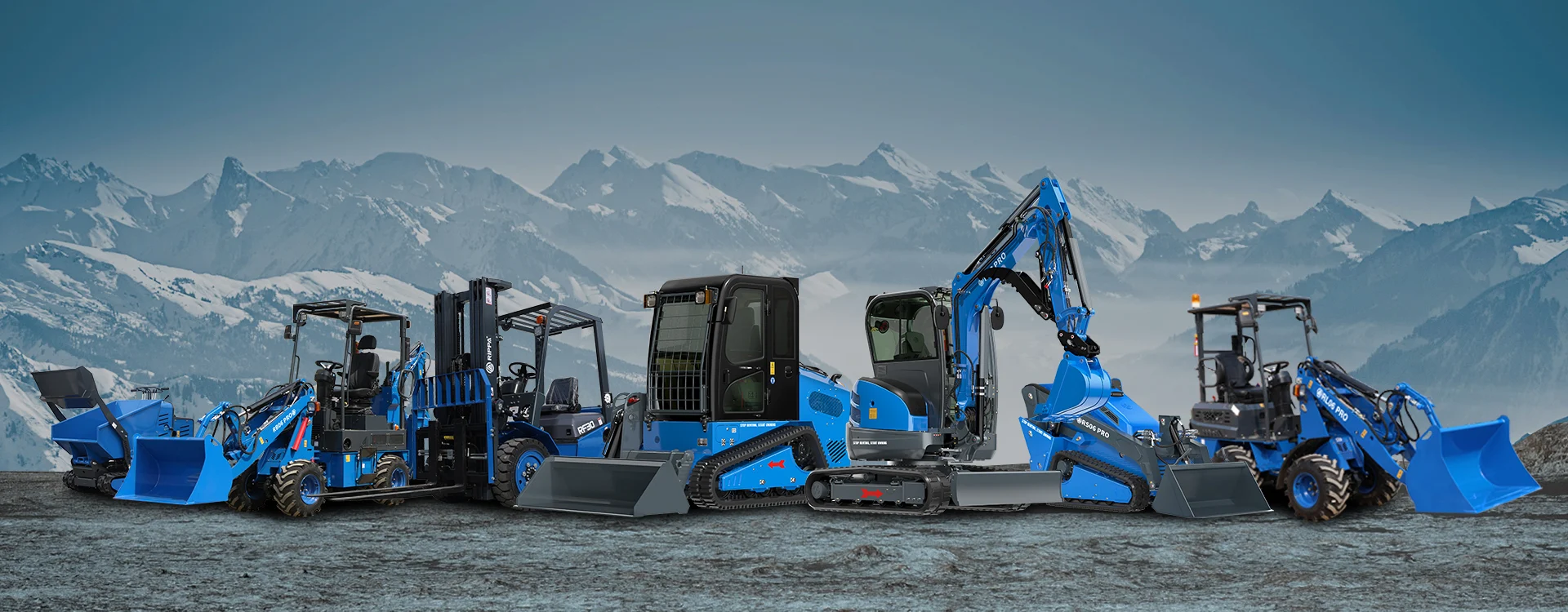
Tractor dealers already serve customers who use machines to solve practical work problems. Farmers, rural property owners, agricultural contractors, land maintenance businesses, and countryside service companies often visit tractor dealerships because they need reliable equipment for real daily tasks.
Many of these customers do not only need tractors. They also need machines for digging, trenching, drainage, fencing, planting, ditch cleaning, farm path repair, and property maintenance.
This is why mini excavators can be a strong product extension for tractor dealers.
A mini excavator does not replace a tractor. It complements the tractor by handling jobs that require compact digging power and excavation ability. For tractor dealers, adding mini excavators can help serve existing customers more completely, increase product value, and create new revenue opportunities around compact excavation demand.
RIPPA mini excavators can be considered by tractor and farm equipment dealers who want to expand into compact digging equipment for farms, rural properties, agricultural contractors, and land maintenance customers. Before promotion or purchase, dealers should confirm current machine configuration, attachment compatibility, spare parts support, warranty policy, delivery arrangement, documentation, and dealer cooperation terms.
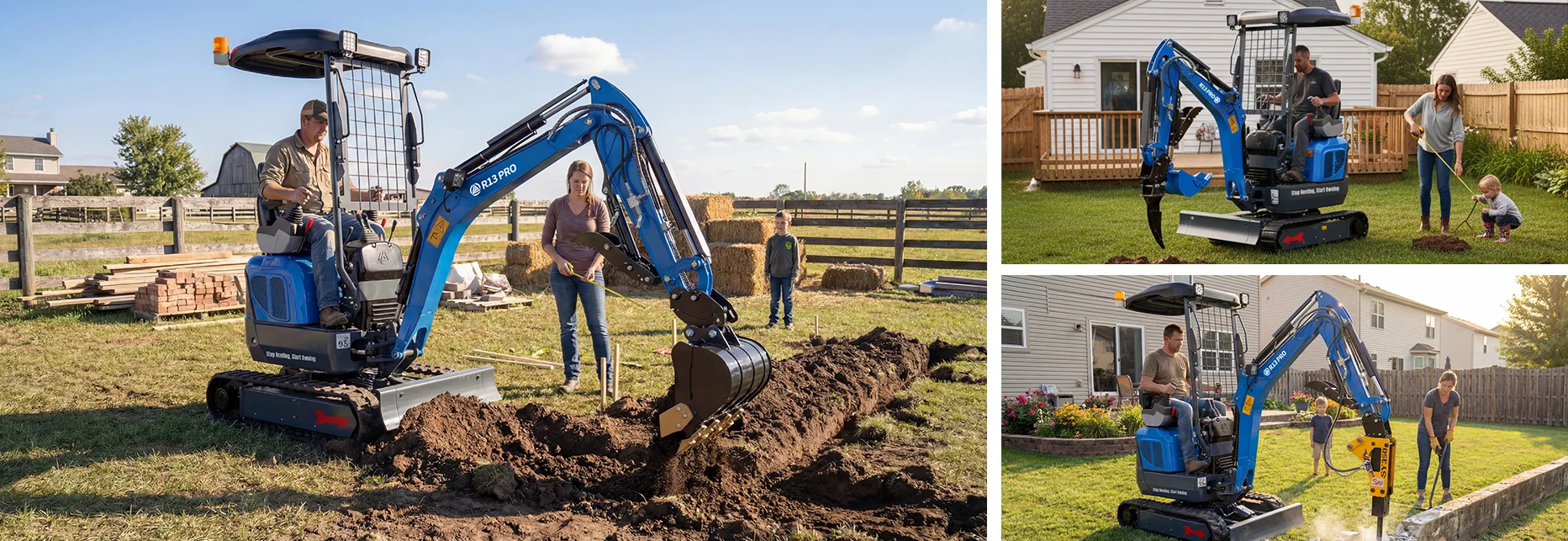
Tractor Dealers Already Have the Right Customers
One of the biggest advantages tractor dealers have is customer overlap. A dealer does not need to build a completely new audience to sell mini excavators. Many existing tractor customers already have excavation-related needs.
Typical customers may include:
- Farmers
- Rural property owners
- Agricultural contractors
- Fence contractors
- Land clearing businesses
- Small construction users in rural areas
- Farm maintenance teams
- Equipment buyers who already own tractors or loaders
- Customers who rent excavators for seasonal projects
These customers often need practical machines for work that tractors alone may not handle efficiently.
For example, a tractor may be useful for pulling, mowing, grading, hauling, or working with implements. But when the job requires digging a trench, cleaning a ditch, preparing a fence line, removing roots, or creating drainage, a mini excavator may be the better tool.
This natural customer overlap makes mini excavators easier for tractor dealers to introduce than an unrelated product category.
Mini Excavators Solve Common Farm Problems
Farm customers often deal with land, water, soil, access paths, fencing, and maintenance. These are exactly the kinds of problems where mini excavators can be useful.
Common rural and agricultural applications include:
| Farm or Rural Task | How a Mini Excavator Helps |
|---|---|
| Drainage improvement | Digs trenches and helps manage water flow |
| Ditch cleaning | Removes soil, mud, and debris from channels |
| Fence preparation | Supports post lines and hole preparation with suitable attachments |
| Tree planting | Helps dig planting holes efficiently |
| Farm path repair | Reshapes uneven access areas |
| Root removal | Helps remove unwanted roots and small obstacles |
| Small trenching | Supports utility, irrigation, or farm maintenance work |
| Property maintenance | Helps rural owners manage land and outdoor projects |
| Pond or waterway support | Assists with small digging and shaping tasks where suitable |
| Seasonal land work | Supports repeated farm projects across the year |
These are not luxury applications. They are practical jobs that appear regularly in many rural markets.
A tractor dealer who understands these customer problems can position mini excavators as a natural work solution.
Mini Excavators Complement Tractors Instead of Competing with Them
Some tractor dealers may worry that adding mini excavators will confuse customers or compete with existing tractor sales. In reality, tractors and mini excavators usually serve different roles.
A tractor is often used for pulling, mowing, grading, hauling, and operating agricultural implements. A mini excavator is used for digging, trenching, drainage, planting, root clearing, and compact excavation tasks.
| Customer Need | Tractor Fit | Mini Excavator Fit |
|---|---|---|
| Pulling implements | Strong fit | Not primary use |
| Mowing and field work | Strong fit | Not primary use |
| Loading with front loader | Useful | Not primary use |
| Digging trenches | Limited | Strong fit |
| Cleaning ditches | Limited to some tasks | Strong fit |
| Fence preparation | May support some work | Stronger with suitable attachments |
| Obras de drenaje | Limited | Strong fit |
| Root removal | Limited | Strong fit |
| Land maintenance | Useful | Useful for digging-related tasks |
This makes the two machines complementary. A customer may own a tractor and still need a mini excavator. In some cases, selling a mini excavator can make the dealer more valuable to the same customer.
Mini Excavators Can Increase Dealer Revenue
For tractor dealers, mini excavators can create more than one revenue opportunity.
Revenue channels may include:
- New machine sales
- Attachment packages
- Spare parts
- Maintenance support
- Service relationships
- Repeat purchases
- Farm customer upgrades
- Rental company sales
- Agricultural contractor sales
- Referrals from rural customers
A farmer who buys a mini excavator may later need an auger, grading bucket, thumb, rake, common service parts, or another compact machine. A rural contractor may buy one machine first and later expand. A landowner may recommend the dealer to a neighbor.
The dealer already has customer trust. Mini excavators give the dealer another practical product category to sell to that same customer base.
Why Mini Excavators Are Easier to Sell Through Farm Equipment Channels
Farm equipment dealers usually understand how to sell by application. They know that rural customers often ask, “What job will this machine help me complete?” rather than only asking for technical specifications.
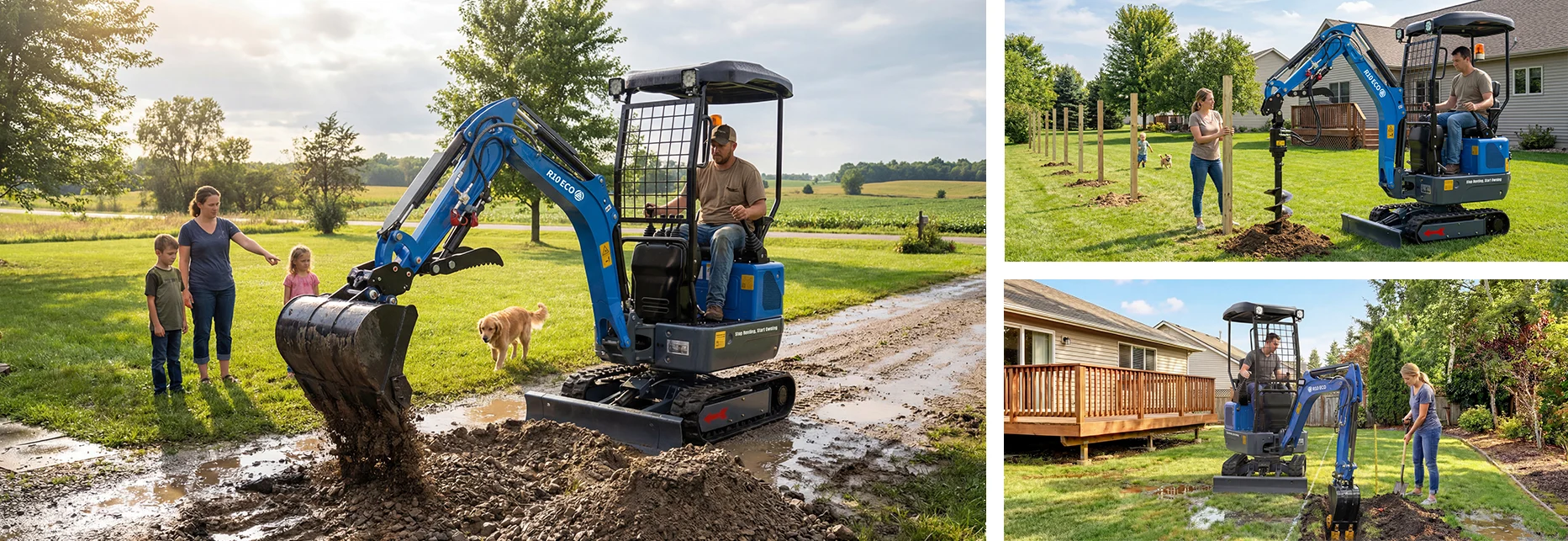
Mini excavators fit this style of selling because their applications are easy to show:
- Drainage trenching
- Ditch maintenance
- Fence line preparation
- Planting holes
- Farm road repair
- Limpieza de raíces
- Small land improvement
- Property cleanup
- Utility preparation
- Soil shaping
Dealers can use photos, videos, demonstrations, and project examples to explain the machine’s value.
Instead of selling only by machine model, the dealer can sell by farm problem:
- “This machine can help with drainage.”
- “This machine can support fence preparation.”
- “This machine can help maintain farm access paths.”
- “This machine can reduce the need to rent excavation equipment for repeated jobs.”
Application-based selling is especially effective for agricultural customers.
How Tractor Dealers Can Start Selling Mini Excavators
Tractor dealers do not need to add a large number of models immediately. A careful launch can reduce risk.
Step 1: Identify existing customer demand
Dealers should review whether customers already ask about digging, drainage, fencing, or land maintenance equipment. Salespeople and service teams often know which customers repeatedly rent or outsource excavation work.
Step 2: Choose practical models
The first mini excavator models should match common rural applications. Dealers should avoid choosing machines only by size or price. The machine should fit farm work, rural property work, and local customer expectations.
Step 3: Prepare application-based sales materials
Sales pages, brochures, videos, and social posts should show real farm uses: trenches, drainage, fencing, planting, ditch cleaning, and property maintenance.
Step 4: Confirm parts and support
Before selling machines publicly, dealers should understand spare parts, warranty policy, technical support, and service process.
Step 5: Train the sales team
Salespeople should learn how to ask practical questions:
- Do you have drainage problems?
- Do you maintain fence lines?
- Do you rent excavation equipment?
- Do you need to clean ditches?
- Do you handle planting or land preparation?
- Do you outsource small digging jobs?
Step 6: Test demand with existing customers
The dealer can begin by marketing to existing tractor and farm equipment customers before expanding advertising.
What Tractor Dealers Should Confirm Before Adding Mini Excavators
Before adding a new mini excavator line, tractor dealers should confirm business and product details.
| Item to Confirm | Why It Matters |
|---|---|
| Current machine configuration | Ensures product details are accurate |
| Farm application suitability | Helps match machines to rural work |
| Attachment compatibility | Supports fencing, planting, cleanup, and drainage |
| Spare parts package | Builds long-term customer confidence |
| Warranty policy | Clarifies after-sales responsibility |
| Technical support | Helps dealers support buyers |
| Delivery arrangement | Supports inventory planning |
| Documentation | Helps with resale and customer communication |
| Dealer terms | Supports long-term cooperation |
| Training or marketing materials | Helps launch the new category |
For RIPPA mini excavators, these details should be confirmed through current official channels before public promotion.
How RIPPA Mini Excavators Can Fit Tractor Dealer Expansion
RIPPA mini excavators can be positioned for tractor dealers as practical compact digging machines for farms, rural properties, agricultural contractors, and land maintenance customers.
Potential selling points include:
- Useful for common rural digging tasks
- Fits farm maintenance and property work
- Can complement existing tractor and equipment sales
- Helps dealers serve current customers more completely
- Creates opportunities for attachments and parts
- Supports dealer expansion into compact excavation equipment
RIPPA’s broader product line may support future expansion, but for tractor dealers, the core product focus should remain mini excavators and excavators.
Dealers should avoid making fixed claims about warranty, delivery time, certification, exclusive territory, or dealer profit unless those details are confirmed by current policy.
Preguntas frecuentes
Why should tractor dealers sell mini excavators?
Tractor dealers already serve farmers, rural property owners, agricultural contractors, and land maintenance customers who often need digging, drainage, fencing, planting, and property maintenance equipment. Mini excavators can serve these needs as a natural product extension.
Do mini excavators replace tractors?
No. Mini excavators complement tractors. Tractors are useful for pulling, mowing, hauling, and implement work, while mini excavators are better suited for digging, trenching, ditch cleaning, and compact excavation tasks.
What farm customers are most likely to need mini excavators?
Potential buyers include farmers, rural landowners, fence contractors, agricultural contractors, property maintenance businesses, and customers who frequently rent or outsource excavation work.
What should tractor dealers confirm before selling mini excavators?
Dealers should confirm machine configuration, farm application suitability, attachment compatibility, spare parts support, warranty policy, technical support, delivery arrangement, documentation, and dealer terms.
Can mini excavators create additional revenue for tractor dealers?
Yes. Mini excavators can create revenue through machine sales, attachments, spare parts, maintenance support, repeat purchases, and referrals from existing rural customers.
Can RIPPA mini excavators fit farm equipment channels?
RIPPA mini excavators may fit farm equipment channels, but current product details, parts support, warranty policy, delivery arrangement, and cooperation terms should be confirmed before promotion or purchase.
Conclusión
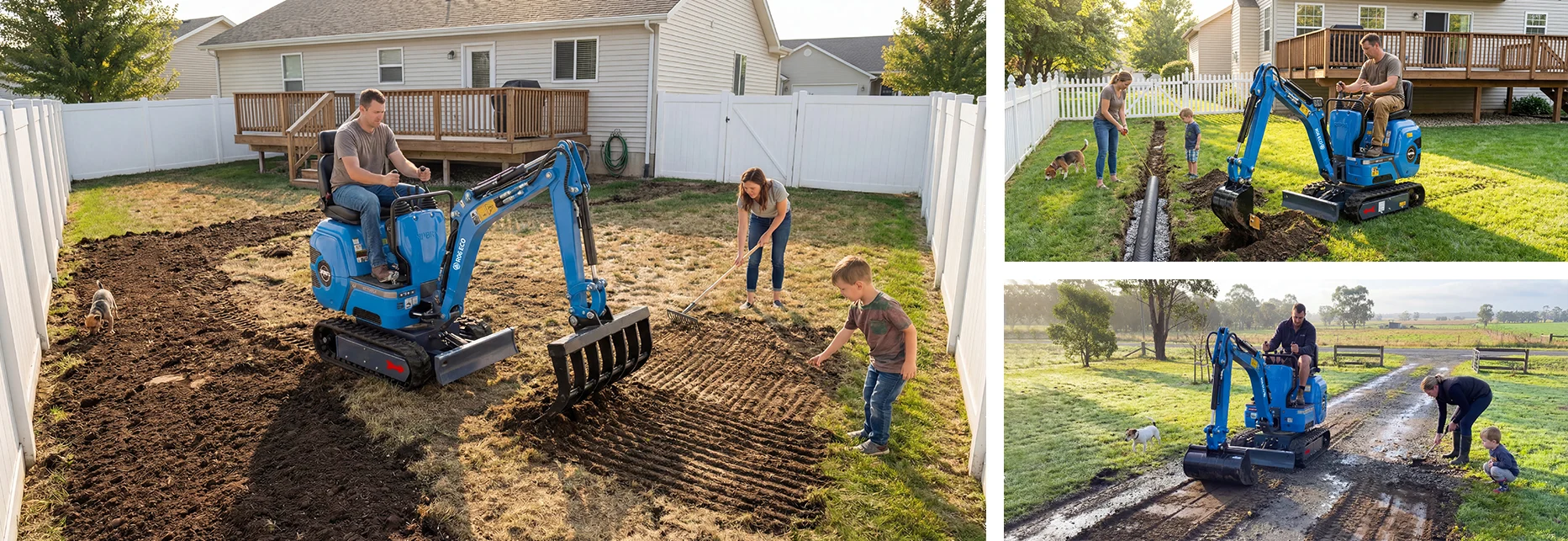
Tractor dealers should consider miniexcavadoras because their existing customers often need compact digging equipment. Farmers, rural property owners, agricultural contractors, and land maintenance businesses regularly face jobs involving drainage, fencing, trenching, planting, ditch cleaning, and property repair.
Mini excavators do not compete directly with tractors. They complement tractors by handling work that requires excavation ability.
For farm equipment dealers, adding mini excavators can increase customer value, expand product offerings, create attachment and parts opportunities, and strengthen long-term customer relationships.
RIPPA mini excavators can be considered as a practical product line for tractor dealers seeking to expand into compact excavation equipment. Before purchase, resale, or promotion, dealers should confirm current machine configuration, attachment compatibility, spare parts support, warranty policy, technical support, delivery arrangement, documentation, and dealer cooperation terms through official RIPPA channels.
 Inicio
 Productos
 Correo electrónico
 WhatsApp

