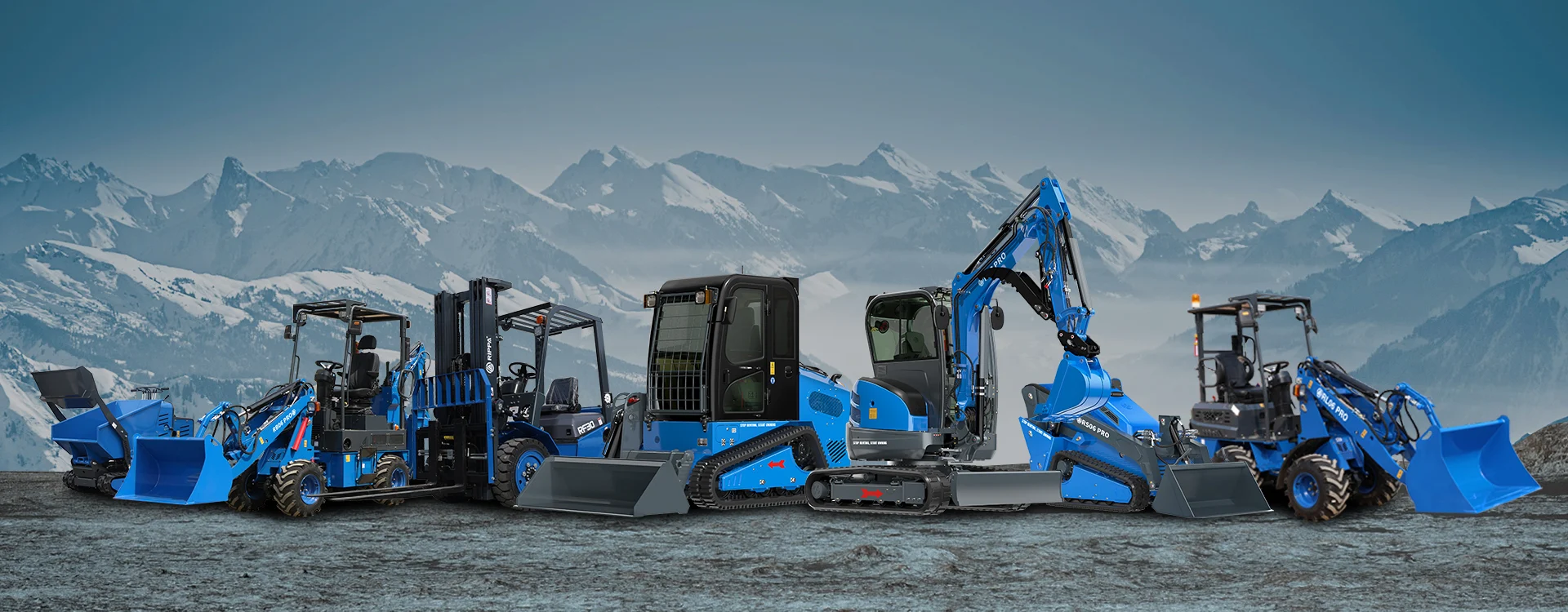
Selecting the right skid steer involves more than comparing horsepower. It requires evaluating workload intensity, financial planning, and business growth strategy.
Step 1: Assess Your Business Scale
-
Small contractor → 25–40 HP
-
Medium contractor → 40–60 HP
-
Heavy-duty operation → 60 HP+
Choose a machine aligned with your projected workload, not just current demand.
Step 2: Compare Lift Path Design
Two main lift types:
-
Radial lift: Better for digging
-
Vertical lift: Better for loading trucks
Vertical lift is ideal for construction material handling.
Step 3: Consider Attachment Expansion
Future-proof your investment by selecting:
-
Universal quick attach
-
High-flow hydraulic option
-
Electrical auxiliary connections
Step 4: Evaluate Total Cost of Ownership (TCO)
TCO includes:
-
Purchase price
-
Fuel cost
-
Hooldus
-
Parts replacement
-
Edasimüügiväärtus
Lower upfront cost does not always mean lower long-term cost.
Step 5: Supplier Strength Matters
A professional manufacturer such as RIPPA provides:
-
Global dealer support
-
Bulk order advantage
-
Overseas warehouse availability
-
Stable spare parts supply
Strong supply chain support reduces operational risks for B2B buyers.
Final Recommendation
The right skid steer should:
✔ Match your terrain
✔ Support required attachments
✔ Fit your budget
✔ Provide reliable after-sales support
Make data-driven comparisons and choose a machine that supports long-term profitability, not just short-term savings.
 Kodu
Kodu
 Tooted
 E-post
 WhatsApp

