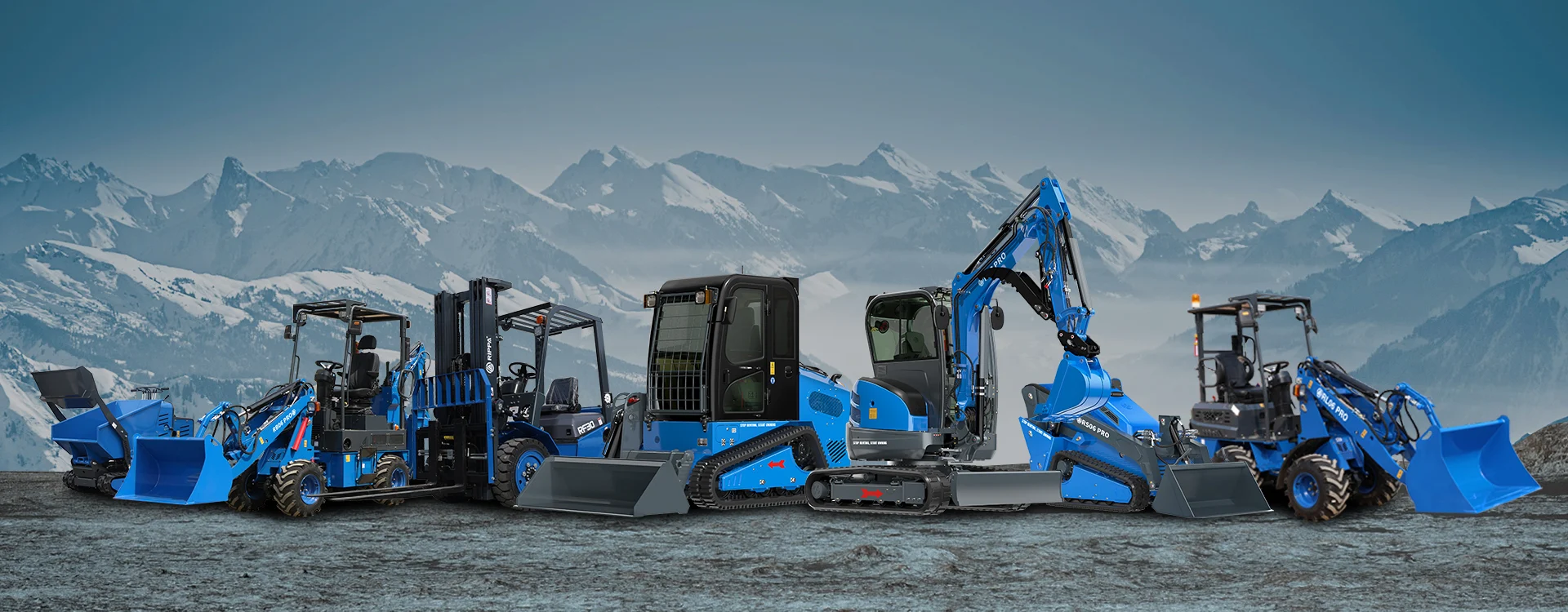
Forklifts are essential machines in modern logistics, construction, and industrial operations. From warehouses and manufacturing plants to construction sites and outdoor yards, forklifts help businesses move heavy materials efficiently and safely.
Understanding the different forklift types and classifications is crucial when choosing the right equipment for your operation. Each type of forklift is designed for specific working environments, load capacities, and operational requirements.
As a global construction equipment manufacturer, RIPPA provides a range of reliable and cost-effective material-handling equipment designed for warehouses, logistics centers, and industrial applications worldwide.
This guide explains forklift classifications, 10 common forklift types, and how to choose the right forklift for your business.
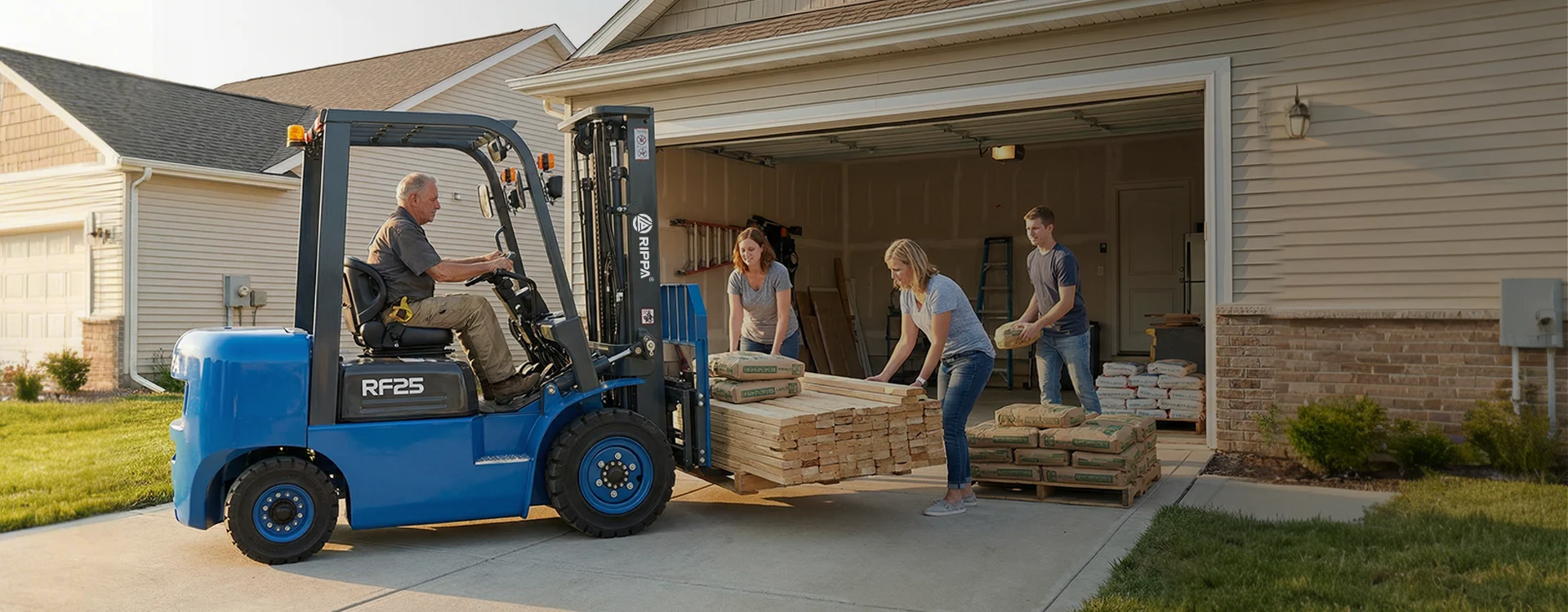
Forklift Classifications Explained
Forklifts are generally divided into seven major classes according to power source, design, and operating environment. Understanding these categories helps businesses determine which type of forklift is suitable for their worksite.
Class I: Electric Motor Rider Forklifts
Class I forklifts are battery-powered machines where the operator rides on the vehicle. These forklifts are commonly used indoors because they produce no emissions and minimal noise.
Key characteristics:
-
●Electric battery power
-
●Smooth and quiet operation
-
●Suitable for indoor facilities
Typical applications:
-
●Warehouses
-
●Distribution centers
-
●Cold storage facilities
-
●Manufacturing plants
Common models include electric counterbalance forklifts ja three-wheel electric forklifts.
Class II: Narrow Aisle Electric Forklifts
Class II forklifts are designed specifically for tight warehouse aisles and high-density storage systems.
Their compact design allows operators to move easily through narrow spaces while reaching high storage racks.
Yleisiä esimerkkejä ovat:
-
●Reach trucks
-
●Order pickers
-
●Turret trucks
-
●Side loaders
These forklifts are widely used in e-commerce warehouses and logistics hubs.
Class III: Electric Hand Trucks
Class III forklifts are smaller material-handling machines operated by a walking operator.
They are designed for short-distance transport of light loads, often inside warehouses or retail stockrooms.
Typical equipment includes:
-
●Pallet jacks
-
●Walkie stackers
These machines are ideal for loading docks, trucks, and tight indoor spaces.
Class IV: Internal Combustion Forklifts (Cushion Tires)
Class IV forklifts are powered by internal combustion engines, using fuels such as propane, gasoline, or diesel.
They use cushion tires, which perform best on smooth indoor floors.
Typical environments include:
-
●Manufacturing plants
-
●Indoor logistics centers
-
●Loading docks
Class V: Internal Combustion Forklifts (Pneumatic Tires)
Class V forklifts are highly versatile machines equipped with pneumatic tires, allowing them to operate both indoors and outdoors.
These forklifts are often used in:
-
●Lumber yards
-
●Outdoor storage yards
-
●Industrial facilities
-
●Construction staging areas
They are among the most commonly used forklift types worldwide.
Class VI: Tow Tractors
Class VI machines focus on towing rather than lifting.
They are designed to pull carts, trailers, or dollies across large industrial facilities.
Typical locations include:
-
●Airports
-
●Manufacturing plants
-
●Large warehouses
Class VII: Rough Terrain Forklifts
Class VII forklifts are specifically designed for outdoor and rough environments.
Features include:
-
●Large treaded tires
-
●High ground clearance
-
●Reinforced frames
-
●Diesel engines
They are commonly used on construction sites and agricultural operations.
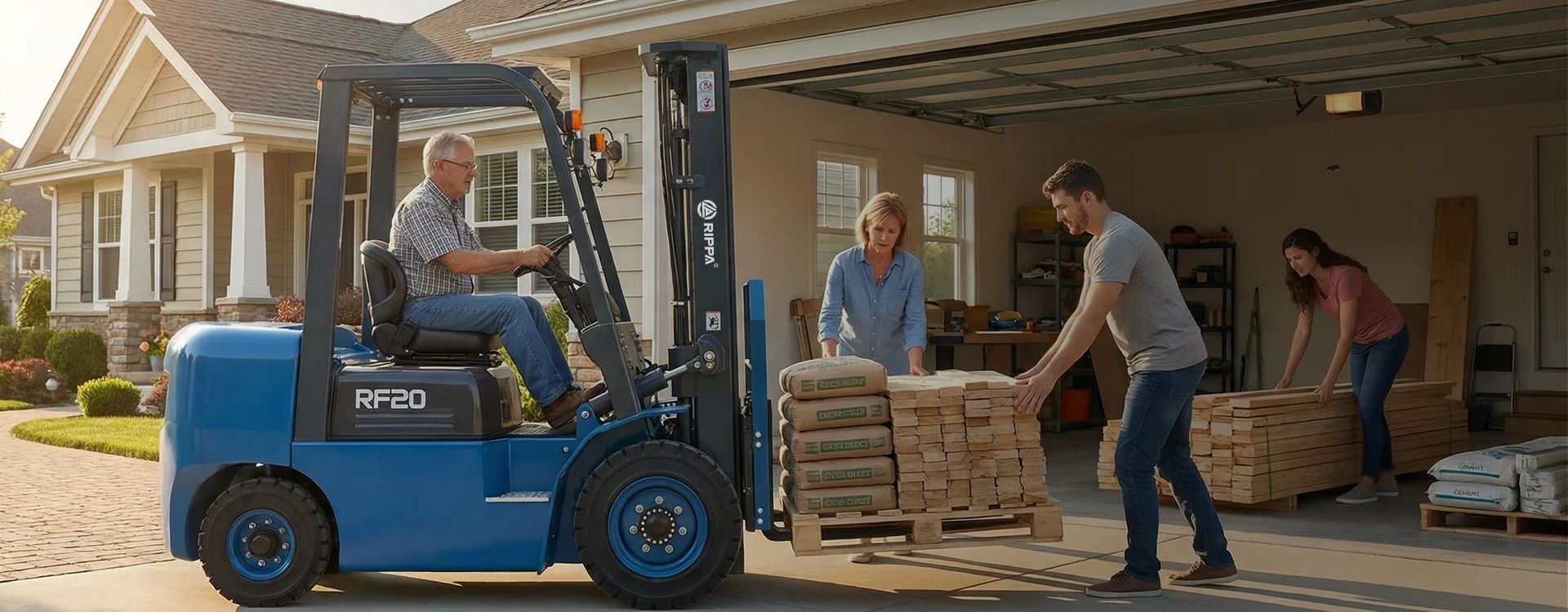
10 Common Types of Forklifts and Their Uses
Different industries require different types of forklifts. Below are the 10 most commonly used forklift types in material handling.
1. Warehouse Forklift
Warehouse forklifts are among the most widely used machines for indoor material handling.
These forklifts are designed for:
-
●Smooth warehouse floors
-
●Routine pallet movement
-
●Loading and unloading trucks
Typical tasks include:
-
●Moving pallets between storage areas
-
●Dock loading
-
●Inventory transportation
2. Side Loader Forklift
Side loaders are designed to handle long or bulky materials such as pipes, lumber, or steel beams.
Instead of lifting loads from the front, the forklift picks them up from the side, allowing easier movement in narrow aisles.
Industries using side loaders include:
-
●Lumber yards
-
●Steel warehouses
-
●Manufacturing facilities
3. Counterbalance Forklift
The counterbalance forklift is one of the most common forklift designs.
Its rear counterweight balances the load on the forks, allowing operators to lift pallets without additional support arms.
Common applications include:
-
●Warehouse logistics
-
●Manufacturing plants
-
●Outdoor yards
Molemmat electric and diesel versions are available.
4. Telehandler
A telehandler combines the functions of a forklift and crane.
It uses a telescopic boom to extend forward and upward, allowing materials to be placed at height or over obstacles.
Telehandlers are widely used in:
-
●Construction sites
-
●Agriculture
-
●Building maintenance projects
5. Heavy-Duty Forklift
Heavy-duty forklifts are built for extremely large loads, often exceeding 30,000 pounds.
They are commonly used in:
-
●Ports and shipping yards
-
●Steel manufacturing
-
●Heavy industrial facilities
6. Rough Terrain Forklift
Rough terrain forklifts are designed for uneven ground conditions.
They feature:
-
●Large tires
-
●High stability
-
●Strong lifting capability
Typical industries include:
-
●Construction
-
●Forestry
-
●Agriculture
7. Pallet Jack
Pallet jacks are the simplest type of forklift equipment.
They lift pallets slightly off the ground so they can be moved across flat surfaces.
They are commonly used in:
-
●Retail stores
-
●Warehouses
-
●Delivery trucks
8. Walkie Stacker
Walkie stackers provide vertical lifting capability while maintaining a compact footprint.
Operators walk behind the machine while controlling it.
They are ideal for:
-
●Small warehouses
-
●Stockrooms
-
●Light-duty stacking operations
9. Order Picker
Order pickers are designed for piece-picking operations.
Instead of lifting just the load, the forklift lifts the operator so they can retrieve items from high shelves.
These machines are widely used in:
-
●E-commerce warehouses
-
●Distribution centers
-
●Fulfillment facilities
10. Reach Truck
Reach trucks are designed for high-density warehouse storage.
Their forks extend forward to access deep storage racks while the truck remains in narrow aisles.
Typical uses include:
-
●High rack storage
-
●Warehouse inventory management
-
●Narrow aisle logistics
Key Factors When Choosing a Forklift
Selecting the right forklift requires evaluating several important factors.
1. Load Capacity
Determine how much weight the forklift must safely lift.
2. Working Environment
Indoor warehouses typically require electric forklifts, while outdoor sites often need diesel or rough terrain forklifts.
3. Lift Height
Consider the height of warehouse racks or construction work areas.
4. Floor Conditions
Smooth floors require different tires than rough outdoor terrain.
5. Fuel Type
Common options include:
-
●Electric
-
●Diesel
-
●LPG (propane)
Each has advantages depending on the working environment.
Why Businesses Choose RIPPA Forklifts
Global material-handling demand continues to grow, and businesses need equipment that is reliable, efficient, and cost-effective.
RIPPA focuses on delivering:
-
●High-performance forklifts
-
●Competitive factory pricing
-
●Durable industrial components
-
●Global dealer support
-
●Fast international delivery
RIPPA forklifts are widely used in:
-
●Warehouses
-
●Logistics companies
-
●Construction projects
-
●Manufacturing plants
With growing global demand for efficient material handling equipment, RIPPA continues expanding its forklift solutions for international markets.
Päätelmä
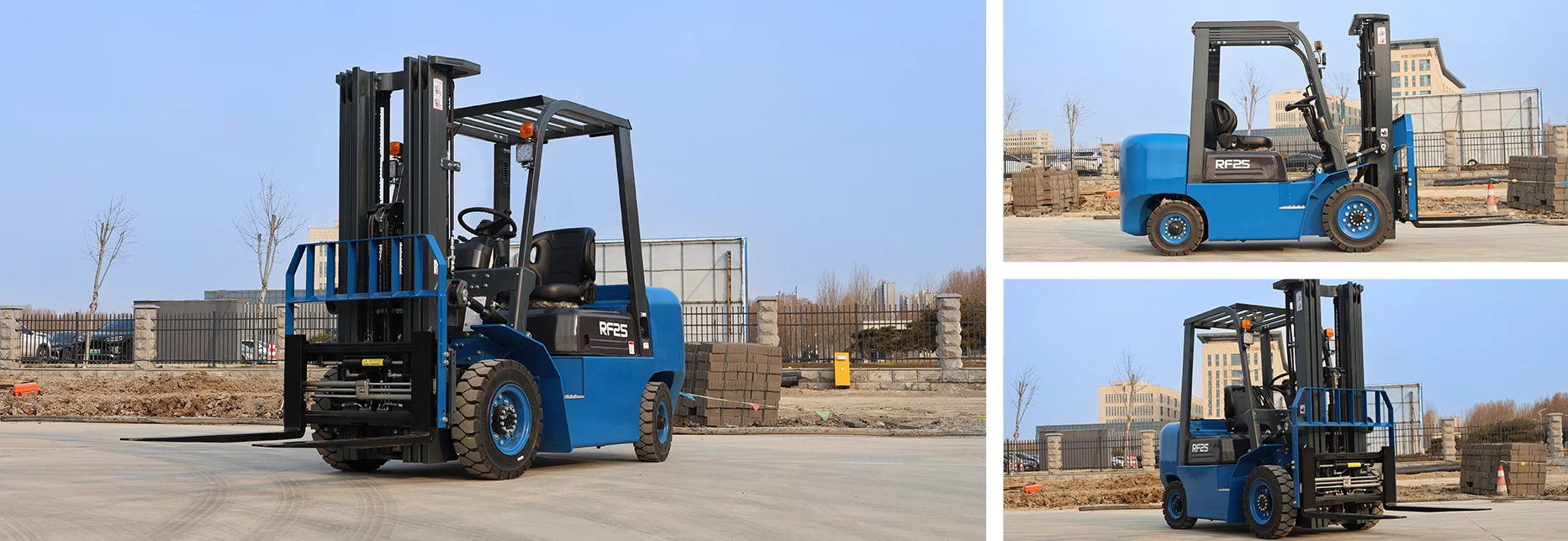
Forklifts are critical machines for modern logistics and industrial operations. From warehouse forklifts and pallet jacks to telehandlers and rough terrain forklifts, each type is designed to solve specific material-handling challenges.
Understanding the seven forklift classifications and ten common forklift types helps businesses select the right machine for their needs.
Whether operating in a warehouse, logistics center, or construction site, choosing the correct forklift improves productivity, safety, and operational efficiency.
For businesses looking for reliable and affordable forklift solutions, valmistajat kuten RIPPA provide equipment designed to meet the demands of modern material-handling operations worldwide.
 Etusivu
 Tuotteet
 Sähköposti
 WhatsApp

