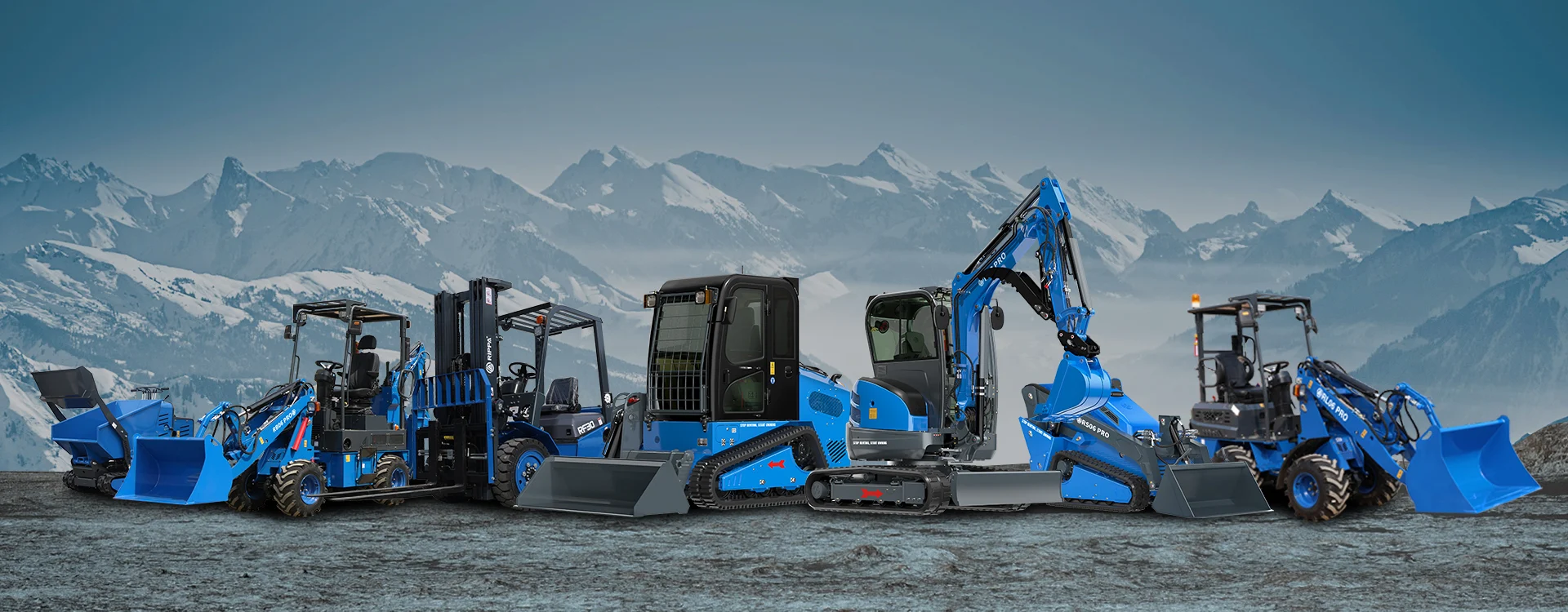
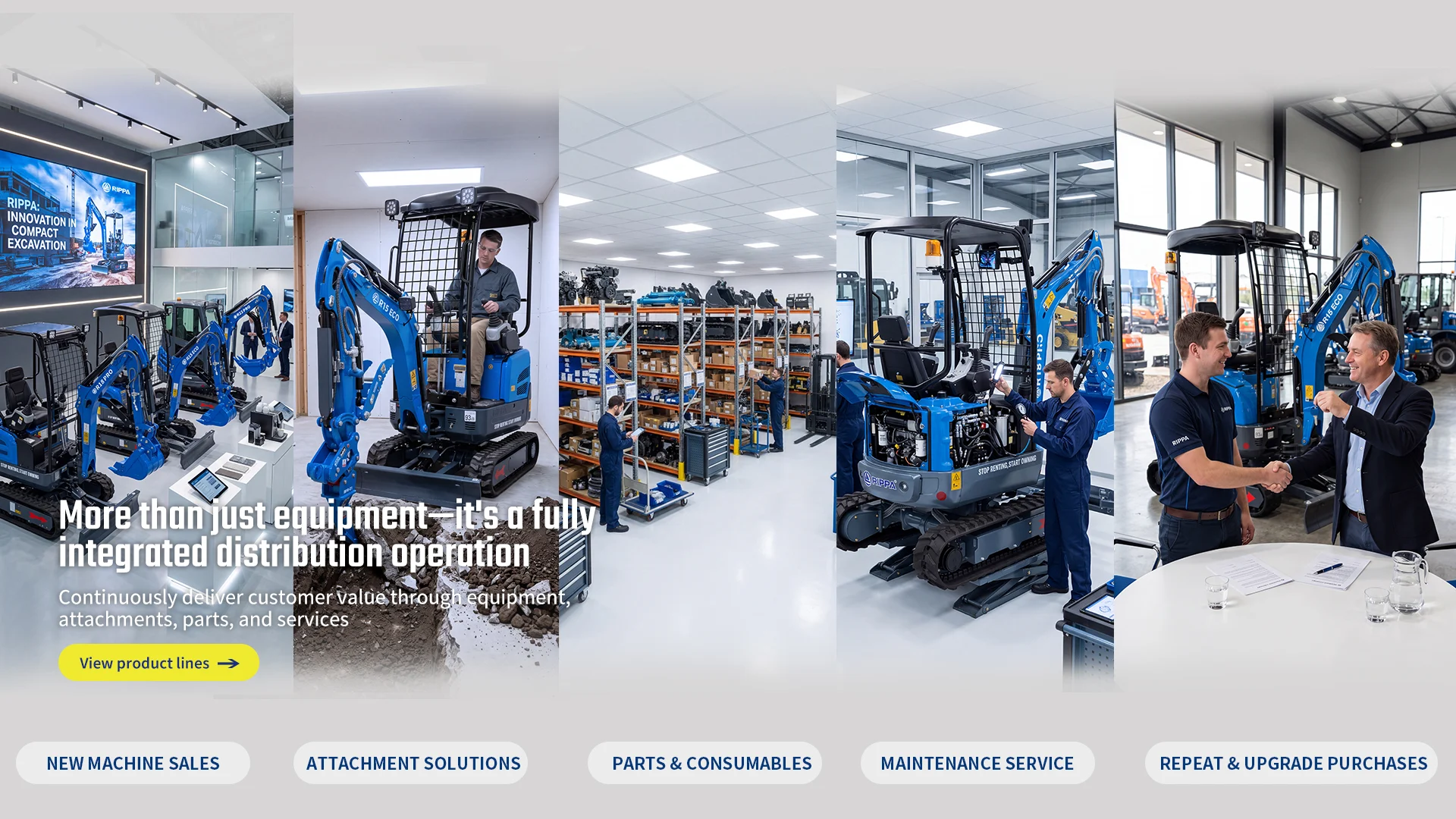
Building an equipment dealership is not simply a matter of purchasing machines and listing them for sale. A sustainable B2B equipment business requires the right customer groups, a clear product strategy, spare parts planning, application knowledge, attachments, after-sales support, and a system for turning first-time buyers into repeat customers.
For dealers entering compact construction equipment, mini excavators can provide a practical core product around which the rest of the business can develop.
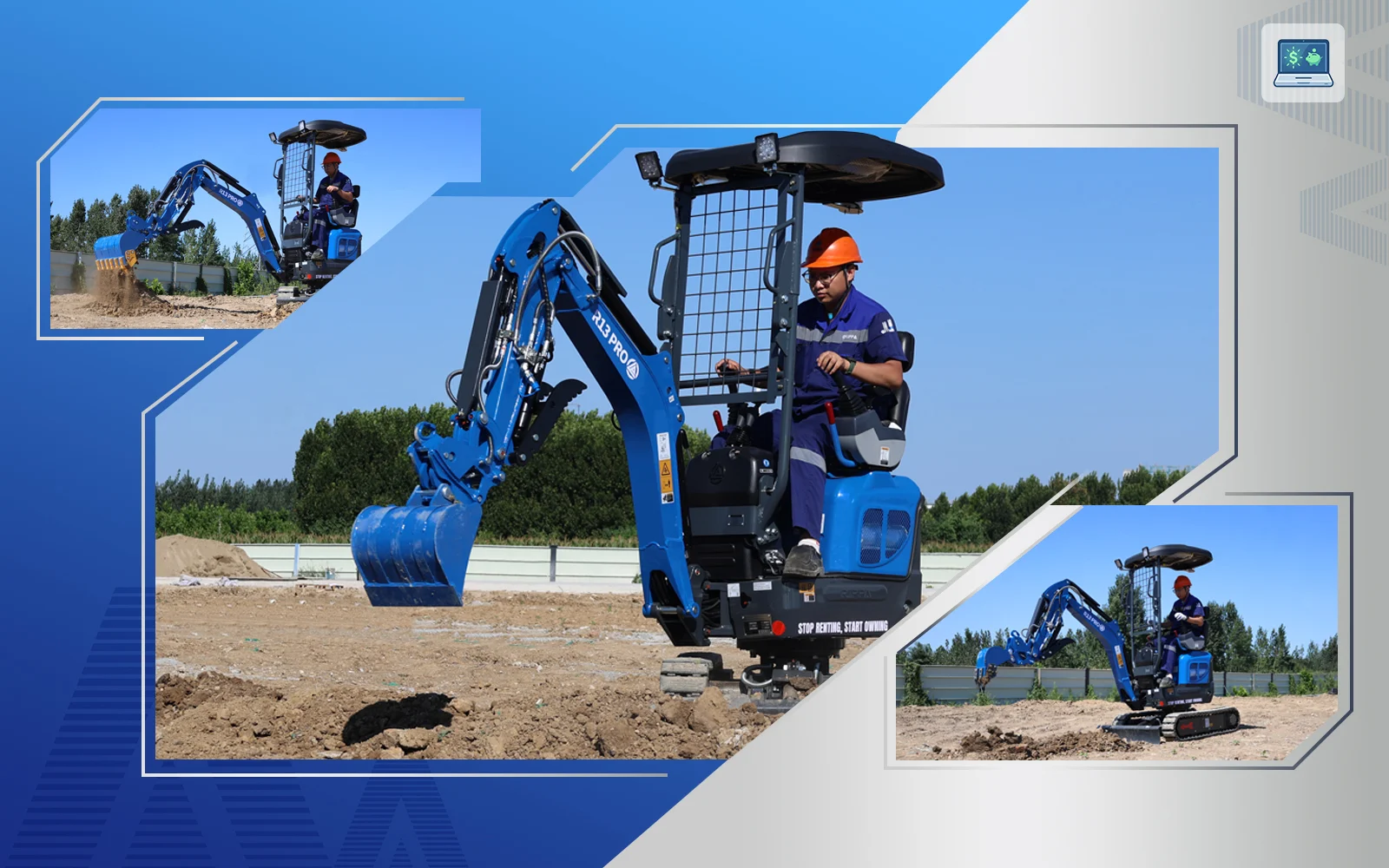
Mini excavators serve a wide range of customers, including contractors, rental companies, farms, landscaping businesses, rural service companies, fence contractors, used equipment dealers, and machinery resellers. Their applications may include trenching, drainage, ditch cleaning, fence preparation, tree planting, root removal, hardscape preparation, property maintenance, and small construction excavation.
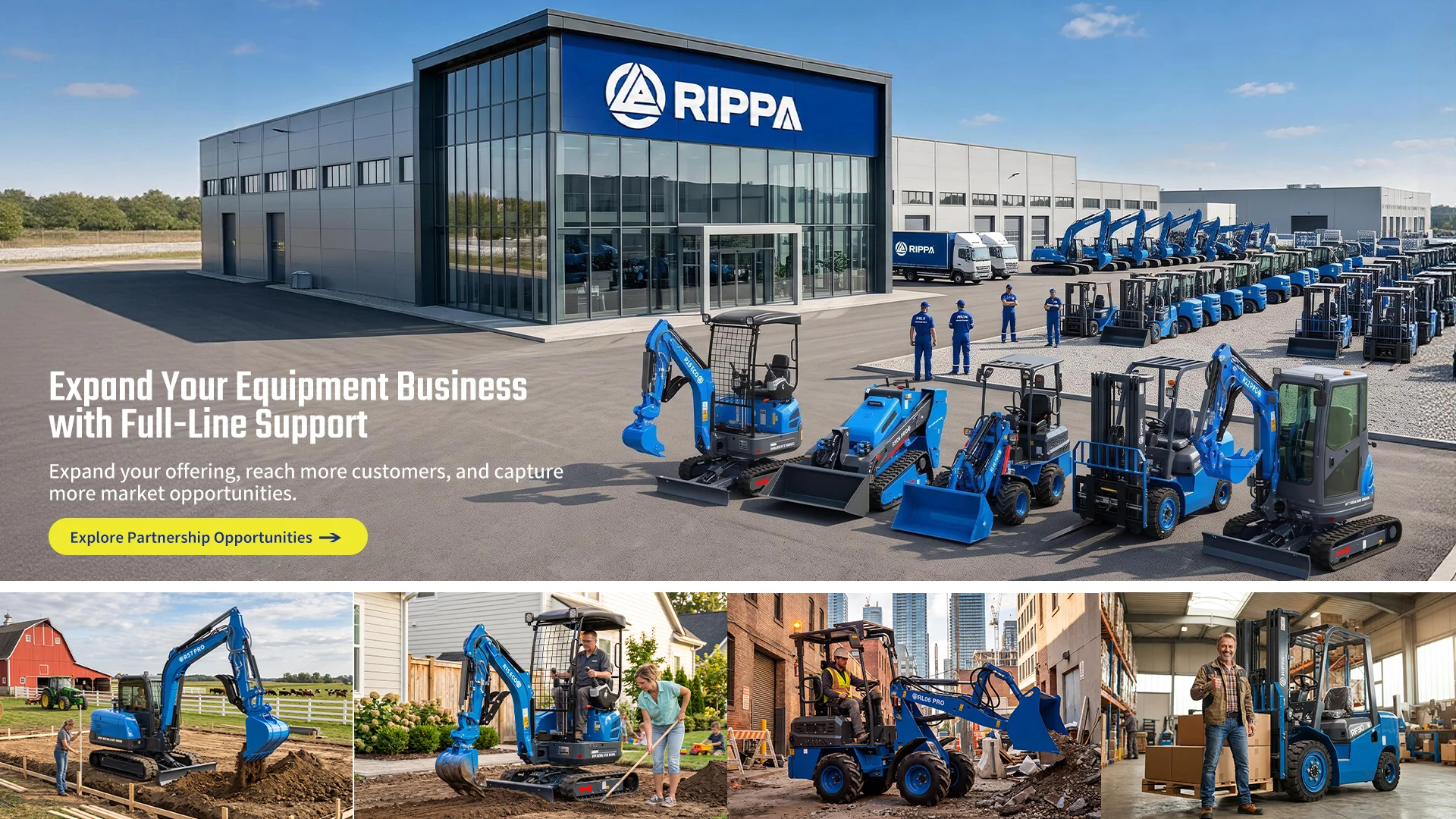
For dealers considering RIPPA mini excavators, the stronger strategy is not simply to add several machines to inventory. It is to build a complete business model around the customer problems those machines solve.
Before purchasing, reselling, renting, or promoting RIPPA equipment, dealers should confirm current machine configurations, specifications, attachment compatibility, spare parts support, warranty policy, technical support, delivery arrangements, documentation, and cooperation terms through official RIPPA channels.
Start with a Clear Target Customer
A dealer should not begin with the question:
“How many mini excavators should I order?”
The better question is:
“Who will buy these mini excavators from me?”
Potential B2B customer groups include:
- Construction contractors
- Landscaping businesses
- Sociétés de location
- Farm equipment customers
- Fence contractors
- Rural service businesses
- Property maintenance companies
- Used machinery buyers
- Small construction companies
Each customer group has different priorities.
A contractor may care about project scheduling.
A rental company may care about utilization and maintenance.
A farmer may care about drainage and property maintenance.
A landscaper may care about compact access and attachments.
Understanding these differences helps the dealer build a more focused sales strategy.
Why Mini Excavators Can Be the Core Product
Mini excavators are useful as a core dealer category because compact digging demand appears in many industries.
Parmi les applications courantes, on peut citer :
- Creusement de tranchées
- Drainage preparation
- Ditch maintenance
- Préparation du tracé de la clôture
- Plantation d'arbres
- Root removal
- Hardscape preparation
- Small site excavation
- Entretien de la ferme
- Rural property improvement
- Landscaping renovation
A dealer does not need to create a completely different product strategy for every customer.
The same machine category can be positioned according to different applications.
How to Sell Mini Excavators to Contractors
Contractors generally evaluate machinery according to business value.
Useful dealer questions include:
- How often do you rent excavators?
- What digging work do you subcontract?
- Which project stages cause delays?
- What type of jobs do you perform most frequently?
- Which attachments do you use?
- How will you transport the machine?
A contractor that frequently handles trenching, drainage, property renovation, fencing, or site preparation may see more value in ownership than a contractor that only needs excavation occasionally.
Dealers should explain the machine in terms of workflow rather than only specifications.
How to Sell Mini Excavators to Rental Companies
Rental companies think differently.
They may ask:
- Who will rent the machine?
- How often will it be rented?
- What attachments should be offered?
- How quickly can routine maintenance be performed?
- Are common parts available?
- How will machines be inspected between rentals?
Potential rental customers may include:
- Entrepreneurs
- Paysagistes
- Farms
- Fence installers
- Property maintenance companies
- Rural businesses
For rental buyers, machine uptime can matter as much as acquisition price.
How to Reach Farm Customers
Farm customers may already own tractors, implements, and other agricultural machinery.
The mini excavator should therefore be positioned as a complementary machine rather than a replacement.
Potential applications include:
- Creusement de tranchées de drainage
- Ditch cleaning
- Préparation de la clôture
- Plantation d'arbres
- Root removal
- Farm path repair
- Rural property maintenance
The message is straightforward:
The tractor handles many agricultural jobs. The mini excavator adds dedicated digging capability.
This makes mini excavators especially relevant for farm equipment dealers expanding into compact construction equipment.
How to Reach Landscaping Businesses
Landscaping companies often grow from basic maintenance into more complex projects.
Customers may begin requesting:
- Drainage correction
- Hardscape preparation
- Plantation d'arbres
- Root removal
- Yard renovation
- Préparation de la clôture
These jobs create demand for compact excavation.
A landscape equipment dealer can therefore use mini excavators to follow the growth of its existing professional customers.
Build an Attachment Strategy
A dealer can create more value from each machine by developing an organized attachment offering.
Possible attachment directions include:
- Digging buckets
- Grading buckets
- Tarières
- Hydraulic thumbs
- Grappins
- Breakers
- Rakes
- Quick couplers
Different customers require different combinations.
| Customer | Possible Attachment Direction |
|---|---|
| General contractor | Digging bucket, breaker |
| Landscaper | Grading bucket, thumb |
| Farm | Auger, grapple |
| Fence contractor | Compatible auger |
| Rental company | General-purpose attachments |
Attachment compatibility should always be confirmed for the exact machine model and hydraulic configuration.
Why Attachments Matter to Dealer Profitability
A mini excavator customer does not always need every attachment on the first day.
That can actually create a useful long-term sales path.
The customer may first buy:
- Mini excavator
- Godet standard
Later:
- Godet de nivellement
- Auger
- Grappin
- Brise-glace
- Another compatible tool
This creates repeat transactions without requiring another machine purchase immediately.
Build Spare Parts Support Early
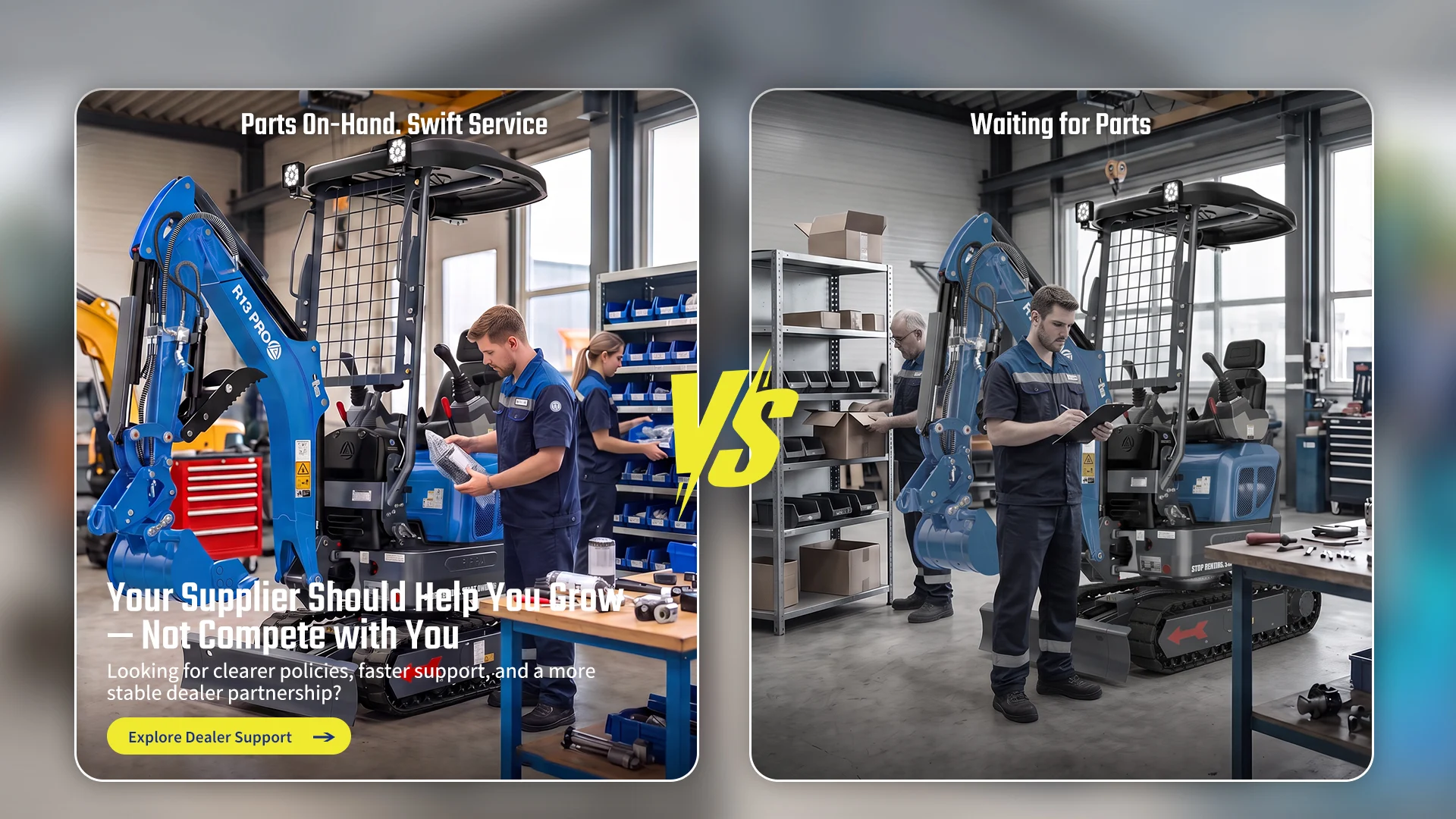
One of the most important mistakes to avoid is selling equipment before thinking about parts.
As more machines enter the market, customers will need:
- Filters
- Routine service parts
- Wear components
- Hydraulic components
- Electrical components
- Replacement parts
Dealers should understand:
- How parts are identified
- How parts are ordered
- Which items may need local stock
- How technical questions are handled
Parts support becomes increasingly important as the dealer’s installed machine population grows.
Use After-Sales Support to Retain B2B Customers
Equipment customers may need help long after the machine is delivered.
Typical questions may involve:
- Maintenance
- Pièces jointes
- Parts
- Troubleshooting
- Documentation
- Warranty procedures
A dealer that responds effectively can become more difficult for competitors to replace.
This is especially important with B2B customers, because one satisfied contractor or rental company may later purchase multiple units.
Create a Repeat-Purchase Path
A mini excavator customer may have additional needs as the business grows.
Contractor
First purchase:
- Mini excavator
Later:
- Pièces jointes
- Second excavator
- Chargeuse compacte
Rental Company
First purchase:
- Mini-pelles
Later:
- More units
- Pièces jointes
- Chargeuses compactes
- Compact wheel loaders
Farm Customer
First purchase:
- Mini excavator
Later:
- Compact wheel loader
- Additional attachments
The dealer should develop customer accounts rather than viewing each machine sale as a separate transaction.
Do Not Expand Too Quickly
A successful mini excavator dealer does not automatically need every type of equipment.
Each new category creates additional responsibilities:
- Parts
- Service knowledge
- Marketing
- Documentation
- Technical questions
- Inventory
- Warranty communication
It can be better to sell and support a focused range well before adding more categories.
When to Add Skid Steer Loaders
A skid steer loader may be a logical next product when customers frequently need:
- Chargement
- Notation
- Nettoyage
- Debris movement
- Material movement
A contractor that owns a mini excavator may later need a skid steer because the machines serve complementary roles.
The excavator digs.
The skid steer moves material and cleans the site.
When to Add Compact Wheel Loaders
Compact wheel loaders may become relevant when customers regularly move:
- Sol
- Gravier
- Sable
- Mulch
- Other loose materials
Potential customers include:
- Farms
- Dépôts de matériaux
- Landscaping businesses
- Entrepreneurs
- Sociétés de location
Again, expansion should follow real demand.
What Dealers Should Confirm Before Building Inventory
Before developing a RIPPA mini excavator business, confirm:
| Zone | What to Confirm |
|---|---|
| Produits | Current models and configurations |
| Specifications | Current technical information |
| Pièces jointes | Compatibility |
| Parts | Ordering and support process |
| Maintenance | Service requirements |
| Garantie | Current policy |
| Technical support | Communication process |
| Documentation | Available product information |
| Delivery | Current logistics arrangement |
| Cooperation | Current dealer or reseller terms |
Dealers should avoid making unconfirmed promises about warranty duration, certification, delivery time, exclusivity, or profitability.
Foire aux questions
Can a dealer build a business mainly around mini excavators?
Yes. Mini excavators can serve multiple B2B customer groups and may provide a strong core category for compact equipment dealers.
Who should dealers target first?
Potential customers include contractors, rental companies, farms, landscapers, fence businesses, and rural service companies.
Are attachments important for dealer growth?
Yes. Compatible attachments expand machine applications and can create repeat business.
What should dealers add after mini excavators?
Depending on customer demand, skid steer loaders, compact wheel loaders, attachments, or other equipment may be considered.
Why are spare parts important?
Parts support helps customers keep equipment operating and can strengthen long-term dealer relationships.
Conclusion
Building a mini excavator business requires more than purchasing inventory.
Dealers need a clear target customer, application knowledge, attachment strategy, spare parts support, technical communication, and a plan for repeat purchases.
Mini-pelles RIPPA can be considered as the core product for dealers serving contractors, rental companies, farms, landscapers, and other B2B customers.
The strongest business model is simple:
Start with the excavator, solve real customer problems, support the equipment after the sale, and expand the product line only as customer demand grows.
 Accueil
 Produits
 Courriel
 WhatsApp

