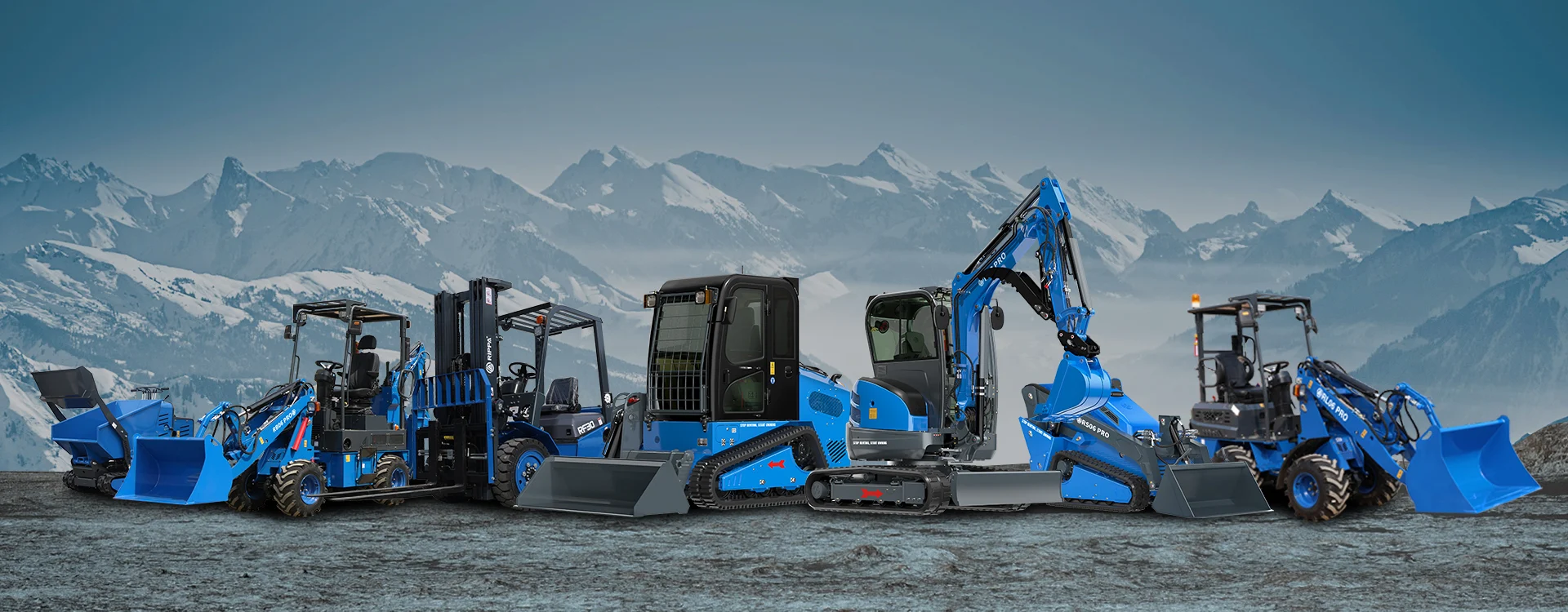
When choosing between a skid steer loader and a compact track loader (CTL), understanding terrain, cost structure, and long-term ROI is essential.
Both machines are versatile and compatible with multiple attachments, but they serve different operational environments.
Qu'est-ce qu'une chargeuse compacte ?
A skid steer loader is a four-wheeled compact machine designed for tight turning radius and high maneuverability. It performs exceptionally well on hard, stable surfaces.
Avantages :
-
Lower initial cost
-
Vitesse de déplacement plus rapide
-
Lower maintenance expenses
-
Ideal for urban construction
What Is a Compact Track Loader?
A compact track loader uses rubber tracks instead of wheels. It distributes weight more evenly across the ground.
Avantages :
-
Superior traction
-
Reduced ground damage
-
Better performance on mud, sand, snow
-
Higher stability when lifting heavy loads
Comparaison des coûts
| Facteur | Chariot élévateur | CTL |
|---|---|---|
| Prix d'achat | Inférieur | Plus élevé |
| Maintenance | Inférieur | Higher (track replacement) |
| Consommation de carburant | Inférieur | Slightly higher |
| Pression au sol | Plus élevé | Inférieur |
Track replacement costs can significantly increase long-term operating expenses.
Terrain Considerations
Choose skid steer if:
-
Working on asphalt or concrete
-
Operating indoors
-
Budget is limited
Choose CTL if:
-
Working on soft soil
-
Agricultural field operations
-
Snow removal in extreme climates
Productivity and ROI
For most urban contractors, wheeled skid steers offer faster ROI due to lower ownership cost.
Manufacturers such as RIPPA offer both wheeled skid steers and track options to meet different market demands.
Final Decision Guide
If your primary environment is paved and stable → choose skid steer.
If your projects involve mud, sand, or slopes → choose compact track loader.
Carefully analyze your project pipeline before investing.
 Accueil
 Produits
 Courriel
 WhatsApp

