What Does a Wheel Loader Do?
A chargeuse sur pneus is one of the most versatile pieces of heavy equipment used across construction, agriculture, mining, landscaping, and industrial operations. Designed with a front-mounted bucket and articulated steering, wheel loaders can quickly move, load, carry, and transport large amounts of material while maintaining excellent mobility on various terrains.
Whether you’re building roads, clearing land, loading trucks, or managing farms, a modern wheel loader significantly improves productivity while reducing labor costs.
In this guide, we’ll explain exactly what a wheel loader does, where it’s commonly used, what attachments expand its capabilities, and how to choose the right model for your business.
Qu'est-ce qu'une chargeuse sur pneus ?
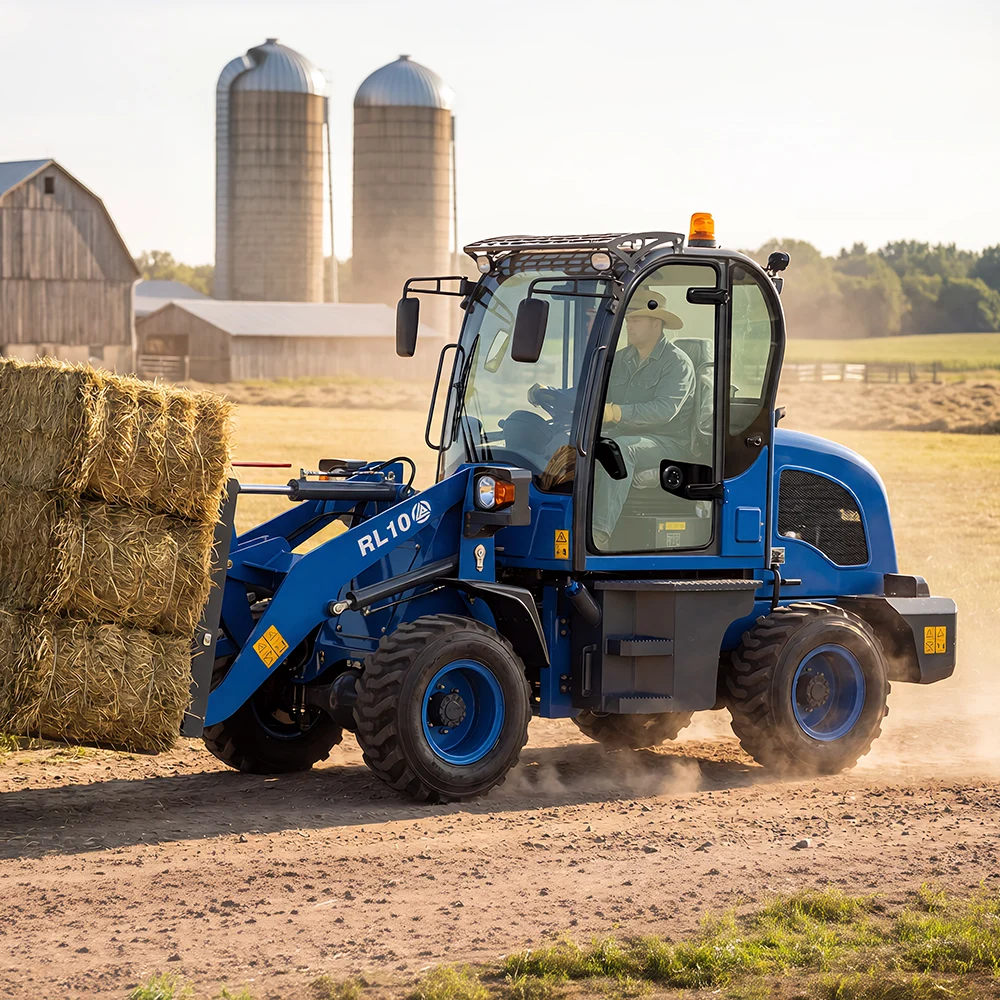
A wheel loader (sometimes called a chargeur frontal) is a four-wheel machine equipped with:
- Hydraulic lifting arms
- Large front bucket
- Moteur diesel puissant
- Articulated steering system
- Heavy-duty tires
Unlike excavators, wheel loaders primarily move materials above ground rather than digging deep into the earth.
Their combination of speed, lifting power, and maneuverability makes them indispensable on job sites worldwide.
Primary Functions of a Wheel Loader
1. Loading Materials
The most common job of a wheel loader is loading materials into dump trucks or hoppers.
Typical materials include:
- Sable
- Gravier
- Dirt
- Topsoil
- Crushed stone
- Charbon
- Copeaux de bois
- Neige
The loader scoops material, transports it over short distances, and deposits it efficiently.
2. Moving Bulk Materials
Wheel loaders excel at transporting loose materials around construction sites.
Instead of using multiple workers with smaller equipment, one operator can relocate hundreds of tons of material each day.
Common examples include:
- Construction routière
- Building foundations
- Exploitation des carrières
- Recycling plants
3. Site Cleanup
After excavation or demolition work, wheel loaders remove:
- Broken concrete
- Bricks
- Waste materials
- Scrap metal
- Construction debris
Their large buckets make cleanup significantly faster than manual methods.
4. Stockpile Management
Many aggregate plants and mining operations rely on wheel loaders to create, organize, and maintain stockpiles.
Operators can quickly:
- Build piles
- Blend materials
- Reload trucks
- Maintain inventory areas
5. Truck Loading
Wheel loaders are designed to load dump trucks efficiently.
Their hydraulic systems provide:
- Fast lifting cycles
- High breakout force
- Excellent bucket control
These features reduce truck waiting time and improve overall job-site efficiency.
Industries That Use Wheel Loaders
La construction
Construction companies use wheel loaders for:
- Transport de matériaux
- Foundation preparation
- Road building
- Site development
- Concrete plant operations
Agriculture
Farmers use compact wheel loaders for:
- Alimentation du bétail
- Moving hay bales
- Loading grain
- Nettoyage des étables
- Manipulation des engrais
Compact machines fit well inside farm buildings while providing excellent lifting performance.
Aménagement paysager
Landscape contractors use wheel loaders to transport:
- Mulch
- Decorative stone
- Sol
- Trees
- Compost
Their ability to work quickly without damaging finished surfaces makes them ideal for landscaping projects.
Exploitation minière
Mining operations require heavy-duty wheel loaders to handle:
- Ore
- Charbon
- Rock
- Waste materials
Large loaders can move several tons in a single bucket.
Déneigement
Municipalities and contractors frequently equip wheel loaders with:
- Snow buckets
- Snow pushers
- Plows
- Spreaders
Their traction and lifting capacity make them highly effective during winter operations.
Common Wheel Loader Attachments
One reason wheel loaders are so popular is their compatibility with various attachments.
Standard Bucket
Best for:
- Dirt
- Sable
- Gravier
- Total
Fourches à palettes
Idéal pour :
- Warehouse work
- Construction materials
- Brick pallets
- Lumber
Godet à grappin
Perfect for:
- Logs
- Brush
- Demolition debris
- Recycling materials
Lame à neige
Used for:
- Parking lots
- Roads
- Industrial facilities
Bale Spear
Designed for agricultural operations involving hay and straw bales.
Sweeper Attachment
Excellent for:
- Parking lots
- Streets
- Parcs industriels
Avantages de l'utilisation d'une chargeuse sur pneus
Haute productivité
Wheel loaders complete loading tasks much faster than manual labor or smaller equipment.
Excellente mobilité
Rubber tires allow higher travel speeds than tracked machines, making wheel loaders efficient for jobs requiring frequent movement.
Lower Ground Damage
Compared with steel tracks, tires minimize surface damage on paved areas and finished landscapes.
Rendement énergétique
Modern engines and hydraulic systems help reduce fuel consumption while maintaining strong performance.
Confort de l'opérateur
Today’s wheel loaders often feature:
- Air-conditioned cabs
- Commandes ergonomiques
- Adjustable suspension seats
- Excellente visibilité
- Digital displays
These improvements help reduce operator fatigue during long workdays.
Choosing the Right Wheel Loader
When selecting a machine, consider:
Job Type
Choose bucket size and lifting capacity based on your primary applications.
Working Environment
Compact wheel loaders are better for confined spaces, while larger models are ideal for open construction sites and quarries.
Pièces jointes
Select a machine with a quick coupler if you plan to switch between buckets, forks, grapples, or snow equipment.
Service and Parts
Reliable access to maintenance, replacement parts, and technical support minimizes downtime and protects your investment.
Why Businesses Choose RIPPA Wheel Loaders
RIPPA wheel loaders are designed for contractors, agricultural operations, landscaping companies, and industrial users seeking dependable performance and versatility.
Parmi les principaux avantages, on peut citer :
- Efficient hydraulic systems
- Comfortable operator cabins
- Compatibilité avec plusieurs types de pièces jointes
- Durable construction
- Entretien facile
- Models suitable for light- and medium-duty applications
Whether handling aggregates, loading trucks, or maintaining farms, RIPPA wheel loaders provide practical solutions for a wide range of jobs.
Foire aux questions
What does a wheel loader mainly do?
A wheel loader is primarily used to scoop, lift, transport, and load loose materials such as sand, gravel, soil, snow, and construction debris.
Can a wheel loader dig?
It can dig shallow material piles, but it is not designed for deep excavation. Excavators are better suited for trenching and deep digging.
What’s the difference between a wheel loader and a skid steer?
Wheel loaders offer higher travel speeds, larger lifting capacities, and better comfort, while skid steers provide superior maneuverability in tight spaces.
Les chargeuses sur pneus sont-elles adaptées aux exploitations agricoles ?
Yes. Compact wheel loaders are widely used for feeding livestock, moving hay, loading grain, and general farm maintenance.
Can wheel loaders use different attachments?
Yes. Common attachments include buckets, pallet forks, grapples, snow blades, sweepers, and bale spears, allowing one machine to perform multiple tasks.
 Accueil
 Produits
 Courriel
 WhatsApp

