Introduction
Are you looking for a mini excavator manufacturer in China to supply your equipment dealership or distribution business?
Finding the right factory can create opportunities to expand your product range, develop wholesale sales, and reach new construction equipment customers.
However, choosing a Chinese excavator supplier is not simply about finding the lowest factory price.
A reliable business partnership should consider:
- Manufacturing capability
- Product range
- Quality control
- Export experience
- Wholesale pricing
- Spare parts
- Warranty procedures
- Technical training
- Dealer territory
- Long-term supply
For existing machinery dealers, rental companies, equipment importers, and other B2B businesses, working directly with a manufacturer can become a practical way to enter or expand in the compact equipment market.
RIPPA, based in Jining, Shandong, China, is actively developing its international dealer network and offers opportunities for qualified businesses interested in compact equipment distribution.
1. How Do You Identify a Real Mini Excavator Manufacturer in China?
The first step is distinguishing a manufacturer from a trading company or intermediary.
A trading company may provide access to different products, but a direct manufacturer relationship can offer closer communication about production, specifications, and technical matters.
When evaluating a factory, ask:
- Where is the manufacturing facility?
- Which products are manufactured by the company?
- What production equipment is used?
- How are machines tested?
- Can the company arrange a factory visit?
- What quality documentation is available?
- Does it have experience exporting to your country?
A manufacturer should be able to explain its production operation clearly.
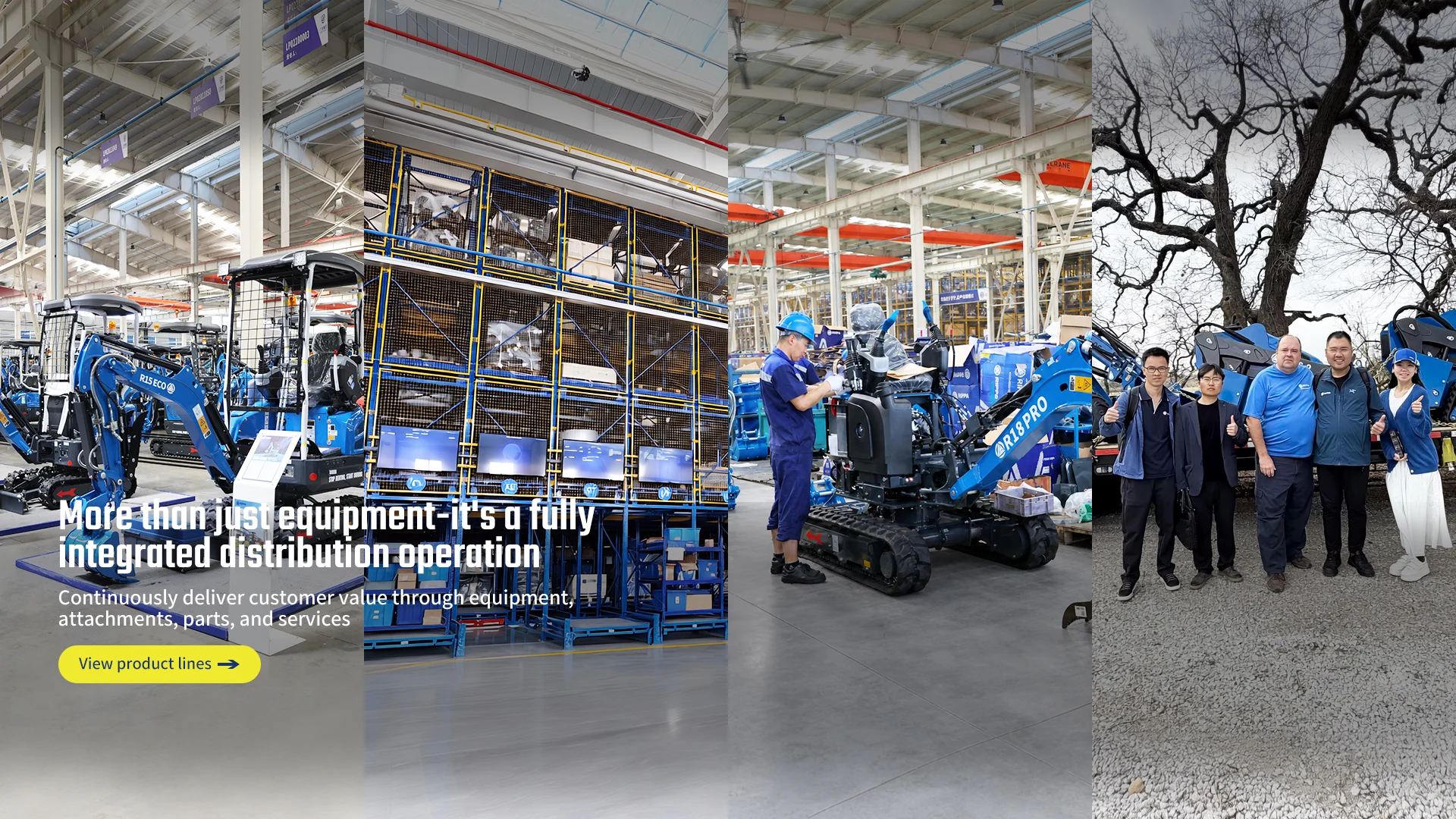
RIPPA identifies itself as Shandong Rippa Machinery Group Co., Ltd., headquartered in Jining, Shandong Province, with business activities covering machinery research, development, production, and sales.
Its published factory materials describe 12 intelligent production lines, more than 50 robotic welding stations, and a 200-hour pre-delivery test for each machine.
These details provide a starting point for evaluating the manufacturer’s production capabilities.
2. Why Should Dealers Evaluate Factory Production Capacity?
Production capacity matters when you are building a dealership rather than purchasing one machine.
A distributor may eventually need:
- Initial inventory
- Repeat orders
- Multiple machine sizes
- Additional attachments
- Fleet orders
- Seasonal stock replenishment
A supplier that cannot support future demand may limit the dealer’s growth.
RIPPA’s published factory information reports daily output of up to 150 units.
Its manufacturing structure also includes 13 subsidiaries producing selected core components, such as wire harnesses, oil pipes, laser-cut parts, and radiators.
For dealers, this type of manufacturing structure is relevant because production coordination and component supply can affect order planning.
3. How Important Is Quality Control When Buying Wholesale Excavators?
A wholesale buyer is not only purchasing equipment.
The dealer is also putting its own reputation behind the product.
A machine that arrives with avoidable problems can affect:
- Customer satisfaction
- Warranty costs
- Repeat orders
- Dealer reputation
- Local brand development
Before selecting a supplier, ask about:
- Welding processes
- Structural inspection
- Hydraulic-system checks
- Engine testing
- Final machine inspection
- Pre-delivery testing
- Warranty procedures
RIPPA’s published factory materials describe 200-hour pre-delivery testing and report a first-pass yield of 99.2%.
Dealers should request relevant quality documentation and understand how these measurements are calculated.
The purpose is not simply to collect factory statistics.
It is to understand how the manufacturer manages product consistency.
4. Choose a Manufacturer with the Right Product Range
A successful equipment dealer should select products according to local customer demand.
Mini excavators can serve:
- Construction contractors
- Landscapers
- Farms
- Rental companies
- Fence contractors
- Property maintenance businesses
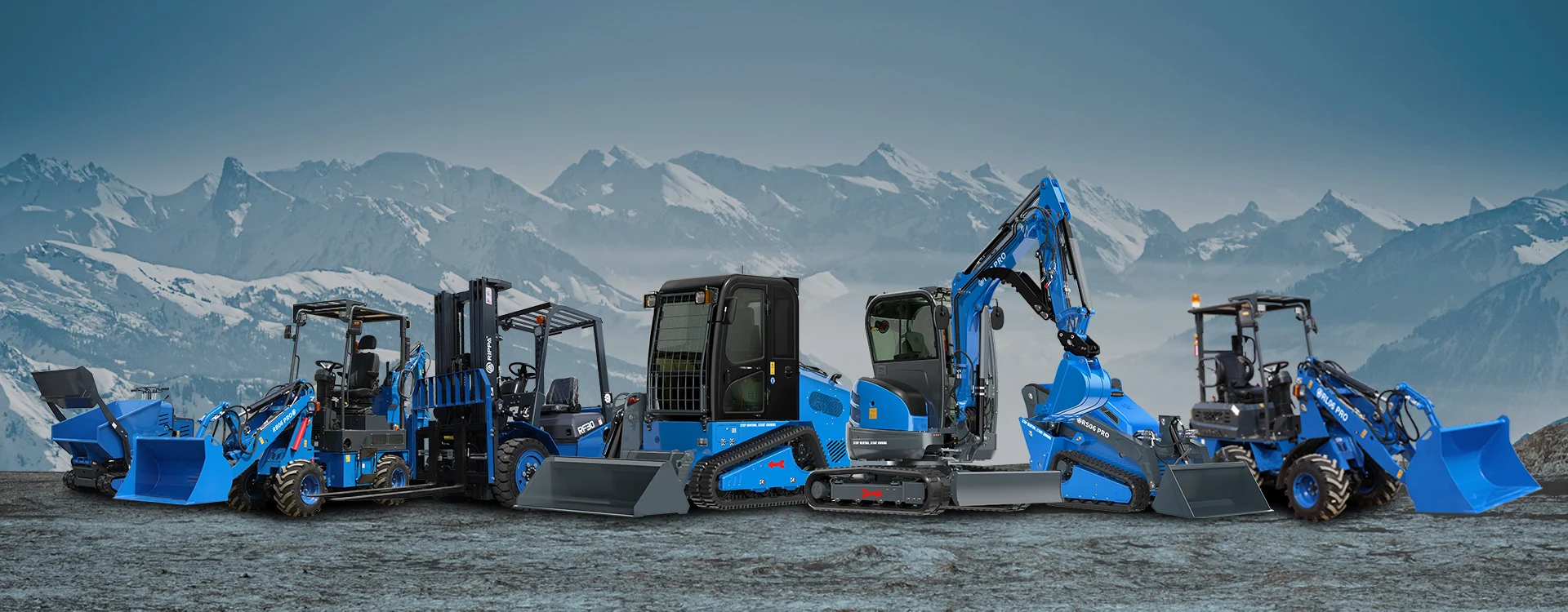
RIPPA’s current published mini excavator lineup includes several compact models, including:
- R319
- R327
- R322L
- R330
- R350
The published lineup spans approximately 1 to 3.5 metric tons.
Beyond excavators, RIPPA also offers:
| Product Category | Main Applications |
|---|---|
| Mini Excavators | Digging, trenching, drainage |
| Skid Steer Loaders | Loading, grading, cleanup |
| Wheel Loaders | Loose-material movement |
| Forklifts | Pallet and warehouse handling |
| Attachments | Expanding machine applications |
This product range gives dealers the opportunity to develop multiple customer segments over time.
However, a new dealer does not need to stock every category immediately.
Starting with a focused mini excavator product line can make market development easier.
5. Why Factory-Direct Wholesale Pricing Matters
Wholesale pricing is important, but dealers should evaluate the complete commercial offer.
A useful calculation includes:
- Factory price
- Shipping
- Import duties
- Customs clearance
- Local handling
- Inland transportation
- Parts inventory
- Warranty responsibilities
- Marketing expenses
The actual dealer margin depends on the final landed cost and the selling price in the local market.
RIPPA’s published dealer materials describe factory-direct wholesale arrangements supported by its vertically integrated manufacturing model.
Potential dealers should request a current quotation for the specific models and quantities they intend to purchase.
6. What Should a Chinese Excavator Manufacturer Provide to International Dealers?
A long-term dealer relationship needs support beyond equipment supply.
Important areas include:
Sales Training
Salespeople should understand:
- Model differences
- Machine applications
- Product specifications
- Attachment options
- Customer positioning
Technical Training
Service personnel may need guidance on:
- Maintenance
- Hydraulic systems
- Electrical systems
- Diagnostics
- Troubleshooting
- Warranty procedures
Spare Parts Support
Dealers should understand:
- Parts identification
- Ordering procedures
- Recommended local stock
- Regional warehouse availability
- Emergency parts arrangements
Marketing Support
Useful resources may include:
- Product brochures
- Specification sheets
- Product videos
- Website materials
- Demonstration support
- Digital advertising
RIPPA’s current published dealer program describes these areas as parts of its support structure for approved dealers.
7. What Are the Benefits of Becoming a RIPPA Dealer?
RIPPA is actively recruiting qualified international partners.
Its published dealer program describes the following benefits.
| Dealer Benefit | Published Program Description |
|---|---|
| Territory | Defined exclusive territories for approved dealers |
| Initial inventory | Flexible stocking based on market potential |
| Wholesale pricing | Factory-direct purchasing arrangements |
| Franchise fee | No franchise fee |
| Sales training | Product and sales training |
| Technical training | Maintenance and troubleshooting training |
| Parts support | Regional and overseas parts support |
| Marketing | Digital marketing and product materials |
| Demo equipment | Preferential demonstration machine arrangements |
| Lead generation | Qualified inquiries from dealer territories |
RIPPA’s published materials also describe annual digital marketing investment exceeding $500,000 and forwarding qualified territorial leads to relevant dealers.
These benefits are subject to qualification and the applicable written agreement. They should not be interpreted as a guarantee of a specific number of sales or leads.
8. Is There a Minimum Order Quantity to Become a RIPPA Dealer?
One of the common concerns for new equipment distributors is the amount of inventory they must purchase before starting.
RIPPA’s main published dealer program describes flexible initial stocking rather than a single rigid minimum order quantity for every applicant.
A potential dealer may discuss a starting plan involving:
- Demonstration equipment
- Selected core models
- Basic spare parts
- Common attachments
- Additional machines as demand grows
The appropriate arrangement depends on:
- Business size
- Available capital
- Local market potential
- Territory
- Product selection
Confirm the current initial order requirements directly with RIPPA before making an investment decision.
9. Who Can Apply to Become a RIPPA Dealer?
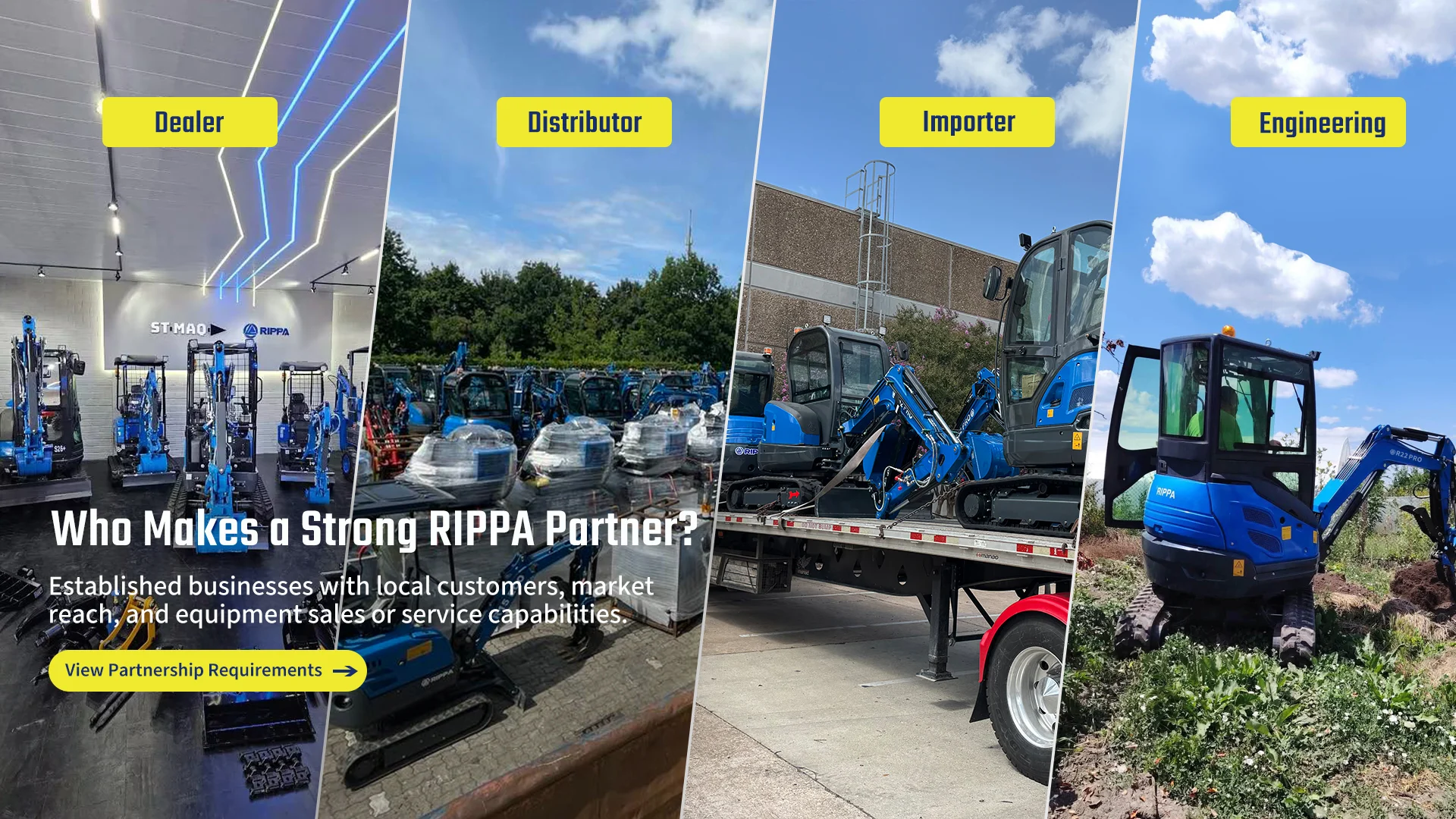
RIPPA is interested in businesses that can develop local equipment sales and customer support.
Potential applicants include:
Existing Equipment Dealers
Businesses that already sell construction or agricultural machinery.
Rental Companies
Companies with equipment fleets, rental customers, and maintenance resources.
Machinery Importers
Businesses with international sourcing, logistics, and distribution experience.
Tractor and Agricultural Dealers
Companies serving farmers and rural customers.
Landscaping Equipment Businesses
Dealers serving professional landscapers and outdoor construction contractors.
Trailer and Commercial Vehicle Dealers
Businesses with established contractor and machinery customer networks.
Construction Contractors
Established companies with industry relationships and plans to expand into equipment sales.
Previous dealership experience may be helpful, but the business’s customer access, operating resources, and ability to support equipment are also important.
10. How Do You Apply to Become a RIPPA Dealer?
The published RIPPA application process includes several stages.
Step 1: Submit a Dealer Inquiry
Provide:
- Company name
- Country and location
- Current business activities
- Existing product categories
- Customer groups
- Intended sales territory
Step 2: Market and Business Review
RIPPA evaluates the proposed market and the applicant’s sales and service capabilities.
Step 3: Factory Tour
Qualified prospects can explore the manufacturing operation through a virtual or in-person factory tour.
Step 4: Discuss Commercial Terms
Confirm:
- Territory
- Wholesale pricing
- Initial stocking
- Parts
- Warranty
- Training
- Marketing support
Step 5: Sign the Dealer Agreement
Ensure all agreed commercial terms and responsibilities are documented.
Step 6: Prepare for Market Launch
Develop the initial product range, demonstration plan, marketing, and customer support processes.
RIPPA’s published guide describes an indicative timeline of approximately four to eight weeks from initial inquiry to the first order. Actual timing depends on qualification, territory availability, and agreement arrangements.
11. How Can You Build a Successful Local Mini Excavator Dealership?
Getting approved is only the beginning.
The dealer must develop a local customer base.
A practical strategy includes:
Identify Your Main Customer Groups
Focus on:
- Contractors
- Landscapers
- Farms
- Rental companies
- Property maintenance businesses
Select Suitable Machines
Start with products that match the most common local applications.
Build a Demonstration Strategy
Allow customers to understand the machine, controls, attachments, and applications.
Develop Parts and Service
Prepare a clear process for routine maintenance, parts, and technical support.
Build Online Visibility
Publish useful content such as:
- Mini excavator buying guides
- Mini excavators for landscaping
- Excavator size comparisons
- Compact equipment applications
- Equipment rental solutions
Follow Up with B2B Customers
Develop long-term relationships rather than focusing only on individual machine transactions.
Frequently Asked Questions
How do I find a mini excavator manufacturer in China?
Research manufacturers, verify their production locations, review their product range, request quality documentation, and evaluate their export and after-sales capabilities.
Is RIPPA a Chinese mini excavator manufacturer?
Yes. Shandong Rippa Machinery Group is headquartered in Jining, Shandong Province, China, and its business includes machinery research, development, production, and sales.
Can I buy mini excavators directly from RIPPA?
Potential business buyers and qualified dealers can contact RIPPA to discuss direct purchasing, wholesale quotations, and applicable commercial arrangements.
Does RIPPA offer exclusive territories?
Its published dealer program describes defined exclusive territories for approved partners. The exact territory and conditions must be confirmed in the written agreement.
Does RIPPA charge a franchise fee?
RIPPA’s published dealer materials state that it does not charge a franchise fee. Other equipment and operating costs still apply.
Can a rental company become a RIPPA dealer?
Potentially, yes. Rental businesses are among the types of companies identified in RIPPA’s published dealer recruitment materials.
Can I start with a small inventory?
RIPPA’s main published dealer materials describe flexible initial stocking based on business size and market potential. Confirm the exact starting arrangement for your market.
Conclusion
Choosing a Chinese mini excavator manufacturer is a strategic decision for any business planning to enter equipment distribution.
A suitable manufacturer should provide more than a competitive factory quotation.
It should demonstrate manufacturing capability, product consistency, export experience, parts support, and a clear dealer cooperation structure.
RIPPA combines its manufacturing base in Shandong, compact equipment product range, and international dealer program to support businesses interested in developing local machinery markets.
If you already operate an equipment dealership, rental company, machinery import business, or another B2B enterprise, you can explore becoming an authorized RIPPA dealer and building a long-term partnership directly with a Chinese manufacturer.
 Home
 Products
 Email
 WhatsApp

