Uvod
Choosing the best mini excavator for landscaping requires more than comparing prices or selecting the smallest available machine.
The right excavator should match the type of landscaping work you perform, the access conditions of your job sites, your transportation setup, and the attachments you need.
A machine used for residential garden renovation may have different requirements from one used for commercial landscaping, drainage installation, tree planting, or hardscape construction.
For landscaping businesses, the most important factors include:
- Machine size and operating weight
- Overall width and access requirements
- Digging depth and working range
- Track configuration
- Hydraulic attachment compatibility
- Transport
- Maintenance and parts support
- Expected equipment utilization
This guide explains how to evaluate these factors before purchasing a mini excavator for landscaping.
1. What Is the Best Mini Excavator for Landscaping?
The best mini excavator for landscaping is the machine that fits your typical job sites and performs your most frequent paid tasks efficiently.
There is no single model that is ideal for every landscaping business.
A contractor working in small residential gardens may prioritize compact dimensions and access.
A commercial landscaper performing drainage and hardscape preparation may require greater digging capability.
A landscaping company handling larger projects may need a machine with more reach and a broader range of compatible attachments.
Start by reviewing your actual workload.
Ask:
- Do you primarily work in residential gardens?
- Do you install drainage?
- Do you perform tree planting or root removal?
- Do you prepare patios and hardscapes?
- Do you work on large commercial properties?
- How often do you transport the machine between jobs?
Your answers should determine the machine specifications you prioritize.
2. Choose the Right Mini Excavator Size
Machine size influences purchase price, transport, site access, digging capability, and productivity.
Smaller Mini Excavators
Smaller machines may suit:
- Residential gardens
- Narrow access areas
- Small landscaping projects
- Light excavation
- Održavanje nekretnine
Their compact dimensions may make them easier to position in confined spaces.
However, buyers should verify that the machine can meet their actual digging and lifting requirements.
Mid-Size Mini Excavators
Mid-size machines may suit landscaping contractors performing:
- Drainage
- Sadnja drveća
- Hardscape preparation
- General excavation
- Repeated commercial projects
They can offer a balance between compact access and working capability, depending on the exact configuration.
Larger Compact Excavators
Larger compact excavators may suit:
- Bigger landscaping projects
- More demanding excavation
- Commercial site preparation
- Businesses with heavier workloads
However, a larger machine may require more transport capacity and may not fit smaller residential sites.
Buying tip: Choose the machine based on your most common jobs, not the largest project you might perform once a year.
3. Check Machine Width and Site Access
Landscaping work frequently takes place around existing properties.
Potential obstacles include:
- Garden gates
- Fences
- Narrow paths
- Trees
- Walls
- Finished landscaping
- Residential structures
Before purchasing, compare the machine’s actual dimensions with the access routes at your typical job sites.
Check:
- Overall width
- Overall length
- Height
- Working clearance
- Tail-swing characteristics
- Access for loading and unloading
Do not assume that every machine marketed as a mini excavator will fit through a particular gate or narrow passage.
Measure your actual access points and verify the selected configuration.
4. Understand Operating Weight and Transportation
Operating weight affects how the machine can be transported and what transport equipment may be required.
Landscaping businesses often move equipment between multiple jobs in the same week.
Before purchasing, confirm:
- Machine operating weight for the selected configuration
- Attachment weight
- Trailer capacity and rating
- Tow vehicle capability
- Loading procedures
- Applicable local transport regulations
If transport is inefficient, the machine may become less useful even if it performs well on site.
A landscaping contractor should consider transportation part of the equipment investment rather than a separate issue.
5. Evaluate Digging Depth and Working Range
Different landscaping jobs require different excavation capabilities.
Na primjer:
Drainage Installation
The machine needs to meet the depth and working requirements of the project.
Tree Planting
The required digging capability depends on the planting plan, root ball, and site conditions.
Hardscape Preparation
The machine may need to excavate soil and prepare the area for the next construction stage.
Fence Work
The required digging method depends on the fence design, soil, and whether a compatible auger or another attachment is appropriate.
Compare the manufacturer’s specifications with your actual project requirements.
Avoid selecting a machine based only on operating weight or price.
6. Consider Tail Swing and Maneuverability
Landscaping jobs may require operating near fences, walls, buildings, and existing structures.
Tail-swing design can affect how the machine moves and operates in confined spaces.
Depending on the job, a compact or reduced-tail-swing configuration may be worth evaluating.
However, buyers should also consider:
- Stability
- Working range
- Site layout
- Operator visibility
- Required clearance
A machine that fits the site but cannot perform the work efficiently is not necessarily the right choice.
7. Choose the Right Track Configuration
Track configuration affects how a machine interacts with the ground.
Landscaping projects may involve:
- Grass
- Tlo
- Šljunak
- Uneven ground
- Prepared surfaces
- Residential driveways
Rubber tracks may be worth evaluating for many landscaping applications because they can be suitable for work around finished surfaces when used appropriately.
However, ground pressure, surface condition, machine weight, and operating practices still matter.
No track configuration guarantees that a surface will remain undamaged.
Check the manufacturer’s recommendations and consider the specific site conditions.
8. Which Attachments Are Best for Landscaping?
Attachments can make a mini excavator more useful across different landscaping projects.
The right combination depends on the services your business offers.
Digging Bucket
A general-purpose digging bucket supports excavation and trenching.
It is often the first attachment to evaluate.
Grading Bucket
A grading bucket can support suitable finishing, shaping, and grading-preparation tasks.
Bušilica
A compatible auger may be useful for selected planting and fence-related applications.
The required hydraulic flow, pressure, and mounting configuration should be confirmed.
Hydraulic Thumb
A compatible thumb can help handle selected materials, such as branches, roots, and irregular objects.
Grappling
A suitable grapple may help with handling brush, debris, or other materials.
Prekinjač
A compatible breaker may be useful for certain demolition or hard-material tasks.
Not every landscaping business needs every attachment.
Start with tools that support work you already sell or have a realistic plan to offer.
9. How Should You Choose Hydraulic Attachments?
Before purchasing a hydraulic attachment, verify:
- Required hydraulic flow
- Required hydraulic pressure
- Auxiliary hydraulic configuration
- Coupler compatibility
- Attachment weight
- Machine operating limits
- Manufacturer recommendations
A machine’s physical ability to connect to an attachment does not automatically mean that the hydraulic system can operate it correctly.
Compatibility should be confirmed for the exact model and configuration.
10. Is a Mini Excavator Worth Buying for a Landscaping Business?
It can be when the business performs excavation-related work regularly.
Consider buying when:
- You frequently rent mini excavators.
- Drainage work is becoming a regular service.
- Customers request hardscape preparation.
- You want to expand into tree installation or property improvement.
- Rental availability affects scheduling.
- The machine can support several paid services.
Renting may remain practical when excavation is occasional, the required machine size changes significantly between projects, or transport and maintenance would be difficult to manage.
Before buying, compare annual rental costs with ownership, maintenance, attachments, transport, storage, and expected utilization.
11. New vs. Used Mini Excavators for Landscaping
Both options can be appropriate.
New Mini Excavator
May suit businesses that prioritize:
- Current specifications
- A known configuration
- Planned attachment compatibility
- Current warranty terms
- Repeat availability for future purchases
Used Mini Excavator
May suit buyers who prioritize:
- Lower initial acquisition cost
- A particular available machine
- A smaller initial investment
When evaluating a used machine, inspect its condition, maintenance history, undercarriage, hydraulic systems, and other relevant components.
A low purchase price does not guarantee low ownership costs.
12. What Maintenance Factors Should Landscaping Contractors Consider?
Landscaping equipment may work in dusty, muddy, or variable outdoor conditions.
Businesses should understand routine maintenance requirements, including:
- Daily inspections
- Lubrication
- Fluid checks
- Filter servicing
- Track inspection
- Hydraulic-system checks
- Cleaning
- Wear-part replacement
The exact requirements should follow the manufacturer’s current instructions for the selected machine.
A landscaping business should also decide who will perform routine service and how technical problems will be handled.
13. Why Are Spare Parts Important?
Equipment downtime can affect customer schedules.
A landscaping contractor may have:
- A prepared job site
- A crew scheduled
- Materials already delivered
- A deadline agreed with the customer
If the excavator is unavailable, the entire project may be affected.
Before purchasing, ask the supplier or dealer:
- How are parts identified?
- How are routine service items ordered?
- What documentation is available?
- How are technical questions handled?
- What are the current warranty procedures?
A reliable support process is part of the overall purchasing decision.
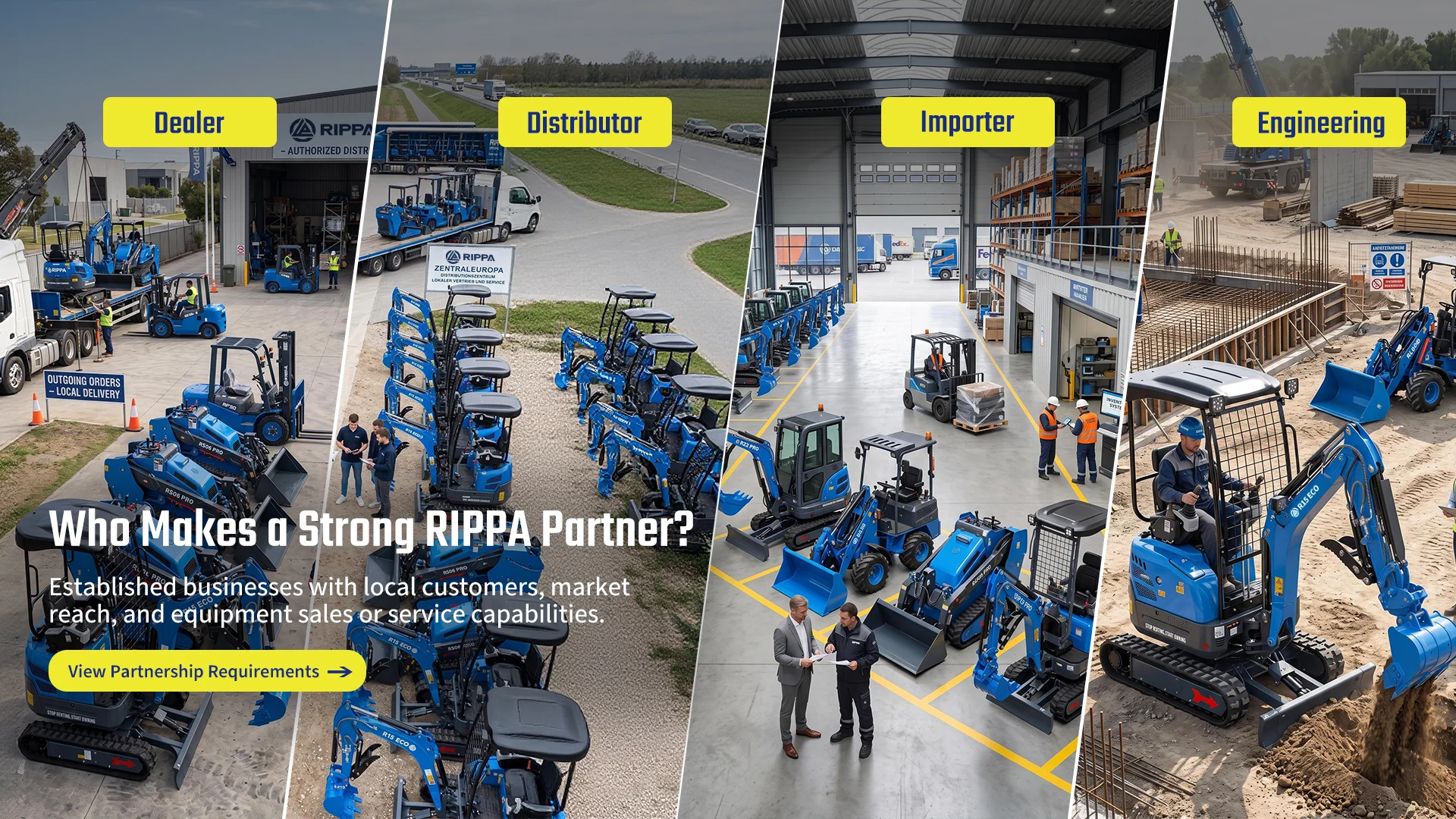
14. How Can Landscaping Equipment Dealers Choose Machines to Stock?
For equipment dealers, the best inventory strategy begins with local customer demand.
Review:
- Which landscaping businesses regularly rent excavators
- Which customers are expanding into hardscape work
- Which machine sizes generate qualified inquiries
- Which attachments customers request
- Which configurations sell consistently
A dealer does not need to stock every available model.
A focused product range can be easier to explain, maintain, and support.
Businesses that already sell commercial mowers, outdoor power equipment, trailers, or landscaping tools may have an existing customer base that can help validate demand for mini excavators.
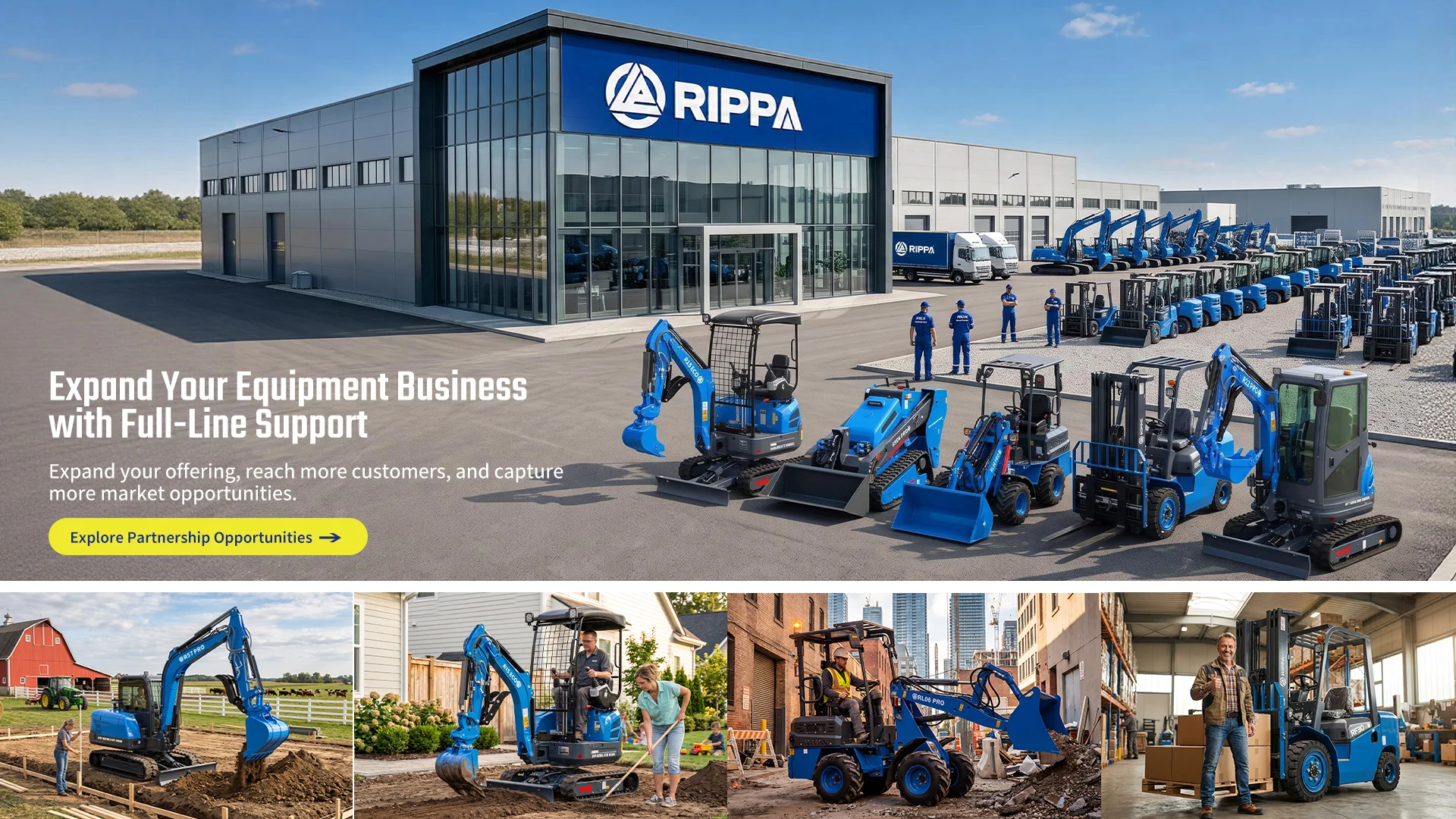
For potential B2B partners, RIPPA mini excavators may be worth evaluating alongside other compact equipment categories, subject to current product availability and dealer arrangements.
Mini Excavator Landscaping Buying Checklist
Before purchasing, confirm the following:
| Factor | What to Check |
|---|---|
| Application | Which landscaping jobs will the machine perform? |
| Size | Does the machine match typical project requirements? |
| Širina | Can it access the work areas? |
| Digging | Does it meet depth and working-range requirements? |
| Transport | Can it be moved safely and efficiently? |
| Tracks | Are they appropriate for the surfaces? |
| Attachments | Are the required tools compatible? |
| Maintenance | Can routine service be managed? |
| Parts | Is there a clear ordering process? |
| Support | How are technical and warranty questions handled? |
| Utilization | Will the machine perform enough paid work? |
Često postavljana pitanja
What size mini excavator is best for landscaping?
The best size depends on access, digging requirements, transport, and typical project scale. Smaller machines may suit confined residential sites, while larger compact machines may be more appropriate for demanding commercial work.
Are mini excavators good for residential landscaping?
They can be useful for drainage, tree planting, root removal, hardscape preparation, and other suitable excavation tasks. Site access and surface conditions must be checked.
What attachments should a landscaping contractor buy first?
A digging bucket is a common starting point. A grading bucket, auger, thumb, or grapple may be useful depending on the business’s actual applications and machine compatibility.
Should a landscaping company buy or rent a mini excavator?
Frequent users should compare ownership costs with rental costs and the additional revenue ownership may create. Occasional users may find rental more practical.
Are rubber tracks better for landscaping?
They may be suitable for many landscaping environments, but the right configuration depends on ground conditions, machine weight, surface sensitivity, and manufacturer recommendations.
Why should landscaping businesses compare after-sales support?
Parts, maintenance, and technical assistance can affect equipment availability and project schedules.
Zaključak
The best mini excavator for landscaping is not necessarily the smallest, largest, or least expensive model.
It is the machine that fits your most common jobs, accesses your sites, meets your digging requirements, supports the right attachments, and can be maintained effectively.
Before buying, evaluate:
- Machine size
- Access
- Digging capability
- Transport
- Attachments
- Maintenance
- Parts
- Utilization
For landscaping contractors, a well-selected mini excavator can support a wider range of projects and help the business expand beyond routine maintenance into excavation, drainage, hardscaping, and property improvement.
For equipment dealers, these applications also create opportunities to serve professional landscaping customers with a focused compact machinery offering.
 Početna
 Proizvodi
 E-pošta
 WhatsApp

