Starting a mini excavator dealership requires more than purchasing several machines at wholesale prices.
A successful equipment dealer needs a combination of:
- Customers
- Capital
- Product knowledge
- Sales capability
- Inventory planning
- Atsarginių dalių aptarnavimas
- Technical communication
- Physical infrastructure
- Marketing
- Local business relationships
The good news is that many potential dealers already possess several of these resources.
A farm equipment dealer may already have a showroom and service department.
A trailer dealer may already have contractor customers.
A rental company may already own machinery and know local demand.
A used equipment dealer may already understand equipment sales.
An importer may already understand logistics and distribution.
For these businesses, starting a mini excavator dealership may be less about building everything from zero and more about identifying which capabilities are already available and which still need to be developed.
Resource 1: A Clear Customer Base
The most important resource is not a building or even inventory.
It is knowing:
Who will buy the machines?
Potential customers may include:
- Construction contractors
- Sodininkai
- Nuomos įmonės
- Farms
- Fence businesses
- Property maintenance companies
- Rural contractors
- Equipment resellers
A dealer should be able to identify specific local customer segments before investing heavily in inventory.
Why Existing Customer Relationships Are So Valuable
Consider a trailer dealership serving 500 contractor and landscaping customers.
Even if it has never sold an excavator, it already has access to machinery buyers.
Compare this with a new company that owns ten excavators but has no local customer relationships.
Inventory alone does not create a dealership.
Customer access is one of the most valuable resources a potential dealer can bring.
Resource 2: Working Capital
Equipment sales require capital.
Potential expenses can include:
- Machine inventory
- Priedai
- Spare parts
- Shipping
- Storage
- Marketing
- Staff
- Demonstration equipment
- Service operations
A dealer should avoid putting all available capital into machines.
Cash may also be needed for:
- Operating costs
- Customer support
- Reordering
- Parts
- Unexpected expenses
Healthy inventory planning requires balance.
How Much Inventory Does a New Dealer Need?
There is no universal number.
The right starting inventory depends on:
- Local demand
- Target customer
- Dealer capital
- Product range
- Supplier lead times
- Storage
- Sales cycle
A new dealer does not necessarily need one unit of every available model.
A focused range can be more manageable.
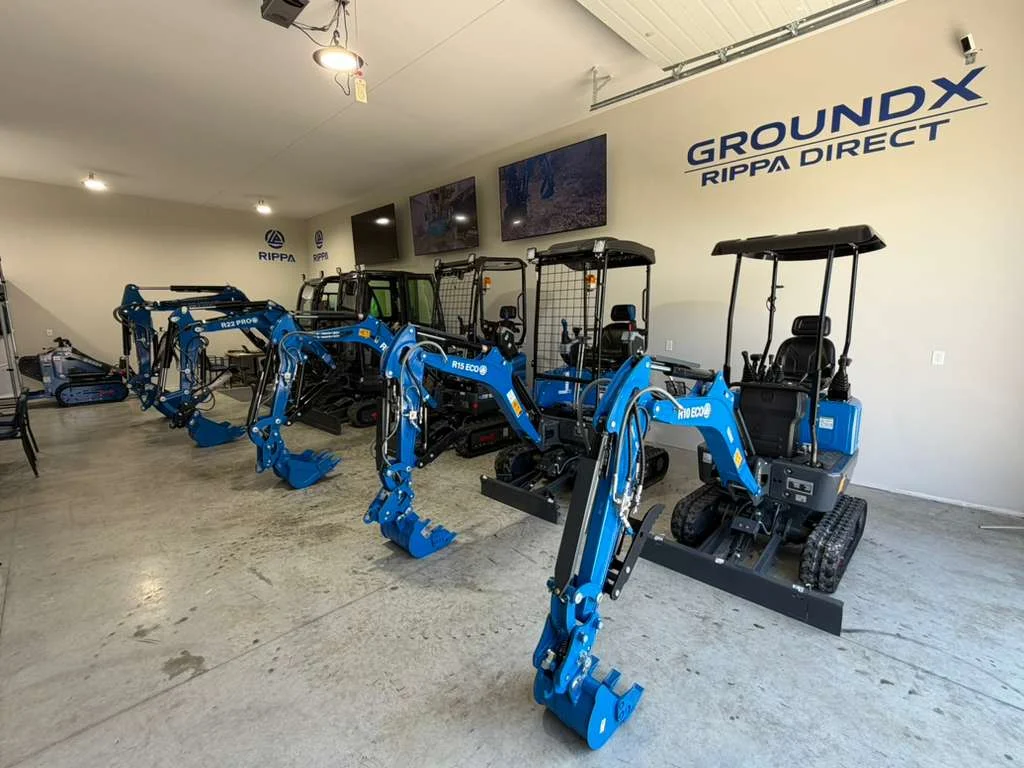
Resource 3: A Physical Location
Equipment dealerships benefit from a suitable location.
Possible requirements include:
- Machine display space
- Secure storage
- Customer parking
- Delivery access
- Attachment storage
- Parts storage
A large showroom is not always necessary.
For machinery, an organized outdoor or warehouse-style operation can sometimes be more relevant than an expensive retail showroom.
The location should fit the business model.
Resource 4: Sales Capability
Equipment does not sell itself.
Dealers need people who can communicate with:
- Rangovai
- Nuomos įmonės
- Farms
- Sodininkai
- Other dealers
Salespeople should understand how to ask:
- What work does the customer perform?
- What machine size is required?
- What attachments are needed?
- How frequently will the machine be used?
- How will it be transported?
- Is the buyer planning one unit or a fleet?
Application-based selling is more effective than simply reading specifications.
Resource 5: Product Knowledge
Customers expect dealers to understand the equipment.
Sales staff should know:
- Main applications
- Machine differences
- Transport considerations
- Priedai
- Routine maintenance concepts
- Parts processes
- Support procedures
They do not need to be engineers.
But they should be able to guide customers toward the correct equipment category.
Resource 6: A Focused Product Range
Trying to sell every machine immediately can make a new dealership harder to manage.
Mini excavators can provide a strong starting category because they support:
- Statybos
- Kraštovaizdžio formavimas
- Žemės ūkis
- Rental
- Fencing
- Nekilnojamojo turto priežiūra
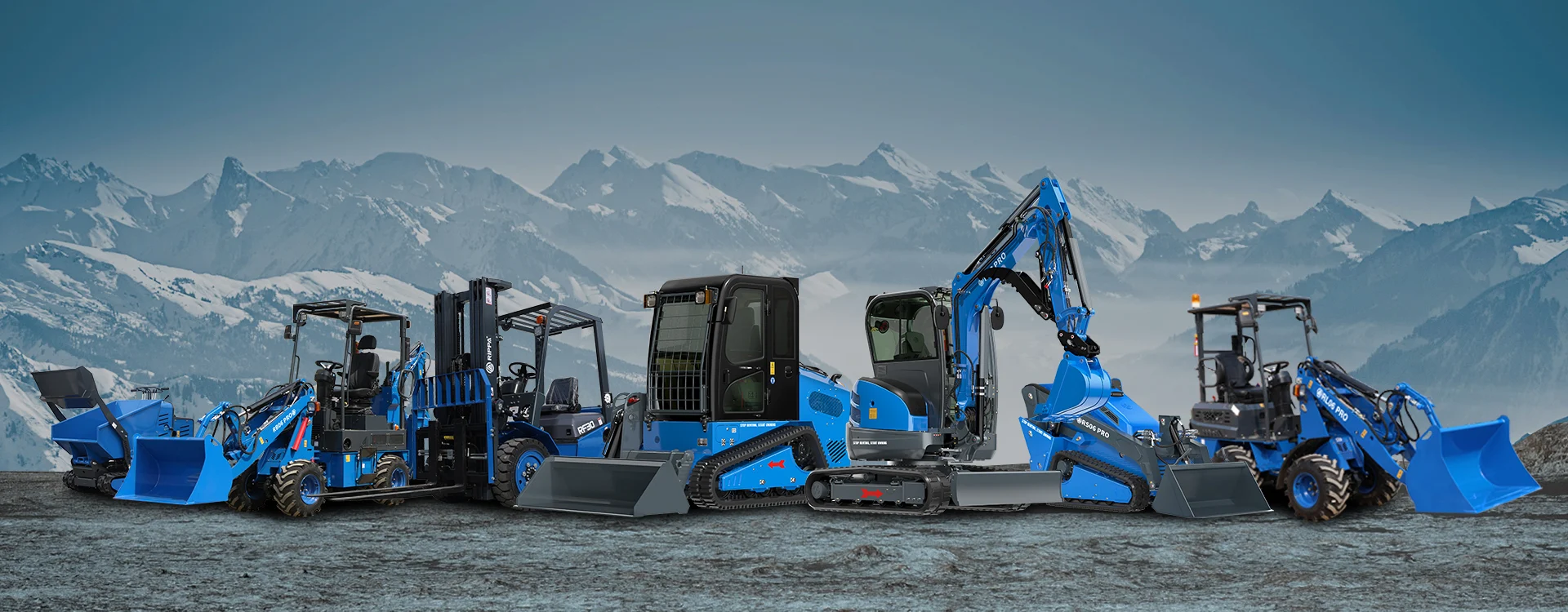
RIPPA’s official mini excavator catalog currently includes multiple compact models with different operating weights and digging capabilities, giving dealers options for different customer applications.
A new dealer can select a smaller core range rather than carrying every model.
Resource 7: Attachment Knowledge
Customers buy excavators to perform work.
That means attachments matter.
Possible directions include:
- Digging buckets
- Grading buckets
- Sraigtiniai grąžtai
- Griebtuvai
- Hydraulic thumbs
- Breakers
- Rakes
- Quick couplers
The dealer should understand:
- Which attachments customers need
- Which machines support them
- Which hydraulic requirements apply
- Which attachment combinations deserve local stock
Compatibility should always be confirmed for the exact machine configuration.
Resource 8: Spare Parts Planning
A dealer relationship does not end when the machine leaves the yard.
Customers may later require:
- Filters
- Routine service items
- Wear components
- Hydraulic parts
- Electrical parts
- Replacement components
A dealer should know how parts will be:
- Identified
- Ordered
- Stored
- Delivered
- Supported
This should be planned before machine sales increase.
Do New Dealers Need a Large Parts Warehouse?
Not necessarily.
A new dealer may begin by stocking selected commonly required items.
Other parts may remain supplier-order items.
The decision should reflect:
- Machine population
- Demand frequency
- Part criticality
- Lead time
- Cost
Parts inventory can grow alongside the installed customer base.
Resource 9: Technical Support Process
Customers sometimes report problems.
The dealer needs a process.
A useful technical-support intake may include:
- Machine model
- Identification information
- Description of the issue
- Photos
- Video where relevant
- Operating conditions
- Techninės priežiūros istorija
Simple issues may be resolved locally.
More complex issues may need escalation.
The important thing is having a clear process.
Resource 10: Maintenance or Service Capability
A dealership does not necessarily need a large workshop immediately, but customers need to know how equipment will be supported.
Possible approaches include:
- In-house technicians
- Local service partners
- Mobile service
- Supplier technical support combined with local repair capability
The correct structure depends on the dealer’s scale and market.
Resource 11: Logistics Capability
Equipment must move.
A dealer should plan:
- Supplier-to-dealer delivery
- Customer pickup
- Local delivery
- Machine loading
- Attachment transport
- Parts shipments
Businesses already involved in:
- Trailers
- Transport
- Žemės ūkis
- Heavy equipment
may have a natural advantage here.
Resource 12: Local Marketing Capability
A new dealership needs customers to know it exists.
Useful channels may include:
- Website content
- Search marketing
- Socialiniai tinklai
- Local contractor outreach
- Demonstration events
- Trade shows
- Industry associations
- Existing customer databases
- Referral marketing
B2B marketing should target specific industries rather than simply advertise “cheap excavators.”
What Content Should a New Dealer Publish?
Examples include:
- Mini excavators for contractors
- Mini excavators for landscaping
- Mini excavators for farm drainage
- Mini excavators for rental fleets
- Mini excavator buying guide
- Mini excavator attachment guide
- Buying vs renting
- New vs used equipment
This content helps attract customers based on actual applications.
Resource 13: A Demonstration Strategy
Some customers want to see or test machinery before purchasing.
A demonstration machine can help dealers:
- Educate contractors
- Qualify buyers
- Show attachments
- Collect market feedback
- Generate quotes
- Develop rental-company accounts
A demonstration does not need to become an expensive event.
It simply needs to show real applications relevant to local buyers.
Resource 14: Lead Follow-Up
Equipment purchasing cycles can be longer than ordinary retail sales.
A customer may inquire today and purchase months later.
Dealers should track:
- Customer type
- Machine interest
- Quantity
- Paraiška
- Purchase timing
- Attachment needs
- Follow-up date
A simple CRM or organized sales process can significantly improve B2B follow-up.
Resource 15: Supplier Communication
A dealer depends on the supplier for accurate information.
Before building the business, clarify current processes for:
- Product availability
- Specifications
- Priedai
- Spare parts
- Technical communication
- Garantija
- Documentation
- Shipping
- Repeat orders
Dealer promises to customers should be based on confirmed information.
What Resources Do Existing Businesses Already Have?
Different businesses start with different advantages.
| Existing Business | Resources Already Available |
|---|---|
| Tractor dealer | Farm customers, service, machinery knowledge |
| Trailer dealer | Contractor customers, transport knowledge |
| Rental company | Equipment users, demand data, maintenance |
| Used equipment dealer | Machinery buyers, resale knowledge |
| Landscape dealer | Professional landscape customers |
| Forklift dealer | B2B sales, service, parts |
| Importer | International logistics, distribution |
| Contractor | Industry network, application knowledge |
This is why the ideal future equipment dealer does not have to start as a traditional excavator dealer.
What Can Be Added Later?
Not every capability must be perfect before launch.
A business may start with:
- Existing customer network
- Sales capability
- Small machine inventory
- Basic parts support
and gradually develop:
- More stock
- Technicians
- Additional attachments
- Larger parts inventory
- More product categories
- Regional distribution
The important thing is to identify the gaps and plan for them.
A Practical Dealer Readiness Checklist
Before beginning, ask:
| Area | Question |
|---|---|
| Customers | Do we already know likely buyers? |
| Capital | Can we support inventory and operations? |
| Location | Do we have suitable display and storage space? |
| Sales | Can someone actively develop B2B accounts? |
| Product knowledge | Can we explain applications accurately? |
| Parts | Do we have a parts process? |
| Service | How will technical issues be handled? |
| Marketing | How will customers find us? |
| Logistics | Can machines be received and delivered? |
| Supplier | Are support and ordering processes clear? |
A business that can answer most of these questions has a stronger foundation.
When Should a Dealer Expand Beyond Mini Excavators?
Once mini excavator demand is established, customers may begin asking for other equipment.
Examples include:
Rangovai
May request:
- Skid steer loaders
Farms
May request:
- Compact wheel loaders
Material Businesses
May request:
- Forklifts
RIPPA’s current catalog includes mini excavators, skid steers, wheel loaders and forklift categories, so a dealer can evaluate additional product lines where customer demand justifies expansion.
Customer demand first. Product expansion second.
Dažnai užduodami klausimai
Do I need a large amount of inventory to start?
Not necessarily. A focused starting range can reduce capital pressure and help the dealer learn which configurations local customers actually want.
Do I need an existing customer base?
It is extremely helpful, although a new business can build one through sales and marketing.
Do I need mechanics before becoming a dealer?
You need a realistic service and technical-support plan. The exact structure can include in-house staff or qualified service partners depending on the business.
What is the most important resource?
There is no single answer, but customer access, working capital, sales capability, and after-sales support are especially important.
Can an existing business add mini excavators without becoming a completely separate company?
Potentially, yes. Many related businesses may be able to add machinery as a new product category depending on their resources and current cooperation arrangements.
Išvada
Starting a mini excavator dealership requires more than money and machines.
The strongest foundation combines:
- Existing customers
- Working capital
- Sales capability
- Product knowledge
- Suitable inventory
- Priedai
- Parts
- Technical support
- Logistics
- Marketing
- Supplier communication
Many businesses already possess half of these resources.
A tractor dealer already has farm customers.
A trailer dealer already knows contractors.
A rental company already understands equipment demand.
A used equipment dealer already knows machinery buyers.
For these businesses, the opportunity is not necessarily to create a new business from nothing.
It is to use existing commercial resources to enter a higher-value machinery category in a controlled and professional way.
 Pagrindinis
 Produktai
 El. paštas
 "WhatsApp"

