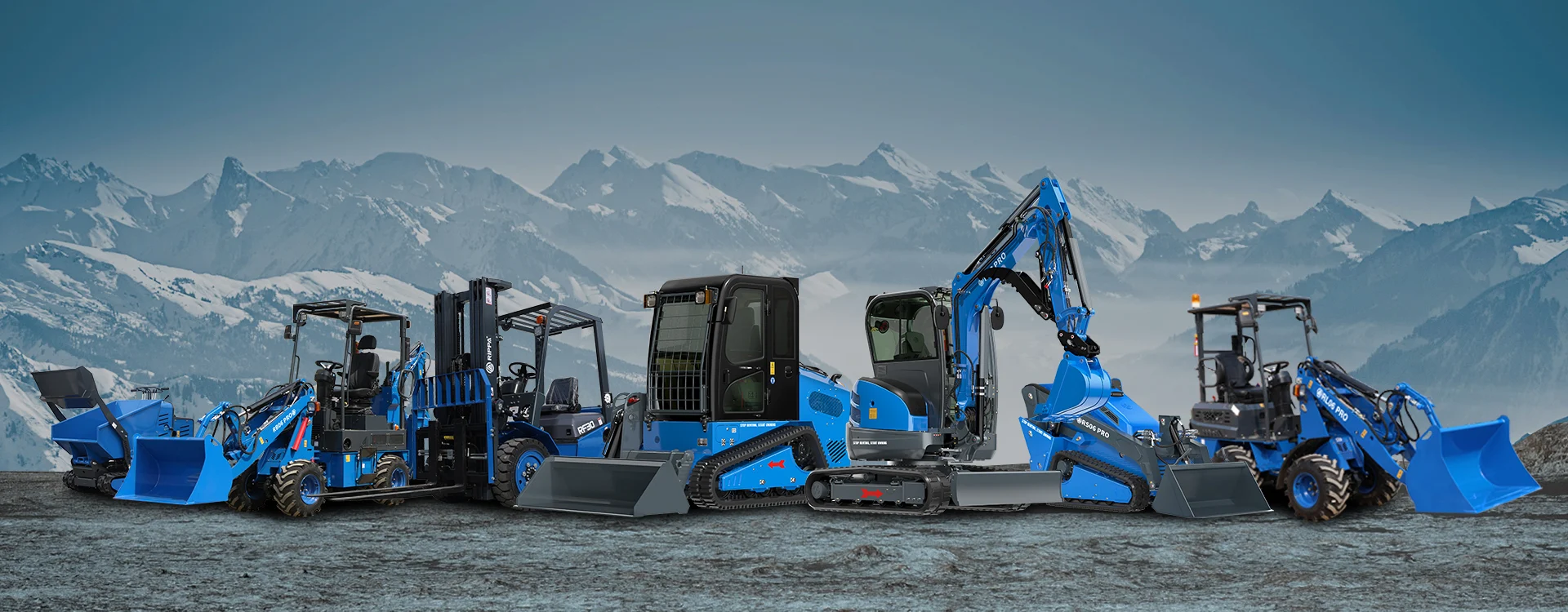
Equipment dealers have a different relationship with a mini excavator manufacturer than individual machine owners.
A contractor may purchase one machine for its own projects. A dealer may purchase multiple units, resell them to different customer groups, answer technical questions, supply attachments, coordinate parts, and manage long-term customer expectations.
This makes manufacturer selection a strategic decision.
The right mini excavator manufacturer should provide more than machinery. It should provide enough product information, support processes, parts availability, technical communication, and commercial clarity to help the dealer build a sustainable equipment business.
RIPPA mini excavators can be considered by construction equipment dealers, farm equipment dealers, landscape equipment dealers, used equipment dealers, machinery resellers, rental companies, and other B2B equipment businesses. Dealers should confirm all current product and cooperation information through official channels before placing orders.
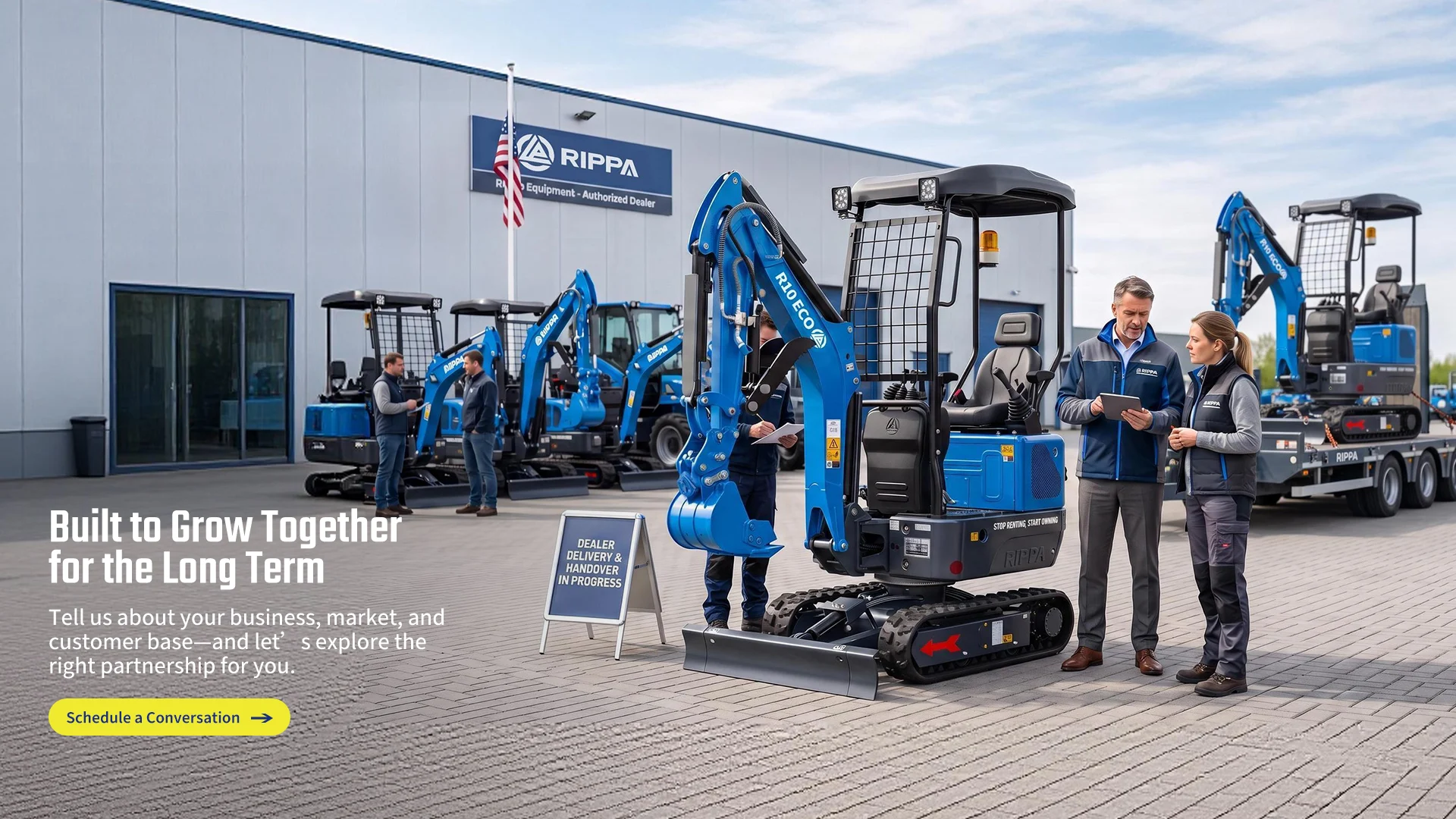
Manufacturer vs Supplier: Why the Difference Matters to Dealers
Dealers may work with manufacturers, exporters, distributors, or other equipment suppliers.
Regardless of the business structure, the dealer should understand:
- Who provides product information
- Who handles spare parts
- Who provides technical support
- Who manages warranty communication
- Who coordinates logistics
- Who is responsible for commercial cooperation
The goal is not simply to identify a factory.
The goal is to understand who supports the dealership after the order.
Evaluate Whether the Product Range Matches Your Market
Dealers should begin with customers, not machines.
Ask:
- Who buys equipment from us?
- What jobs do they perform?
- What machine size do they usually need?
- Are they contractors, landscapers, farmers, or rental companies?
- Do they need compact equipment or larger machines?
- What attachments do they request?
The manufacturer’s mini excavator range should match those needs.
Pavyzdžiui:
Contractor-Focused Dealer
May prioritize:
- Trenching capability
- Attachment options
- Transportability
- Galimybė įsigyti dalių
Farm Equipment Dealer
May prioritize:
- Drainage applications
- Ditch cleaning
- Fence preparation
- Auger compatibility
- Rural maintenance
Landscape Equipment Dealer
May prioritize:
- Compact access
- Grading
- Planting
- Root removal
- Hardscape preparation
Rental Company
May prioritize:
- Broad applications
- Techninė priežiūra
- Parts
- Versatile attachments
- Fleet support
Evaluate Product Information Accuracy
Dealers depend on accurate information because they pass that information to customers.
The manufacturer or supplier should provide current information regarding:
- Machine dimensions
- Working weight
- Digging depth
- Reach
- Engine configuration
- Hidraulinė sistema
- Priedai
- Operating requirements
- Service information
Dealers should not rely on assumptions from similar models.
Each machine configuration should be confirmed separately.
Ask How Product Changes Are Communicated
Equipment configurations may change over time.
Dealers should understand how changes in:
- Components
- Specifications
- Priedai
- Parinktys
- Documentation
are communicated.
This matters because dealers may have older inventory, current inventory, and new orders at the same time.
Accurate machine identification helps reduce parts and service mistakes.
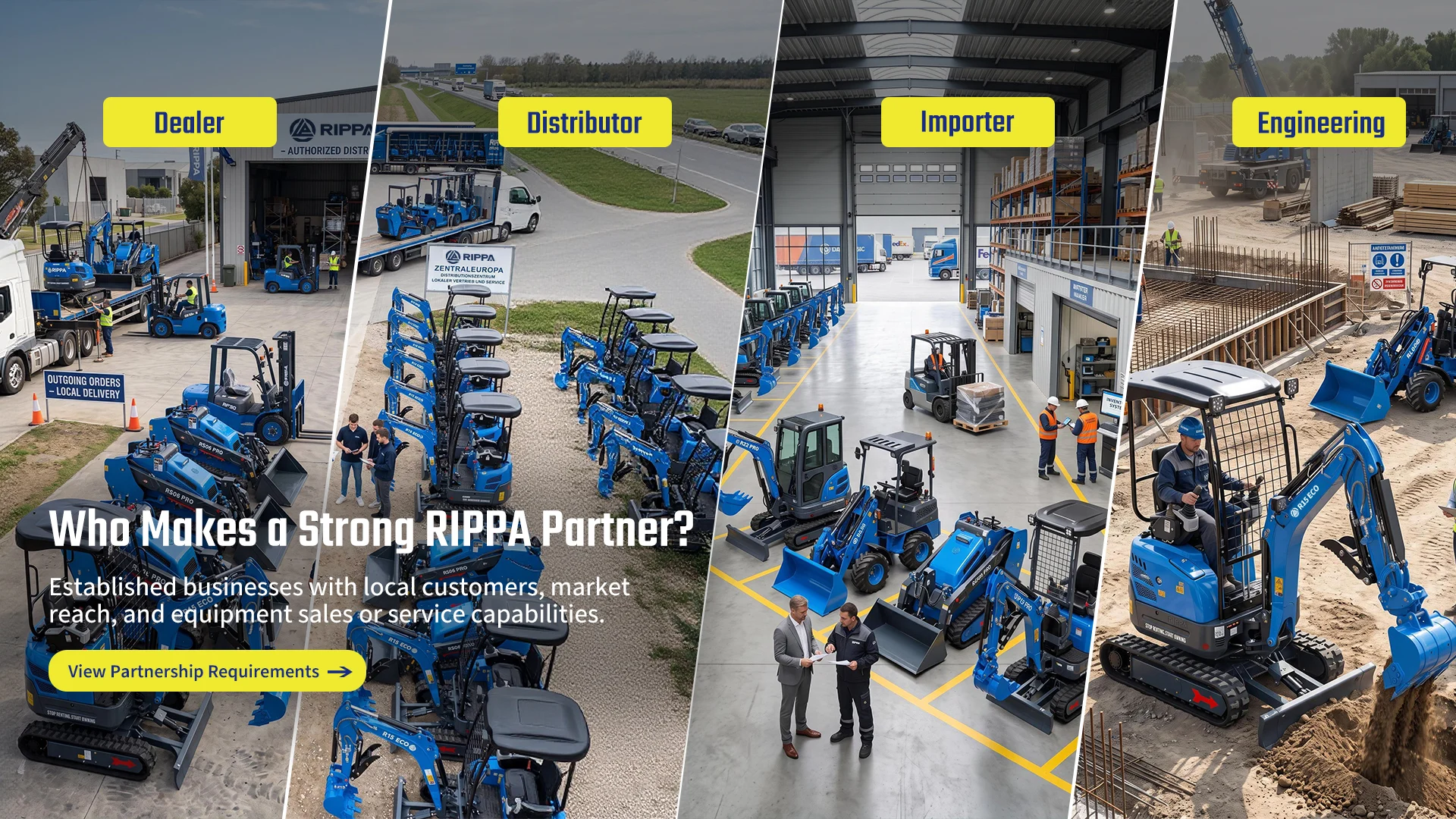
Evaluate Spare Parts Before You Evaluate Sales Volume
One of the biggest mistakes a new dealer can make is focusing on machine inventory without planning parts support.
Before purchasing multiple mini excavators, ask:
- Which routine service parts should be stocked?
- Which wear items are commonly required?
- How are parts identified?
- What information is needed to place an order?
- Can parts be shipped separately from machines?
- What documentation supports parts identification?
A strong dealer relationship requires parts planning from the beginning.
Consider Building a Starter Parts Inventory
Depending on dealer volume and service capability, commonly used items may need to be available locally.
The exact inventory depends on machine models and business strategy.
Possible categories to discuss with the supplier include:
- Filters
- Service items
- Wear components
- Selected hydraulic components
- Selected electrical components
- Frequently requested replacement parts
Dealers should base stocking decisions on actual machines sold and supplier recommendations rather than guessing.
Evaluate Attachment Strategy
Attachments can significantly expand a mini excavator dealership.
Possible attachment categories include:
- Digging buckets
- Grading buckets
- Sraigtiniai grąžtai
- Breakers
- Griebtuvai
- Hydraulic thumbs
- Rakes
- Quick couplers
Dealers should ask:
- Which attachments fit which models?
- What hydraulic requirements apply?
- Does the attachment need additional components?
- How should compatibility be verified?
- What customer applications justify each attachment?
An organized attachment strategy may help dealers create additional sales while giving customers more use from the machine.
Evaluate the Manufacturer’s Technical Communication
Dealers do not need every technical question answered instantly, but they need a reliable process.
A useful support system should allow the dealer to provide:
- Machine identification
- Photos or videos where relevant
- Operating symptoms
- Error information where available
- Parts information
- Techninės priežiūros istorija
and receive clear troubleshooting guidance.
The exact technical process should be confirmed before building a larger inventory.
Understand Warranty Before Selling Machines
A dealer must be able to explain warranty terms accurately.
Confirm:
- Current coverage
- Exclusions
- Required documentation
- Claim submission process
- Parts procedures
- Diagnostic responsibility
- Communication process
Dealers should not promise customers warranty conditions that have not been confirmed.
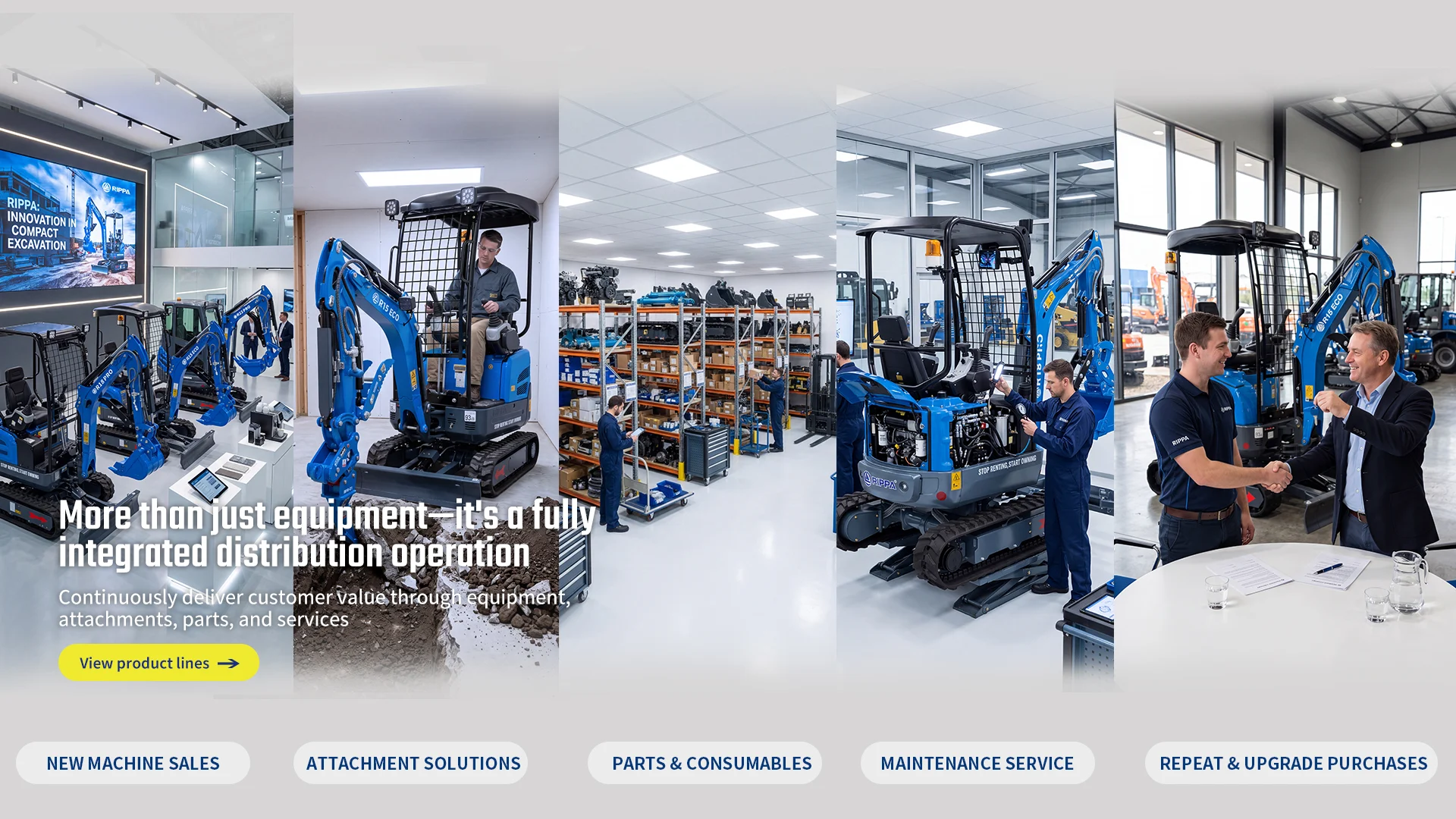
Evaluate Documentation Quality
Documentation can support:
- Customer handover
- Techninė priežiūra
- Operator education
- Parts identification
- Technical communication
- Perpardavimas
Dealers should ask what information is available with each machine and whether additional technical materials are available when needed.
Review Packaging and Logistics
International equipment dealers should also evaluate how machines and attachments are prepared for shipment.
Important areas to discuss include:
- Packaging
- Machine protection
- Attachment packing
- Parts shipment
- Order documentation
- Shipping coordination
- Delivery terms
Exact logistics requirements depend on the destination and order.
Evaluate Communication Before the First Large Order
Dealers can learn a great deal about a potential manufacturer during the inquiry stage.
Consider:
- Are questions answered directly?
- Are uncertain details checked rather than guessed?
- Can the supplier distinguish different machine models?
- Are attachment questions handled clearly?
- Are commercial terms documented?
- Are technical questions forwarded appropriately?
Early communication often provides useful insight into future cooperation.
Avoid Choosing a Manufacturer Based Only on Product Photos
Product appearance matters for marketing, but dealers need deeper information.
A strong evaluation should include:
- Technical specifications
- Real machine configurations
- Priedai
- Parts
- Service
- Garantija
- Documentation
- Logistics
- Commercial terms
A professional product presentation cannot replace these operational factors.
Evaluate the Manufacturer for Repeat Business
Dealer relationships should be designed for repeat orders.
Ask whether the cooperation process can support:
- Initial sample or trial orders where appropriate
- Additional inventory
- Attachment orders
- Spare parts orders
- Multiple model purchases
- Future product-line expansion
The goal is to determine whether the relationship can scale with the dealer.
Mini Excavator Manufacturer Evaluation Checklist
| Area | Dealer Question |
|---|---|
| Product range | Does it fit our customers? |
| Specifications | Is information current and clear? |
| Priedai | Is compatibility documented? |
| Parts | Can we support machines after sale? |
| Techninė priežiūra | Is service information available? |
| Garantija | Are terms and procedures clear? |
| Technical support | Is there a practical support process? |
| Documentation | Can we educate customers properly? |
| Logistics | Can orders be coordinated efficiently? |
| Communication | Are responses accurate and consistent? |
| Cooperation | Can the relationship support repeat orders? |
Why Mini Excavators Can Be a Strong Dealer Category
Mini excavators can serve multiple B2B customer groups.
Potential buyers include:
- Construction contractors
- Sodininkai
- Farms
- Nuomos įmonės
- Fence contractors
- Rural property businesses
- Small construction firms
- Equipment resellers
Dažniausiai naudojamos sritys:
- Trenching
- Drainage
- Ditch cleaning
- Fence preparation
- Medžių sodinimas
- Root removal
- Hardscape preparation
- Nekilnojamojo turto priežiūra
This application range makes mini excavators a practical core product for many compact equipment dealers.
How RIPPA Can Fit an Equipment Dealer Strategy
RIPPA mini excavators can be considered by dealers that want compact digging equipment as a core product category.
Dealers may also explore complementary products according to their customer base.
However, before building inventory or making customer commitments, dealers should confirm current:
- Models
- Configurations
- Priedai
- Parts arrangements
- Garantijos sąlygos
- Technical support
- Documentation
- Delivery arrangements
- Cooperation terms
Dažnai užduodami klausimai
What should dealers look for in a mini excavator manufacturer?
They should evaluate product range, specifications, attachments, parts, maintenance, warranty, technical support, documentation, logistics, communication, and cooperation terms.
Why is spare parts support important before the first machine sale?
Because dealers become responsible for supporting customers after the equipment is delivered.
Should dealers offer mini excavator attachments?
They may benefit from offering compatible attachments that match customer applications.
How should dealers evaluate warranty support?
They should confirm current coverage, exclusions, required documentation, claims procedures, and responsibility for diagnosis.
Should dealers place a large order immediately?
Order strategy depends on the dealer’s market, business model, and supplier relationship. Buyers should evaluate local demand and cooperation processes before committing to inventory.
Išvada
Selecting a mini excavator manufacturer is not simply about finding a machine with competitive specifications.
For equipment dealers, the manufacturer or supplier becomes part of the dealership’s operational support system.
Products, attachments, spare parts, technical communication, maintenance information, warranty procedures, documentation, logistics, and long-term cooperation all matter.
Dealers that evaluate these areas before building inventory are better positioned to create a sustainable mini excavator business.
 Pagrindinis
 Produktai
 El. paštas
 "WhatsApp"

