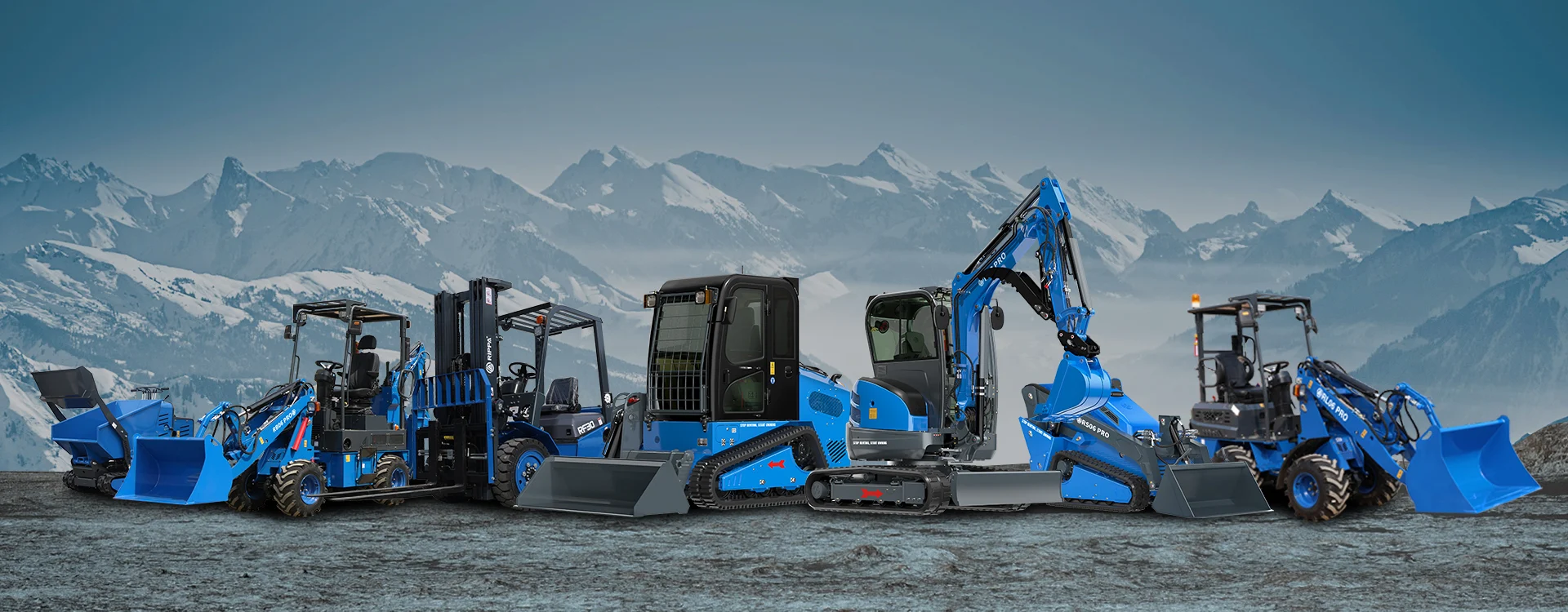
Construction and landscaping projects often require more than one type of machine. Digging is only one stage of the job. Soil must be removed, materials must be moved, surfaces may need grading, and the job site must eventually be cleaned.
This is why mini excavators and skid steer loaders work well together.
A mini excavator is designed primarily for digging, trenching, and compact excavation. A skid steer loader is designed primarily for loading, grading, cleanup, and material movement.
When these machines are used together, contractors and landscaping businesses can handle more project stages internally and reduce dependence on manual labor or outside equipment.
For B2B equipment buyers, this combination can also be attractive for rental fleets and dealer product lines because the machines serve different but related customer needs.
Why One Machine Cannot Handle Every Job Efficiently
Compact equipment is most effective when each machine performs the work it was designed to do.
Trying to make one machine handle every stage of a project may reduce efficiency.
For example, a mini excavator may dig effectively but may not be the best machine for repeatedly carrying loose material across a site.
A skid steer loader may move soil quickly but is not designed to replace a dedicated excavator for deeper or more precise trenching.
This leads to a simple equipment strategy:
Use the mini excavator for digging. Use the skid steer loader for moving and cleanup.
Step 1: The Mini Excavator Opens the Job Site
Many projects begin with digging or preparation.
A mini excavator can support:
- Graving av grøfter
- Drainage preparation
- Soil removal
- Root removal
- Fence line preparation
- Treplanting
- Hardscape preparation
- Mindre utgraving
- Ditch cleaning
Its compact excavation capability helps prepare the site for the next stage.
Step 2: The Skid Steer Moves Excavated Material
Digging creates soil, debris, roots, stones, or other material that may need to be moved.
This is where the skid steer loader becomes useful.
It may help:
- Move excavated soil
- Load trailers
- Relocate gravel
- Remove debris
- Carry mulch or sand
- Clean work areas
- Distribute materials
- Support surface grading
Instead of using the excavator for repeated material transport, the skid steer can keep materials moving across the job site.
Step 3: The Excavator Continues Precision Work
Once excess material has been removed, the mini excavator can continue with detailed digging.
This may include:
- Final trench shaping
- Drainage preparation
- Root removal
- Hardscape excavation
- Fence preparation
- Tree planting holes
- Compact site excavation
The skid steer keeps the surrounding work area clear while the excavator handles more precise preparation.
Step 4: The Skid Steer Supports Grading and Cleanup
After the digging stage is completed, the project usually needs cleanup and surface work.
A skid steer loader may support:
- Backfilling support
- Surface grading
- Material distribution
- Jordbevegelser
- Fjerning av avfall
- Final cleanup
- Loading remaining materials
This creates a more complete workflow than relying on one machine alone.
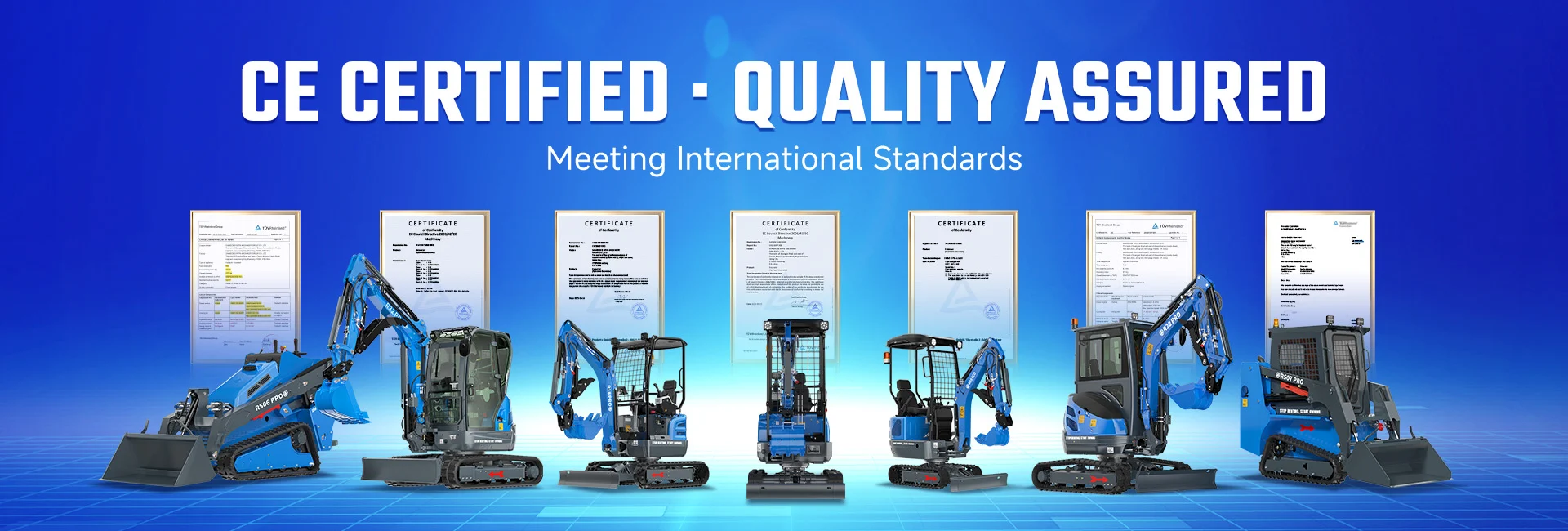
Example: Drainage Project
A drainage project may require both machines.
Mini Excavator Role
The excavator:
- Digs the trench
- Removes compacted soil
- Shapes the drainage area
- Supports detailed excavation
Skid Steer Loader Role
The skid steer:
- Moves excavated soil
- Delivers gravel or other materials
- Supports backfilling
- Grades disturbed areas
- Cleans the site
Together, the two machines can help contractors control more of the project.
Example: Landscaping Project
Professional landscaping often involves more than planting and mowing.
A larger project may include:
- Removing old material
- Digging drainage
- Preparing planting areas
- Flytting av jord
- Installing hardscape
- Vurdering
- Cleaning the property
A mini excavator can handle digging, roots, drainage, and preparation.
A skid steer can handle material movement, loading, grading, and cleanup.
This combination may help landscaping companies expand into higher-value project work.
Example: Hardscape Project
Hardscape preparation may involve patios, walkways, retaining walls, or outdoor structures.
The mini excavator can support:
- Soil removal
- Base excavation
- Root removal
- Drainage trench preparation
The skid steer loader can support:
- Carrying gravel
- Moving base material
- Removing excavated soil
- Vurdering
- Cleanup
For hardscape contractors, the combination can reduce manual material handling.
Example: Farm and Rural Property Work
Farm and rural work may also benefit from both machines.
The mini excavator can handle:
- Ditches
- Drainage
- Fence preparation
- Treplanting
- Root removal
- Path repair
The skid steer loader can handle:
- Loose material movement
- Farmyard cleanup
- Gravel loading
- Jordbevegelser
- Debris handling
- Surface maintenance
For farm equipment dealers, the two machines can serve different parts of the same rural customer base.
Why Contractors May Benefit from Owning Both
Contractors who frequently need digging and material movement may benefit from operating both machines.
Potential advantages include:
- Better project control
- Faster transition between project stages
- Less manual material handling
- Reduced equipment waiting time
- More complete customer service
- Reduced dependence on outside equipment
- Ability to quote larger projects
- Better job-site flexibility
However, ownership should still be based on work frequency. Contractors should consider transport, storage, maintenance, operators, and support before purchasing multiple machines.
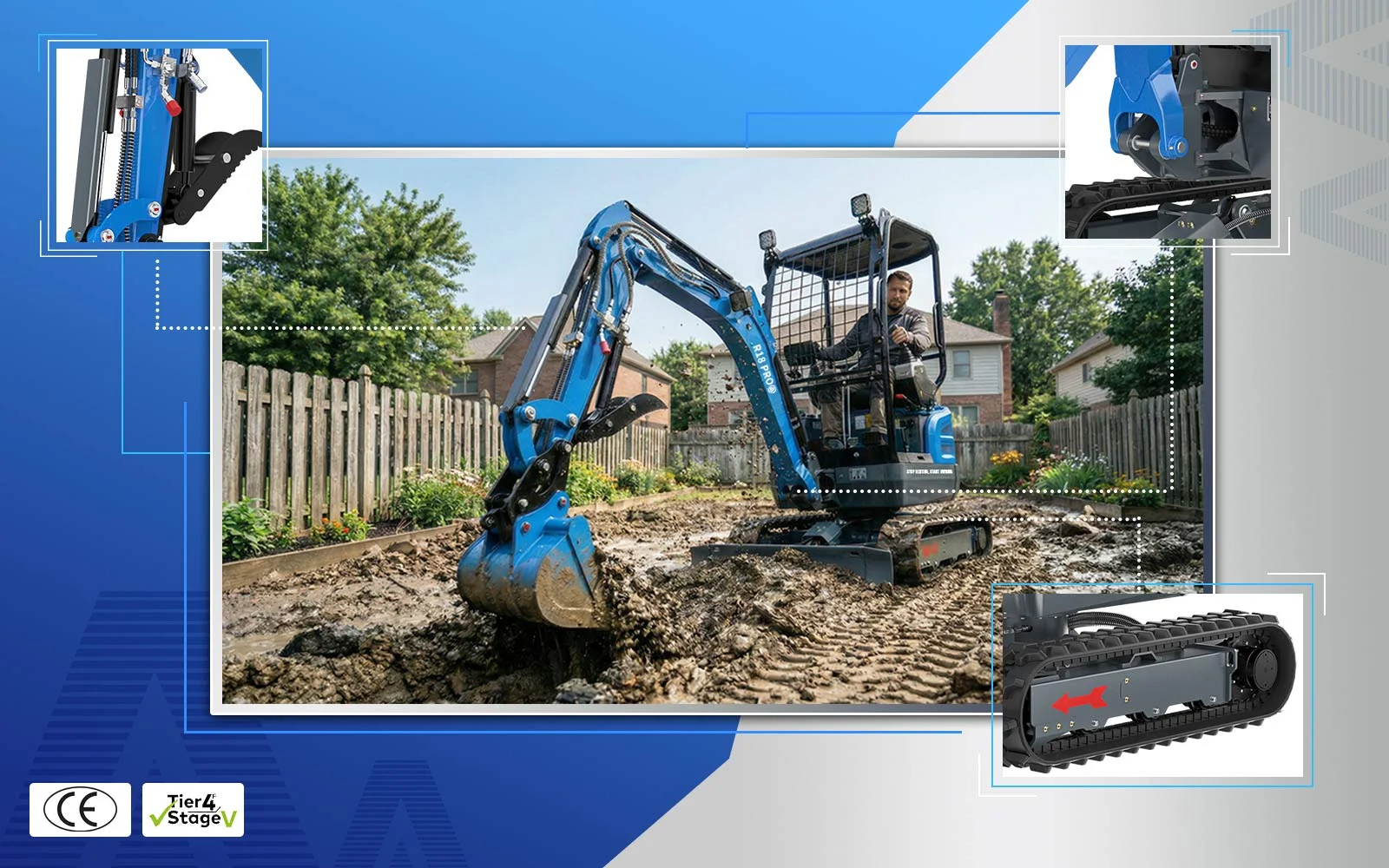
Why Rental Companies May Offer Both
Rental companies may benefit from offering mini excavators and skid steer loaders as complementary categories.
Some customers may rent only one machine. Others may need both.
Potential rental packages could be based on applications such as:
- Drainage projects
- Landskapsprosjekter
- Farm maintenance
- Property renovation
- Construction preparation
- Hardscape work
Rental companies should confirm machine support, parts availability, maintenance procedures, attachment compatibility, and local demand before expanding fleet categories.
Why Dealers May Sell Both Machines
Equipment dealers can use both product categories to serve a broader B2B customer base.
Mini excavator customers may include:
- Entreprenører
- Gårder
- Landscapers
- Utleieselskaper
- Rural businesses
Skid steer customers may include:
- Entreprenører
- Landscapers
- Gårder
- Materialplasser
- Property maintenance businesses
- Utleieselskaper
Offering both gives dealers more ways to match products to customer applications.
Attachments Make the Combination More Flexible
Attachments can further expand the usefulness of both machines.
Mini excavator attachment directions may include:
- Skuffer
- Skruer
- Thumbs
- Gripere
- Rakes
- Breakers
- Hurtigkoblinger
Skid steer attachment directions may include:
- Skuffer
- Gafler
- Gripere
- Skruer
- Brooms
- Other compatible work tools
Compatibility should always be confirmed according to current machine and attachment specifications.
What Buyers Should Confirm Before Building a Two-Machine Combination
Before purchasing both machines, businesses should confirm:
| Vare | Why It Matters |
|---|---|
| Main customer applications | Determines whether both machines are needed |
| Work frequency | Helps justify ownership |
| Machine size | Affects job-site access |
| Transport requirements | Important when moving two machines |
| Vedlegg | Expands application range |
| Parts availability | Reduces downtime |
| Maintenance access | Supports long-term ownership |
| Warranty policy | Clarifies support responsibilities |
| Teknisk støtte | Helps resolve issues |
| Operator requirements | Supports safe, productive use |
A two-machine combination should be built around actual project demand.
Ofte stilte spørsmål
Why do mini excavators and skid steer loaders work well together?
Mini excavators handle digging and trenching, while skid steer loaders handle loading, grading, cleanup, and material movement.
Which machine should work first?
On many projects, the mini excavator begins with digging or preparation. The skid steer then moves material and supports cleanup.
Are both useful for landscaping?
Yes. Mini excavators support drainage, planting, root removal, and hardscape preparation, while skid steers support material movement, grading, and cleanup.
Are both useful for contractors?
Yes, especially for contractors who frequently handle both excavation and material movement.
Can rental companies offer both machines?
Yes. Rental companies may offer both categories when local customers need complementary equipment for construction, landscaping, farm, and property projects.
Konklusjon
Mini excavators and skid steer loaders work together because they solve different parts of the same project.
The mini excavator digs.
The skid steer loader moves.
The mini excavator prepares.
The skid steer cleans and grades.
For contractors, landscaping businesses, farms, dealers, and rental companies, this combination can create a more complete compact equipment solution.
RIPPA mini excavators and skid steer loaders can be considered by B2B customers that need machines for digging, loading, material movement, grading, and job-site support. Current product configuration, attachments, parts support, warranty, delivery, documentation, and service arrangements should be confirmed through official RIPPA channels.
 Hjem
Hjem
 Produkter
 E-post
 WhatsApp

