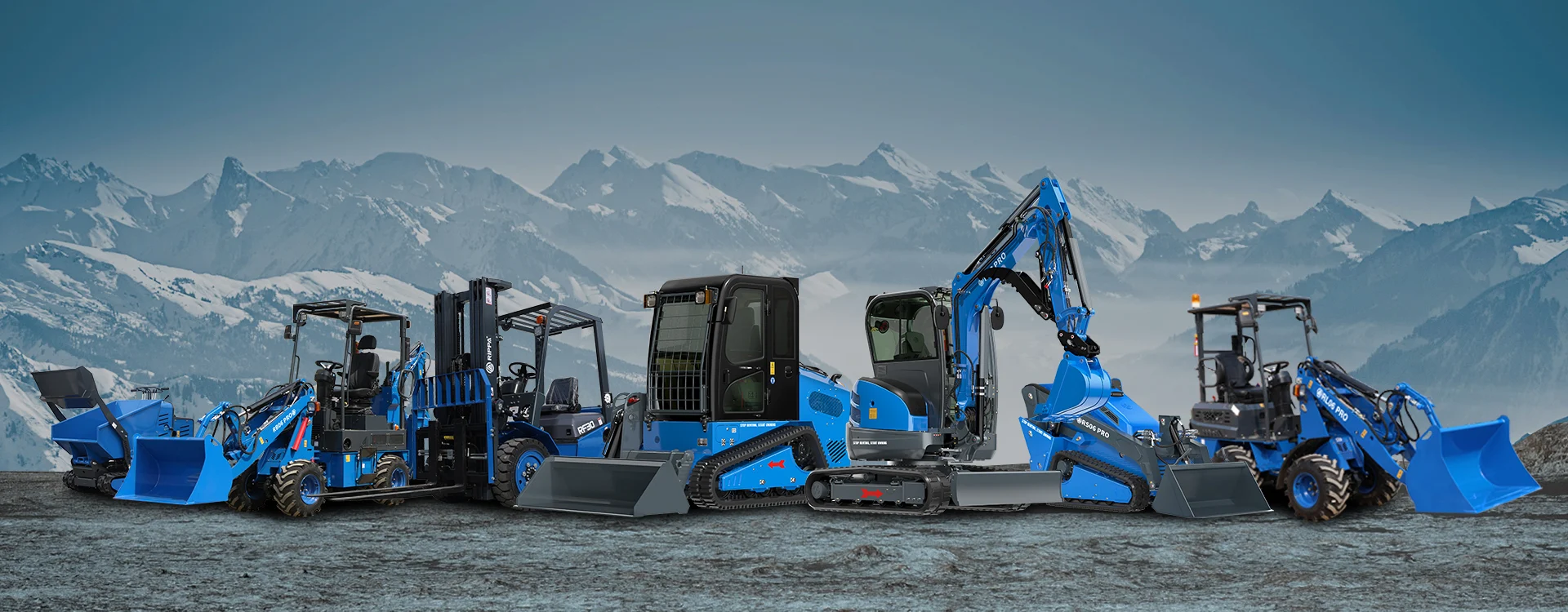
Buyers comparing a mini skid steer with a mini track loader often want to know whether wheels or tracks provide better performance. In practice, the answer depends on ground conditions, operating surfaces, maintenance expectations, transport requirements and the type of work being completed.
The two names may also overlap in equipment listings. Some sellers use “mini skid steer” as a general term for both wheeled and tracked compact loaders. Buyers should therefore evaluate the actual undercarriage and machine configuration rather than relying only on the product title.
What Is a Mini Skid Steer?
A mini skid steer is a compact loader designed to operate different attachments in restricted working areas. It may use wheels or tracks, depending on the manufacturer and model.
Wheeled mini skid steers are commonly considered for firm ground, paved yards and sites where the machine frequently travels across harder surfaces. Tire condition is relatively easy to inspect, and many equipment service teams are familiar with tire maintenance.
Performance can decrease when the ground becomes soft, muddy or deeply uneven. Tires may sink or lose traction depending on the soil, load and machine configuration.

What Is a Mini Track Loader?
A mini track loader uses a tracked undercarriage rather than conventional wheels. Tracks create a larger ground-contact area, which can provide useful traction and flotation on soft soil, loose material and uneven terrain.
Tracked machines are frequently used in landscaping, site preparation, agricultural maintenance and construction work where surface conditions change.
However, the undercarriage requires regular inspection and cleaning. Stones, soil, branches and construction debris can collect around moving components. Track wear may also increase when the machine performs frequent sharp turns on abrasive hard surfaces.
Ground Conditions and Traction
Ground conditions should be one of the first selection factors. A tracked machine may be more suitable when most jobs take place on soil, mud or uneven ground. Improved traction can help maintain productivity when tires would struggle.
Wheels may offer a practical solution when most work occurs on concrete, compacted surfaces or firm yards. Buyers should consider the normal operating environment rather than choosing tracks for an occasional soft-ground project.
Neither undercarriage completely prevents surface damage. Machine load, soil moisture, turning technique and operator behavior all affect turf and ground disturbance.
Maintenance and Operating Costs
Tires and tracks have different ownership costs. Tires can be damaged by sharp debris and may wear quickly on abrasive surfaces, but replacement and routine service may be straightforward.
Tracks require attention to condition, alignment and cleanliness according to the manufacturer’s instructions. Undercarriage components should be included when estimating long-term maintenance expenses.
The cheapest undercarriage to purchase is not always the cheapest to operate. Buyers should estimate annual working hours and the proportion of time spent on each surface.
Attachment Performance
Both wheeled and tracked machines may operate buckets, augers, trenchers, grapples and other approved tools. Attachment performance depends on the carrier’s hydraulic capability, mounting interface, stability and operating limits.
Tracks do not automatically mean that a machine can handle a larger attachment. Buyers must verify compatibility for the exact machine-and-attachment combination.
Contractors should select attachments around recurring paid work. Rental companies should clearly control which tools are approved for each carrier.
Transport and Worksite Access
Machine width, length and transport information should be checked using current manufacturer documents. Buyers must also consider the space required for attachments, spare parts and loading equipment.
A machine may fit through the worksite gate but still lack sufficient turning or operating clearance. Measure the entire working route and not only the narrowest entrance.
Which Machine Should You Choose?
Choose a wheeled mini skid steer when firm surfaces, tire service and hard-ground operation dominate the work cycle. Consider a mini track loader when traction and flotation on soft or variable terrain can create a meaningful productivity advantage.
There is no universal winner. RIPPA can help contractors, rental fleets and dealers compare available compact-loader configurations based on application, operating surface and destination market.
 Home
Home
 Producten
 E-mail
 WhatsApp

