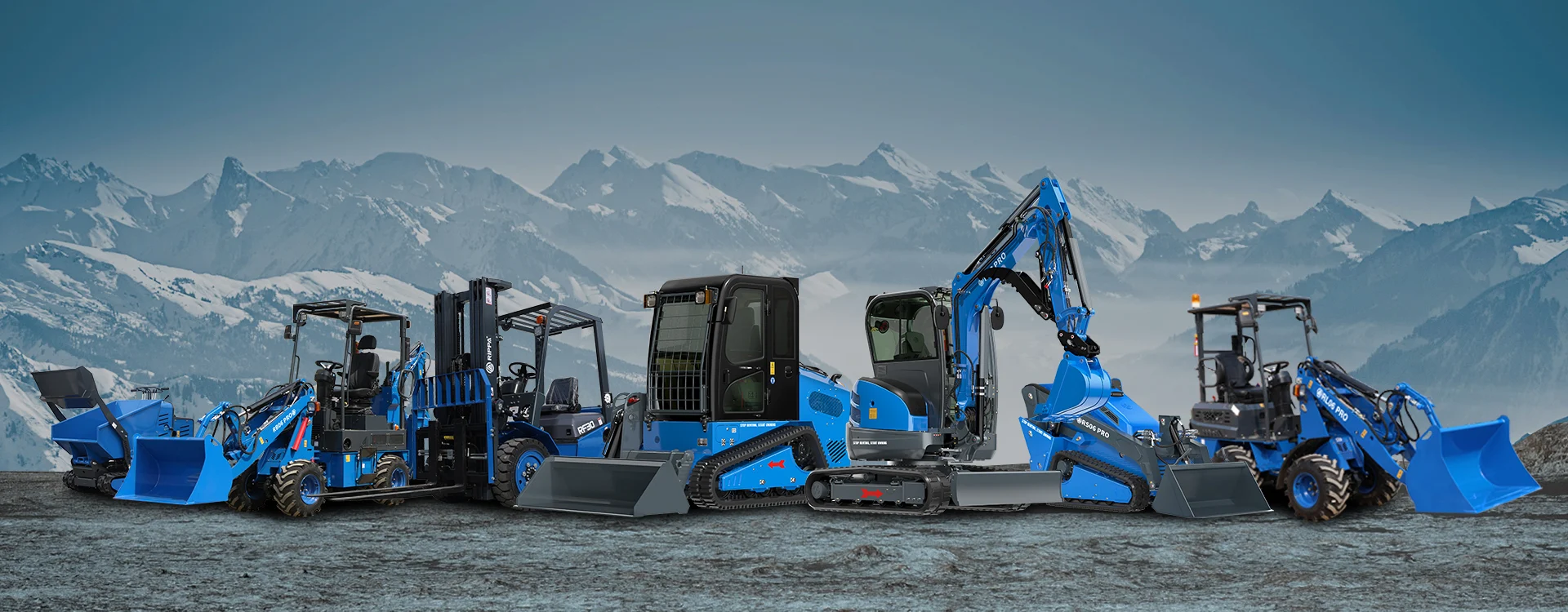
Skid steer and compact track loaders perform many of the same tasks, but they are not interchangeable. The right choice depends on ground conditions, attachment demand, maintenance capacity, and customer applications. For contractors, rental companies, and dealers, these factors matter more than purchase price alone.
Understanding the Main Difference
A skid steer travels on wheels and turns within a compact area by varying the speed and direction of each side. It is agile on concrete, asphalt, and hard-packed soil. Its faster travel can suit material yards, farms, landscaping, and municipal work.
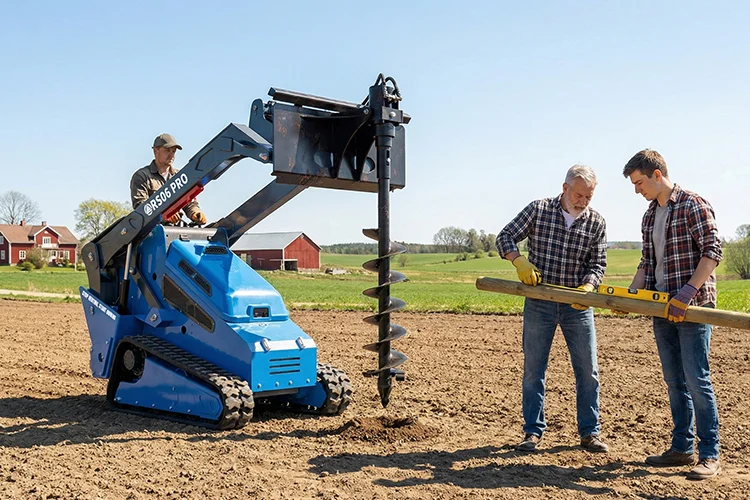
A compact track loader spreads weight through a tracked undercarriage. This improves flotation and traction on mud, sand, loose soil, slopes, and landscaped ground where weather can affect productivity.
Compare Performance by Working Condition
Surface and Traction
Wheels deliver efficient movement on stable ground and are easy to inspect. Tracks provide better grip and lower ground pressure on soft surfaces, although abrasive pavement and sharp turns may accelerate wear. Evaluate where the machine will spend most of its hours.
Attachments and Hydraulic Demand
Both types can operate buckets, forks, augers, trenchers, sweepers, breakers, and grapples when the interface and hydraulics match. Confirm auxiliary flow, pressure, electrical connections, coupler type, and attachment weight. A tool that connects physically may still perform poorly with mismatched hydraulics.
Transport also matters. Check machine width, operating weight, trailer capacity, loading method, and local road rules for the exact configuration. Good visibility, intuitive controls, and accessible service points can improve daily use and reduce avoidable delays.
Calculate Cost Beyond the Purchase Price
These machines have different wear patterns. Tire cost, track and undercarriage replacement, fuel use, planned service, downtime, and resale demand all contribute to total ownership cost. A wheeled machine may be economical on hard surfaces, while a tracked loader can create more value when it prevents delays or ground damage in difficult terrain.
Dealers should also examine parts availability, technical support, warranty terms, training, and delivery planning. Documentation must identify the exact configuration and any destination-market requirements.
Build a Loader Range Around Customer Demand
There is no universal winner. Choose wheels for maneuverability and regular work on firm surfaces; choose tracks for traction and flotation on soft or uneven ground. RIPPA Machinery offers loader and attachment solutions for international buyers, but every configuration should be checked against the job, attachment list, service conditions, and local requirements before ordering.
 Strona główna
 Produkty
 E-mail
 WhatsApp

