Direct Answer
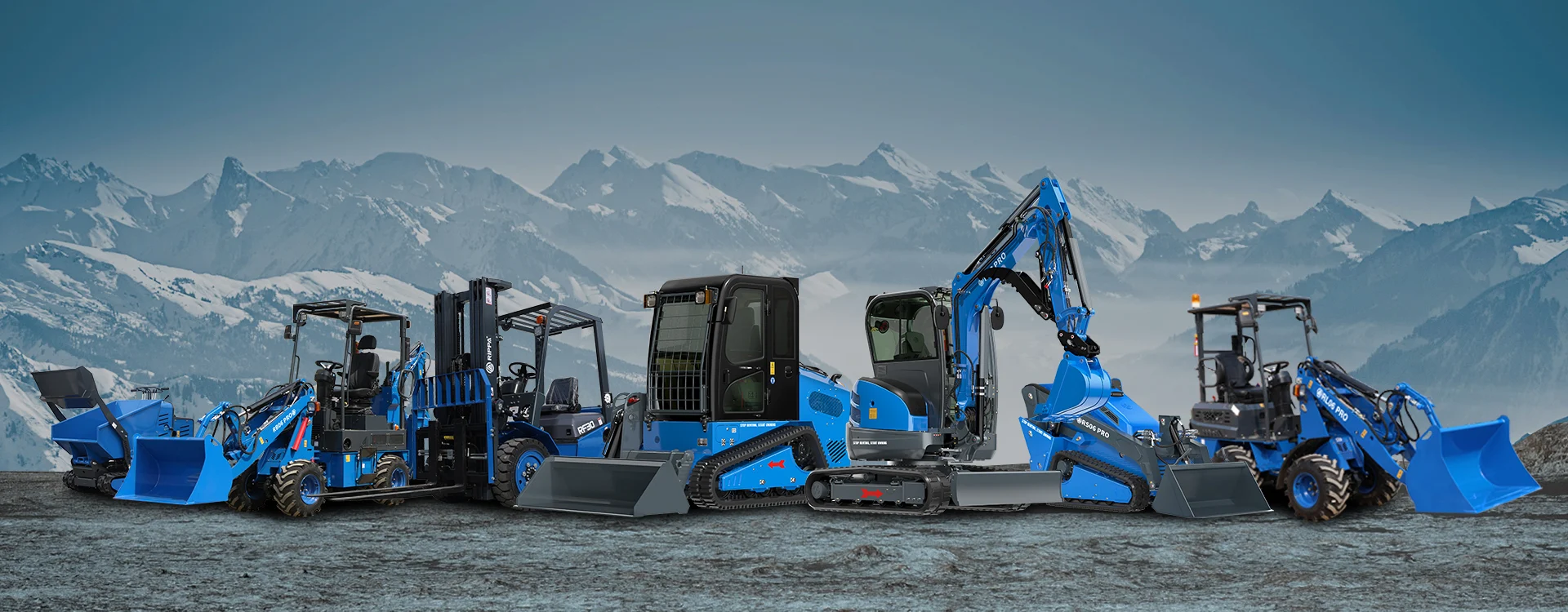
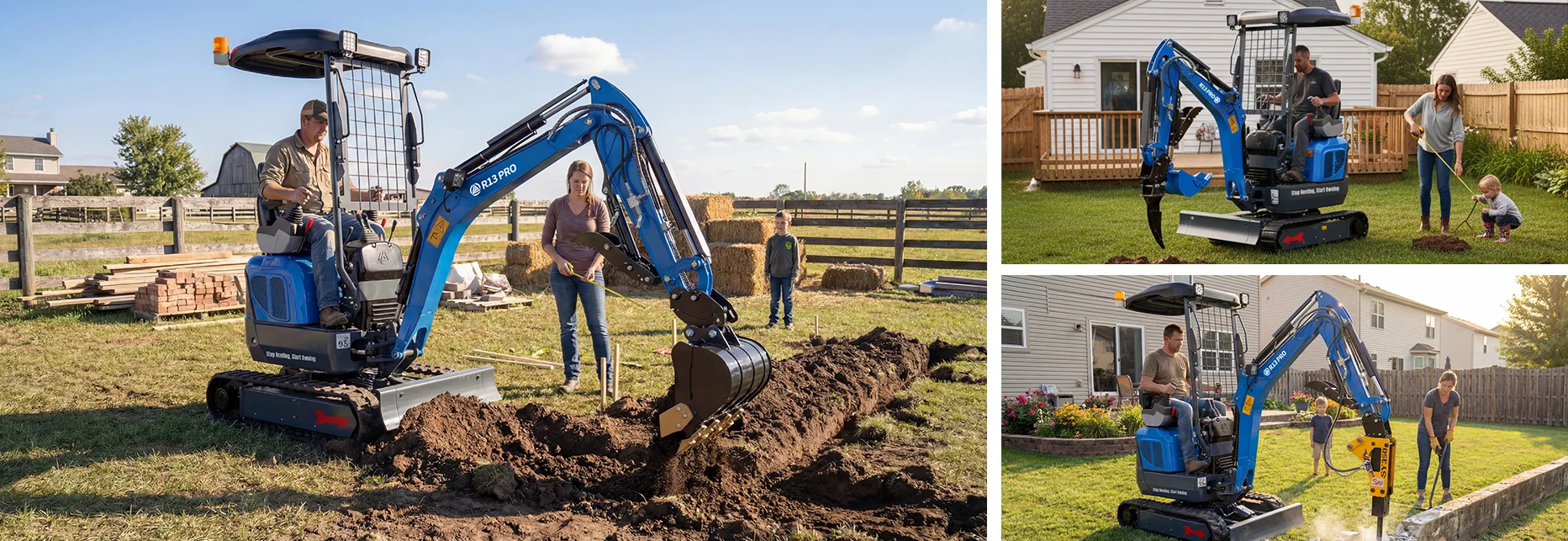
RIPPA mini excavators can be considered by contractors and rental companies that need compact equipment for repeated digging, trenching, drainage, landscaping preparation, fence work, and small construction projects.
For contractors, a mini excavator may help bring selected excavation work in-house, reduce dependence on rental availability, and support additional customer services.
For rental companies, mini excavators can serve multiple customer groups, including contractors, landscapers, farms, fence businesses, rural property owners, and small construction companies.
However, the right machine depends on actual work requirements. Buyers should confirm the current machine configuration, size, digging capability, attachment compatibility, transport requirements, spare parts support, maintenance requirements, warranty policy, technical support, delivery arrangements, and documentation before purchasing.
What Are Mini Excavators Used For?
Mini excavators are primarily designed for compact digging and excavation work.
Typical applications may include:
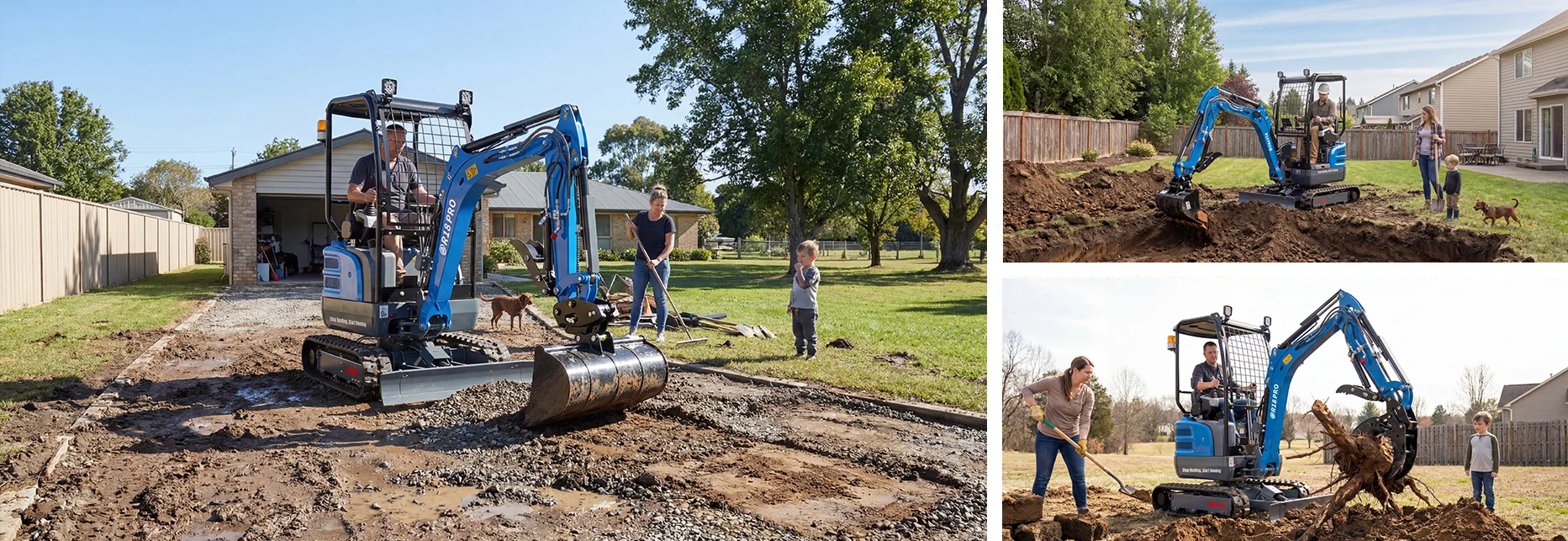
- Săparea șanțurilor
- Drainage preparation
- Ditch cleaning
- Pregătirea gardului
- Plantarea copacilor
- Root removal
- Hardscape preparation
- Reparația aleii de acces
- Amenajare peisagistică
- Rural property maintenance
- Small construction projects
- General site preparation
Their value comes from combining dedicated excavation capability with a compact machine format.
Are Mini Excavators Good for Contractors?
Mini excavators may be especially useful for contractors that regularly perform small or medium-scale excavation work.
Potential contractor users include:
- General contractors
- Landscaping contractors
- Fence contractors
- Hardscape companies
- Property maintenance businesses
- Rural service contractors
- Small construction companies
The machine can help these businesses complete excavation-related stages of a project without automatically relying on another company.
How Can a Mini Excavator Help a Contractor?
A mini excavator may help a contractor in several ways.
1. Handle More Work Internally
A contractor may normally outsource:
- Săparea șanțurilor
- Drainage digging
- Root removal
- Small excavation
- Fence line preparation
With suitable compact equipment, some of these tasks may be completed internally.
2. Improve Project Scheduling
Waiting for rented equipment or subcontractors can affect project timing.
Owning a mini excavator may provide more control when excavation work appears frequently.
3. Add Related Services
A landscaping contractor may add drainage work.
A fence contractor may add more ground preparation.
A hardscape contractor may handle site excavation before installation.
A rural contractor may add ditch and property maintenance work.
The machine can therefore support business expansion when customer demand already exists.
Should Contractors Buy or Rent a Mini Excavator?
Contractors should compare expected machine utilization with the cost and responsibility of ownership.
Buying may deserve consideration when:
- Mini excavators are rented frequently.
- Customers regularly request excavation work.
- Rental availability causes delays.
- Small digging tasks are repeatedly subcontracted.
- The machine can support several paid services.
- Transport and storage are available.
- Maintenance can be managed.
Renting may remain more practical when:
- Excavation work is occasional.
- Different machine sizes are needed for different projects.
- Storage is limited.
- Transport is difficult.
- The business does not want maintenance responsibility.
There is no universal answer. Work frequency should guide the decision.
Are Mini Excavators Suitable for Rental Companies?
Yes, mini excavators may be suitable for rental fleets when local customers regularly need compact excavation equipment.
Rental companies may serve:
- Construction contractors
- Firme de amenajare a spațiilor verzi
- Fence installers
- Ferme
- Rural service businesses
- Property maintenance companies
- Small construction users
One machine category can therefore address several customer segments.
What Jobs Do Customers Rent Mini Excavators For?
Common rental applications may include:
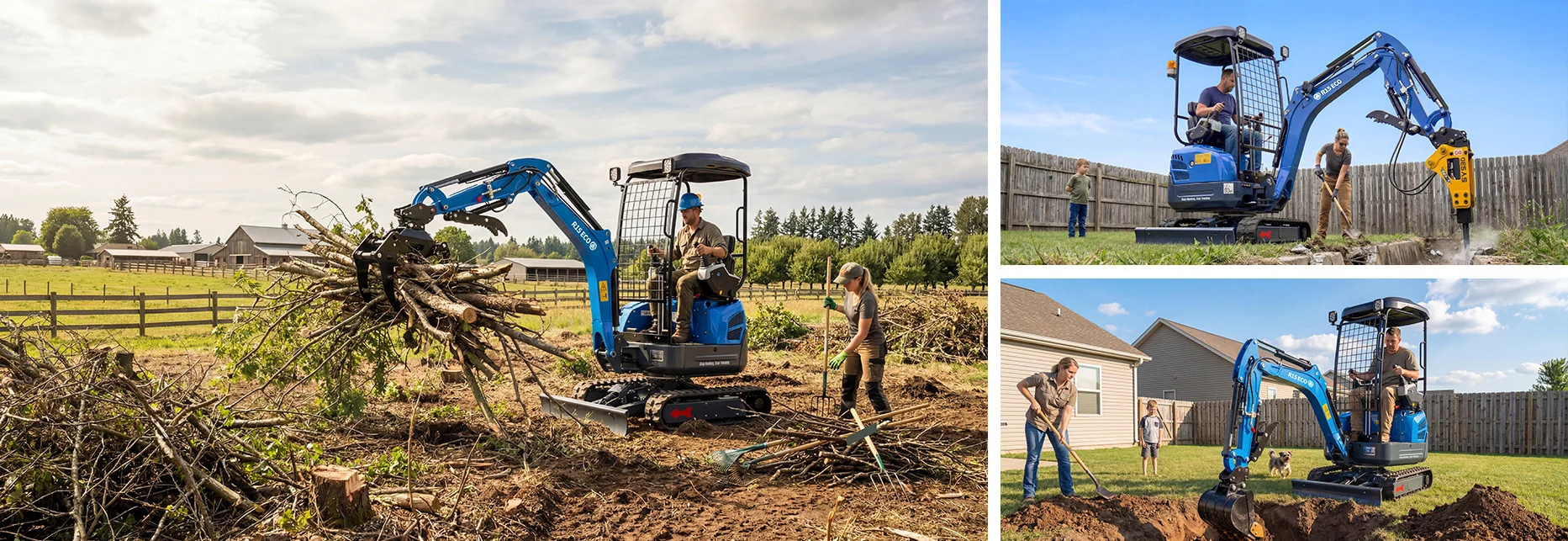
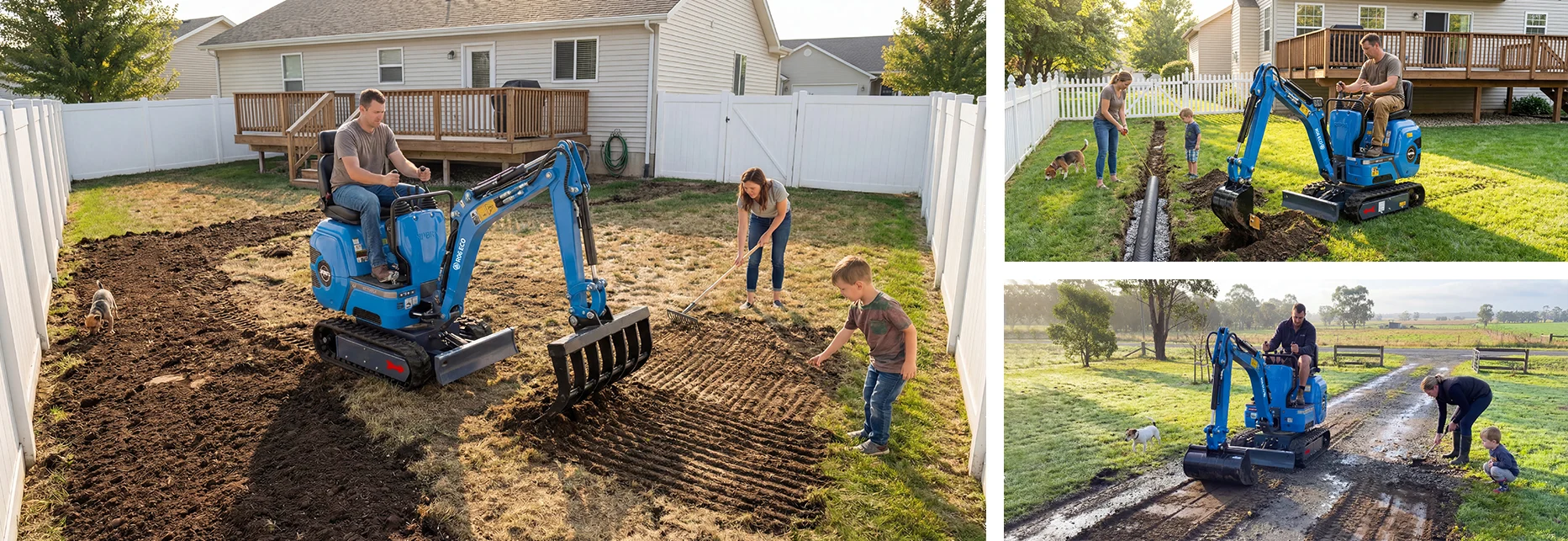
- Drainage trenches
- Small excavation
- Yard renovation
- Plantarea copacilor
- Pregătirea gardului
- Root removal
- Întreținerea fermei
- Property improvement
- Landscaping preparation
Rental companies should study local demand rather than assuming every market has the same utilization pattern.
Why Is Utilization Important for Rental Companies?
A rental machine only creates business value when customers actually rent it.
Rental companies should evaluate:
- Local demand
- Customer mix
- Seasonal demand
- Average rental frequency
- Machine size preference
- Attachment demand
- Downtime
- Maintenance requirements
The lowest purchase price is not necessarily the most important factor.
A machine that is well matched to local demand and remains available for customers may be more valuable than one that spends long periods idle or unavailable.
What Attachments Can Increase Mini Excavator Applications?
Possible attachment directions include:
- Digging buckets
- Grading buckets
- Burghie
- Hydraulic thumbs
- Graifere
- Rakes
- Breakers
- Quick couplers
Different users may need different attachment combinations.
| Tipul clientului | Possible Attachment Direction |
|---|---|
| General contractor | Digging bucket, breaker |
| Landscaper | Grading bucket, thumb |
| Fence contractor | Compatible auger |
| Farm customer | Bucket, auger, grapple |
| Rental company | General-purpose attachment range |
Compatibility should always be confirmed for the exact machine model and hydraulic configuration.
Why Are Spare Parts Important?
Parts support is important because downtime affects business operations.
For contractors, downtime may delay customer projects.
For rental companies, downtime may reduce fleet availability.
Important areas to confirm include:
- Filtre
- Routine maintenance parts
- Wear components
- Hydraulic components
- Replacement parts
- Parts identification
- Ordering procedures
A B2B buyer should understand the support process before adding equipment to the business.
Why Does Maintenance Matter for Rental Fleets?
Rental machines often operate with different users and on different job sites.
This makes inspection and maintenance particularly important.
Rental companies should consider:
- Routine service intervals
- Daily inspection requirements
- Attachment inspection
- Fluid checks
- Wear items
- Customer return inspections
- Service documentation
A clear maintenance process can help reduce unexpected downtime.
Why Is Transport Important for Contractors?
Contractors frequently move equipment between job sites.
Before selecting a mini excavator, they should confirm:
- Current machine dimensions
- Machine weight for the selected configuration
- Suitable transport equipment
- Loading procedures
- Secure tie-down requirements
- Applicable local transport rules
Transport should be considered before the purchase rather than after it.
What Should Rental Companies Confirm Before Buying RIPPA Mini Excavators?
Rental companies should confirm:
| Area | Ce trebuie verificat |
|---|---|
| Customer demand | Which customers will rent the machine? |
| Machine configuration | Does it match common rental work? |
| Anexe | What options are compatible? |
| Asistență pentru piese de schimb | Can common parts be supplied? |
| Maintenance | Can routine service be handled efficiently? |
| Garanție | What are the current terms? |
| Asistență tehnică | What assistance is available? |
| Transport | How will machines be delivered or collected? |
| Documentation | Is operating and service information available? |
What Should Contractors Confirm Before Buying?
Contractors should confirm:
- Application suitability
- Current machine specifications
- Digging requirements
- Compatibilitatea atașamentului
- Transport requirements
- Storage
- Spare parts support
- Maintenance access
- Politica de garanție
- Asistență tehnică
- Modalități de livrare
- Documentation
The correct machine should fit the contractor’s actual workflow.
Întrebări frecvente
Are RIPPA mini excavators suitable for small contractors?
They may be suitable for contractors that frequently perform trenching, drainage, landscaping preparation, fence work, property maintenance, or other compact excavation tasks.
Are mini excavators useful for rental fleets?
They may be useful when local customers regularly need compact digging equipment and the rental company can support maintenance and parts requirements.
Can contractors reduce rental dependence by buying a mini excavator?
Potentially. Frequent users may gain more scheduling control through ownership, while occasional users may still find rental more practical.
What customers may rent mini excavators?
Potential customers include contractors, landscapers, farms, fence businesses, rural service companies, and property maintenance businesses.
Are attachments important?
Yes. Compatible attachments can expand the range of work supported by the machine.
What should buyers confirm before purchasing RIPPA equipment?
Buyers should confirm current configuration, specifications, attachment compatibility, parts support, warranty, maintenance requirements, technical support, delivery, documentation, and other current purchase terms.
Rezumat
RIPPA mini excavators can be considered by both contractors and rental companies when compact excavation is a regular part of their business or customer demand.
Contractors may use mini excavators to improve project control, reduce selected rental or subcontractor dependence, and add excavation-related services.
Rental companies may use the same equipment category to serve contractors, landscapers, farms, fence businesses, and property maintenance customers.
The buying decision should ultimately depend on utilization, applications, attachments, transport, maintenance, parts support, and current product information rather than purchase price alone.
 Acasă
Acasă
 Produse
 E-mail
 WhatsApp

