For an equipment dealer, choosing which mini excavators to stock can be more difficult than deciding whether to sell mini excavators at all.
A manufacturer may offer several machine sizes and configurations, but a dealer usually should not put every available model into local inventory.
Too many models can create:
- Higher inventory costs
- More spare parts complexity
- More attachment combinations
- More sales training requirements
- Slower inventory turnover
- Greater after-sales complexity
Too few models can create a different problem: customers may not find a machine that fits their work.
The goal is therefore not to carry the largest possible mini excavator lineup.
The goal is to build a focused excavator inventory that matches the dealer’s real customer base.
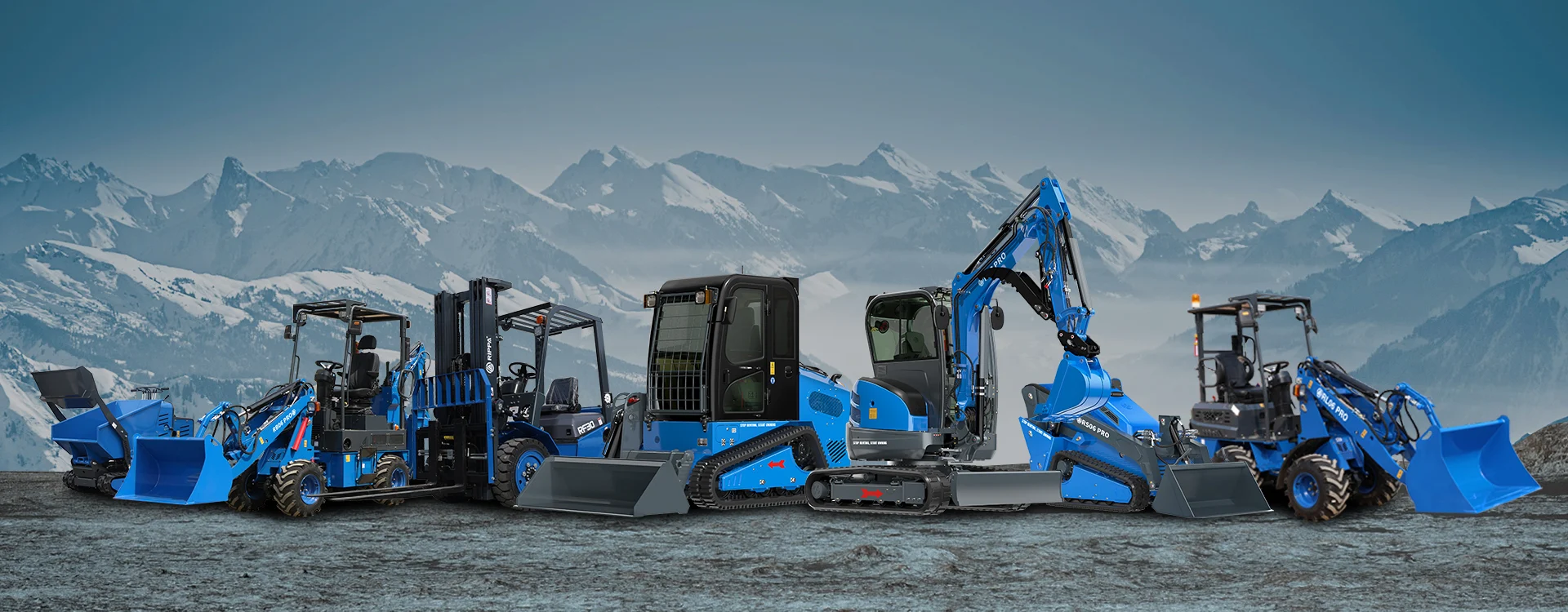
For dealers considering RIPPA mini excavators, the current product catalog provides multiple compact excavator models and configurations rather than a single universal machine. That makes customer segmentation especially important when deciding what to stock.
Start with Customer Applications, Not Machine Size
A dealer should first understand what customers actually need to do.
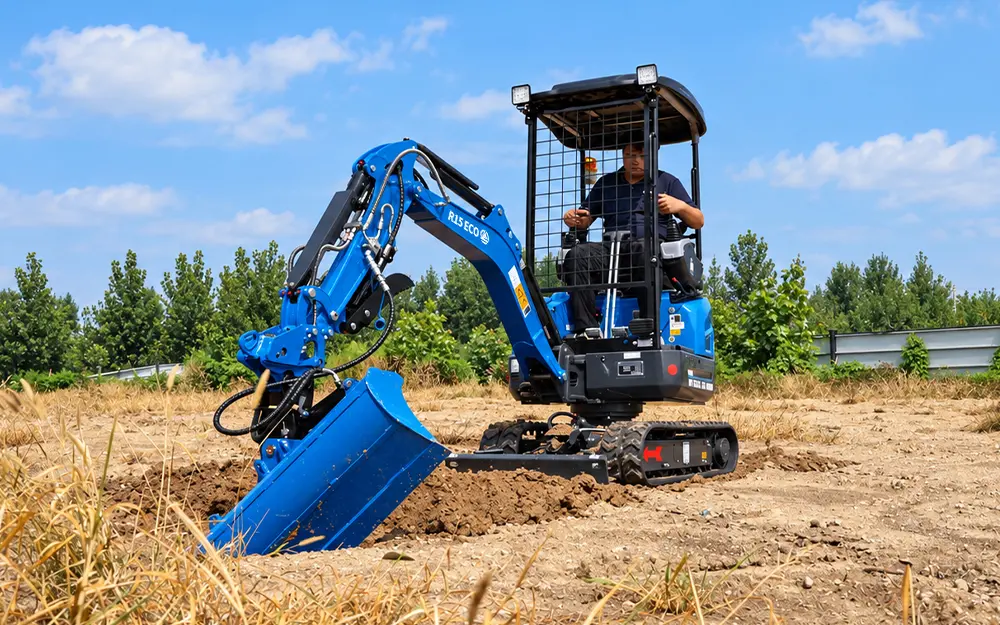
Typical mini excavator applications may include:
- Рытье траншей
- Дренажные работы
- Ditch maintenance
- Подготовка забора
- Посадка деревьев
- Root removal
- Landscaping excavation
- Hardscape preparation
- Rural property maintenance
- Small construction excavation
Once the main applications are clear, the dealer can begin matching machine categories to customer requirements.
Starting with machine specifications before understanding the job can lead to poor inventory decisions.
Identify Your Main Mini Excavator Customer Groups
Different customer types may require different machines.
Construction Contractors
Contractors may prioritize:
- Digging capability
- Transportability
- Совместимость с приложениями
- Machine availability
- Поддержка запчастей
Their machines may move between multiple job sites.
Landscaping Businesses
Landscapers may prioritize:
- Compact access
- Transport
- Grading-related work
- Посадка деревьев
- Drainage
- Attachment flexibility
Компании по прокату
Rental customers may prioritize:
- Broad application range
- Easy fleet standardization
- Техническое обслуживание
- Spare parts
- Simple customer instruction
- Repeat machine availability
Farms and Rural Businesses
These customers may use mini excavators for:
- Drainage
- Ditch cleaning
- Подготовка забора
- Tree work
- Property maintenance
Equipment Resellers
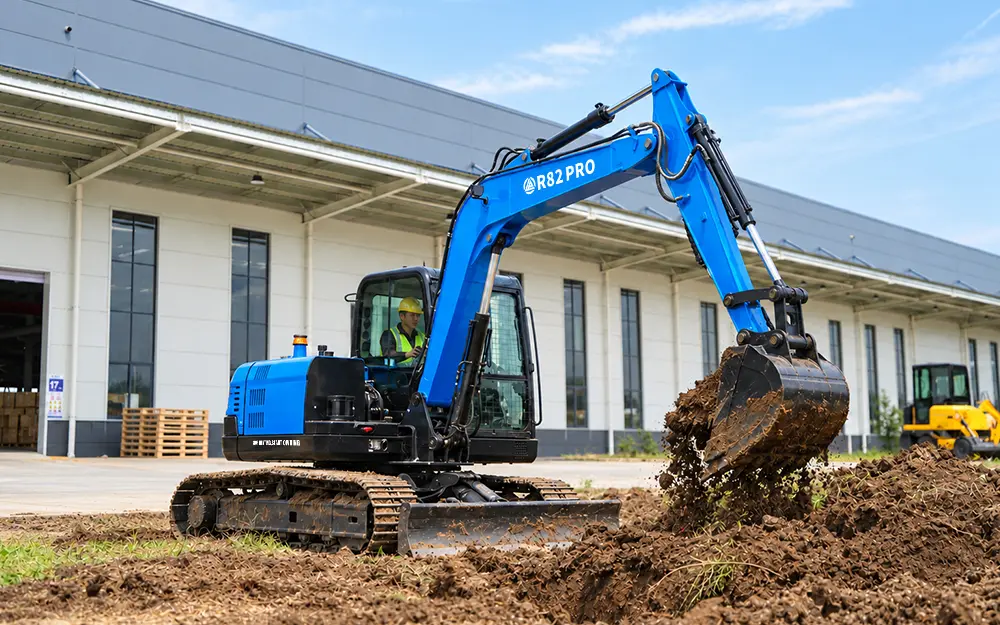
Resellers may prioritize machines that fit the widest number of local buyers and can be reordered consistently.
The dealer’s inventory should reflect which of these customer groups actually generate qualified demand.
Review Your Inquiry History
One of the best sources of inventory information is the dealer’s own inquiry history.
Review the previous several months and ask:
- Which excavator sizes received the most inquiries?
- Which applications appeared most often?
- Which customers asked for machines but could not find a suitable configuration?
- Which models sold quickly?
- Which models remained in stock too long?
- Which customers requested multiple units?
- Which attachments were requested with specific machines?
This information is often more useful than simply following a manufacturer’s full catalog.
Separate High-Inquiry Models from High-Quality-Demand Models
A machine can attract many inquiries without producing strong B2B sales.
For example, an entry-level mini excavator may generate significant price-shopping traffic.
A different machine may receive fewer inquiries but attract:
- Подрядчики
- Rental companies
- Equipment dealers
- Commercial landscapers
The second category may ultimately be more important to a B2B-focused dealership.
Dealers should therefore evaluate:
Inquiry volume + buyer quality + actual conversion.
Not inquiry volume alone.
Build Inventory Around Job Profiles
A dealer can organize excavator inventory according to job profile.
Light Property and Landscaping Work
Customer needs may include:
- Small trenches
- Planting
- Yard work
- Property maintenance
Important considerations may include:
- Compact dimensions
- Transport
- Basic bucket options
- Easy access to confined areas
Contractor and General Excavation Work
Customers may need:
- Drainage
- Рытье траншей
- Подготовка площадки
- Hardscape preparation
Important considerations may include:
- Working capability
- Hydraulic requirements
- Совместимость с приложениями
- Transport logistics
Rental Fleet Applications
Rental companies may prioritize:
- Standardized models
- Common maintenance procedures
- Common attachments
- Parts planning
- Broad customer usability
This type of application-based segmentation can make stock planning more practical.
Why Transport Should Influence Stock Decisions
Transport is one of the most important factors in compact equipment purchasing.
A machine that fits the job but is difficult for the target customer to move may be harder to sell.
Dealers should understand:
- Typical customer trailers
- Tow vehicle capability
- Job-site access
- Machine dimensions
- Machine weight for specific configurations
- Local transportation requirements
A landscaping contractor with compact transport requirements may prefer a different machine from a construction company with larger equipment trailers.
Dealers should not ignore this distinction.
Why Dealer Inventory Should Include More Than One Customer Entry Point
Carrying only one mini excavator configuration can simplify inventory, but it may limit the market.
A practical dealership may consider a small number of clearly differentiated options.
For example:
Entry Option
For customers needing compact excavation and lower initial investment.
Core B2B Option
For contractors, landscapers, or rental companies with regular commercial work.
Higher-Capability Option
For buyers requiring more digging capability or broader attachment use.
The exact machine selection should depend on local demand rather than a fixed universal formula.
Standardization Can Be More Valuable Than Maximum Variety
Dealers sometimes assume more models mean more selling opportunities.
However, standardizing around a smaller number of high-demand machines can offer advantages.
It may simplify:
- Spare parts inventory
- Sales training
- Maintenance knowledge
- Customer demonstrations
- Attachment stocking
- Product documentation
- Repeat ordering
Rental companies may also prefer standardized machines because technicians and staff become familiar with the same equipment.
Build Attachment Planning into Model Selection
A dealer should not select the excavator first and think about attachments later.
Common attachment directions may include:
- Digging buckets
- Grading buckets
- Шнеки
- Грэпплз
- Hydraulic thumbs
- Breakers
- Rakes
- Quick couplers
Different machine configurations may have different compatibility requirements.
Before stocking a machine, ask:
- Which attachments will customers request?
- Which hydraulic functions are required?
- Can the same attachment inventory support several machines?
- Which attachment combinations create the strongest customer value?
A machine with a clear attachment strategy may be easier to market.
Use Customer Packages Carefully
Dealers can create application-oriented packages without forcing customers to buy unnecessary equipment.
For example:
Landscaping Direction
- Мини-экскаватор
- Экскаваторный ковш
- Ковш для сортировки
- Appropriate compatible attachment options
Fence Contractor Direction
- Мини-экскаватор
- Экскаваторный ковш
- Compatible auger option
General Contractor Direction
- Мини-экскаватор
- Экскаваторный ковш
- Additional compatible tools depending on work
Rental Fleet Direction
- Standard machine configuration
- General-purpose attachments
- Planned service parts
These should be treated as starting points, not mandatory bundles.
Consider Spare Parts Before Increasing Model Variety
Every additional excavator model can increase parts complexity.
Dealers may need to support:
- Filters
- Wear parts
- Hydraulic components
- Electrical components
- Service items
- Machine-specific replacement components
If two machines serve similar customers but one creates significantly more inventory complexity, that factor should be considered.
This does not mean dealers should avoid product variety.
It means parts planning should be part of stock planning.
Consider Technician Familiarity
As more machines are sold locally, dealers or service partners may encounter more maintenance questions.
A focused machine range allows technicians to become familiar with:
- Routine inspection
- Техническое обслуживание
- Component identification
- Parts
- Troubleshooting procedures
This can improve the dealer’s ability to support customers.
Should Dealers Stock Machines or Sell by Order?
Not every model needs to sit in inventory.
A dealer can separate products into:
Stock Models
Machines with:
- Frequent demand
- Broad application range
- Predictable turnover
Order-Based Models
Machines for:
- Specialized applications
- Less common customer requirements
- Specific configurations
This approach may reduce inventory pressure while still allowing the dealer to serve a broad market.
How Can a Dealer Test a New Model?
Before committing to larger inventory, dealers may consider introducing a limited number of units.
The objective is to learn:
- Which customers show interest
- Which applications fit the machine
- Which questions buyers ask
- Which attachments are requested
- How quickly the machine sells
- What support issues appear
Actual market feedback is often more useful than assumptions.
Track Inventory Turnover by Model
Dealers should know:
- How long each model remains in inventory
- How many qualified inquiries it receives
- What customer groups ask about it
- How often discounts are required
- Which attachments are sold with it
- Whether customers later purchase additional machines
A machine with slightly fewer inquiries but faster conversion may deserve more inventory than a model generating many low-quality leads.
Use Website Content to Support Specific Stock Models
If a dealer decides to focus on several core mini excavator categories, website content should support them.
Useful topics may include:
- Mini excavators for contractors
- Mini excavators for landscaping businesses
- Mini excavators for rental fleets
- Mini excavators for farm drainage
- How to choose a mini excavator size
- Mini excavator attachment guide
- Mini excavator transport considerations
This helps attract customers according to applications rather than price alone.
What Should Dealers Confirm Before Ordering RIPPA Mini Excavators?
Before building inventory, dealers should confirm current:
| Площадь | What to Confirm |
|---|---|
| Models | Current available configurations |
| Specifications | Current technical information |
| Applications | Suitability for target customers |
| Вложения | Compatibility |
| Parts | Support and ordering process |
| Техническое обслуживание | Service requirements |
| Гарантия | Current terms |
| Техническая поддержка | Support process |
| Documentation | Available machine information |
| Delivery | Current arrangements |
| Cooperation | Current dealer terms |
RIPPA’s official mini excavator catalog currently lists multiple compact models with different operating weights and digging characteristics, reinforcing the need for model-by-model evaluation rather than assuming all mini excavators serve the same buyer.
Часто задаваемые вопросы
How many mini excavator models should a dealer stock?
There is no universal number. Dealers should base inventory on customer demand, applications, transport requirements, sales volume, and support capability.
Should the cheapest model receive the most inventory?
Not necessarily. Dealers should evaluate buyer quality, conversion, support requirements, and inventory turnover.
Why should attachments influence model selection?
Because customers often purchase mini excavators for specific jobs, and attachment compatibility may determine whether the machine can perform those jobs.
Should rental-focused dealers standardize their excavators?
Standardization may simplify parts, maintenance, staff familiarity, attachments, and fleet management.
Should every available model be stocked?
No. Lower-demand configurations can often be supplied by order while high-demand models remain in stock.
Заключение
Choosing which мини-экскаваторы to stock is an inventory strategy decision, not simply a product selection decision.
Equipment dealers should evaluate:
- Customer type
- Applications
- Inquiry quality
- Transport
- Attachment demand
- Spare parts
- Technician familiarity
- Inventory turnover
- Repeat purchasing
The strongest mini excavator inventory is not necessarily the largest.
It is the one where each stocked machine has a clear customer, clear application, and clear role in the dealer’s B2B business.
 Главная
 Продукция
 Электронная почта
 WhatsApp

