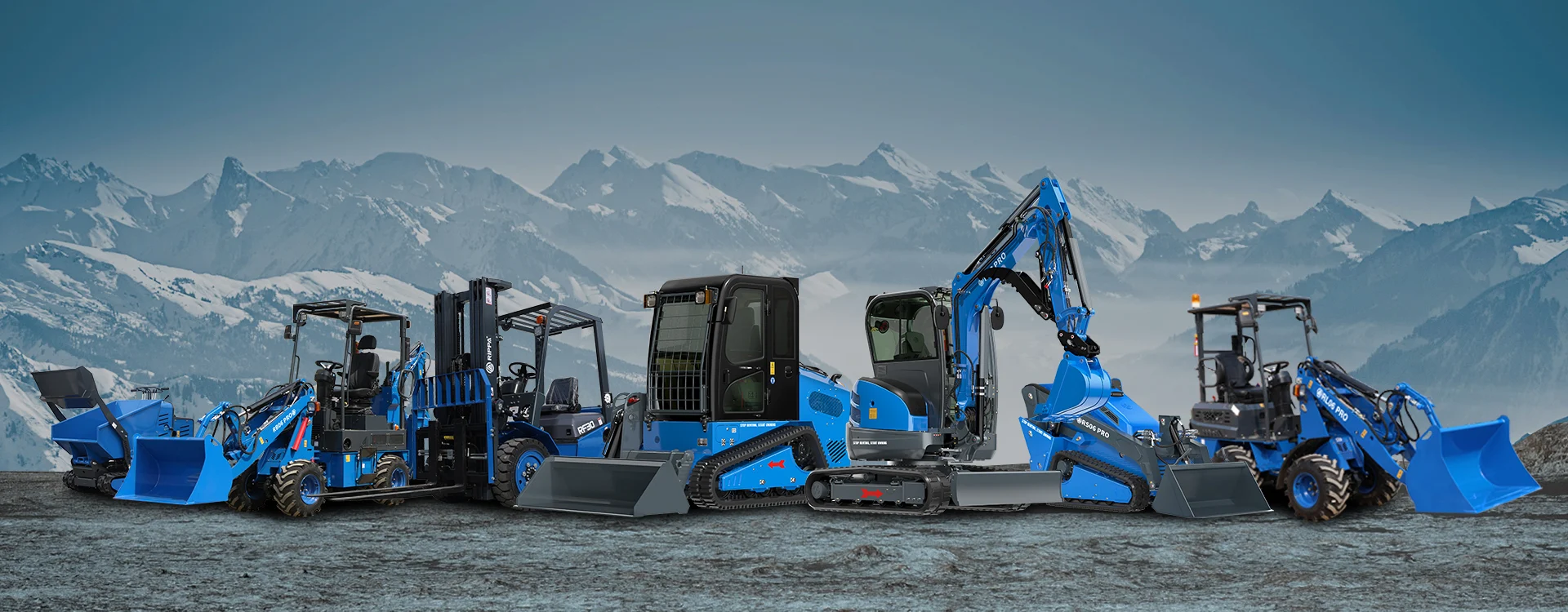
Skid-steer loaders are among the most adaptable and compact machines found on modern job sites. Their small size, powerful performance, and easy maneuverability make them essential across industries such as construction, landscaping, agriculture, snow removal, and property maintenance. This article explains what a skid-steer loader is, how it works, and why so many professionals consider it a must-have machine for daily operations.

1. What Is a Skid-Steer Loader?
A skid-steer loader is a compact, engine-powered machine equipped with lift arms that can connect to a wide range of tools or attachments. Unlike large wheel loaders, skid steers are designed to operate in tight spaces where agility and quick directional control are critical. Their compact frame allows them to enter narrow pathways, indoor Distribution Center, small construction areas, or backyard landscaping sites where limited space restricts larger equipment.
2. How the Steering System Works
The name “skid-steer” comes from its unique steering mechanism. Instead of using a traditional turning axle, the machine operates by varying the speed of its left and right wheels. When wheels on one side turn faster than the other, the machine “skids” across the ground to perform sharp turns. This mechanism allows:
-
Zero-radius turning
-
Precise control in narrow areas
-
Smooth and agile movement
-
Fast directional changes on job sites
This steering system is one of the main reasons skid steers are preferred for indoor or urban work projects.
3. Key Components of a Skid-Steer Loader
A modern skid-steer includes:
-
Hydraulic system: The heart of machine power
-
Engine: Provides strength for lifting and attachment control
-
Operator cabin: Designed for safety, visibility, and comfort
-
Lift arms: Connect to numerous attachments
-
Tires or tracks: Depending on the working surface
Skid steers may be wheel-based or track-based. Wheeled models are faster and ideal for concrete or hard ground, whereas tracked skid steers offer better traction in mud, snow, or uneven terrain.

4. Advantages of Using a Skid-Steer Loader
The versatility of skid-steer loaders is unmatched. A single machine can replace several pieces of equipment thanks to the large variety of attachments available. Benefits include:
-
Compact size for limited work areas
-
High lifting power despite small dimensions
-
Fast attachment changing
-
Nižšia spotreba paliva compared to larger loaders
-
Nižšie prevádzkové náklady for long-term use
This makes skid-steer loaders ideal for small contractors, farmers, municipal projects, and rental companies.
5. Common Applications
Skid-steer loaders can perform dozens of jobs, including:
-
Výkopové a zemné práce
-
Transporting construction materials
-
Landscaping and soil preparation
-
Odstraňovanie snehu a nečistôt
-
Drilling holes for fencing
-
Removing stumps
-
Cleaning barns in agriculture
Their ability to adapt to different tasks makes them a cost-effective investment for many businesses.
6. Why Skid-Steer Loaders Are So Popular
Professionals around the world choose skid-steer loaders due to their reliability and multi-function performance. The addition of new technologies—such as high-flow hydraulics, improved safety features, and enhanced visibility—makes modern skid steers even more efficient than older models.
7. Rippa’s Skid-Steer Loader Advantages
Rippa’s skid-steer loaders are engineered for durability, fuel efficiency, and heavy-duty performance. Benefits include:
-
Reinforced frames
-
Powerful hydraulic systems
-
Ľahký prístup na účely údržby
-
Wide attachment compatibility
-
Strong lifting capacity
For companies seeking a machine that can handle daily workloads with stability and long service life, Rippa’s skid steers are a practical solution.
 Domov
Domov
 Produkty
 E-mail
 WhatsApp

