Direct Answer
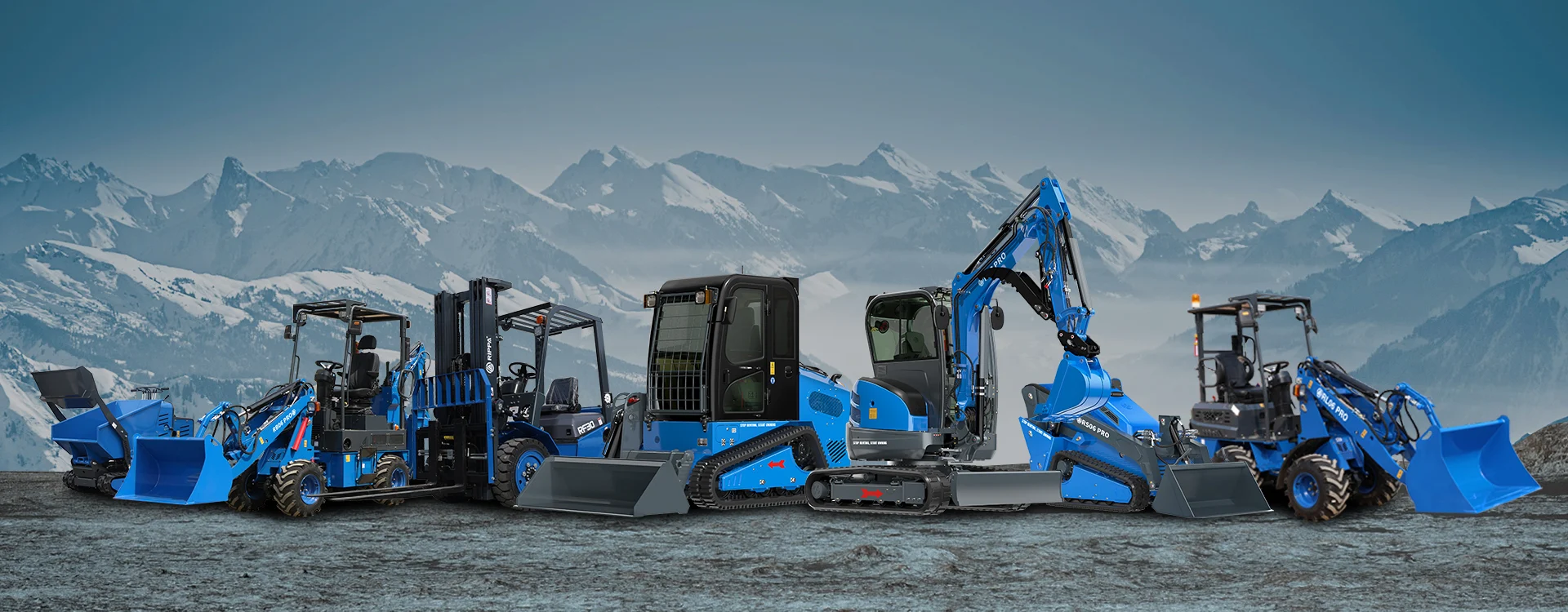
Yes. An existing business owner may be a potential RIPPA mini excavator dealer even if the business does not currently sell excavators.
Businesses that already have some combination of B2B customers, working capital, sales staff, equipment-related experience, storage or display space, logistics capability, local market relationships, or after-sales resources may have a practical foundation for entering the compact equipment market.
Potential candidates may include:
- Tractor and farm equipment dealers
- Trailer dealers
- Used equipment dealers
- Equipment rental companies
- Landscape equipment dealers
- Forklift dealers
- Building material suppliers
- Tool and industrial distributors
- Machinery importers
- Izvajalci
- Regional wholesalers
- Established entrepreneurs with relevant business resources
RIPPA’s current dealer-program information asks potential partners about their company, current product lines, service capability, location, and intended territory, indicating that dealer evaluation is based on the broader business and market capability rather than simply whether the applicant already sells mini excavators.
Current dealer terms, territory arrangements, stocking requirements, warranty, support, and commercial conditions should always be confirmed directly with RIPPA before making investment decisions.
Do I Need to Already Be a Construction Equipment Dealer?
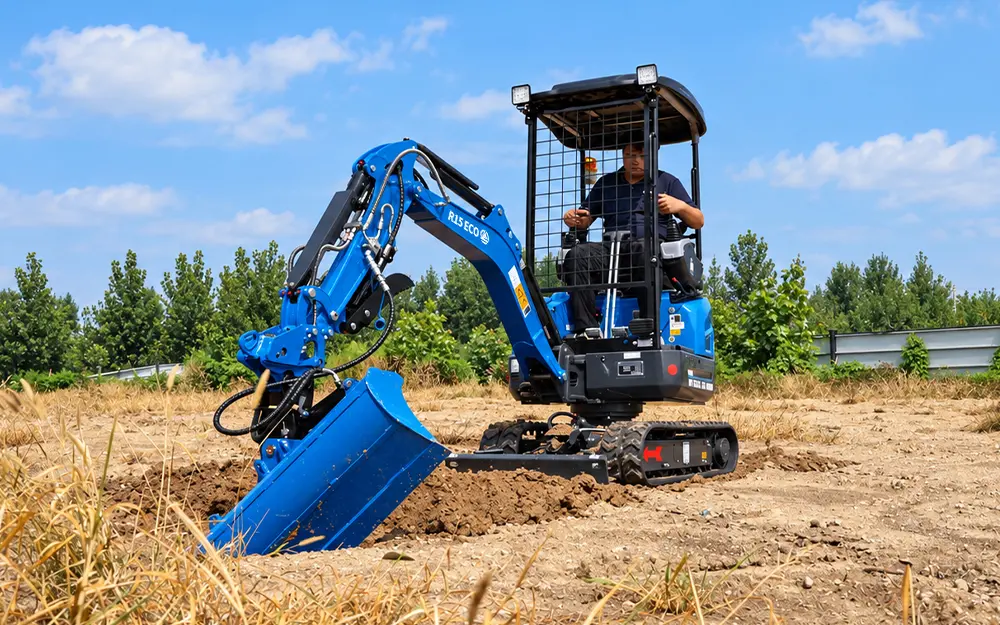
Not necessarily.
Being an existing machinery dealer can provide an advantage because the company may already understand:
- Equipment sales
- Parts
- Storitve
- Financiranje
- Prevoz
- Customer support
However, machinery experience is only one part of dealership potential.
Another business may already have something equally important:
the customers who buy machinery.
For example, a trailer dealer may already serve hundreds of contractors.
A tractor dealer may already serve farmers who need drainage equipment.
A rental company may know exactly which mini excavators customers request most frequently.
A building material business may already supply contractors every day.
These companies may have a realistic route into machinery sales even if excavators are not currently part of their product range.
Why Can Mini Excavators Be a Good Entry Product?
Mini excavators can be attractive as a dealer entry category because one product type can serve multiple industries.
Typical applications may include:
- Izkopavanje jarkov
- Drainage
- Ditch cleaning
- Fence preparation
- Saditev dreves
- Root removal
- Landscaping preparation
- Hardscape preparation
- Property maintenance
- Farm work
- Small construction excavation
Potential customers can therefore include:
- Izvajalci
- Landscapers
- Farms
- Podjetja za najem
- Fence businesses
- Rural service companies
- Property maintenance businesses
This means a new dealer does not need to rely on only one customer segment.
Can a Tractor Dealer Become a Mini Excavator Dealer?
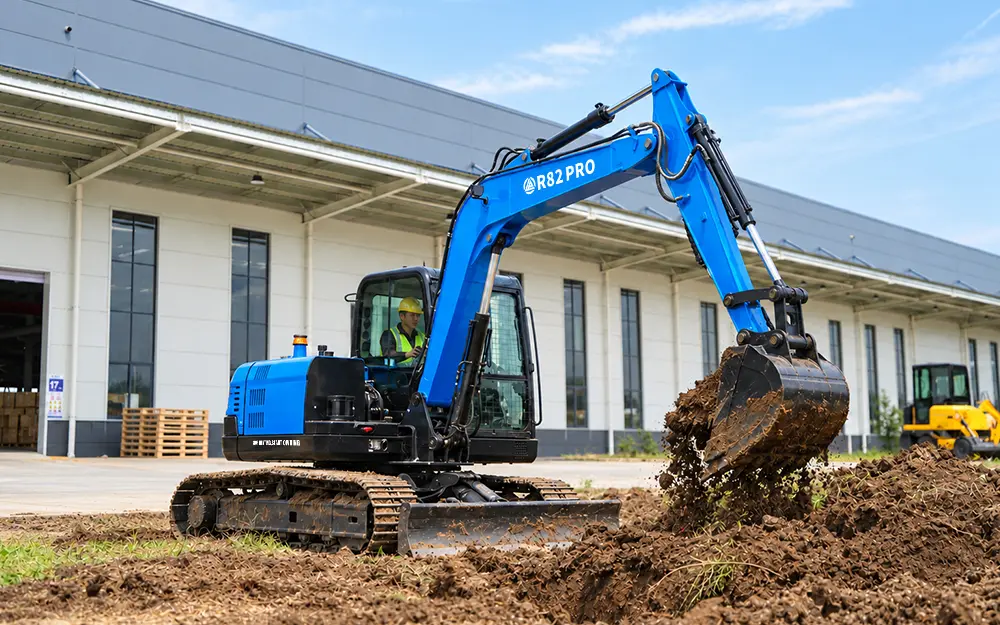
Yes, a tractor or farm equipment dealer may be a strong candidate if its customers regularly need compact excavation equipment.
Farm customers may need digging capability for:
- Drainage
- Irrigation-related earthwork
- Ditch maintenance
- Fence preparation
- Saditev dreves
- Root removal
- Farm path work
- Rural property improvement
A mini excavator does not replace the tractor.
Instead, the products solve different problems.
Tractor
Commonly supports broader agricultural and implement-based work.
Mini bager
Provides dedicated digging and trenching capability.
This makes mini excavators a logical adjacent category for some agricultural dealers.
Can a Trailer Dealer Sell Mini Excavators?
Potentially, yes.
Trailer dealerships often serve:
- Izvajalci
- Landscapers
- Kmetje
- Podjetja za najem
- Equipment owners
These are also important mini excavator customer groups.
A customer purchasing an equipment trailer may already own machinery or may be planning to buy machinery.
This creates natural customer overlap.
A trailer dealership considering excavator sales should evaluate whether it also has, or can develop:
- Product knowledge
- Equipment display space
- Podpora za nadomestne dele
- Technical communication
- After-sales processes
The customer relationships may already exist. The machinery support capability may be the part that needs to be added.
Can an Equipment Rental Company Become a Dealer?
Yes. Rental companies can be particularly interesting potential equipment dealers because they already understand local machinery demand.
A rental company knows:
- Which machines customers rent
- Which sizes are requested
- Which applications are common
- Which attachments customers need
- Which contractors rent repeatedly
That knowledge can help reduce uncertainty when entering equipment sales.
For example, a contractor that rents the same type of mini excavator frequently may eventually consider ownership.
The rental company can potentially develop two business channels:
equipment rental + equipment sales
A rental company may also become a repeat B2B buyer if it expands its own fleet.
Can a Used Equipment Dealer Add New RIPPA Mini Excavators?
Yes. New and used equipment can serve different customers inside the same dealership.
Used-equipment customers may prioritize:
- Purchase budget
- Individual machine condition
- Specific brands
- Immediate availability
New-equipment customers may place greater emphasis on:
- Current configurations
- Attachment planning
- Podpora za nadomestne dele
- Current warranty terms
- Repeat machine availability
- Standardized fleet purchasing
A used machinery dealer already has relationships with equipment buyers.
Adding new mini excavators may allow the business to keep customers who would otherwise leave to purchase new machinery elsewhere.
Can a Landscape Equipment Dealer Become a Mini Excavator Dealer?
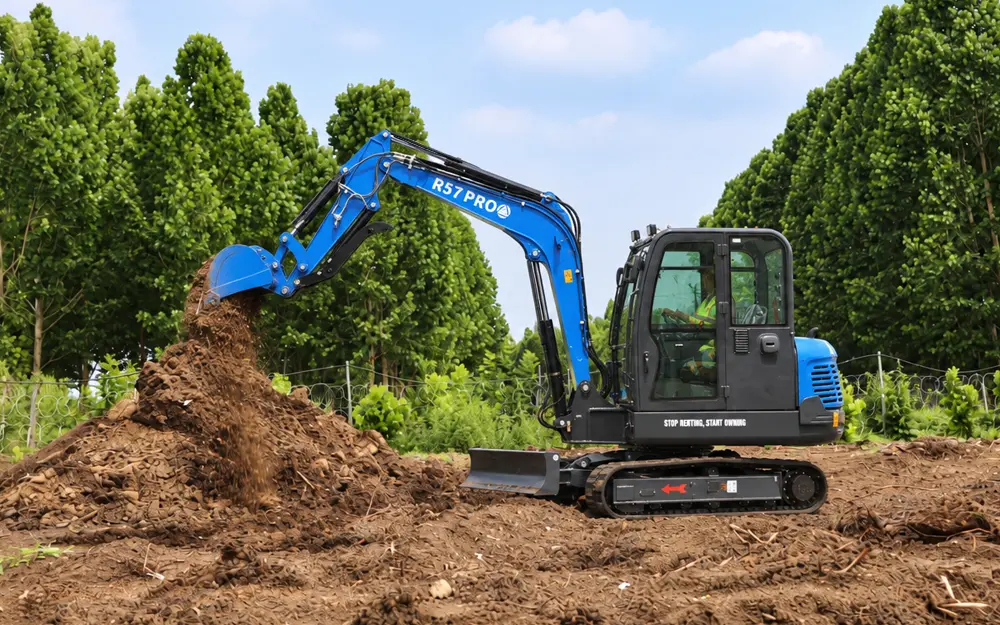
Potentially.
Professional landscaping companies often grow beyond:
- Mowing
- Vzdrževanje
- Basic planting
and begin performing:
- Drainage
- Hardscaping
- Tree installation
- Root removal
- Yard renovation
- Priprava gradbišča
As their work becomes more project-oriented, compact excavation may become increasingly relevant.
A landscape equipment dealer may already have access to precisely this customer group.
Mini excavators can therefore become a way for the dealership to grow with its existing customers.
Can a Forklift Dealer Sell Mini Excavators?
A forklift or material-handling dealer may be able to expand into compact construction equipment if it wants to serve new customer groups.
Forklift dealers often already possess:
- B2B sales experience
- Machinery knowledge
- Technicians
- Parts operations
- Yard or warehouse space
- Commercial accounts
However, the end markets are not identical.
Forklifts primarily serve material-handling applications.
Mini excavators primarily serve excavation.
A forklift dealership should therefore determine whether it can reach:
- Izvajalci
- Landscapers
- Farms
- Podjetja za najem
- Rural equipment customers
before expanding.
Can Building Material Suppliers Become Equipment Dealers?
Some can.
Building material businesses often have strong relationships with:
- Builders
- Izvajalci
- Landscapers
- Property developers
- Construction companies
These customers regularly use machinery.
A material supplier may already have:
- Commercial yard space
- Delivery vehicles
- Sales staff
- Contractor accounts
- Credit relationships
That gives the company an important commercial foundation.
The main challenge is developing the equipment-specific side of the business:
- Product knowledge
- Parts
- Storitve
- Warranty communication
- Tehnična podpora
Can a Contractor Become a Mini Excavator Dealer?
An established contractor may be a potential dealer when it has sufficient commercial resources and industry relationships.
Contractors often understand equipment at a practical level.
They know:
- What machines contractors use
- What equipment is frequently rented
- Which jobs require compact excavators
- What buyers care about
- What equipment problems frustrate operators
A successful contractor may also know many other:
- Builders
- Landscapers
- Excavation companies
- Property developers
- Subcontractors
That network can become valuable in equipment sales.
However, operating a construction business and operating a dealership are different.
The contractor would still need a sales, inventory, parts, and after-sales strategy.
What Resources Make an Existing Business a Good Candidate?
A potential dealer does not necessarily need every capability immediately.
However, several resources can make the transition easier.
| Existing Resource | Why It Matters |
|---|---|
| B2B customer network | Provides potential equipment buyers |
| Working capital | Supports machines, parts and operations |
| Physical location | Supports display and storage |
| Sales staff | Helps develop local accounts |
| Service capability | Supports customers after purchase |
| Industry reputation | Builds buyer confidence |
| Logistics | Helps receive and deliver machinery |
| Digital marketing | Helps generate new leads |
| Equipment experience | Makes product learning easier |
The strongest candidates usually combine several of these resources.
Is Having Money Enough to Become a Dealer?
No. Capital is important, but it is not sufficient by itself.
A dealership also needs customers and operating capability.
A business that purchases several excavators but has no:
- Target market
- Sales plan
- Customer network
- Lead-generation process
- Service plan
may struggle to turn inventory into a sustainable business.
A stronger candidate asks:
Who will buy the machines?
before asking:
How many machines can I afford to buy?
Is an Existing Customer Base More Important Than Machinery Experience?
Both matter, but an existing customer base can be extremely valuable.
Consider two potential dealers.
Company A
Has excellent machinery knowledge but very few customers.
Company B
Already serves 1,000 contractors, landscapers, or farms but has not previously sold excavators.
Company B may have a significant commercial advantage.
Machinery knowledge can be developed through:
- Product training
- Technical materials
- Demonstrations
- Supplier support
- Hiring experienced staff
A strong local customer network may take many years to build.
RIPPA’s current dealer-program pages describe sales and technical training as part of its dealer support structure, which may help qualified partners develop product knowledge.
Do I Need a Large Showroom?
Not necessarily.
Compact equipment businesses may operate effectively from:
- Equipment yards
- Skladišča
- Existing dealership locations
- Commercial properties
The more important questions include:
- Can equipment be displayed securely?
- Can machines be loaded and unloaded?
- Can customers inspect or demonstrate equipment?
- Is there space for attachments?
- Can parts be stored?
- Is the location suitable for commercial traffic?
The facility should match the business model.
Do I Need a Service Department?
You need an after-sales plan.
That does not always mean building a large workshop immediately.
Possible structures may include:
- In-house technicians
- Mobile service capability
- Qualified local service partners
- Dealer staff supported by manufacturer technical assistance
The important point is that customers know what happens when they need:
- Maintenance information
- Parts
- Troubleshooting
- Warranty support
RIPPA’s current dealer information specifically includes service capability in the dealer qualification process and describes technical training and parts support as parts of its dealer program.
How Much Inventory Should a New Dealer Start With?
There is no universal answer.
The right quantity depends on:
- Local demand
- Dealer capital
- Customer type
- Supplier lead times
- Machine range
- Storage
- Sales pipeline
RIPPA’s current dealer-program materials describe a flexible stocking approach rather than a single rigid starting quantity, but actual current terms should be confirmed directly for the dealer’s market.
A cautious new dealer may be better served by:
- A focused machine range
- Demonstration capability
- Selected attachments
- Basic parts planning
than by purchasing every model available.
What Should I Sell After Mini Excavators?
A new dealership should not rush into every category.
Instead, observe what excavator customers ask for next.
Contractors May Ask For
- Skid steer loaders
- Additional excavators
- Priloge
Farms May Ask For
- Wheel loaders
- Skid steers
- Priloge
Rental Companies May Ask For
- More excavators
- Skid steer loaders
- Additional attachments
RIPPA’s current product catalog includes Mini Excavator, Skid Steer, Wheel Loader and Rippa Forklift categories among its broader machinery range.
This allows a dealer to broaden its offering where customer demand justifies it.
How Do I Know Whether My Existing Business Is Ready?
Ask the following questions:
- Do we already serve contractors, farms, landscapers, rental companies, or other equipment users?
- Do customers already ask us about machinery?
- Do we have enough working capital for inventory and operations?
- Can we provide suitable display or storage space?
- Can our team sell B2B equipment?
- Can we develop a spare-parts process?
- Can we provide or coordinate technical support?
- Can we market machinery locally?
- Can we manage machine delivery?
- Are we prepared to build the business over time?
If the answer to most of these questions is yes, the business may deserve further evaluation as a potential equipment dealership.
What Does RIPPA Look for in a Dealer Applicant?
According to RIPPA’s current dealer guidance, potential applicants provide information such as:
- Company information
- Location
- Years in business
- Existing product lines
- Service capability
- Intended sales territory
RIPPA then describes evaluating local market potential and service capability as part of its qualification process.
This supports an important point:
Dealer recruitment is about business capability, not simply whether the applicant already has “excavator dealer” in its company name.
Frequently Asked Questions
Can I become a RIPPA mini excavator dealer if I currently sell tractors?
Potentially, yes. Tractor dealers may already have rural customers, machinery knowledge, service resources, and equipment sales experience.
Can trailer dealers become excavator dealers?
Potentially. Trailer dealers often serve contractors, landscapers, farmers, and equipment owners who may also purchase mini excavators.
Can a rental company sell RIPPA mini excavators?
A rental company may be a good candidate because it already understands equipment demand and has relationships with machinery users. Current cooperation terms should be confirmed with RIPPA.
Can used equipment dealers sell new RIPPA machines?
Potentially, yes. New and used equipment may serve different customer segments.
Do I need previous excavator experience?
Not necessarily, but equipment knowledge, parts support, technical communication, and after-sales capability need to be developed.
Does RIPPA provide dealer support?
Current RIPPA dealer-program materials describe sales and technical training, parts support, demo support, marketing support, and flexible stocking as dealer-program elements. Specific current terms should be verified for each market.
Povzetek
You do not necessarily need to already be a construction equipment dealer to become a potential RIPPA mini excavator dealer.
Some of the strongest future dealer candidates may currently be:
- Tractor dealers
- Trailer dealers
- Podjetja za najem
- Used machinery businesses
- Landscape equipment dealers
- Forklift dealers
- Building material companies
- Importers
- Izvajalci
- Experienced entrepreneurs
What matters most is whether the business already has, or can develop, the resources required to sell and support machinery.
Those resources include:
customers + capital + sales capability + location + logistics + parts + technical support + local market knowledge.
For an established business that already serves equipment users, mini excavators can provide a practical bridge into the compact machinery market.
 Domov
Domov
 Izdelki
 E-pošta
 WhatsApp

