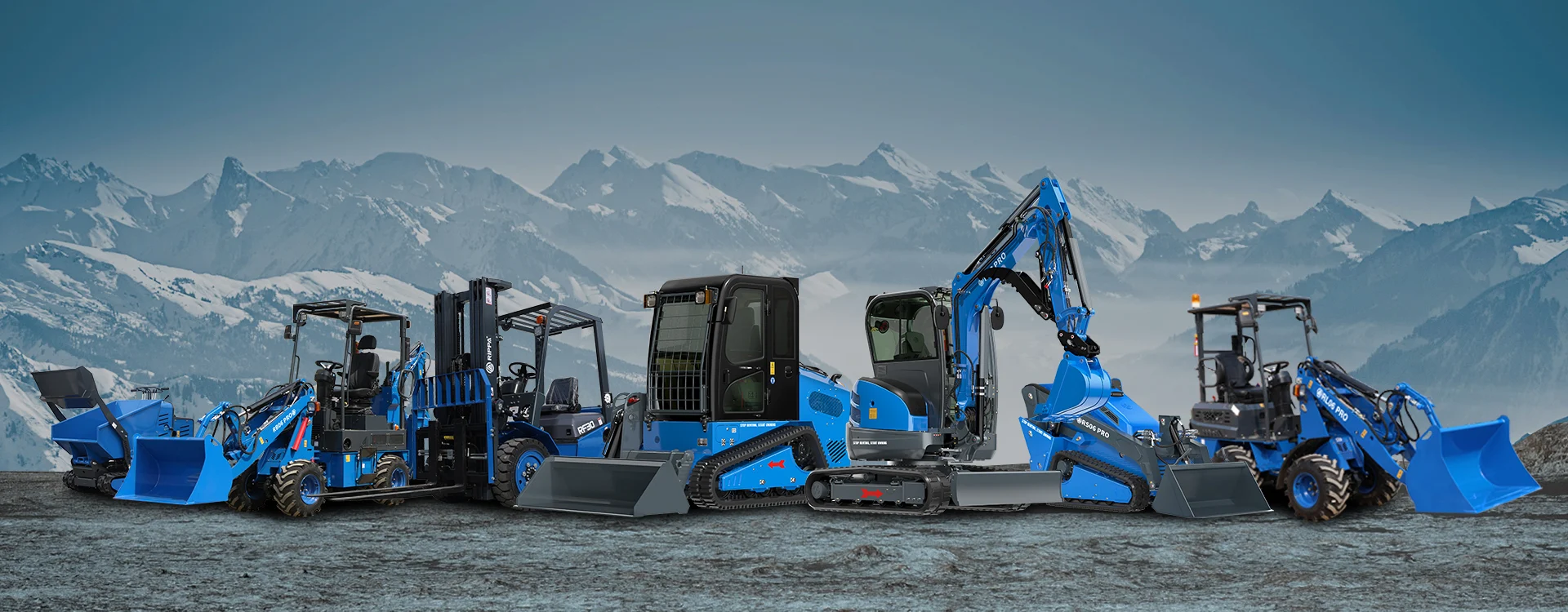
Comparing skid steer brands in 2026 requires more than ranking manufacturers. A loader suited to road construction may be unnecessarily large for landscaping, while a compact farm machine may lack the hydraulic capability required by demanding attachments. The better approach is to match each brand and model to the work, ownership pattern and local support environment.
Choose by Application Before Brand
Construction contractors often need dependable material handling, stable operation and compatibility with buckets, breakers, augers or trenchers. For frequent truck loading, a vertical-lift machine may provide useful reach at height. For excavation, grading and work near ground level, a radial-lift configuration may be practical.
Landscapers and agricultural users may value compact dimensions, maneuverability and easy attachment changes. Tire choice matters on mud, gravel, concrete and finished surfaces. When jobs regularly involve soft ground, compare a wheeled skid steer with a compact track loader instead of assuming wheels suit every site.
Rental companies face a different calculation. Familiar controls, protected components, simple daily checks and available wear parts can matter more than one headline specification. A broad attachment ecosystem also allows one machine to serve more customers and improve fleet utilization.
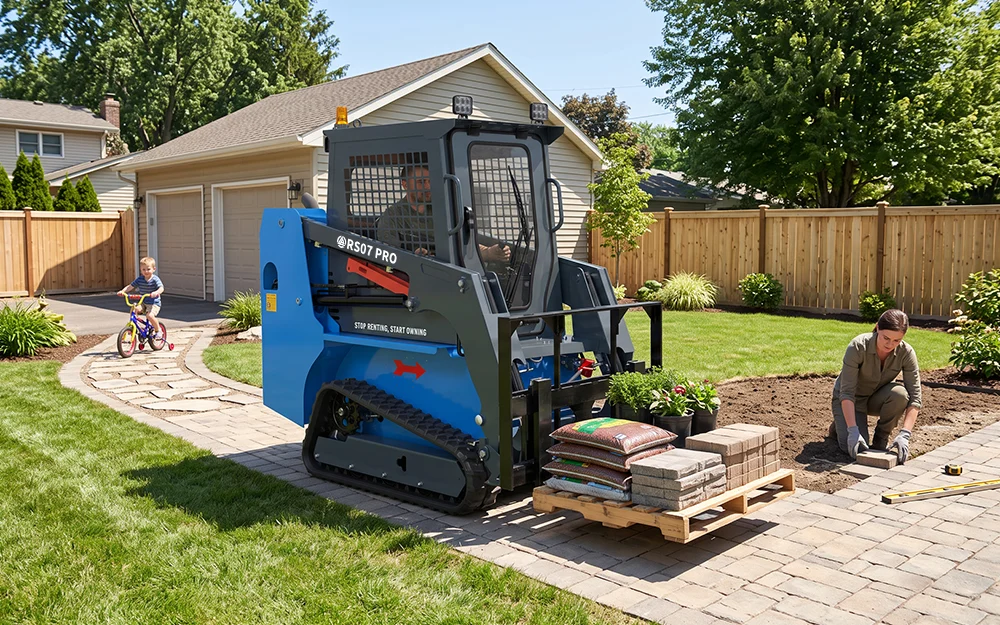
How Skid Steer Manufacturers Differ
Commonly considered brands include Bobcat, Caterpillar, John Deere, CASE, New Holland, JCB, GEHL, Manitou and Kubota. Their product ranges differ in lift design, controls, operator environment, attachment support and dealer coverage. In many markets, the strongest advantage is the support system surrounding the machine.
Chinese manufacturers are also considered by wholesalers and dealers seeking additional price segments or OEM opportunities. Supplier evaluation is essential: verify the factory, quality-control process, production capacity, parts plan, technical response and export documentation. Engine and compliance claims must be confirmed for the exact model and destination.
Evaluating RIPPA as a B2B Supply Option
RIPPA skid steer loaders can be assessed for construction, landscaping, agriculture and property-maintenance markets. Rather than comparing factory prices alone, distributors should examine how each proposed model fits local customer budgets, common jobs and attachment preferences.
A serious supplier discussion should cover order quantities, configurations, spare-parts packages, manuals, warranty procedures, delivery schedules and after-sales communication. Importers should confirm shipping information and destination-market requirements before ordering. A carefully selected demonstration unit can provide feedback from operators and technicians.
Compare Total Cost, Not Price Alone
The lowest quotation does not always produce the lowest cost per working hour. Downtime, difficult maintenance, unavailable parts or an unsuitable attachment can erase an initial saving. Paying for capacity that is rarely used also increases capital and transport costs.
Compare expected annual hours, routine service items, tire wear, fuel use, attachment needs, parts stocking and resale prospects. Dealers should add margin structure and market support; rental businesses should consider utilization and repair turnaround.
There is no universal winner when comparing skid steer brands in 2026. The right brand fits the application and can be supported throughout the machine’s working life. Buyers and distributors can request current RIPPA model information, configurations and commercial terms before planning an order.
 Почетна
 Производи
 Е-пошта
 ВхатсАпп

