Quick Answer: What Maintenance Does a Mini Excavator Need?
A 5‑minute daily inspection prevents 80% of major failures. Key tasks: visual walk‑around for leaks, check fluid levels (engine oil, hydraulic, coolant), grease all fittings, and inspect tracks. Weekly: clean radiator fins, check track tension, inspect air filter. Seasonal: change engine oil and filter, replace fuel filter, check hydraulic fluid. With proper care, a mini excavator can last 8,000–12,000 hours (10‑15 years for homeowners).
Owner data: 94% of RIPPA owners report no major issues in the first 1,000 hours. Those who had problems often skipped daily checks.
1. Why Maintenance Matters
A mini excavator is a significant investment – typically $15,000 to $50,000. Neglect leads to expensive repairs:
| Занемарено одржавање | Типична последица | Трошак поправке |
|---|---|---|
| Прескакање дневне масноће | Изоношене чепиће и утубке | 1ТП4Т1,500–1ТП4Т3,000 |
| Игнорисање хидрауличних цурења | Квар пумпе | 1ТП4Т3,000–1ТП4Т6,000 |
| Зачепљен ваздушни филтер | Оштећење мотора | 1ТП4Т5,000–1ТП4Т10,000 |
| Низак ниво течности за хлађење | Прегревање, заптивка главе | 1ТП4Т2,000–1ТП4Т4,000 |
| Истрошени колосеци због занемаривања | Квар ланечника/погонског мотора | 1ТП4Т3,500–1ТП4Т7,000 |
Regular maintenance is not an expense – it is an investment in your machine’s future.
2. Daily Maintenance (5‑10 Minutes)
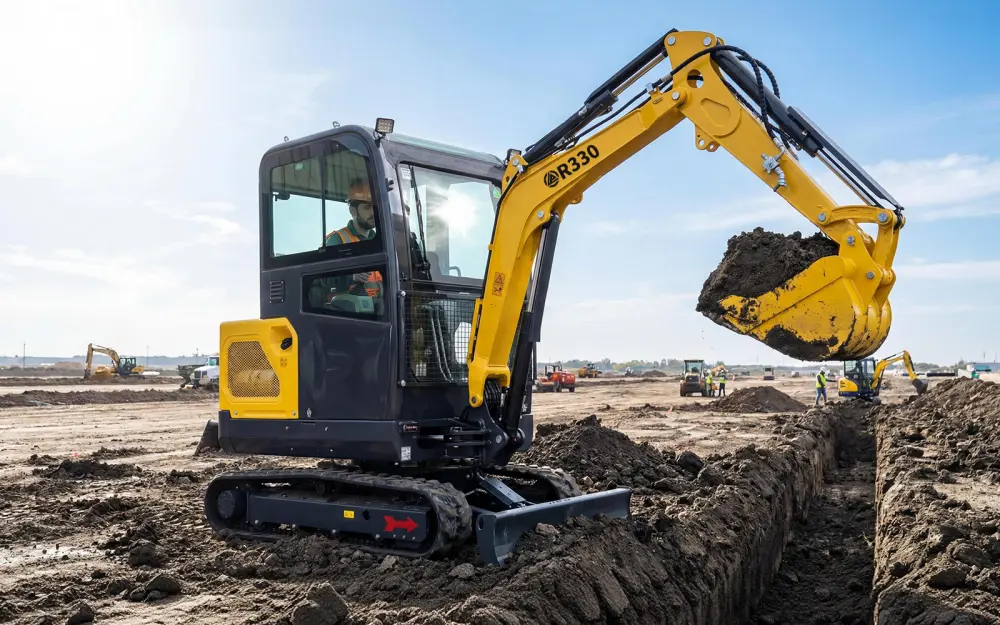
Visual walk‑around:
-
Fluid leaks: Look under the machine for puddles (hydraulic oil, engine oil, coolant, fuel).
-
Hoses: Check for abrasion, bulges, or loose fittings.
-
Tracks: Inspect for cuts, embedded debris, proper tension (10–15 mm sag at mid‑point).
-
Bucket/attachment: Check for cracks, especially at weld points, missing teeth.
-
Structure: Scan boom, arm, and frame for new cracks or damage.
Fluid checks:
-
Engine oil: Check dipstick (machine level, cold). Top up if low.
-
Hydraulic oil: Check sight glass or dipstick. Never run low – pumps fail instantly.
-
Coolant: Check reservoir level. Never open a hot radiator.
-
Fuel: Note level; fill at end of day to prevent condensation.
Grease fittings (all pivot points):
-
Пинци за прелазак у бум (2–4 поена)
-
Пинци за ротацију руке (2–4 поена)
-
Повезивање канти (2–4 поена)
-
Свинг носач (приступне тачке)
-
Подешавачи шина
Function test: Run all functions through full range. Check for hesitation, drift, or unusual noise.
3. Weekly Maintenance (15‑20 Minutes)
Cleaning:
-
Pressure wash carefully to remove built‑up dirt, especially from engine compartment and cooling fins.
-
Clean radiator and oil cooler fins with compressed air – blow from inside out.
-
Clean undercarriage – remove packed mud and debris.
Track inspection:
-
Check tension: proper sag is 10–15 mm at mid‑point.
-
Inspect for damage: cuts, missing lugs, uneven wear.
-
Check sprockets/rollers: wear patterns, debris buildup.
-
Adjust tension if needed.
Battery service (lead‑acid):
-
Clean terminals with wire brush.
-
Apply anti‑corrosion spray.
-
Check electrolyte level; top up with distilled water.
-
Check hold‑downs – secure against vibration.
4. Seasonal Maintenance (Every 250‑500 Hours)
Engine oil and filter change:
-
Run engine to warm oil.
-
Drain oil (capture for recycling).
-
Replace oil filter.
-
Refill with recommended oil (API‑rated diesel oil).
-
Run engine, check for leaks.
Fuel system maintenance:
-
Replace fuel filter(s).
-
Drain water separator (if equipped).
-
Check fuel lines for cracks or soft spots.
-
Add fuel conditioner before storage.
Air filter service:
-
Remove element and inspect.
-
Clean with compressed air (from inside out) if reusable.
-
Replace if damaged or excessively dirty.
-
Never run engine without air filter.
Hydraulic system check:
-
Check fluid level; top up if needed.
-
Inspect all hoses; replace any with abrasion, bulges, or leaks.
-
Check filter condition; replace per manual (typically 500–1,000 hours).
5. Common Problems and Early Warning Signs
| Симптом | Вероватан узрок | Early Warning |
|---|---|---|
| Споро функционисање | Низак ниво хидрауличног уља, зачепљен филтер | Проверите ниво течности; прегледајте филтер |
| Нагли покрет | Ваздух у систему, контаминирана течност | Боја млечне течности; проверите цурење |
| Дрифт (падање оптерећења) | Цилиндрични печати, проблем са вентилом | More than 1″ per minute needs attention |
| Бука кавитације | Низак ниво течности, ограничен унос | “Marbles in a can” sound – stop immediately |
| Прегревање | Запрљани хладњак, низак ниво расхладне течности | Проверите ребра хлађења; проверите ниво расхладне течности |
| Тешко паљење | Батерија, свећице за покретање, гориво | Тест хладног покретања; проверите стање горива |
| Црни дим | Филтер за ваздух, убризгавачи | Check air filter first – cheapest fix |
| Неједнака хабања стазе | Проблем са поравнањем | Измерите разлику у хабању; прегледајте ваљке. |
6. Storage and Seasonal Preparation
Winter storage (if not operating):
-
Clean machine thoroughly.
-
Fill fuel tank (prevents condensation).
-
Add fuel stabilizer.
-
Disconnect battery or maintain with trickle charger.
-
Cover machine (breathable cover, not plastic).
-
Block up tracks to relieve pressure.
Winter operation:
-
Check coolant freeze protection (to -30°F minimum).
-
Use winter‑grade fuel or add anti‑gel.
-
Check battery condition – cold cranking amps critical.
-
Allow extra warm‑up time (10‑15 minutes).
Summer preparation:
-
Clean cooling system thoroughly.
-
Check coolant level and condition.
-
Inspect hoses – heat accelerates deterioration.
-
Check AC system if equipped.
7. Frequently Asked Questions
П: Колико често треба да мењам хидраулично уље?
A: Typically every 1,000–2,000 hours, depending on operating conditions. Dusty or heavy use requires more frequent changes. Oil analysis can extend intervals.
П: Могу ли сам да обавим одржавање без губитка гаранције?
A: Yes, for routine tasks. Daily checks, oil changes, filter replacements, and greasing are owner responsibilities. Major repairs (engine work, hydraulic system) should be done by authorized dealers.
Q: What’s the single most important maintenance task?
A: Daily visual inspection. Catching a small leak, loose bolt, or worn hose before it fails prevents 80% of major repairs.
8. Conclusion
A мини багер is a significant investment. With proper maintenance, that investment pays returns for a decade or more. The daily walk‑around takes five minutes. Weekly cleaning takes 15 minutes. Seasonal service takes a few hours. Compare that to weeks of downtime and thousands in repair bills, and the choice is clear.
Download a free maintenance log template from RIPPA’s website or create your own. Consistent records add value at resale and help you spot trends before failures occur.
 Почетна
 Производи
 Е-пошта
 ВхатсАпп

