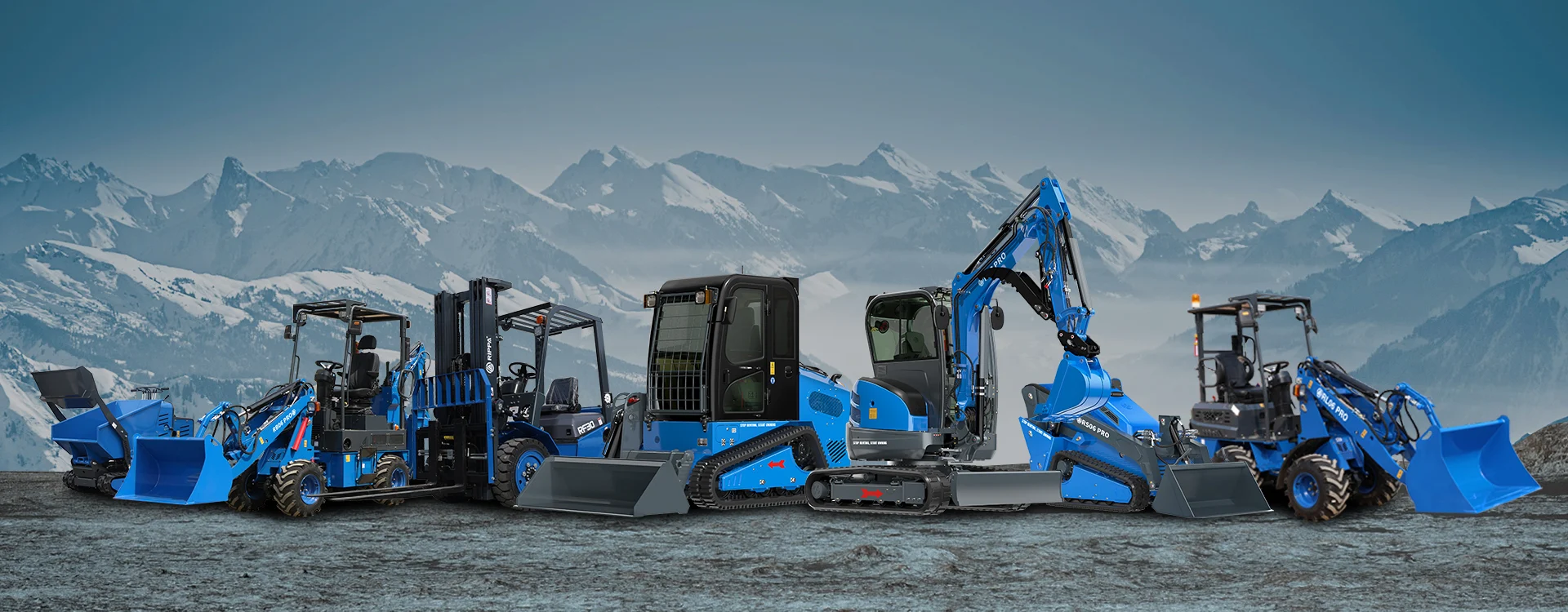
Farm work often requires more than tractors, loaders, and basic implements. Farmers and rural property owners regularly face jobs that involve digging, trenching, drainage, planting, ditch cleaning, fencing, road repair, and land maintenance. These tasks can be difficult, slow, or expensive when handled only by manual labor or outsourced contractors.
A mini excavator can be a practical solution for many farm jobs because it brings compact digging ability to rural work environments. It can help farmers complete repeated maintenance tasks, prepare land, manage water flow, repair access areas, and support seasonal projects.
For farm equipment dealers and tractor dealers, understanding these applications is important. Mini excavators should not be sold only as another machine in the yard. They should be sold as a practical tool for specific farm problems.
RIPPA mini excavators can be considered for farm and rural property applications such as drainage, trenching, fencing, planting, ditch maintenance, farm path repair, and land improvement. Before purchase or promotion, dealers and buyers should confirm current machine configuration, attachment compatibility, spare parts support, warranty policy, delivery arrangement, and service terms.
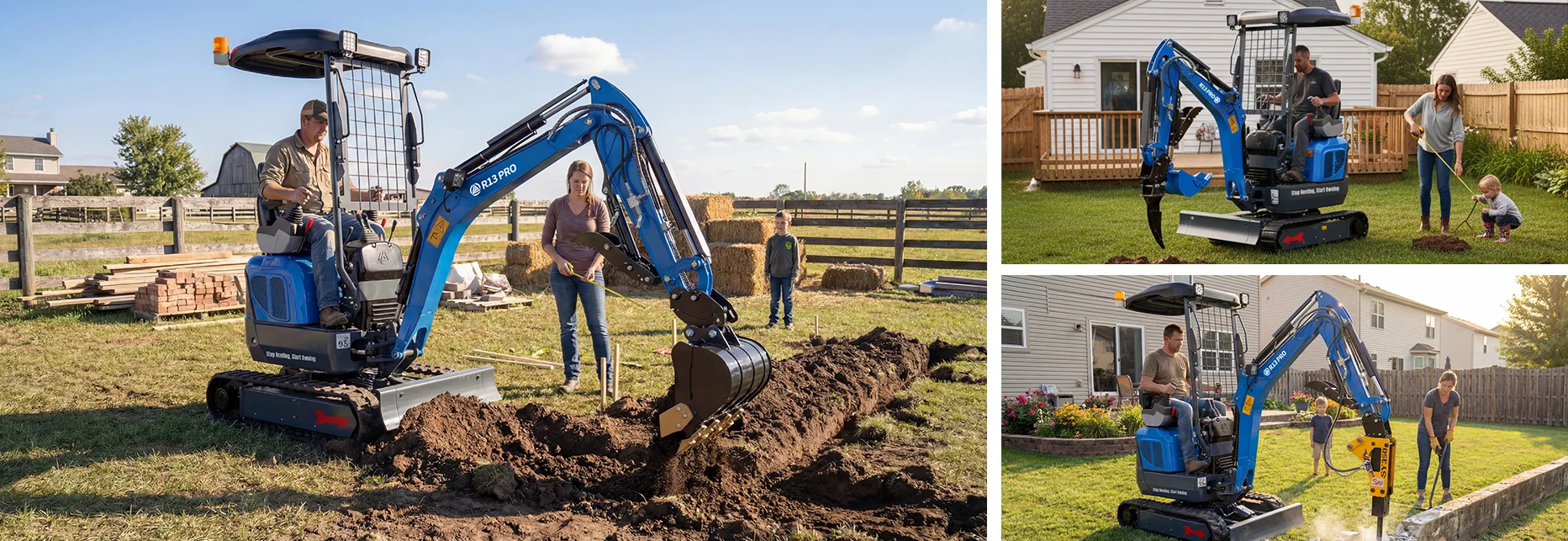
1. Drainage Trenching
Drainage is one of the most common reasons farms need compact excavation equipment. Poor water flow can affect fields, paths, buildings, animal areas, and working access.
A mini excavator can help dig trenches for water management, drainage lines, or small channels where suitable. This can be useful for farms that deal with wet areas, standing water, or seasonal runoff.
Farm drainage work may include:
- Digging shallow trenches
- Preparing drainage paths
- Cleaning small water channels
- Supporting pipe or line installation where appropriate
- Redirecting water away from work areas
- Improving access around farm buildings
For dealers, drainage is a strong application to explain because many rural customers understand the cost of poor water control.
2. Ditch Cleaning
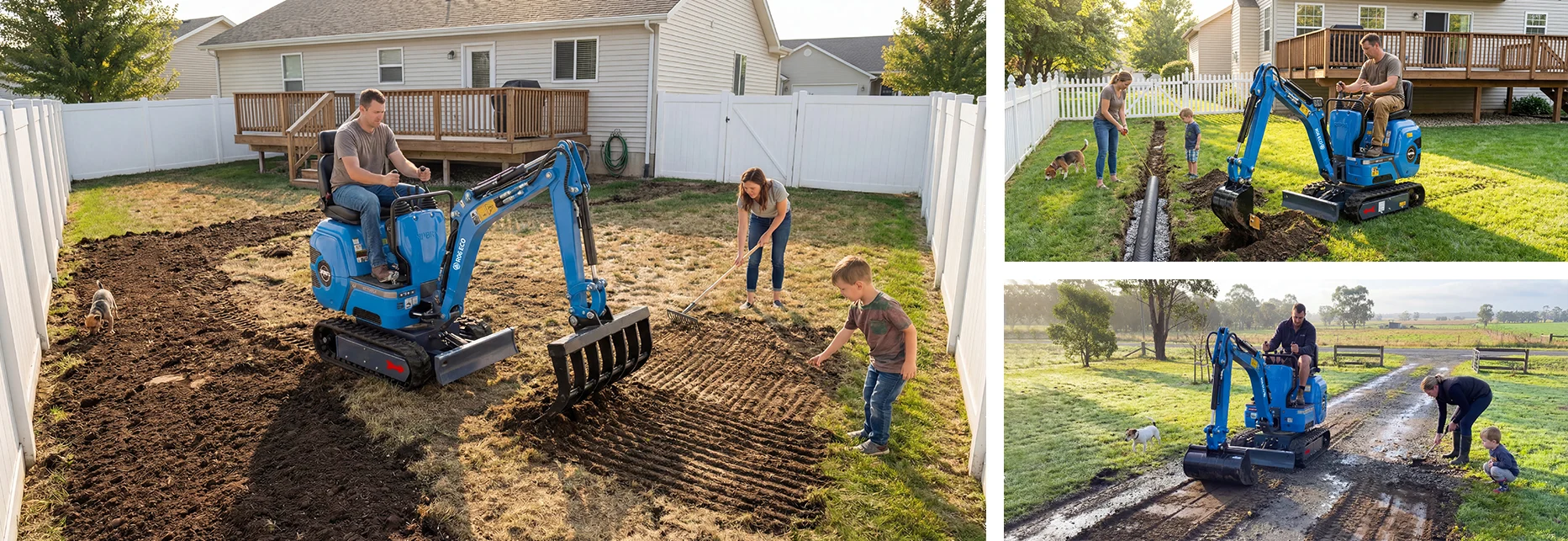
Ditches can fill with soil, mud, vegetation, stones, and debris over time. If they are not maintained, water may not move properly. This can affect farm access, field edges, and property drainage.
A mini excavator can help clean and reshape ditches more efficiently than manual work.
Common ditch maintenance tasks include:
- Removing mud buildup
- Clearing small debris
- Restoring water flow
- Reshaping ditch edges
- Cleaning farm boundary channels
- Maintaining drainage around roads or fields
Ditch cleaning is especially relevant for farms, rural properties, and land maintenance businesses. It is also a useful topic for farm equipment dealers because it connects directly to recurring customer problems.
3. Fence Line Preparation
Fencing is a common farm and rural property job. Fence projects may require clearing a line, preparing post locations, removing roots, or digging holes with suitable attachments.
A mini excavator can support fence work by helping prepare the ground and handle obstacles along the fence line.
Possible fence-related uses include:
- Clearing a path for the fence line
- Removing roots or small obstructions
- Preparing post locations
- Digging with a bucket where suitable
- Using an auger attachment where compatible
- Moving soil or debris away from the work area
Attachment compatibility should always be confirmed according to the current machine model and official product information.
For dealers, fence preparation is a practical sales angle because many farm customers have repeated fencing needs.
4. Tree Planting and Orchard Work
Tree planting can be labor-intensive, especially when multiple holes are needed. A mini excavator can help prepare planting holes, move soil, and support land preparation around orchards, windbreaks, or rural landscaping areas.
Farm tree planting applications may include:
- Digging planting holes
- Preparing orchard rows
- Removing old roots
- Moving soil around planting areas
- Supporting windbreak planting
- Helping rural property landscaping
Depending on attachment compatibility, an auger may also support repeated hole preparation. However, the correct attachment must be confirmed before use.
For agricultural dealers, tree planting is a useful application when selling to orchard owners, rural landowners, and property improvement customers.
5. Farm Path and Access Road Repair
Farm paths and access roads often become uneven because of rain, heavy use, soft ground, or seasonal wear. Poor access can slow down daily farm work and make equipment movement difficult.
A mini excavator can help repair and reshape problem areas.
Possible path repair tasks include:
- Removing damaged material
- Cleaning drainage along paths
- Reshaping uneven ground
- Preparing areas for gravel
- Clearing small obstacles
- Supporting driveway or access repair
A mini excavator may be especially useful when the issue involves drainage, erosion, or ground reshaping rather than simple surface grading.
Farm equipment dealers can position mini excavators as tools for maintaining access and reducing delays around the property.
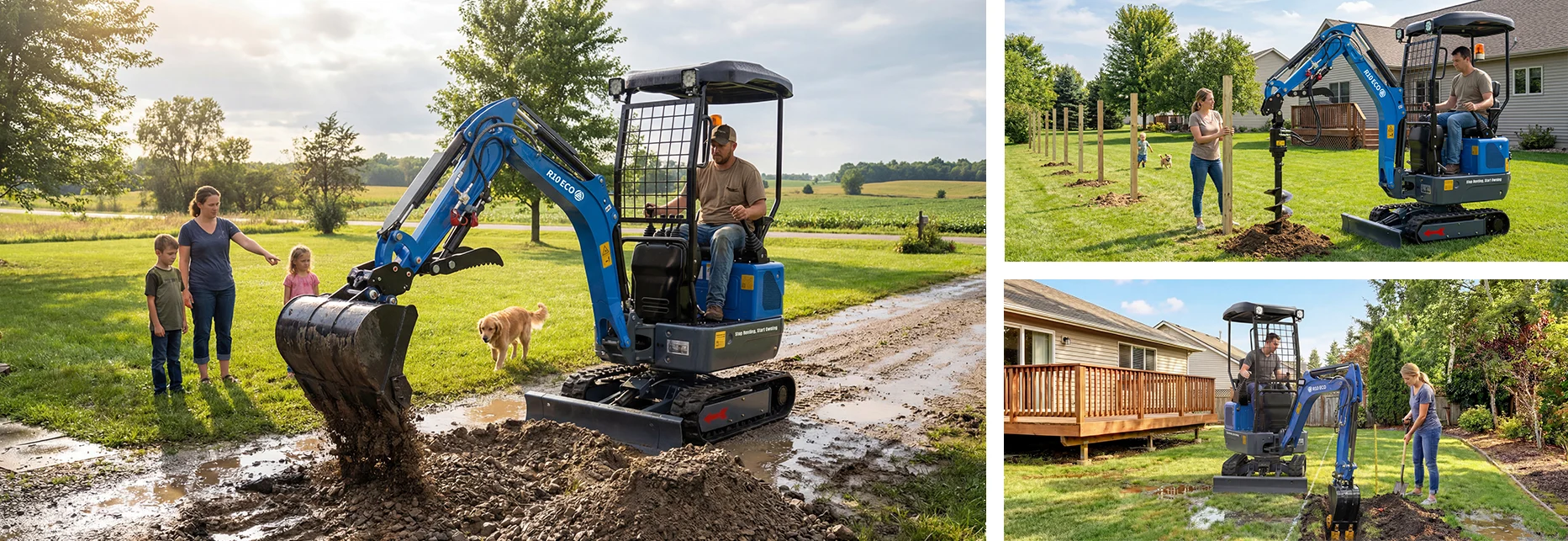
6. Small Trenching for Utilities or Irrigation Support
Farms and rural properties may need trenches for water lines, irrigation support, cables, or other utility-related work where appropriate. A mini excavator can help prepare trenches more efficiently than hand digging.
Possible trenching applications include:
- Water line preparation
- Irrigation support
- Utility trenching where suitable
- Small service line work
- Farm building support projects
- Rural property maintenance
Before beginning utility-related digging, users should follow local safety rules and verify underground line locations. Dealers should avoid giving technical installation claims unless supported by confirmed product and project information.
From a sales perspective, trenching is one of the strongest reasons rural customers consider mini excavators.
7. Root and Stump-Area Cleanup
Farms and rural properties often need to remove roots, small stumps, old plant material, or debris from land. A mini excavator can help loosen soil and handle cleanup work more efficiently than manual labor.
Possible root and cleanup tasks include:
- Removing roots from planting areas
- Cleaning old fence lines
- Clearing small land obstacles
- Preparing areas for new use
- Supporting landscaping around farm buildings
- Handling debris with suitable attachments
A hydraulic thumb, rake, or grapple may help with some material handling tasks, depending on compatibility.
Dealers should present this application carefully. A mini excavator is not a universal land-clearing machine, but it can be very useful for smaller root and debris jobs in farm environments.
8. Small Foundation or Building Preparation
Farms often add or repair small structures such as sheds, equipment storage areas, animal shelters, greenhouse bases, or utility buildings. A mini excavator can support preparation work before construction begins.
Possible uses include:
- Digging small foundation areas
- Preparing drainage around buildings
- Leveling or shaping ground
- Removing old soil or debris
- Preparing post or footing areas where suitable
- Supporting site cleanup before construction
The exact suitability depends on project size, soil conditions, machine configuration, and local building requirements.
For dealers, this application connects mini excavators to farm improvement projects that customers may already be planning.
9. Pond, Waterway, and Erosion Support
Some farms need help maintaining small waterways, pond edges, or erosion-prone areas. A mini excavator can support small digging, shaping, and cleanup tasks where suitable.
Possible applications include:
- Cleaning small water channels
- Removing sediment from limited areas
- Shaping banks where appropriate
- Supporting erosion repair
- Preparing small water management areas
- Clearing debris from drainage paths
Dealers should avoid overclaiming. Not every mini excavator is suitable for every pond or waterway project. Soil, slope, access, water conditions, and machine capacity must be considered carefully.
A safe way to position this application is to describe mini excavators as useful for selected small-scale water management and maintenance tasks, not as a replacement for large excavation equipment.
10. General Farm and Rural Property Maintenance
Many mini excavator uses are not one-time projects. Rural properties require ongoing maintenance, and a compact excavator can help with repeated small jobs around the farm.
General maintenance tasks may include:
- Cleaning problem areas
- Repairing drainage
- Flyttning av jord
- Preparing work areas
- Supporting fence repairs
- Maintaining paths
- Digging small trenches
- Removing minor obstacles
- Supporting seasonal property work
For many farm customers, this is the strongest argument for ownership. They may rent a machine once or twice, but repeated small jobs can make ownership more attractive.
Farm equipment dealers can use this angle to help customers compare renting, outsourcing, and buying.
How Farm Equipment Dealers Can Sell Mini Excavators by Application
Farm equipment dealers should not sell mini excavators only by model name or technical specification. They should sell by farm application.
A practical sales conversation might begin with questions like:
- Do you have drainage problems on your farm?
- Do you need to maintain ditches?
- Do you install or repair fencing?
- Do you plant trees or maintain orchards?
- Do you repair farm paths or rural driveways?
- Do you rent excavators for seasonal projects?
- Do you outsource small digging work?
- Do you need a compact machine for repeated property maintenance?
These questions help the customer connect the machine to real work.
What Dealers and Buyers Should Confirm Before Purchase
Before recommending or buying a mini excavator for farm use, several details should be confirmed.
| Punkt som ska bekräftas | Varför det är viktigt |
|---|---|
| Current machine configuration | Ensures the machine matches real farm applications |
| Working environment suitability | Helps match the machine to soil, access, and site conditions |
| Kompatibilitet med tillbehör | Supports fencing, planting, cleanup, and grading tasks |
| Support för reservdelar | Skapar långsiktigt förtroende hos ägarna |
| Garantivillkor | Clarifies after-sales responsibility |
| Teknisk support | Helps solve operational or maintenance questions |
| Leveransvillkor | Supports purchase planning |
| Documentation | Helps with customer education and resale |
| Dealer support | Important for long-term customer trust |
For RIPPA mini excavators, buyers and dealers should confirm these details through official channels before promotion, quotation, or purchase.
How RIPPA Mini Excavators Can Fit Farm Applications
RIPPA mini excavators can be considered for rural customers who need compact digging equipment for practical farm work.
Relevant applications may include:
- Drainage trenching
- Ditch cleaning
- Fence line preparation
- Trädplantering
- Farm path repair
- Small trenching
- Root cleanup
- Building preparation
- Selected water management support
- General farm maintenance
RIPPA attachments and broader compact equipment may support future product extension, but for farm SEO content, mini excavators and excavators should remain the main product focus.
Vanliga frågor
What farm jobs can a mini excavator do?
A mini excavator can support drainage trenching, ditch cleaning, fence preparation, planting, farm path repair, utility trenching, root cleanup, small building preparation, water management support, and general rural maintenance.
Is a mini excavator useful for farmers?
Yes. A mini excavator can be useful for farmers who frequently need digging, trenching, drainage, fencing, planting, and land maintenance support.
Can a mini excavator replace a tractor?
No. A mini excavator does not replace a tractor. It complements a tractor by handling excavation-related work that tractors are not designed to perform as efficiently.
What attachments are useful for farm mini excavators?
Useful attachment directions may include digging buckets, grading buckets, augers, thumbs, rakes, grapples, and quick couplers. Compatibility should always be confirmed by model.
Should farmers rent or buy a mini excavator?
The decision depends on use frequency, project needs, maintenance ability, budget, and local rental availability. Farmers with repeated digging or maintenance needs may consider ownership.
Can RIPPA mini excavators be used for farm work?
RIPPA mini excavators may fit selected farm work applications, but buyers should confirm current configuration, attachment compatibility, support, warranty policy, and service terms before purchase.
Slutsats
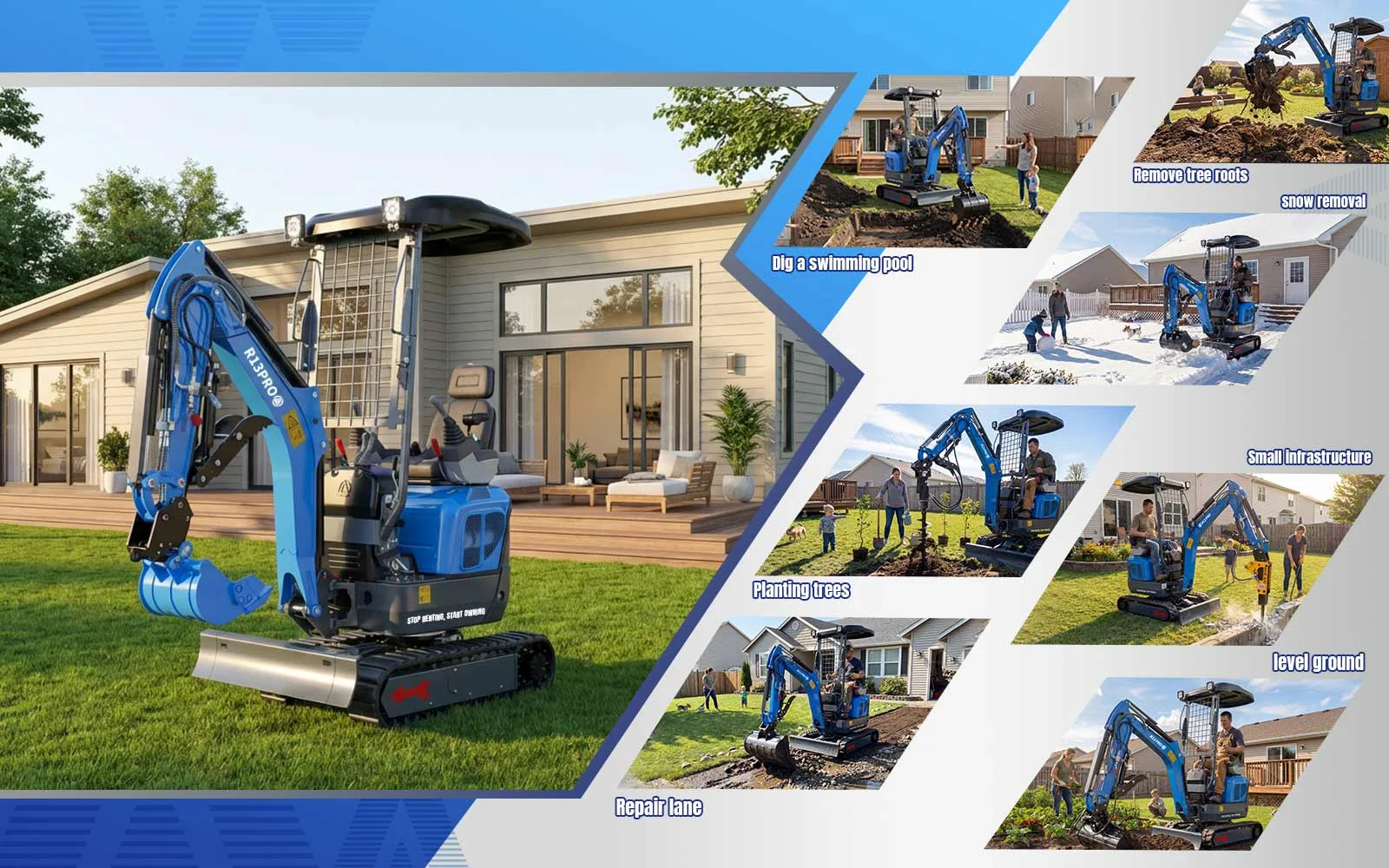
A mini excavator can handle many practical farm jobs, including drainage, ditch cleaning, fencing, planting, path repair, trenching, root cleanup, small building preparation, selected water management work, and general property maintenance.
For tractor dealers and farm equipment dealers, these applications create a clear sales opportunity. The customer base already exists. Farmers and rural property owners already need machines that solve daily land and maintenance problems.
RIPPA mini excavators can be considered as a practical compact digging product line for agricultural channels. Before purchase or promotion, dealers and buyers should confirm current machine configuration, attachment compatibility, parts support, warranty policy, technical support, delivery arrangement, and service terms through official RIPPA channels.
The strongest way to sell mini excavators in farm markets is simple: connect the machine to real farm jobs.
 Hem
Hem
 Produkter
 E-post
 WhatsApp

