Factory Direct Skid Steer Loader: What Should Buyers Confirm Before Ordering?
Buying a skid steer loader directly from a manufacturer can give contractors, importers, and equipment dealers a more direct way to discuss product configurations and purchasing requirements.
However, factory-direct purchasing should not be evaluated by price alone.
Buyers still need to confirm the machine configuration, included attachments, applicable documents, payment conditions, shipping responsibilities, and after-sales arrangements.
A low initial quotation is not necessarily the best offer if important equipment or costs are missing.
This guide explains what to check when purchasing a factory direct skid steer loader from a manufacturer.
1. Understand What Factory Direct Purchasing Means
Factory direct purchasing generally means that buyers communicate and negotiate with the equipment manufacturer rather than purchasing through an independent intermediary.
This can make it easier to discuss:
- Available machine models
- Engine and hydraulic configurations
- Optional equipment
- Attachment compatibility
- Product documentation
- Order quantities
- Export arrangements
For equipment dealers and importers, direct communication can also help clarify product details before placing larger orders.
However, factory-direct purchasing does not automatically mean that every machine is the cheapest option in the market.
The actual value depends on the machine configuration, commercial terms, transportation costs, and support arrangements.
2. Confirm That the Supplier Is the Actual Manufacturer
Before making a purchase, buyers should understand who is supplying the equipment.
Review the company’s official website and available company information.
Useful checks include:
Company identity: Confirm the legal company name and business contact details.
Product range: Check whether the company has a consistent range of relevant construction equipment.
Product documentation: Request brochures, specifications, manuals, and other relevant product information.
Communication: Check whether the supplier can answer detailed questions about the machine and its configuration.
Production information: Ask for appropriate information about manufacturing and quality-control processes.
For large orders, buyers may also request a factory visit or an online factory meeting where available.
The purpose is to establish that the supplier can provide the equipment and information required for the transaction.
3. Compare the Complete Machine Configuration
One of the most common mistakes in equipment purchasing is comparing two prices without checking whether the machines are configured in the same way.
A skid steer loader quotation should clearly identify the machine being offered.
| Item | What Buyers Should Confirm |
|---|---|
| Model | Exact product model |
| Engine | Brand and configuration |
| Hydraulic system | Relevant system specifications |
| Travel system | Tracked or wheeled configuration |
| Operating equipment | Standard and optional equipment |
| Attachments | Included tools and optional accessories |
| Cab or operator station | Applicable configuration |
| Product documentation | Available manuals and technical documents |
For example, a tracked machine and a wheeled machine may have different purchase and maintenance considerations.
Similarly, a quotation including several attachments should not be compared directly with a basic machine quotation without accounting for the differences.
Ask the supplier to provide a clear written configuration list.
4. Evaluate the Real Cost Instead of Only the Advertised Price
When searching for a skid steer loader for sale, buyers may encounter very different prices.
These prices can reflect differences in:
- Machine configuration
- Engine selection
- Hydraulic equipment
- Track or wheel design
- Included attachments
- Packaging
- Shipping arrangements
- Commercial terms
To compare offers fairly, request a breakdown of the main costs.
A complete purchasing calculation may include:
- Base machine price
- Optional configuration costs
- Attachment costs
- Export packaging
- Inland transportation
- International freight
- Cargo insurance
- Import duties and taxes
- Destination handling and local transportation
Not every quotation includes all these items.
Ask the supplier to identify which costs are included, which are excluded, and which responsibilities depend on the agreed Incoterms.
This is more useful than relying on advertising phrases such as cheapest price or no hidden fees without reviewing the actual commercial offer.
5. Check Whether the Machine Matches Your Work
Before choosing a model, identify the tasks the skid steer loader will perform.
For example:
| Application | Important Purchasing Considerations |
|---|---|
| Landscaping | Compact dimensions and suitable ground contact |
| Construction | Material handling and attachment requirements |
| Agriculture | Working conditions and daily operating needs |
| Property maintenance | Maneuverability and tool compatibility |
| Warehouse work | Surface conditions and access restrictions |
Buyers should also consider how frequently the machine will be used and whether multiple attachments are required.
A machine selected for occasional light work may not be the right choice for continuous material handling.
The manufacturer should be given enough information to discuss an appropriate configuration.
6. Ask About Attachments and Optional Equipment
Attachments can significantly change the usefulness of a skid steer loader.
Before ordering, identify the tools required for your business.
Common options include:
- Buckets
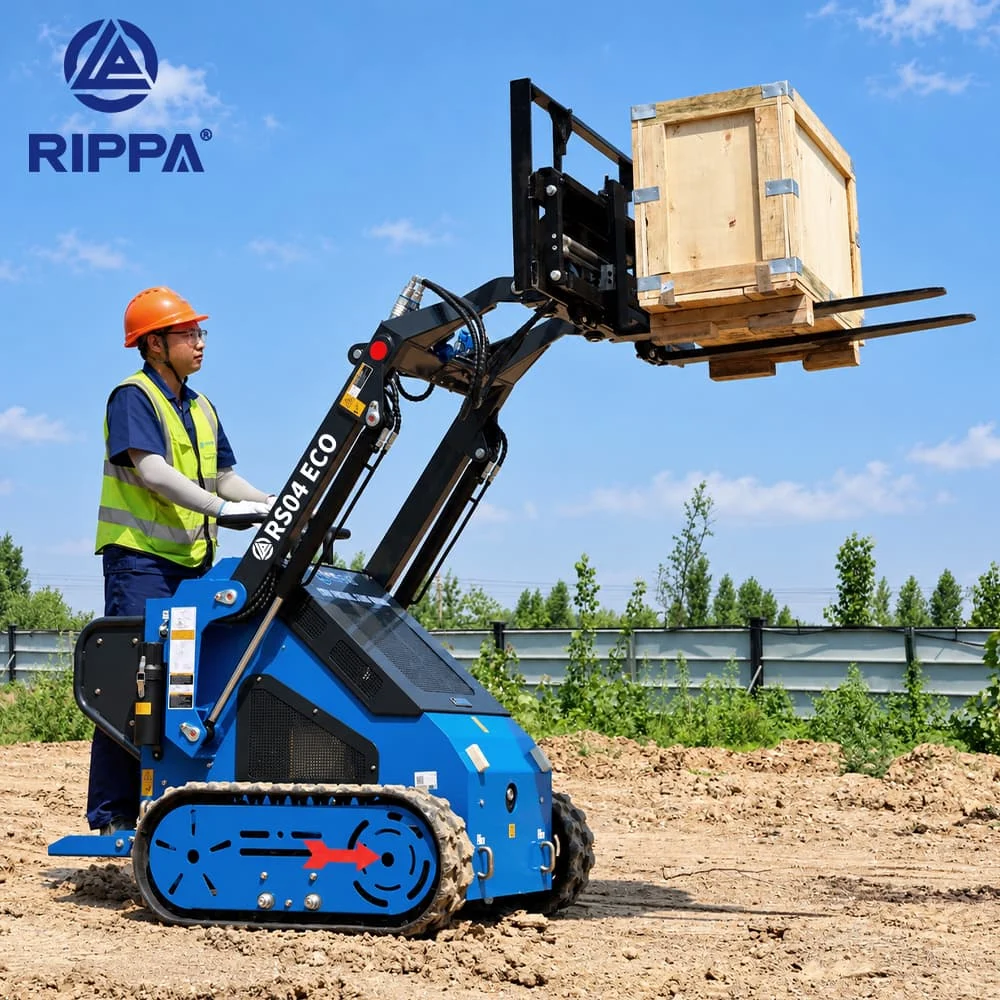
- Pallet forks
- Grapples
- Augers
- Hydraulic breakers
- Sweepers
Not all attachments are suitable for every machine.
Confirm the mounting system, hydraulic connections, flow requirements, and attachment weight before adding tools to the order.
For dealers, it is also useful to understand which attachments are available for future orders.
This helps when planning product packages for different customer applications.
7. Verify Product Documents and Applicable Certifications
International buyers should confirm which documents are available for the exact machine configuration.
Depending on the destination market and product, relevant documents may include:
- Product specifications
- Operation and maintenance manuals
- Commercial invoice
- Packing list
- Shipping documents
- Applicable conformity documentation
- Certificate of origin, where required
If CE compliance is required for your intended market, ask for the applicable documentation and confirm that it covers the exact machine being purchased.
A general statement in an advertisement should not replace verification of the actual documents.
Import requirements can vary by country, so buyers should also consult the relevant authorities or a qualified customs professional.
8. Confirm Shipping and Overseas Warehouse Arrangements
Some manufacturers may offer different shipping arrangements, including factory dispatch or shipment from an overseas warehouse.
These options should be evaluated according to the buyer’s destination and purchasing requirements.
Before relying on an overseas warehouse offer, confirm:
- Whether the required model is actually available
- Whether the machine configuration matches your needs
- Whether the quoted price includes local transportation
- Which taxes and other charges apply
- Whether the machine can be delivered to your location
- Which documents are provided
- Who handles the delivery arrangements
Warehouse availability, inventory, and dispatch conditions should always be confirmed at the time of purchase.
Do not assume that every model is stocked in every warehouse.
9. Review Warranty, Parts, and After-Sales Arrangements
A factory-direct purchase should include a clear discussion of support after delivery.
Before ordering, ask:
- What written warranty conditions apply?
- Which parts are covered?
- What exclusions apply?
- How are warranty claims submitted?
- Which replacement parts are available?
- How can technical questions be handled?
- Are maintenance instructions available?
For international dealers, these questions are particularly important because they affect the ability to support local customers.
The best purchasing decision should consider the complete relationship with the manufacturer, not only the initial transaction.
10. Why Consider RIPPA for Your Skid Steer Loader Purchase?
RIPPA is a Chinese construction machinery manufacturer based in Jining, Shandong Province.
Its product range includes skid steer loaders, mini excavators, excavators, wheel loaders, and other construction equipment.
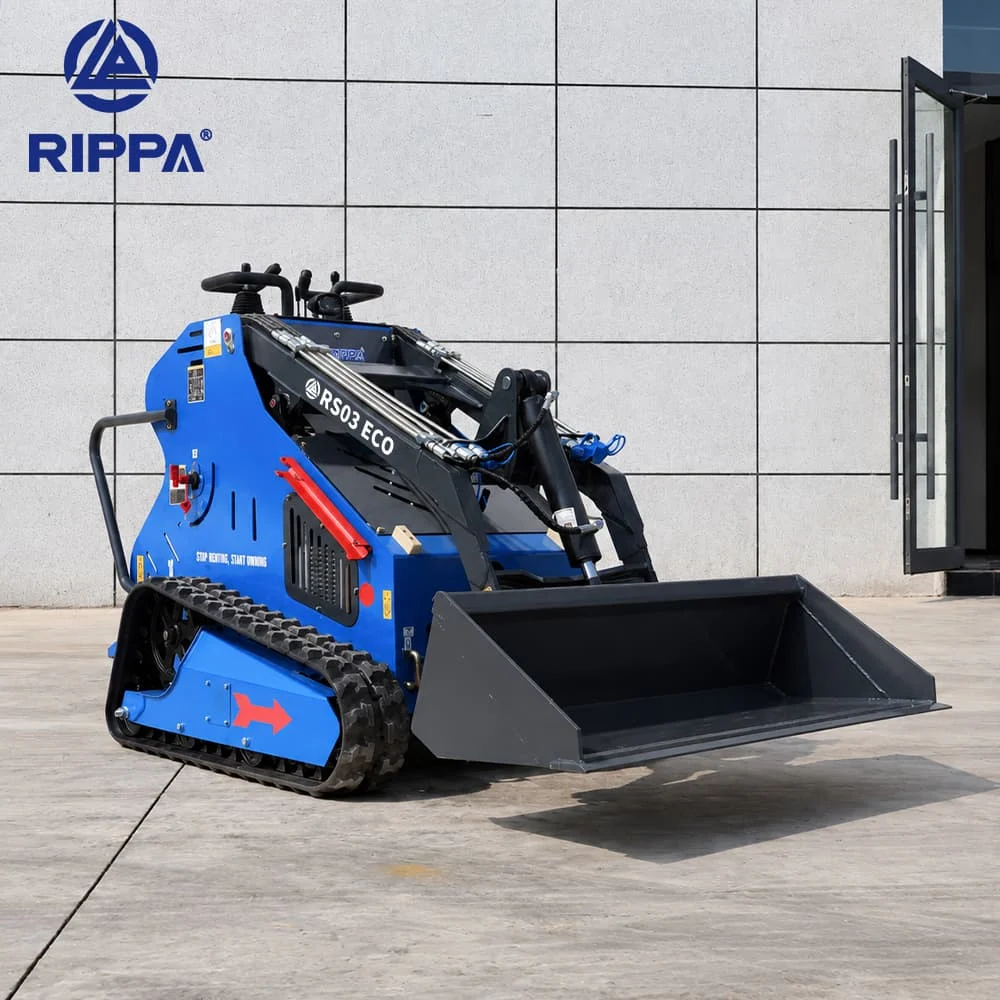
The RIPPA RS Series offers multiple skid steer loader models for buyers to review according to their intended applications and purchasing requirements.
International buyers can contact RIPPA to discuss:
- Available skid steer loader models
- Machine configurations
- Track or wheel options on applicable models
- Attachment requirements
- Product documentation
- Quotation and export arrangements
Visit the official RIPPA skid steer loader product page to review the available range.
Frequently Asked Questions
What is a factory direct skid steer loader?
It is a skid steer loader purchased directly from the manufacturer rather than through an independent equipment reseller.
Is buying directly from a factory always cheaper?
Not necessarily. Buyers should compare the complete machine configuration, attachments, shipping costs, taxes, and commercial terms before deciding which offer provides better value.
What should I check before buying from a Chinese skid steer manufacturer?
Verify the company, machine configuration, product documents, attachments, quotation, shipping responsibilities, warranty terms, and spare parts arrangements.
Can I purchase a new skid steer loader directly from RIPPA?
Interested buyers can contact RIPPA to discuss available RS Series models, product configurations, and purchasing requirements.
Does factory direct pricing include shipping?
Not automatically. Shipping, insurance, customs duties, taxes, and final delivery depend on the quotation and agreed shipping terms. Ask for a written breakdown.
Conclusion
A factory direct skid steer loader purchase can provide a direct channel for discussing equipment configurations, quotations, and export arrangements.
However, buyers should evaluate the entire transaction rather than focusing only on the advertised machine price.
Confirm the supplier, product configuration, attachments, documents, shipping conditions, and after-sales arrangements before placing an order.
Explore the RIPPA skid steer loader range and contact the team to discuss your equipment requirements.
 Home
 Products
 Email
 WhatsApp

