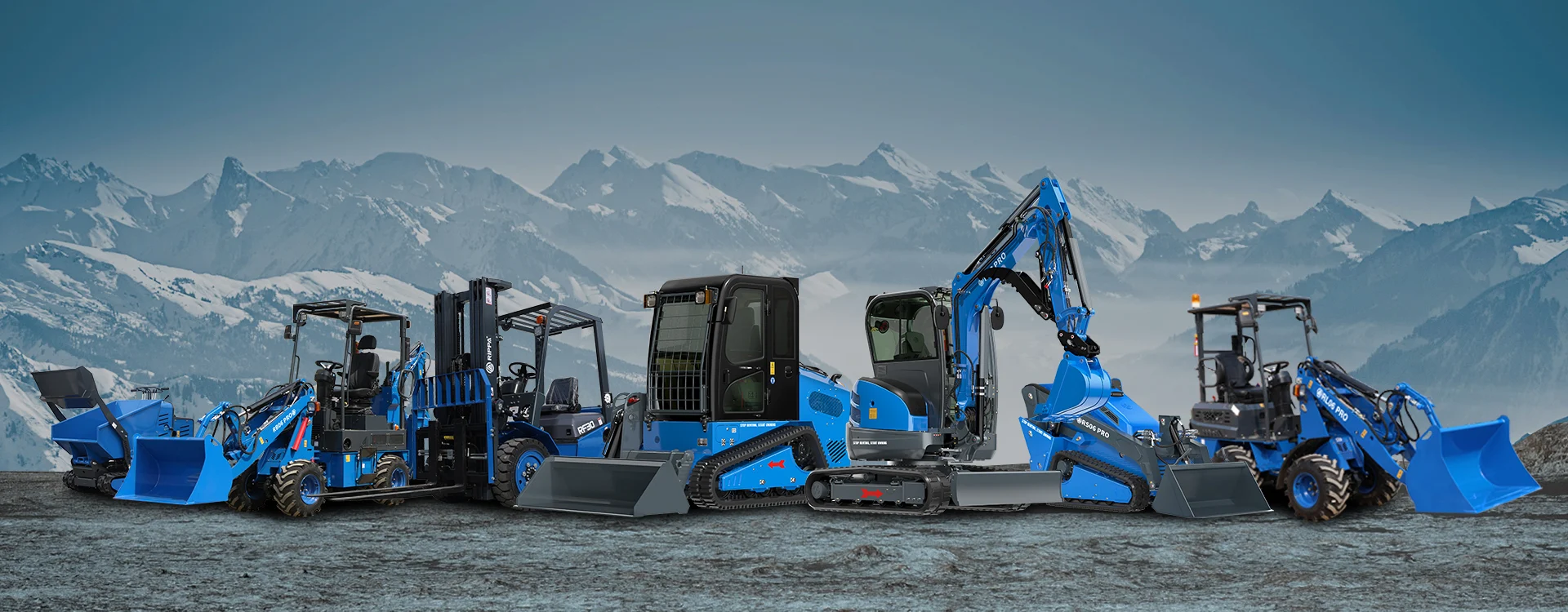
The standalone excavator is becoming obsolete. The future machine is a connected data hub, an automated workhorse, and an integrated component of a seamless digital workflow. This isn’t science fiction; it’s the next evolution of jobsite productivity, and it’s closer than you think.Future excavators will be fully integrated into the digital jobsite via: 1) Machine Control & Guidance (3D GPS for automatic grade), 2) IoT & Telematics for real-time data, 3) Autonomous functions (e.g., repetitive trenching), and 4) Interoperability with drones, survey gear, and project management software.

1 From Joysticks to Coordinates: The 3D Machine Control Revolution
Why have an operator manually chase grade when the machine can do it perfectly, automatically?
-
How It Works: A 3D GPS receiver on the machine compares its bucket position in real-time to a digital site plan. The system automatically controls the hydraulics to raise/lower the boom and arm, holding exact grade, slope, and depth. The operator steers.
-
The Productivity Leap: Eliminates staking, reduces rework, and allows less-experienced operators to perform expert-grade work. For a manufacturer like RIPPA, building machines with precise, responsive hydraulics (like our pilot systems) is the essential foundation for integrating this high-level automation.
2 The Internet of Things (IoT) Jobsite: Your Excavator as a Data Node
Every component will talk, reporting its health and performance.
-
Beyond Basic Telematics: Imagine sensors reporting real-time hydraulic fluid contamination, individual track motor torque, structural stress loads on the boom, and bucket tooth wear. This data feeds predictive maintenance algorithms that schedule service before failure.
-
The System Advantage: RIPPA’s investment in smart diagnostics and quality traceability is a stepping stone to this future. A machine built with an understanding of data from the factory floor is ready to become a proactive source of intelligence on the job site.
3 Assisted & Autonomous Functions: The Co-Pilot Model
Full autonomy is far off for complex tasks, but “operator assist” and targeted autonomy are here.
-
Near-Term Realities: Auto-depth control for trenching. Return-to-dig functions. Assisted loading for trucks (calculated swing angles and dump heights). Fully autonomous repetitive tasks in controlled environments (like a mining pit or a mass excavation site).
-
Safety & Efficiency: These features reduce operator cognitive load and fatigue, ensuring consistency and safety. They turn the operator into a supervisor and strategist. The reliability of the base machine—the kind ensured by RIPPA’s rigorous testing—is non-negotiable for any autonomous system.
4 Interoperability: Playing Nice with the Entire Digital Ecosystem
An excavator’s data is useless if it’s trapped in a proprietary app. The future is open integration.
-
The Connected Workflow: The machine’s guidance system imports site plans directly from the civil engineer’s BIM (Building Information Modeling) software. As-built data from the excavator and drone surveys update the plan in real time. Project management software tracks progress and alerts the project manager of delays.
-
The Platform Approach: Forward-thinking manufacturers will build machines as open, secure platforms. RIPPA’s focus on providing clear, standardized data outputs positions our machines to be valuable players in this connected worksite of the future.
5 The Electric & Autonomous Convergence: A Perfect Match
Electrification isn’t just about emissions; it’s the ideal power source for smart, automated machinery.
-
The Synergy: Electric drive provides precise, instantaneous control perfect for automation algorithms. It has fewer moving parts, increasing reliability for unattended operation. It’s quiet and emission-free, allowing 24/7 work in urban areas.
-
A Logical Path: RIPPA’s development in both efficiency (load-sensing hydraulics) and electrification research places us at the intersection of these two megatrends, working towards machines that are not only cleaner but inherently smarter and more automated.
6 The Human Role Evolution: From Operator to Fleet Manager
The role of the person in the cab will transform dramatically.
-
The New Skillset: Less about manual dexterity, more about data interpretation, system supervision, exception handling, and logistical planning. A single person might remotely monitor or oversee multiple semi-autonomous machines from a central location.
-
Designing for the New Role: Cabs will become more like command centers with larger, more intuitive displays (like the evolution of our Smart LCD). Comfort and visibility will remain critical, but the interface will be for supervision and intervention, not constant manual control.
7 The Path to Adoption: It’s a Journey, Not a Flip of a Switch
This future will be adopted in phases, driven by ROI on specific features.
-
The First Step: Advanced telematics and 3D guidance are here now and offer immediate, provable ROI on complex grading projects.
-
The Next Phase: Enhanced predictive maintenance and operator-assist features will become standard on mid- to high-tier machines.
-
The Long View: Widespread autonomy and ecosystem integration will follow as costs drop, technology proves itself, and the industry adapts its workflows.
Conclusion
The excavator of tomorrow is a connected, intelligent, and semi-autonomous productivity hub. Investing in a machine from a forward-thinking manufacturer today means buying into a platform that can adapt and integrate these technologies as they mature, protecting your investment and keeping you competitive in the digital age.
Build Your Foundation for the Future.
Choose a machine built with the precision, reliability, and data-ready architecture to embrace the smart jobsite. Talk to RIPPA about how our technology roadmap aligns with the future of your business.
 Home
Home
 Products
 Email
Email
 WhatsApp

