Landscape equipment dealers often start with products that serve lawn care, outdoor maintenance, and small property service businesses. Mowers, trimmers, blowers, turf tools, and compact outdoor power equipment can create steady customer traffic. However, many professional customers eventually grow beyond basic maintenance.
They begin taking on drainage projects, hardscape preparation, grading, outdoor renovation, tree planting, soil movement, and property improvement work. These projects require more capable equipment and often carry higher order value.
For landscape equipment dealers, this creates an opportunity: add mini excavators as a high-value product category.
A mini excavator is not just another machine in the yard. It can help the dealer serve more professional customers, increase average order value, create attachment and parts opportunities, and build stronger long-term relationships with landscaping businesses.
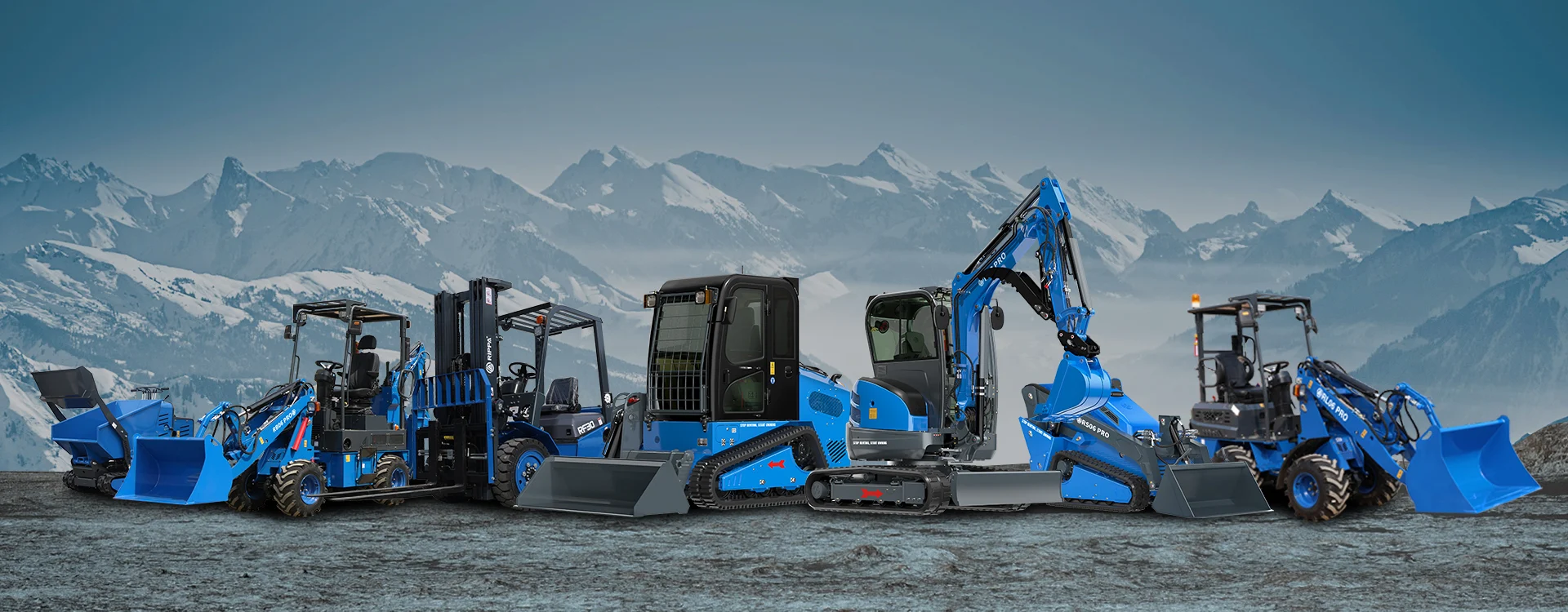
RIPPA mini excavators can be considered by landscape equipment dealers who want to expand from lawn care equipment into compact excavation equipment for professional landscapers, hardscape contractors, property maintenance businesses, and outdoor service companies. Before promotion or purchase, dealers should confirm current machine configuration, attachment compatibility, spare parts support, warranty policy, delivery arrangement, documentation, and dealer cooperation terms.
Why Landscape Dealers Need a High-Value Category
Basic lawn care equipment is important, but many dealers face growth limits if they only sell lower-ticket products. A customer may buy mowers, tools, and maintenance items, but the dealer may miss higher-value opportunities when that same customer begins offering larger outdoor projects.
A high-value product category helps dealers:
- Increase average transaction value
- Serve professional customers more deeply
- Create attachment sales
- Build parts and service relationships
- Improve customer retention
- Support business customers as they grow
- Create stronger differentiation from small equipment sellers
- Open new marketing and advertising opportunities
Mini excavators fit this role because they connect directly to higher-value landscaping work.
Why Mini Excavators Fit Landscape Dealer Expansion
Mini excavators are practical machines for landscaping and outdoor improvement work. They support applications that many professional customers already handle or want to add.
Relevant applications include:
| Landscaping Business Need | Mini Excavator Application |
|---|---|
| Drainage projects | Trenching and water flow preparation |
| Hardscape preparation | Soil removal and base preparation |
| Yard renovation | Removing old materials and reshaping land |
| Посадка дерев | Digging planting holes and moving soil |
| Root removal | Handling old roots and unwanted material |
| Обслуговування нерухомості | Repairing drainage, paths, and outdoor areas |
| Градація | Supporting surface preparation |
| Підготовка огорожі | Preparing lines and post areas |
| Small contractor work | Supporting compact site preparation |
This makes mini excavators a natural extension for dealers already serving landscapers, property maintenance companies, outdoor contractors, and lawn care businesses expanding into larger work.
Step 1: Identify Professional Customers, Not Just Homeowners
A landscape equipment dealer should begin by identifying customers with business growth potential. Not every mower buyer is ready for a mini excavator. The strongest prospects are usually customers who already perform paid outdoor projects or want to expand into larger services.
Strong customer segments include:
- Landscape contractors
- Hardscape contractors
- Tree service companies
- Property maintenance businesses
- Outdoor renovation companies
- Lawn care companies expanding into landscaping
- Small contractors
- Rental businesses serving landscapers
- Estate and facility maintenance teams
These customers often understand the value of equipment that helps them quote more complete jobs.
Sales teams can begin with questions such as:
- Do you offer drainage work?
- Do you prepare sites for patios or walkways?
- Do you handle yard renovation projects?
- Do you rent excavators for customer jobs?
- Do you outsource digging or trenching?
- Do you want to expand beyond mowing?
- Do your customers ask for work you cannot currently perform?
These questions help identify serious prospects.
Step 2: Validate Demand Before Stocking Deep Inventory
Dealers should not assume that adding a new machine category automatically creates sales. Demand should be validated before stocking heavily.
Ways to validate demand include:
- Survey existing professional customers
- Track requests for compact excavation equipment
- Review rental inquiries
- Ask customers what equipment they currently rent
- Study local landscaping project types
- Check whether competitors offer compact excavators
- Test content or ads around mini excavator applications
- Display one practical model before expanding inventory
- Collect feedback from demonstration events
The goal is to understand whether the dealer’s existing customer base is ready for mini excavators.
A small, controlled launch is often better than ordering too many machines before demand is proven.
Step 3: Build Application-Based Product Pages
Landscape dealers should not rely only on a generic product listing. Mini excavator customers often search by application, not only by machine category.
Useful website page topics include:
- Mini excavator for landscapers
- Mini excavator for drainage projects
- Mini excavator for hardscape preparation
- Mini excavator for yard grading
- Mini excavator for tree planting
- Mini excavator for outdoor renovation
- Mini excavator for property maintenance
- Compact excavator for landscape contractors
- Equipment for landscape dealers
- Mini excavator for lawn care business expansion
Each page should connect the machine to real customer problems and business outcomes.
For example, a page about drainage should explain how compact excavation equipment helps prepare trenches and solve water movement problems. A page about hardscape preparation should explain soil removal, base preparation, and site readiness.
Step 4: Prepare Sales Training
Salespeople who are experienced with lawn equipment may need training before selling mini excavators. The conversation is different because buyers are often evaluating business expansion, transport, attachments, service, parts, and project capability.
Sales training should cover:
- Common landscaping applications
- Customer qualification questions
- Attachment basics
- Parts support process
- Гарантійна політика
- Service expectations
- Transport considerations
- Rent-versus-buy conversations
- How to explain mini excavators beside existing lawn equipment
- How to avoid unsupported claims
Salespeople should learn to ask application-based questions:
- What projects do you complete most often?
- Do you currently rent compact excavators?
- Are you losing jobs because you cannot handle excavation work?
- What attachments would help your projects?
- How often would you use the machine?
- Do you have transport capacity?
- Who will maintain the equipment?
- What support do you expect after purchase?
These questions turn the sales process into a business consultation.
Step 5: Prepare Parts and Service Before Promotion
A high-value product category requires after-sales preparation. Landscape contractors may depend on the machine for customer projects. If the dealer cannot support parts or service questions, customer trust may suffer.
Before promoting mini excavators, dealers should confirm:
| Support Area | Чому це важливо |
|---|---|
| Spare parts package | Helps support customers after purchase |
| Parts identification | Reduces ordering errors |
| Гарантійна політика | Clarifies responsibility |
| Технічна підтримка | Helps solve issues faster |
| Maintenance information | Helps customers operate correctly |
| Сумісність додатків | Supports project-based selling |
| Service process | Builds customer confidence |
| Documentation | Helps customer education |
| Supplier contact process | Supports dealer response |
For RIPPA mini excavators, dealers should confirm current parts, warranty, technical support, delivery, and documentation details before launch.
Step 6: Use Demonstrations and Real Project Content
Mini excavators are easier to sell when customers see what they can do. Demonstrations and real project content can help landscape customers understand the value quickly.
Useful demonstration themes include:
- Digging a drainage trench
- Preparing a yard for renovation
- Removing roots or old landscape material
- Preparing a hardscape base
- Digging planting holes
- Shaping soil for outdoor projects
- Showing attachment changes where applicable
- Explaining transport and access considerations
Dealers can use short videos, photos, open house events, customer demos, and job-site examples.
Content should focus on practical work, not exaggerated claims.
Step 7: Start with a Focused Product Offering
A dealer entering a new category should avoid offering too many choices at once. Too many models can confuse customers and make sales training more difficult.
A focused launch may include:
- One or two practical mini excavator models
- A small set of common attachments
- A recommended spare parts package
- Application-based product pages
- Basic customer FAQ
- Sales team training
- Demonstration content
- Clear support process
Once demand is proven, the dealer can expand into more models, attachments, and related compact equipment.
How RIPPA Mini Excavators Can Support a High-Value Category Strategy
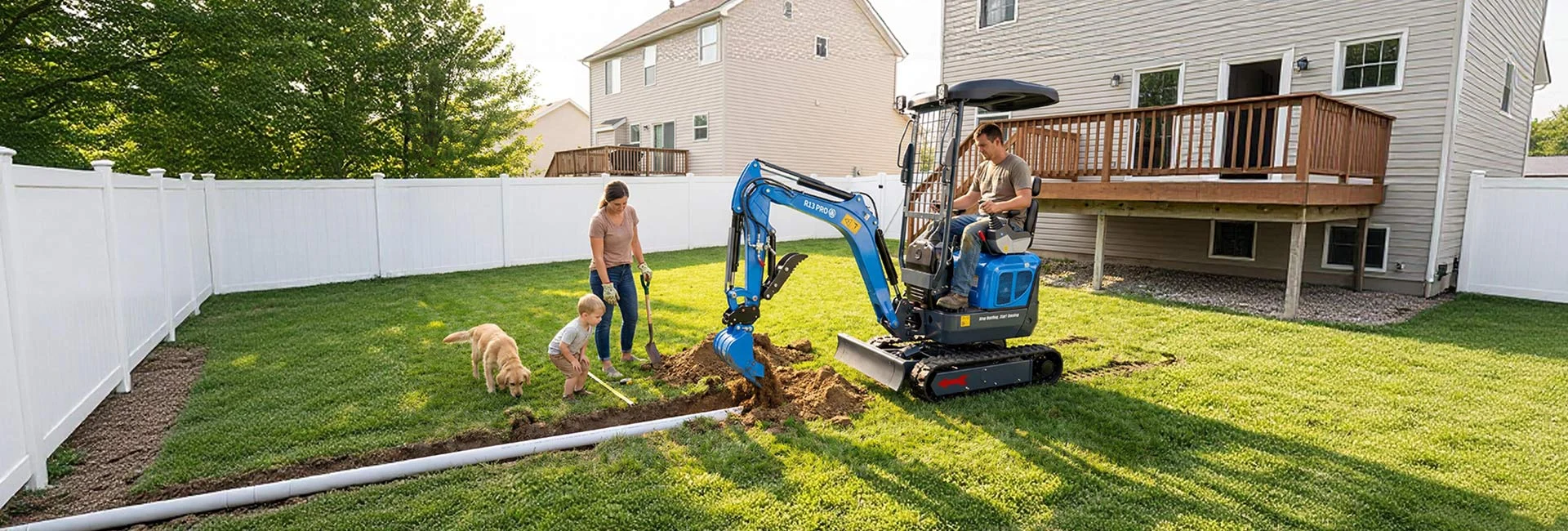
RIPPA mini excavators can be considered as a compact digging product line for landscape equipment dealers who want to move into higher-value machinery.
Potential customer applications include:
- Drainage projects
- Yard grading
- Hardscape preparation
- Посадка дерев
- Root removal
- Soil movement
- Outdoor renovation
- Обслуговування нерухомості
- Small contractor work
- Lawn care business expansion
Before launching RIPPA machines as a high-value category, dealers should confirm:
- Поточна конфігурація машини
- Landscape application suitability
- Сумісність додатків
- Spare parts package
- Гарантійна політика
- Technical support process
- Умови доставки
- Documentation
- Dealer cooperation terms
- Marketing or training resources where available
RIPPA’s broader compact equipment line may support future expansion, but mini excavators and excavators should remain the core focus when entering the landscaping machinery category.
Step 8: Track Performance and Adjust
After launching the new category, dealers should track results carefully.
Important metrics include:
- Website inquiries
- Calls about mini excavators
- Customer type
- Application interest
- Attachment questions
- Price objections
- Financing or payment questions
- Demonstration requests
- Sales conversions
- Parts inquiries
- Service questions
- Repeat customer interest
This information helps the dealer refine marketing, adjust inventory, improve sales training, and decide whether to expand the category.
Mini excavator sales should be treated as a long-term category build, not only a one-time product test.
Поширені запитання
How can landscape equipment dealers add a high-value product category?
Landscape dealers can add mini excavators by identifying professional customers, validating demand, building application-based pages, preparing sales training, confirming parts and service support, and starting with a focused product offering.
Why are mini excavators a good category for landscape dealers?
Mini excavators support higher-value landscaping projects such as drainage, hardscape preparation, grading, tree planting, root removal, property maintenance, and outdoor renovation.
Should dealers stock many mini excavator models immediately?
Not usually. A focused launch with one or two practical models, key attachments, sales training, and support planning can reduce risk before expanding inventory.
What customers should landscape dealers target first?
Dealers should target professional landscapers, hardscape contractors, property maintenance businesses, outdoor renovation companies, tree service companies, and lawn care businesses expanding into larger projects.
Why is after-sales support important for a high-value product category?
High-value machinery requires customer confidence. Parts, warranty, technical support, service process, and documentation should be ready before promotion.
Can RIPPA mini excavators help landscape dealers expand?
RIPPA mini excavators may help landscape dealers enter compact excavation equipment, but current product configuration, support, warranty, delivery, documentation, and cooperation terms should be confirmed before launch.
Висновок
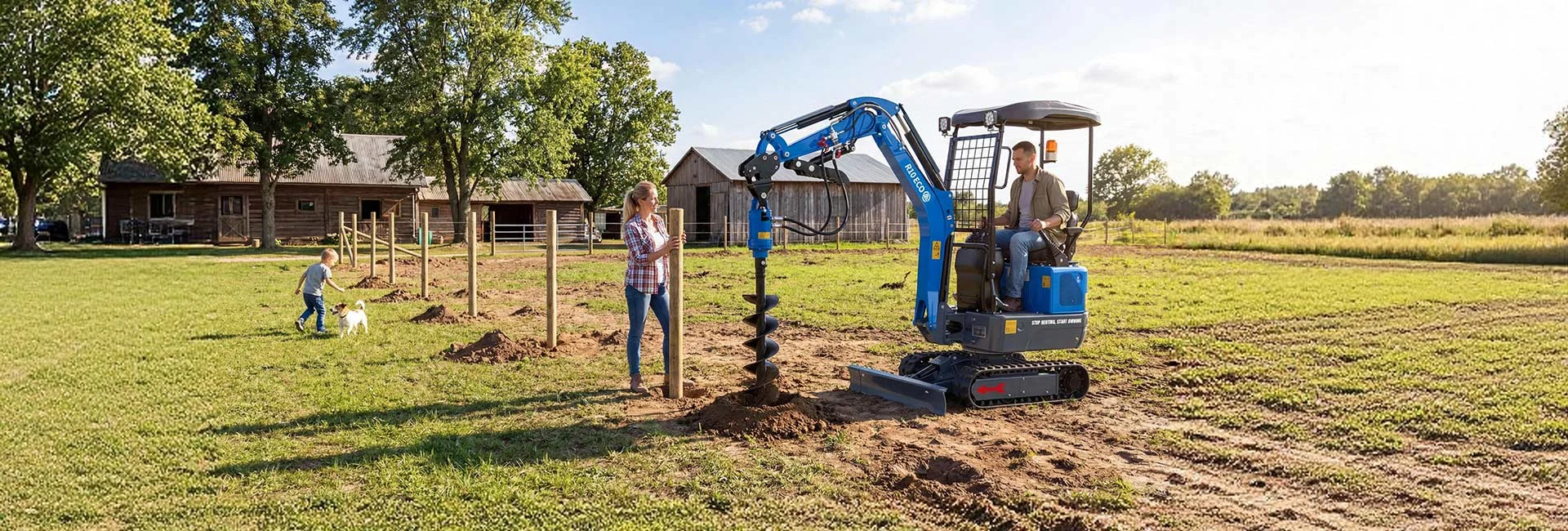
Landscape equipment dealers can add a high-value product category by moving beyond basic lawn equipment and supporting professional customers who need compact excavation equipment. Mini excavators fit this opportunity because they help landscapers complete drainage, grading, hardscape preparation, tree planting, root removal, outdoor renovation, and property maintenance projects.
A successful launch requires more than placing a machine in the yard. Dealers should identify strong customer segments, validate demand, build application-based pages, train salespeople, prepare parts and service support, use demonstrations, and track performance.
RIPPA mini excavators can be considered as a practical compact digging product line for landscape equipment dealers seeking higher-value growth. Before purchase, promotion, or resale, all current machine, attachment, support, warranty, delivery, documentation, and dealer cooperation details should be confirmed through official RIPPA channels.
For landscape dealers, mini excavators are not just another product. They are a path toward serving more professional customers and building a stronger equipment business.
 Головна сторінка
 Продукти
 Електронна пошта
 WhatsApp

