Choosing a mini excavator supplier is different from buying a single machine for personal use.
Equipment dealers, rental companies, contractors, farm equipment businesses, machinery resellers, and other B2B buyers need to think beyond the machine itself. They need to know whether the supplier can support product selection, attachments, spare parts, technical questions, documentation, delivery, and long-term business development.
A mini excavator may look competitive based on price and specifications, but B2B procurement involves a larger question:
Can the supplier support the equipment after the initial order?
A reliable supplier should help buyers understand which machines fit their target market, provide clear and current product information, explain attachment compatibility, establish spare parts and technical support processes, and communicate commercial terms clearly.
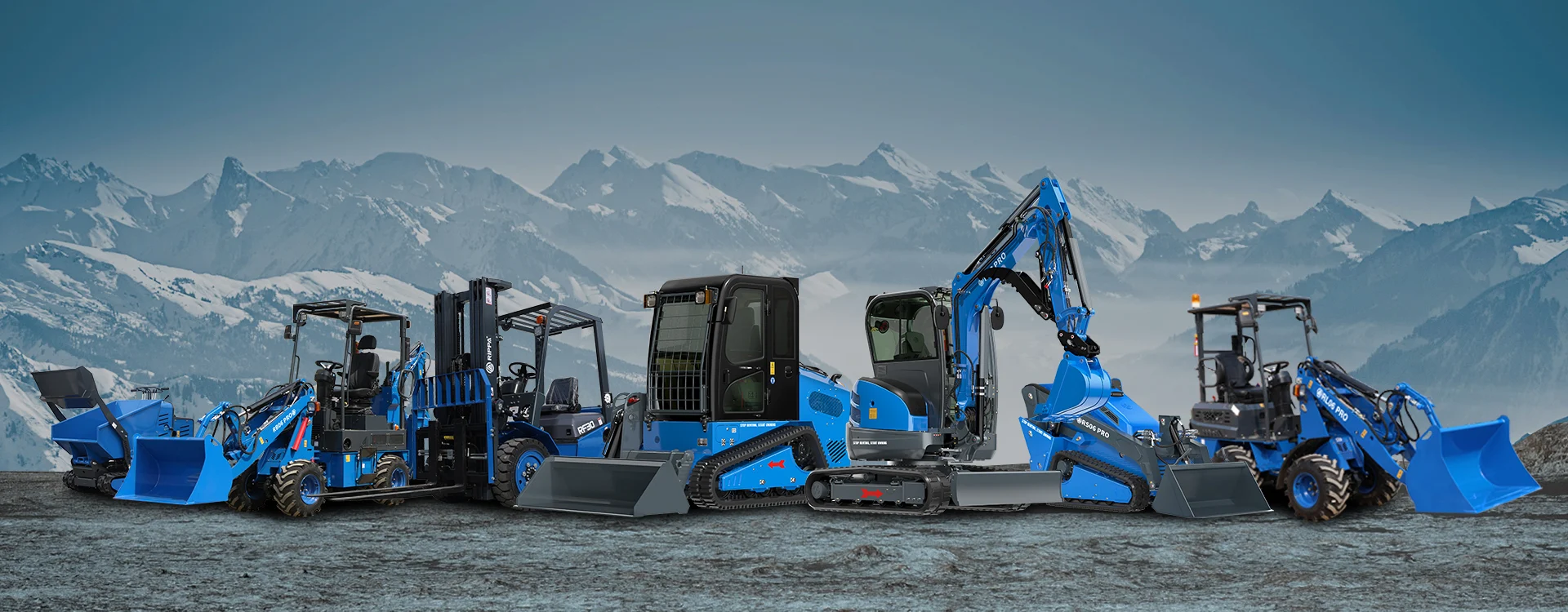
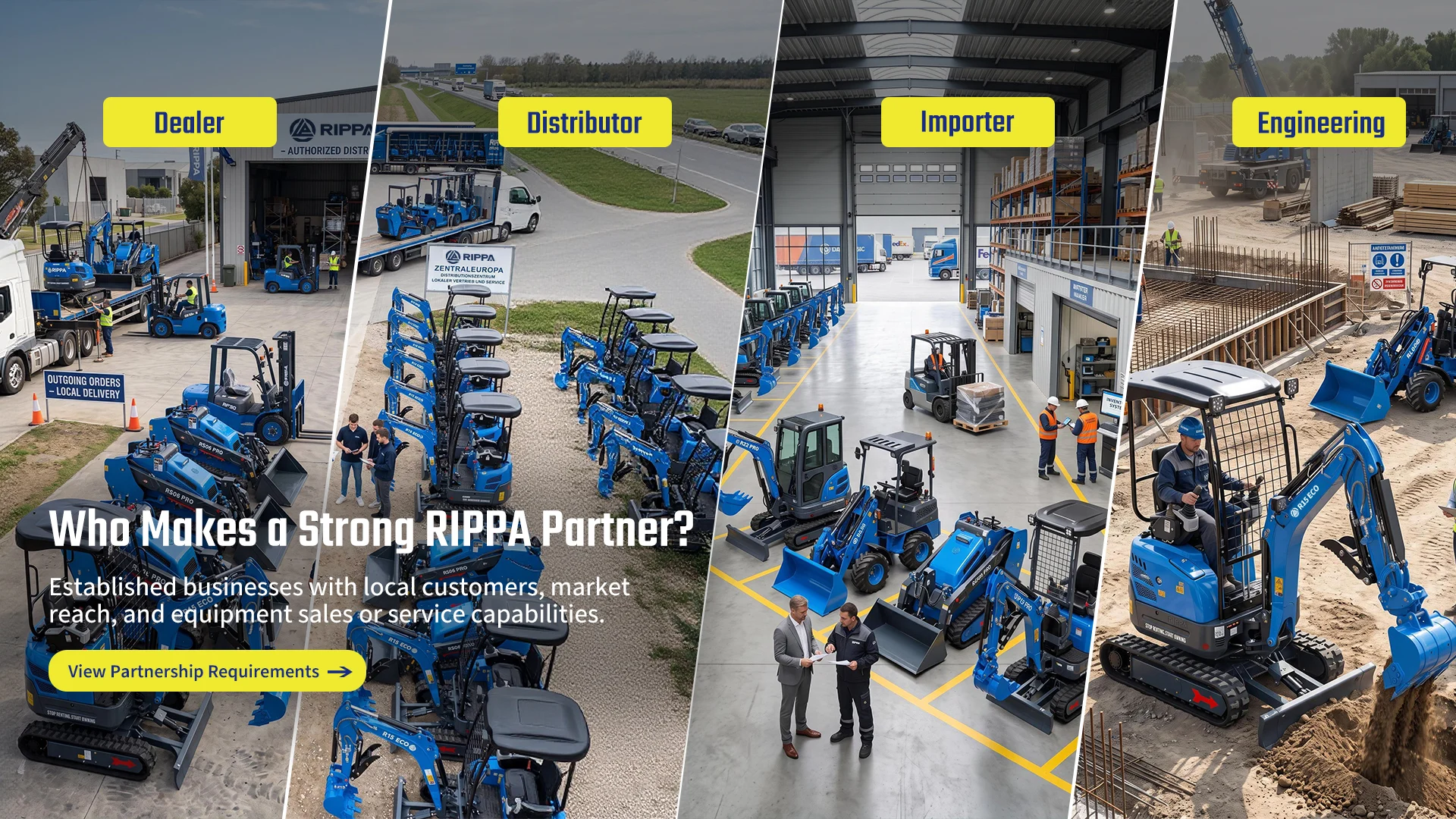
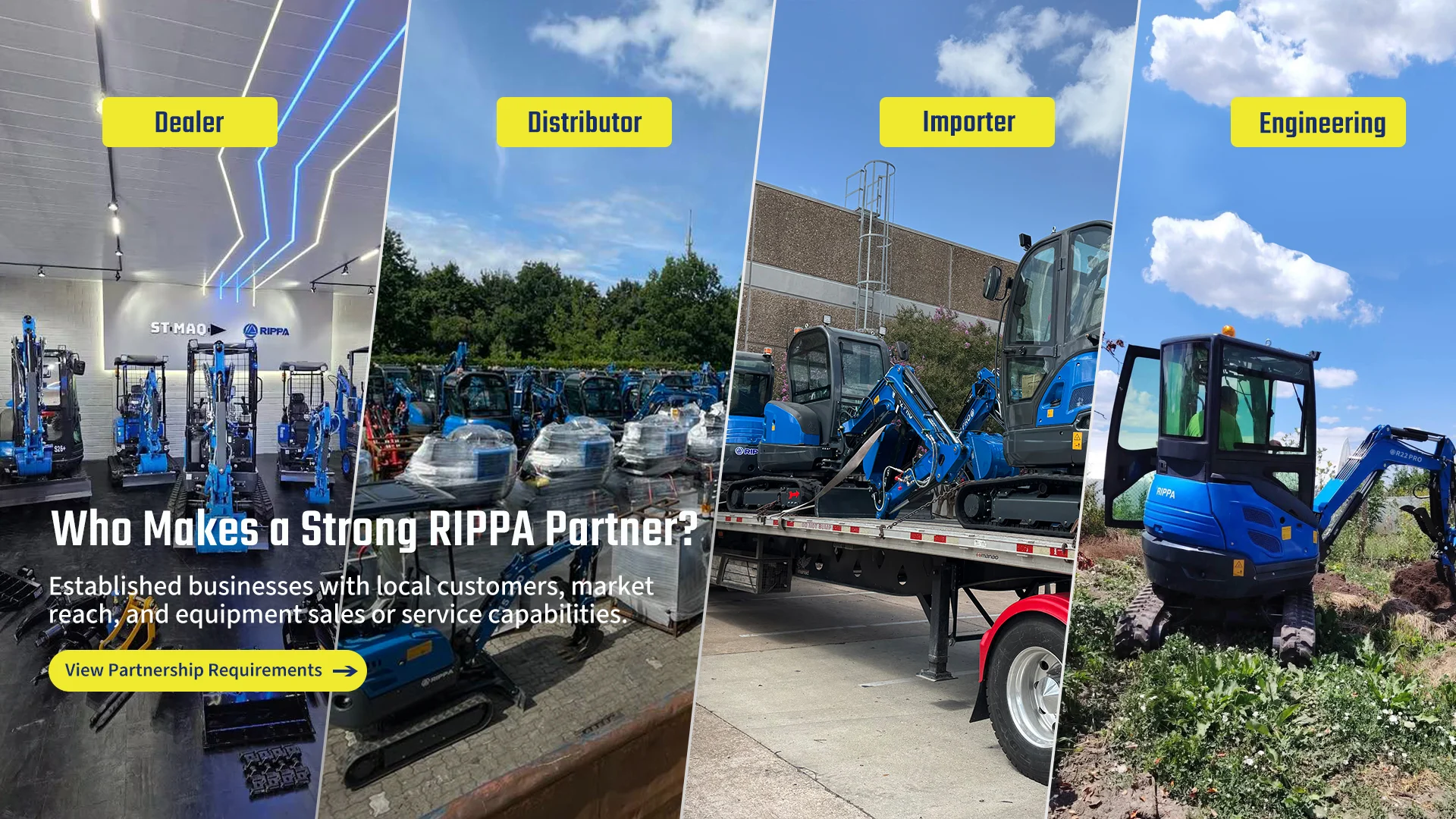
RIPPA mini excavators can be considered by dealers, rental businesses, contractors, farm equipment companies, landscaping equipment dealers, used equipment dealers, trailer dealers, and machinery resellers. Buyers should confirm current product configurations, parts support, warranty terms, documentation, delivery arrangements, and cooperation policies through official RIPPA channels before making purchasing commitments.
Why Supplier Selection Matters for Mini Excavator Buyers
A B2B buyer is usually not buying only one machine for one job.
The buyer may be planning to:
- Resell mini excavators
- Build dealership inventory
- Develop a rental fleet
- Supply contractor customers
- Expand an existing machinery business
- Add compact equipment to an agricultural dealership
- Develop repeat purchases
- Sell attachments and spare parts
This means the quality of the supplier relationship can affect the buyer’s own customers.
If product information is unclear, the dealer may provide incorrect information.
If spare parts are difficult to obtain, customers may experience longer downtime.
If attachment compatibility is not confirmed, the dealer may sell the wrong tool.
If warranty procedures are unclear, after-sales communication may become more difficult.
Supplier selection should therefore be treated as a long-term business decision.
1. Start with the Supplier’s Mini Excavator Product Range
The first question is whether the supplier offers machines that fit your target customers.
A dealer serving small landscaping businesses may need different machines from a rental company serving contractors.
Typical customer groups include:
- Підрядники
- Ландшафтні дизайнери
- Farms
- Fence contractors
- Rural service businesses
- Компанії з прокату
- Property maintenance businesses
- Small construction companies
A supplier should be able to explain how different machine configurations relate to different applications.
Buyers should confirm:
- Available mini excavator categories
- Current machine configurations
- Machine dimensions
- Working weight
- Digging depth
- Digging reach
- Гідравлічна схема
- Attachment options
- Transport considerations
Do not assume that specifications from one model apply to another.
2. Evaluate Whether the Supplier Understands Applications
A reliable supplier should not only provide a specification sheet.
The supplier should also help buyers understand where the machine fits.
Common mini excavator applications include:
- Копання траншеї
- Drainage preparation
- Ditch cleaning
- Підготовка огорожі
- Посадка дерев
- Root removal
- Hardscape preparation
- Property renovation
- Farm maintenance
- Rural property work
- Small construction excavation
Application knowledge is important because B2B buyers need to resell or rent machines to end customers.
A dealer selling to farms needs different marketing and configuration guidance from a dealer selling primarily to landscaping contractors.
3. Check Attachment Compatibility Before Ordering
Attachments can significantly expand the value of mini excavators.
Possible attachment directions include:
- Digging buckets
- Grading buckets
- Шнеки
- Hydraulic thumbs
- Грейфери
- Rakes
- Breakers
- Швидкороз'ємні з'єднання
However, attachments should never be treated as universally interchangeable.
Buyers should confirm:
- Mechanical compatibility
- Hydraulic requirements
- Сумісність з'єднувачів
- Machine model compatibility
- Recommended applications
- Installation requirements
For B2B dealers, inaccurate attachment information can create expensive after-sales problems.
4. Ask About Spare Parts Support
Spare parts are one of the most important supplier-selection factors for commercial buyers.
A contractor may lose project time when a machine is unavailable.
A rental company may lose rental days.
A dealer may face dissatisfied customers.
A reseller may damage its reputation.
Before purchasing, buyers should understand how the supplier handles:
- Filters
- Routine service parts
- Wear components
- Hydraulic components
- Electrical components
- Replacement parts
- Parts identification
- Parts ordering
- Shipping arrangements
A supplier should also have a process for helping dealers identify the correct part for the correct machine.
5. Evaluate Technical Support
Technical support becomes more important as order volume increases.
B2B buyers should ask:
- How are technical questions submitted?
- What information is required when reporting a problem?
- Is troubleshooting guidance available?
- Can the supplier help identify components?
- Is service documentation available?
- How are warranty-related technical issues handled?
A dealer does not necessarily need the supplier to solve every local service issue directly, but it does need a clear communication process.
6. Confirm Maintenance Information
A reliable supplier should provide enough information for buyers to understand routine maintenance requirements.
Important areas may include:
- Service intervals
- Filters
- Lubrication
- Fluid checks
- Wear inspections
- Hydraulic system maintenance
- Track inspection
- General operating checks
Rental companies may have especially high maintenance requirements because machines move between different users and job sites.
Dealers should understand the maintenance expectations before selling machines to customers.
7. Review Warranty Terms Carefully
B2B buyers should never assume warranty terms.
They should confirm the current policy directly.
Important questions may include:
- What is covered?
- What is excluded?
- What documentation is required?
- What is the claim process?
- Who is responsible for diagnostics?
- How are approved replacement parts handled?
- Are different products covered differently?
Clear warranty communication helps dealers set accurate expectations with their own customers.
8. Evaluate Product Documentation
Documentation becomes especially important when machines are being resold.
Useful information may include:
- Product specifications
- Operator information
- Рекомендації щодо технічного обслуговування
- Parts information
- Attachment information
- Technical materials
- Shipping documentation where applicable
Dealers should know what documents are currently available for the machines they plan to sell.
9. Check Communication Quality
Supplier communication can reveal a great deal about future cooperation.
Before placing larger orders, observe whether the supplier:
- Answers technical questions clearly
- Provides current information
- Distinguishes confirmed information from estimates
- Responds to parts questions
- Explains product differences
- Clarifies commercial terms
- Follows up on unresolved questions
Fast communication is useful, but accurate communication is more important.
10. Evaluate Delivery and Logistics
For international B2B buyers, equipment purchasing also involves logistics.
Buyers should confirm current arrangements regarding:
- Order preparation
- Packaging
- Shipment coordination
- Required documentation
- Delivery terms
- Destination requirements
- Machine quantity
- Attachment shipment
- Spare parts shipment
Delivery expectations should be confirmed for each order rather than assumed from previous transactions.
11. Consider the Supplier’s Ability to Support Dealers
Equipment dealers need different support from individual machine buyers.
A dealer may need:
- Product information
- Sales materials
- Підтримка щодо запчастин
- Configuration guidance
- Attachment information
- Technical communication
- Repeat-order coordination
- Dealer cooperation information
If the buyer plans to build a long-term machinery business, these factors may be more important than a small difference in initial price.
12. Compare Suppliers on Total Business Value
A supplier comparison should not be based only on quotation price.
Consider the complete business relationship.
| Evaluation Area | Questions to Ask |
|---|---|
| Product range | Does it fit your customer market? |
| Specifications | Are configurations clearly documented? |
| Applications | Does the supplier understand customer use cases? |
| Вкладення | Is compatibility clearly confirmed? |
| Parts | Is there a clear spare parts process? |
| Обслуговування | Is service information available? |
| Гарантія | Are current terms clear? |
| Технічна підтримка | Is there a communication process? |
| Documentation | Can dealers access useful product information? |
| Доставка | Are logistics arrangements clearly explained? |
| Cooperation | Are dealer/reseller terms clear? |
This gives buyers a more complete basis for comparison.
Why the Cheapest Supplier May Not Be the Best Supplier
A lower price may help reduce acquisition cost, but B2B buyers also need to consider downstream risks.
A cheaper machine may become more expensive if:
- Parts are difficult to obtain.
- Attachment compatibility is unclear.
- Documentation is limited.
- Technical questions take too long to resolve.
- Incorrect configurations are ordered.
- Customer downtime increases.
The best supplier is not necessarily the one with the highest price either.
The better approach is to compare the complete support structure against your business needs.
How Different B2B Buyers Should Evaluate Suppliers
Equipment Dealers
У центрі уваги:
- Product range
- Customer applications
- Parts
- Вкладення
- Гарантія
- Технічна підтримка
- Repeat purchasing
Компанії з прокату
У центрі уваги:
- Fleet suitability
- Доступність запчастин
- Обслуговування
- Attachment options
- Machine uptime
- Технічна підтримка
Підрядники
У центрі уваги:
- Application fit
- Транспорт
- Вкладення
- Parts
- Обслуговування
- Гарантія
Farm Equipment Dealers
У центрі уваги:
- Rural applications
- Product fit with existing customers
- Parts
- Вкладення
- Dealer support
What Should Buyers Confirm with RIPPA?
Before purchasing RIPPA mini excavators, buyers should confirm current information regarding:
- Available machine configurations
- Product specifications
- Сумісність додатків
- Spare parts support
- Maintenance requirements
- Гарантійна політика
- Технічна підтримка
- Documentation
- Delivery arrangements
- Dealer or reseller cooperation
Commercial and product terms may change, so buyers should rely on current official information.
Поширені запитання
How do I choose a reliable mini excavator supplier?
Evaluate product range, application knowledge, attachment compatibility, spare parts, maintenance support, warranty, technical communication, documentation, logistics, and cooperation terms.
Should price be the main factor?
No. Price matters, but long-term parts and support capability can have significant business value.
Why are spare parts important?
Because machine downtime can affect contractors, rental companies, dealers, and their customers.
Should dealers ask about attachments before ordering?
Yes. Attachment compatibility should be confirmed for the specific machine model and configuration.
What should rental companies ask a mini excavator supplier?
They should ask about machine suitability, maintenance, spare parts, attachment options, warranty process, technical support, and fleet-related support.
What should dealers confirm before ordering RIPPA mini excavators?
They should confirm current configurations, specifications, attachments, parts support, warranty, technical support, documentation, delivery, and cooperation terms.
Висновок
Choosing a reliable mini excavator supplier requires more than comparing machine prices.
B2B buyers should evaluate the complete relationship: product suitability, attachments, parts, maintenance, warranty, technical support, documentation, logistics, and communication.
For equipment dealers, rental companies, contractors, and machinery resellers, the supplier becomes part of the customer-support chain.
A reliable mini excavator supplier should therefore help the buyer not only purchase machines, but also support those machines throughout their commercial use.
 Головна сторінка
 Продукти
 Електронна пошта
 WhatsApp

