Direct Answer
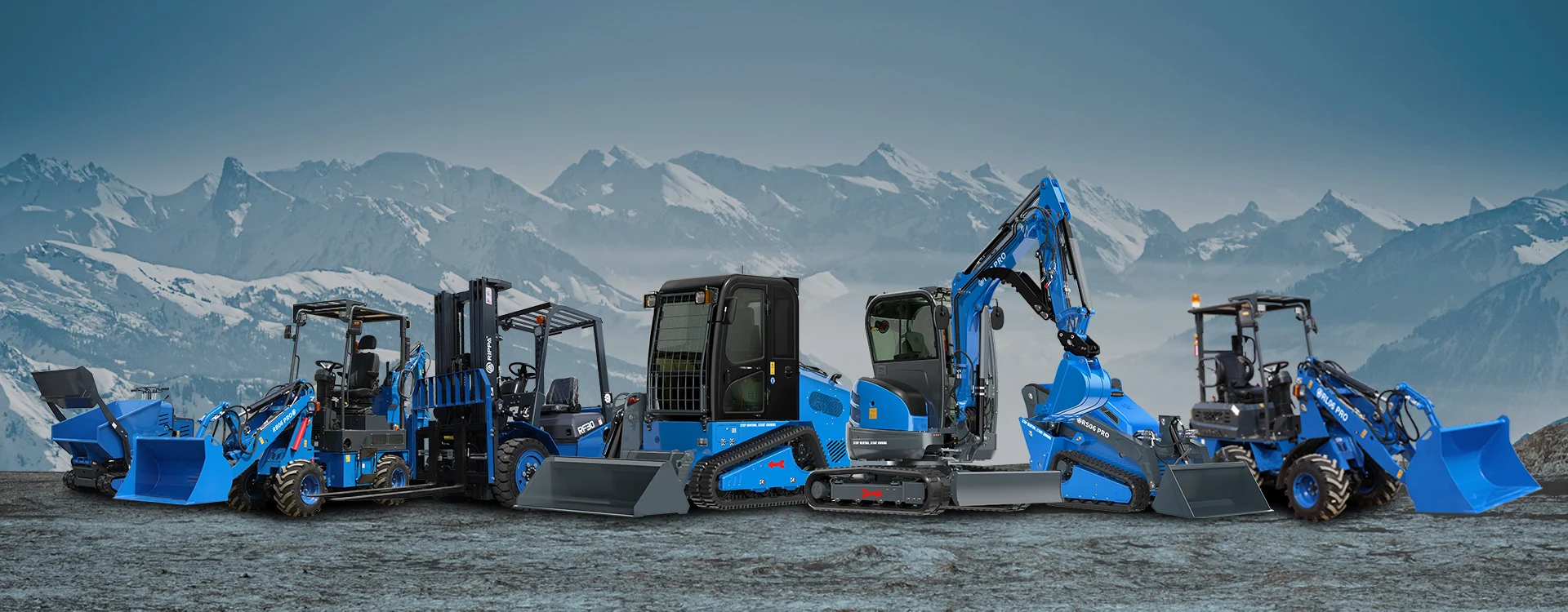
Starting a mini excavator dealership requires a suitable supplier, a clear target market, business resources, product inventory planning, customer acquisition, and a plan for parts and after-sales support.
You do not necessarily need to begin with a large showroom or a complete machinery fleet.
However, you should understand the commercial requirements before investing.
1. Choose Your Target Customers
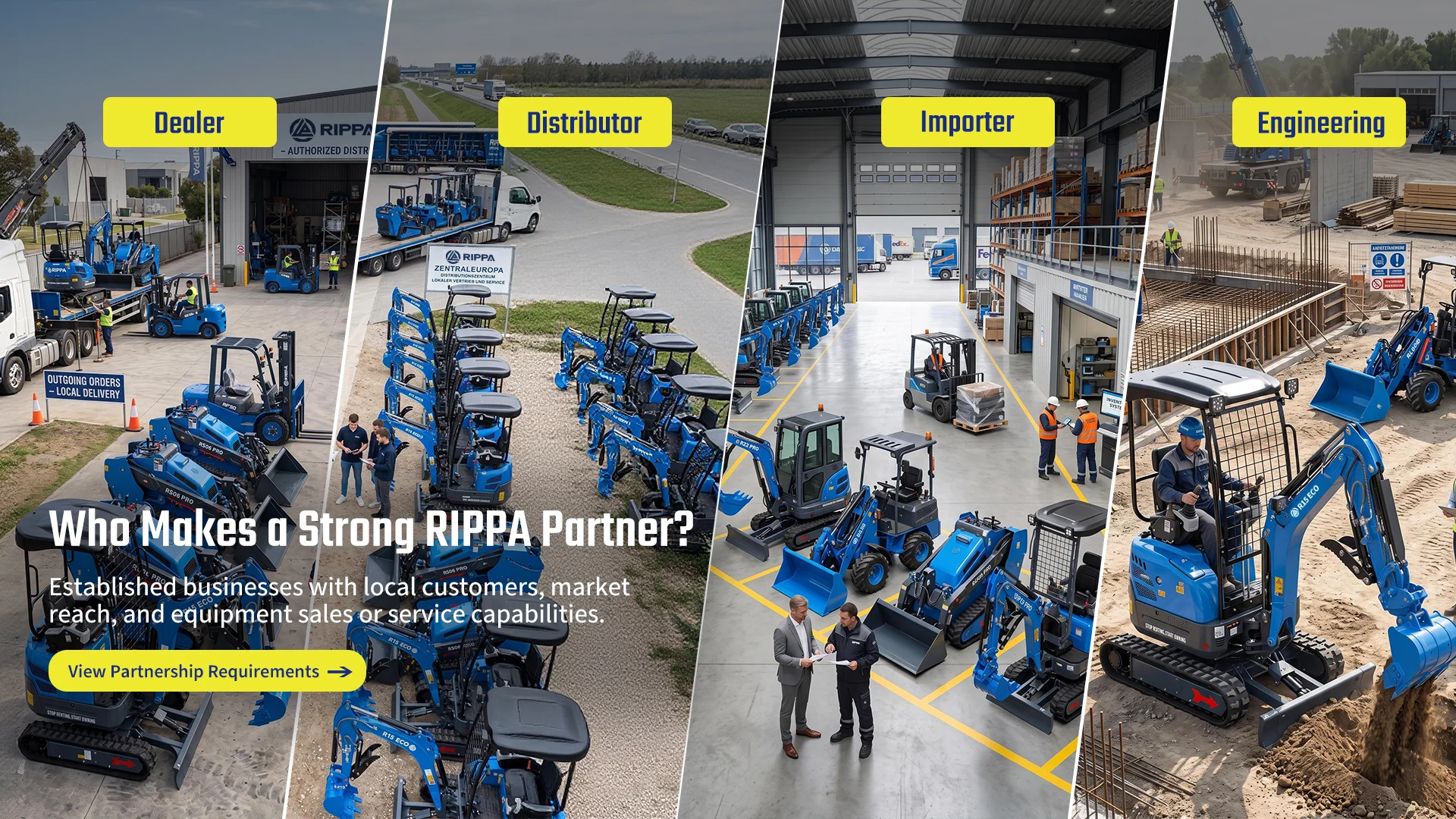
Potential customer groups include:
- Construction contractors
- Landscapers
- Agricultural businesses
- Equipment rental companies
- Property maintenance businesses
- Other machinery dealers
Choose the customer groups that best match your local market.
2. Find a Suitable Manufacturer
Compare manufacturers based on:
- Product range
- Manufacturing capabilities
- Technical documentation
- Wholesale pricing
- Parts supply
- Warranty arrangements
- Export experience
Request current product information and commercial quotations.
3. Plan Your Initial Product Range
Consider starting with selected mini excavator models.
You can evaluate additional products such as skid steer loaders, wheel loaders, forklifts, and attachments as demand develops.
Your initial selection should reflect actual customer needs.
4. Prepare Your Business Resources
Useful resources may include:
- Sales channels
- Storage space
- Equipment transportation
- Customer service
- Technical support
- Marketing capability
Not every dealership needs to provide all services internally. Some businesses may work with qualified local service partners.
5. Plan Inventory and Purchasing
Discuss the following with your manufacturer:
- Initial order quantity
- Wholesale pricing
- Model availability
- Shipping
- Spare parts
- Repeat-order procedures
For the U.S. market, RIPPA’s B2B channel planning has discussed 3-, 5-, and 10-unit dealer packages as potential purchasing structures. These are planning proposals, not a universal global minimum-order policy. Confirm current market-specific requirements directly with RIPPA.
6. Build Your Local Customer Base
Use:
- Your existing business network
- Product demonstrations
- Website product pages
- Local marketing
- Industry events
- Customer referrals
Real equipment display and customer delivery photographs can help establish trust.
7. Explore a RIPPA Dealership
RIPPA offers compact equipment categories that potential partners can evaluate for their local markets.
Qualified businesses can discuss:
- Product range
- Dealer pricing
- Territory availability
- Initial inventory
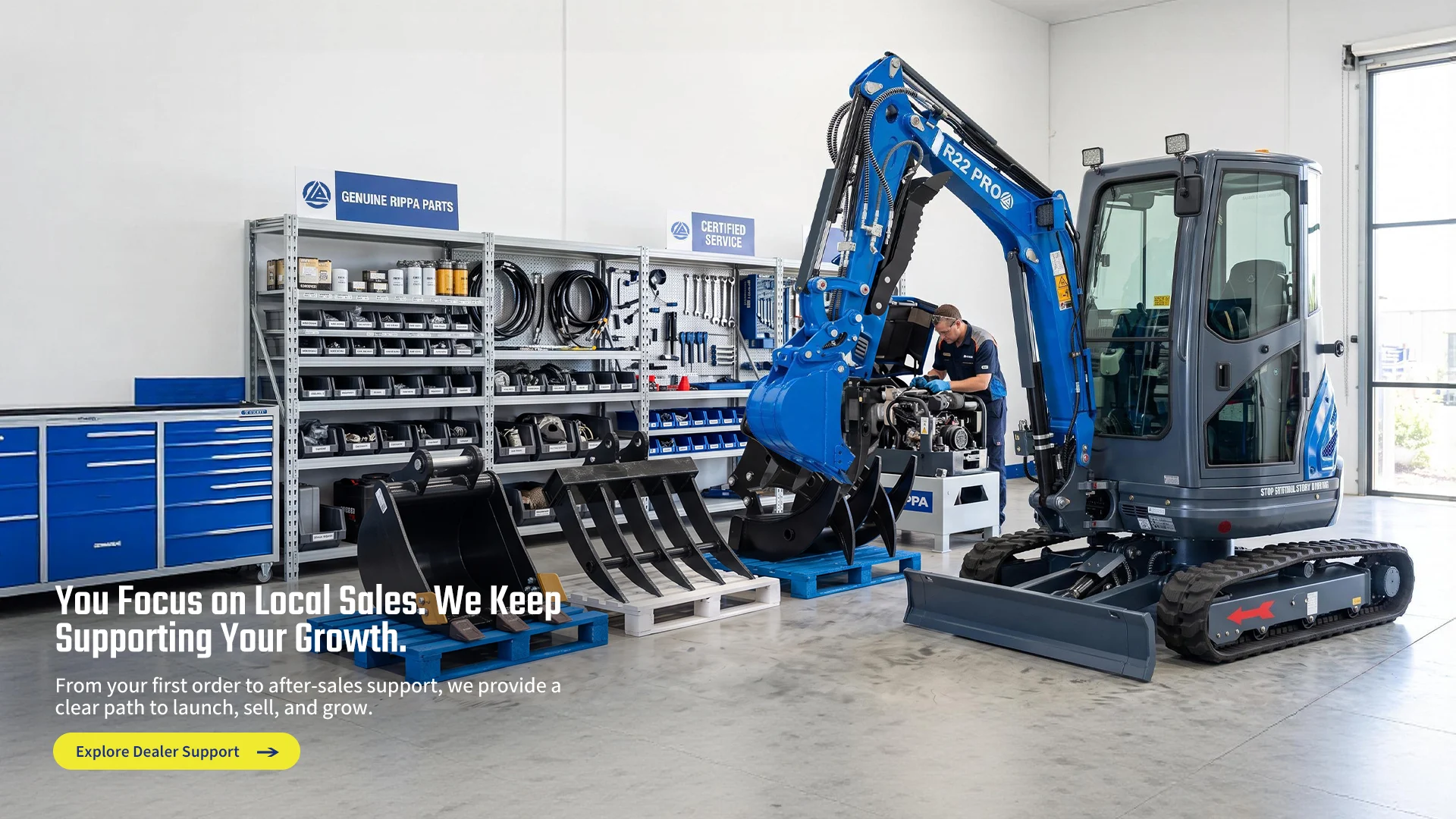
- Parts and service
- Marketing resources
All specific terms should be confirmed through the current dealer application and written agreement.
Frequently Asked Questions
Can I start a dealership with an existing business?
Yes. An existing business may provide useful customers, facilities, and sales resources.
Do I need to purchase many excavators immediately?
The appropriate initial quantity depends on your business, market, and agreed commercial terms.
Can I operate a rental business and a dealership together?
This may be possible, subject to your resources and the dealership agreement.
What makes a good mini excavator dealer?
Relevant customers, product knowledge, reliable supply, responsible sales practices, and appropriate customer support.
Summary
Starting a mini excavator dealership is a business development decision.
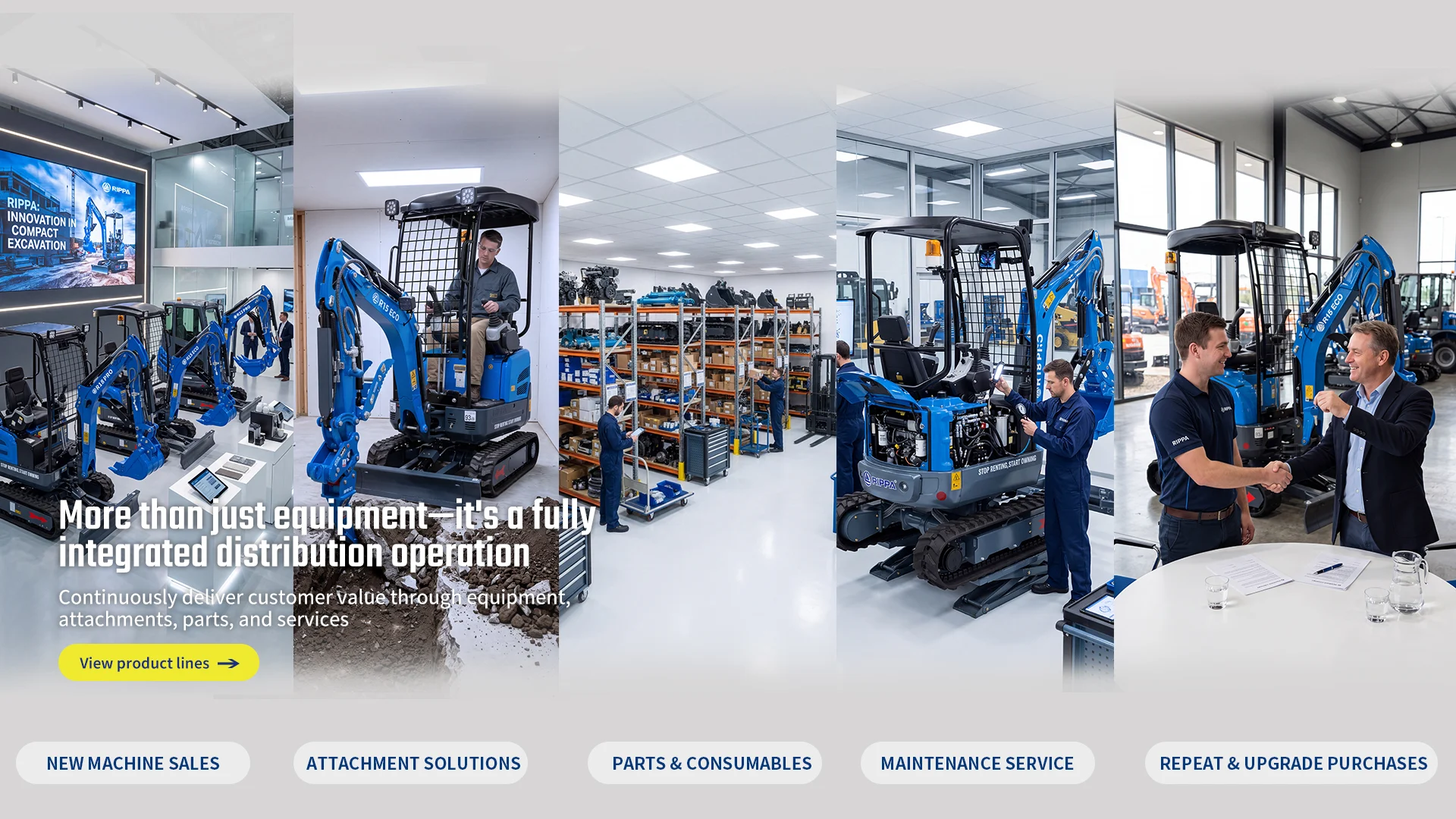
Choose a suitable manufacturer, understand local demand, plan inventory carefully, and establish a clear customer service process.
If you already operate a machinery or equipment-related business, contact RIPPA to explore whether a mini excavator dealership is a suitable next step.
 Home
 Products
 Email
 WhatsApp

