What to Know Before Buying a Wheel Loader: A Complete Buyer’s Guide
Introduction
Purchasing a wheel loader is a major investment for construction companies, farms, landscaping businesses, and material handling operations. With numerous models, capacities, and features available, selecting the right machine requires careful evaluation.
Understanding what to look for before buying a wheel loader can help you avoid costly mistakes, improve productivity, and maximize return on investment. This guide covers the essential factors every buyer should consider before making a purchase.
Determine Your Application Requirements
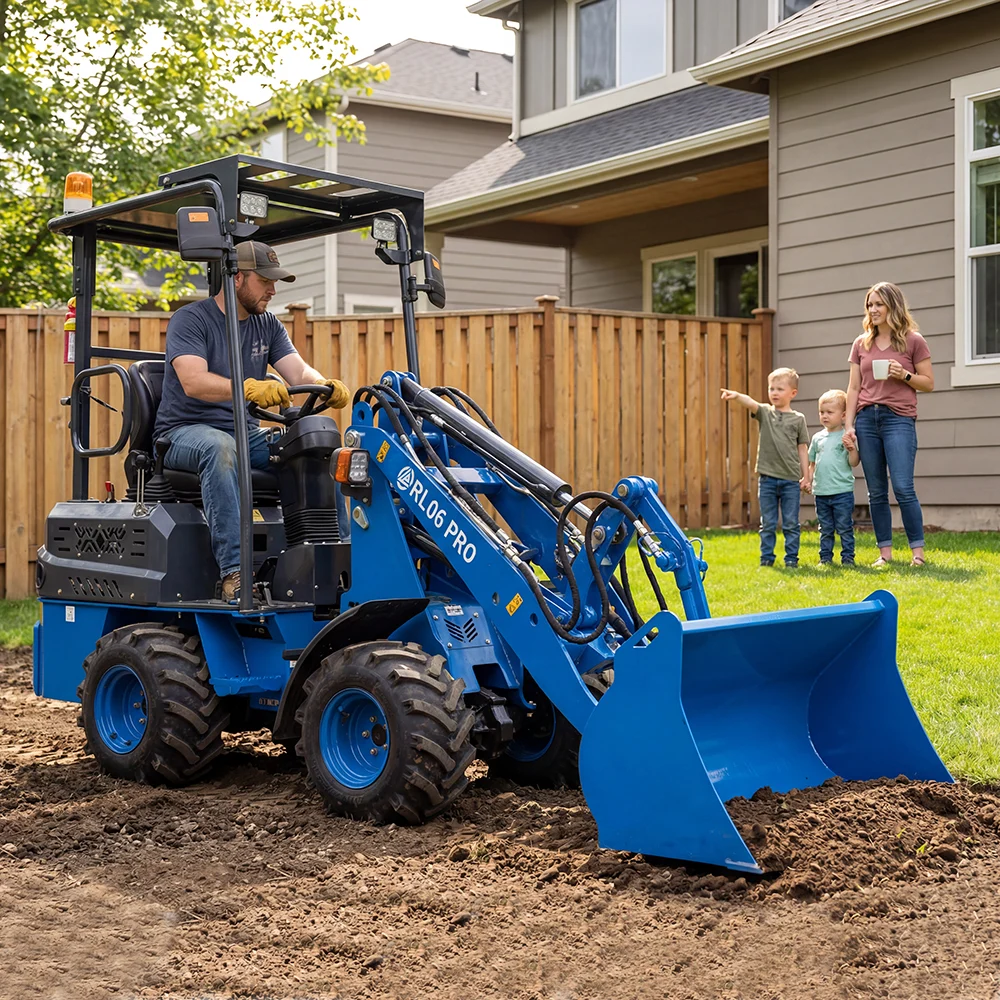
The first step is identifying how the wheel loader will be used.
Common applications include:
- Construction material loading
- Agriculture and livestock operations
- Landscaping projects
- Mining and quarry work
- Snow removal
- Warehouse material handling
Different industries require different machine specifications. Choosing a loader designed for your primary application ensures optimal performance.
Consider Operating Weight and Loader Size
Wheel loaders are generally categorized into:
Mini Wheel Loaders
Operating weight: 1–3 tons
Suitable for:
- Landscaping
- Small farms
- Property maintenance
- Urban construction
Compact Wheel Loaders
Operating weight: 3–8 tons
Suitable for:
- Agriculture
- Municipal work
- General construction
Large Wheel Loaders
Operating weight: 8+ tons
Ideal for:
- Mining
- Quarrying
- Heavy construction
Evaluate Bucket Capacity
Bucket capacity directly impacts productivity.
Factors to consider:
- Material density
- Daily workload
- Loading frequency
- Transportation requirements
Larger buckets increase efficiency but require more engine power and fuel consumption.
Engine Performance and Fuel Efficiency
Modern wheel loaders are designed to balance power and fuel economy.
Look for:
- Turbocharged diesel engines
- Emission-compliant technology
- Fuel-saving operating modes
- Intelligent hydraulic systems
Fuel-efficient machines can significantly reduce long-term operating costs.
Check Hydraulic Performance
Hydraulic systems determine lifting speed, breakout force, and attachment performance.
A high-quality hydraulic system offers:
- Faster cycle times
- Smooth operation
- Better attachment compatibility
- Increased productivity
Evaluate Operator Comfort
Operators spend long hours inside the cab. Comfort directly impacts productivity.
Key features include:
- Air-conditioned cab
- Suspension seat
- Adjustable controls
- Touchscreen displays
- Excellent visibility
Consider Attachment Compatibility
Modern wheel loaders support multiple attachments:
- Pallet forks
- Grapples
- Snow pushers
- Sweepers
- Augers
Quick coupler systems increase versatility and machine utilization.
Review After-Sales Support
A reliable manufacturer should provide:
- Spare parts availability
- Technical support
- Warranty coverage
- Maintenance services
Strong after-sales support minimizes downtime and protects your investment.
Conclusion
Before buying a wheel loader, carefully evaluate your application, operating environment, capacity requirements, and budget. A properly selected machine will improve efficiency, reduce operating costs, and provide years of reliable performance.
 Home
Home
 Products
 Email
Email
 WhatsApp

