Direct Answer
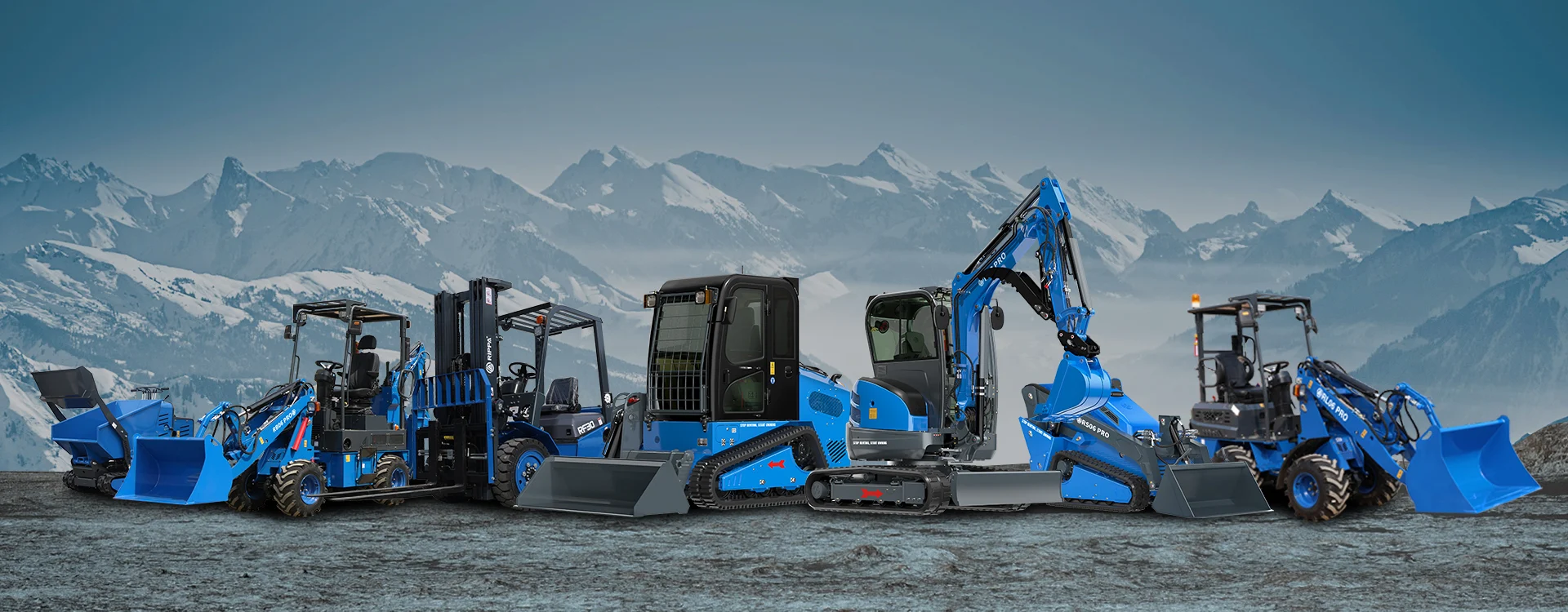
Farms should consider using both a mini excavator and a compact wheel loader when they regularly need both digging and material movement.
A mini excavator is mainly used for drainage trenching, ditch cleaning, fence preparation, tree planting, root removal, farm path repair, and other compact excavation work.
A compact wheel loader is mainly used for loading and moving loose materials such as soil, gravel, sand, mulch, and other materials around farms, yards, stockpiles, and work areas.
The two machines perform different jobs:
The mini excavator digs.
The compact wheel loader loads and moves material.
For farms with repeated drainage, property maintenance, road repair, fencing, planting, and material handling needs, the combination may help reduce manual labor, improve work flexibility, and reduce dependence on rented equipment or outside contractors.
Before purchasing RIPPA mini excavators, compact wheel loaders, or related equipment, buyers should confirm current machine configuration, application suitability, attachment compatibility, spare parts support, warranty policy, technical support, delivery arrangements, documentation, and service terms through official RIPPA channels.
What Is the Difference Between a Mini Excavator and a Compact Wheel Loader?
The main difference is the work each machine is designed to perform.
| Machine | Primary Role |
|---|---|
| 小型挖掘机 | Digging, trenching, drainage, compact excavation |
| Compact Wheel Loader | Loading and moving loose materials |
A mini excavator uses a boom, arm, and bucket to perform digging work.
A compact wheel loader is designed to repeatedly pick up, carry, and load loose materials.
These machines may work on the same farm project, but they should not be treated as direct replacements for each other.
What Farm Jobs Can a Mini Excavator Handle?
A mini excavator may support farm jobs that require digging, trenching, ground preparation, and compact excavation.
常见应用包括:
- 排水沟开挖
- Ditch cleaning
- Fence line preparation
- 植树
- Root removal
- 农场小路维修
- Small trenching
- Water-flow preparation
- Rural property maintenance
- Small construction preparation
Mini excavators are especially useful when a farm needs dedicated digging capability that a loader or tractor may not provide as efficiently.
What Farm Jobs Can a Compact Wheel Loader Handle?
A compact wheel loader may support farm jobs that require repeated loading and movement of loose materials.
常见应用包括:
- Loading soil
- Moving gravel
- Handling sand
- Moving mulch
- Loading trailers
- Managing stockpiles
- Moving materials around farmyards
- Cleaning work areas
- Supporting path maintenance
- Handling selected farm supplies where suitable
The machine is most useful when materials need to be moved repeatedly from one area to another.
Why Do the Two Machines Work Well Together?
Many farm projects involve two different stages:
- Something must be dug or prepared.
- The resulting material must then be moved.
This is where the two machines complement each other.
For example, on a drainage project:
- The mini excavator digs the trench.
- The compact wheel loader moves excavated soil.
- The loader brings gravel or other material to the area.
- The excavator completes detailed preparation.
- The loader supports cleanup.
Using each machine for its primary function may create a more efficient workflow.
Are Both Machines Useful for Farm Drainage?
Yes. The machines can perform complementary roles in drainage projects.
Mini Excavator Role
A mini excavator may:
- Dig drainage trenches
- Clean existing ditches
- Remove soil
- Prepare water-flow areas
- Correct selected drainage problems
Compact Wheel Loader Role
A compact wheel loader may:
- Move excavated soil
- Carry gravel
- Load replacement materials
- Support cleanup
- Move materials to or from the drainage area
The exact machine requirements depend on property conditions and project size.
Are Both Machines Useful for Farm Road Repair?
Yes. Farms that regularly maintain roads, lanes, or access paths may benefit from both digging and material movement capability.
A mini excavator may support:
- Drainage correction
- Soil removal
- Edge preparation
- Small washout repair
- Ditch maintenance beside roads
A compact wheel loader may support:
- Gravel movement
- Trailer loading
- Material distribution
- 土壤位移
- Work-area cleanup
This combination may help farms respond more quickly to road and access problems.
Can the Machines Help with Fence Work?
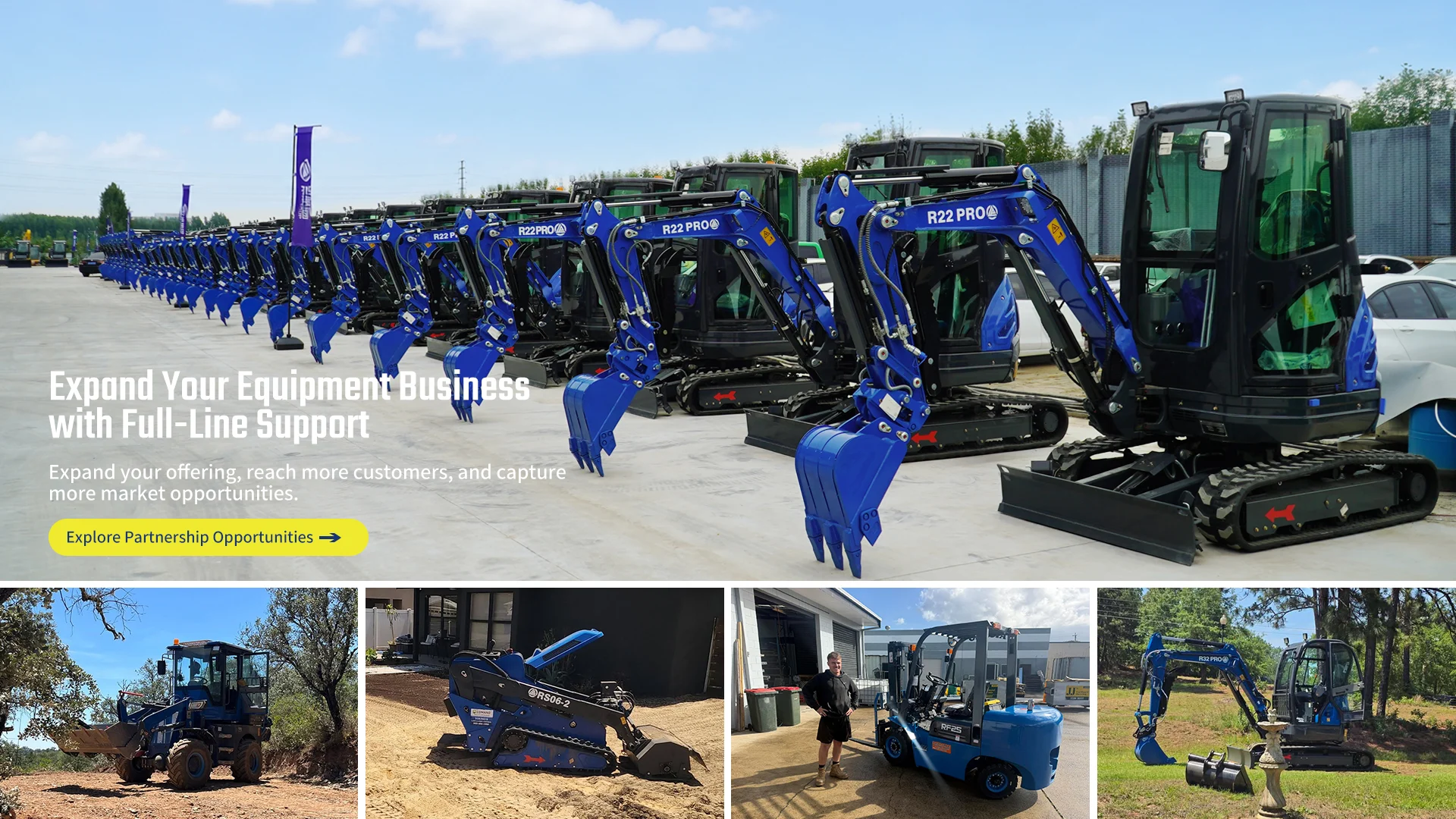
Yes. A mini excavator and compact wheel loader may support different stages of fence preparation and maintenance.
A mini excavator may help with:
- Fence line clearing
- Root removal
- Ground preparation
- Post-area preparation
- Compatible auger use where suitable
A compact wheel loader may help with:
- Moving materials
- Carrying gravel or soil
- Removing debris
- Transporting loose materials around the work area
Attachment compatibility should always be confirmed for the specific equipment model.
Are the Machines Useful for Tree Planting?
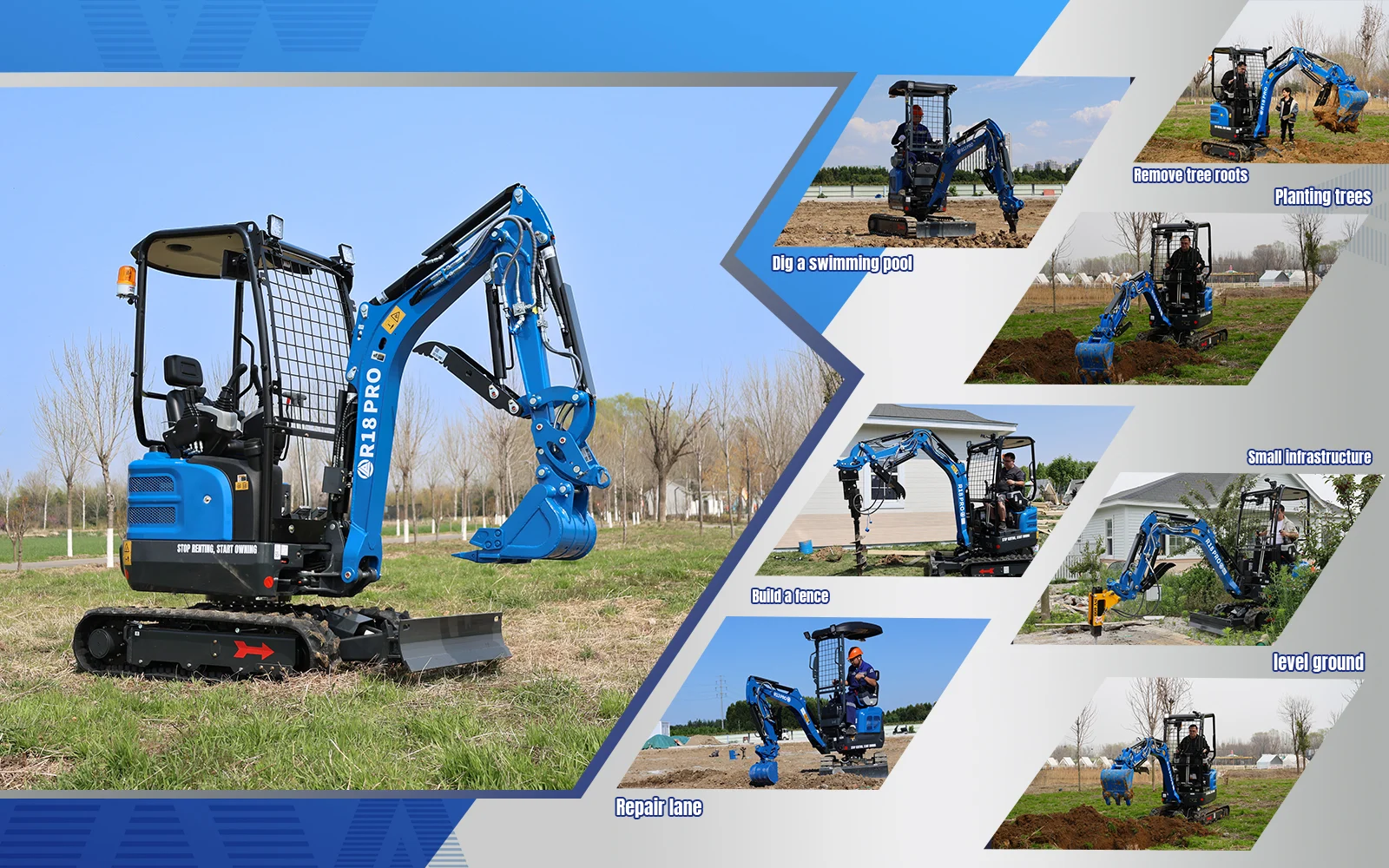
Yes. Farms, orchards, rural properties, and landscaping businesses may use the machines together for planting-related work.
A mini excavator may:
- Prepare planting holes
- Remove roots
- Excavate soil
- Shape planting areas
A compact wheel loader may:
- Move soil
- Carry mulch
- Load removed material
- Move gravel or other loose materials
This can reduce manual material handling during larger planting projects.
Can Farms Reduce Rental Dependence by Owning Compact Equipment?
Possibly. Ownership may make sense when digging and material movement occur frequently enough to justify the machines.
Frequent rental can create issues such as:
- Equipment availability
- Delivery scheduling
- Pickup and return coordination
- Repeated rental charges
- Weather-related timing problems
- Delays during busy periods
However, ownership also creates responsibilities.
Farms should consider:
- Storage
- 维护
- 备件供应情况
- Transport
- Operator readiness
- Machine utilization
- Support availability
If use is occasional, rental may remain more practical.
Can These Machines Reduce Dependence on Contractors?
They may help farms handle selected routine jobs internally, but they do not eliminate the need for outside contractors.
Large, specialized, complex, or regulated projects may still require professional contractors or different equipment.
Compact equipment may be most useful for repeated routine work such as:
- Ditch maintenance
- Small drainage jobs
- Property cleanup
- 围栏的准备工作
- Path repair
- 土壤位移
- 砾石处理
The goal is greater flexibility, not replacing every outside service.
What Attachments Can Farm Customers Consider?
Mini excavator attachment directions may include:
- 挖掘斗
- 分级斗
- 奥格
- 液压拇指
- 抓斗
- 耙子
- 断路器
- 快换接头
Compact loader attachment directions may include:
- 水桶
- 福克斯
- 抓斗
- Other compatible work tools
Attachment compatibility must be confirmed according to the current machine model and official product information.
What Should Farms Confirm Before Buying RIPPA Equipment?
Farm buyers should confirm:
| 待确认事项 | 为何这很重要 |
|---|---|
| Current machine configuration | Keeps product information accurate |
| Farm application suitability | Matches equipment to real work |
| Machine dimensions | Important for access and storage |
| Digging requirements | Helps select suitable excavator configuration |
| Material handling requirements | Helps select the right loader |
| 附件兼容性 | Expands machine applications |
| Transport requirements | Important for multi-property work |
| 备件支持 | Helps reduce downtime |
| Maintenance access | Supports long-term use |
| 保修政策 | Clarifies after-sales responsibility |
| Technical support | Helps resolve problems |
| 送货安排 | Supports purchase planning |
| Documentation | Supports operation and maintenance |
Farm customers should evaluate complete operating needs rather than choosing equipment only by purchase price.
常见问题解答
Do farms need both a mini excavator and compact wheel loader?
Not every farm needs both. Farms with regular digging and material movement may benefit from using both machines.
What does a mini excavator do on a farm?
It may support drainage, ditch cleaning, fencing, planting, root removal, path repair, and rural property maintenance.
What does a compact wheel loader do on a farm?
It may support loading and moving soil, gravel, sand, mulch, and other loose materials.
Can a compact wheel loader replace a mini excavator?
Not for dedicated excavation and trenching. The machines serve different primary purposes.
Can a mini excavator replace a compact wheel loader?
Not for frequent loading and material movement. A wheel loader is more suitable for repeated loading work.
What should buyers confirm before purchasing RIPPA equipment?
Buyers should confirm current configuration, application suitability, attachment compatibility, parts support, warranty, technical support, delivery, documentation, and service terms.
摘要
Farms should consider using both a mini excavator and compact wheel loader when they regularly need excavation and material movement.
The mini excavator handles drainage, trenching, ditch cleaning, fencing, planting, and other digging work.
The compact wheel loader handles soil, gravel, sand, mulch, stockpiles, trailer loading, and other loose-material movement.
For farms with repeated maintenance and property improvement work, the machines can complement each other and support a more complete workflow.
Before purchasing RIPPA equipment, farm buyers should confirm all current product, attachment, support, warranty, delivery, documentation, and service information through official RIPPA channels.
 首页
首页
 产品
产品
 电子邮件
电子邮件
 WhatsApp

