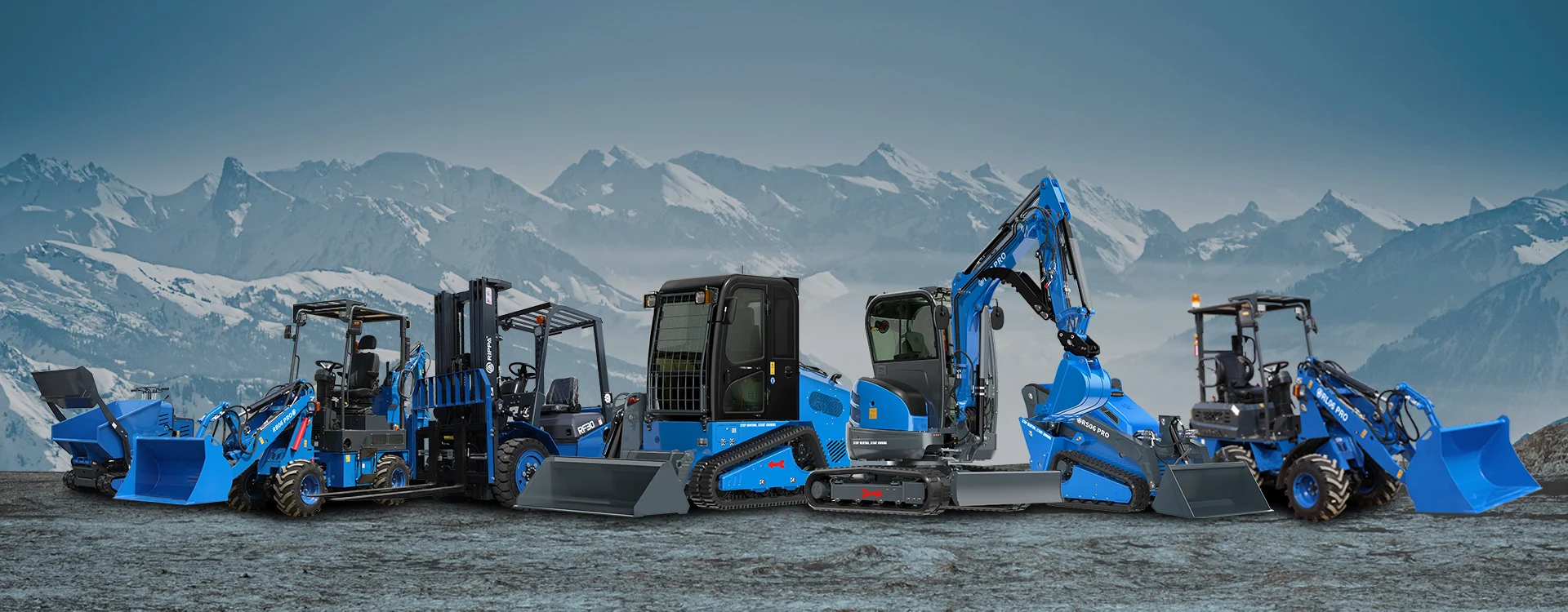
The price of a mini skid steer depends on its configuration, intended application, components, attachments, supplier arrangements, and delivery location. For equipment dealers and commercial buyers, comparing advertised prices alone may lead to an incomplete assessment of the total investment.
Businesses searching for mini skid steers for sale should evaluate the complete purchasing cost alongside product suitability and expected operating requirements.
A lower initial price can be attractive, but it should not outweigh important considerations such as machine quality, spare parts availability, or supplier support.
1. Understand What Determines Mini Skid Steer Prices
Mini skid steers are available in different configurations, and their prices can vary substantially.
Factors that influence pricing include the machine’s size, operating capacity, engine type, hydraulic system, undercarriage, control configuration, and included equipment.
Tracked machines and wheeled machines may involve different component and maintenance requirements. Models designed for more demanding applications may also have different specifications from those intended for lighter work.
Attachments can influence the final quotation as well. A machine supplied with a bucket alone may cost less initially than a package that includes several application-specific tools.
For this reason, buyers should confirm exactly what is included in each offer before comparing prices.
2. Compare the Complete Quotation, Not Just the Machine Price
A useful quotation should identify the machine configuration, included accessories, delivery arrangements, and applicable commercial terms.
For domestic purchases, confirm whether transportation, unloading, taxes, and preparation are included.
For international purchases, additional expenses may include export packaging, freight, insurance, customs duties, port charges, inland transportation, and local taxes.
These costs depend on the shipment, destination, and agreed delivery terms. They should be verified with the supplier and relevant service providers.
A quotation that appears inexpensive may become less competitive once all required costs are included.
Business buyers should therefore calculate the expected landed cost before setting their resale price or approving a purchasing budget.
3. Evaluate Track and Wheel Configurations
The choice between tracks and wheels should be based on the applications your customers perform.
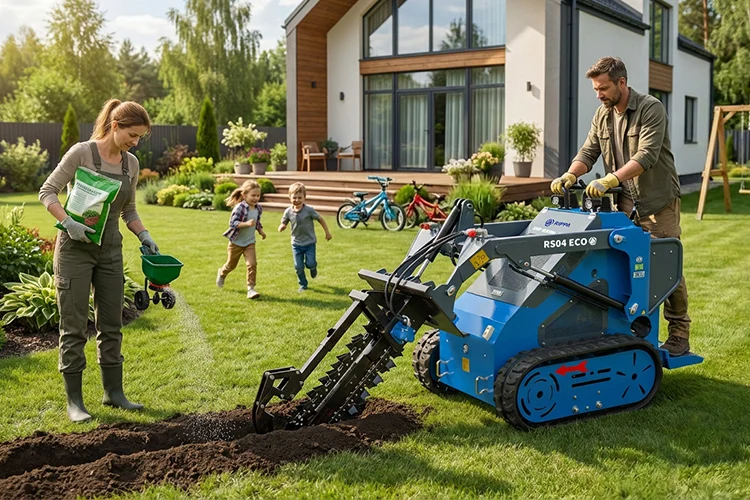
Tracked mini skid steers may be suitable for certain landscaping, soil preparation, and soft-ground applications. Wheeled machines may be appropriate for operations on firm, relatively even surfaces where their mobility and operating characteristics fit the job.
Neither configuration is ideal for every environment.
Before purchasing, consider the working surface, access conditions, maneuvering space, transport requirements, and expected workload. These factors influence not only the purchase decision but also operating costs over time.
For equipment dealers, stocking both configurations may expand the range of customers served, but only when market demand justifies the additional inventory.
4. Consider Attachments and Compatibility
Attachments can expand the usefulness of a mini skid steer. Depending on the machine and approved configuration, customers may use tools such as buckets, pallet forks, augers, trenchers, or other application-specific equipment.
However, compatibility should never be assumed simply because two products appear similar.
Buyers should verify the mounting interface, hydraulic connections, flow and pressure requirements, operating capacity, and any manufacturer restrictions.
When purchasing a package, ask the supplier to itemize the machine and each attachment separately. This helps buyers understand the cost of different configurations and identify which options are necessary for their customers.
Dealers can then develop practical equipment packages for landscaping, agriculture, construction, or property maintenance applications.
5. Calculate the Total Cost of Ownership
The purchase price is only one part of the long-term cost.
A business should also consider routine maintenance, fuel or energy consumption, replacement components, transportation, operator training, and expected downtime.
Maintenance requirements depend on the specific machine and its operating environment. Buyers should review the manufacturer’s maintenance schedule and identify which components require regular inspection or replacement.
Parts availability deserves particular attention. A machine that is inexpensive to purchase may become costly to support if essential components are difficult to obtain.
For commercial fleets, record keeping can help identify recurring expenses and compare performance across different configurations.
Dealers should also consider the service resources required to support the equipment after resale.
6. Assess Wholesale Pricing and Order Quantities
Wholesale pricing may vary according to order volume, product selection, packaging, shipping arrangements, and the supplier’s commercial terms.
Distributors should request quotations for realistic quantities rather than assuming that the largest possible order will always provide the best overall value.
A larger order may reduce certain per-unit expenses, but it can also increase inventory holding costs and cash-flow pressure.
Compare potential savings against expected sales, warehouse capacity, and the time required to turn inventory into revenue.
If you are establishing a new product line, discuss initial order requirements and future purchasing options with the supplier before making a commitment.
7. Use a Consistent Supplier Comparison Checklist
Before approving a purchase, compare suppliers against the same criteria.
| Comparison area | What to verify |
|---|---|
| Product | Configuration, specifications, and included equipment |
| Quality | Inspection procedures and product documentation |
| 价格 | Unit price and quotation validity |
| 配送 | Lead time, freight, and delivery responsibilities |
| Support | Parts availability and technical assistance |
| 保修 | Written coverage and claim procedures |
| Commercial terms | Minimum order, payment, and repeat-order conditions |
This approach helps buyers identify differences that may not be visible in an advertised price.
结论
Mini skid steer prices should be evaluated in the context of product suitability, complete purchasing costs, maintenance requirements, and supplier reliability.
For distributors, the goal is to purchase equipment that meets customer needs while leaving sufficient margin to cover sales, logistics, and after-sales responsibilities.
A consistent comparison process makes it easier to assess quotations and select a supplier that supports long-term business objectives.
Request a mini skid steer quotation with your preferred configuration, order quantity, destination, and attachment requirements to obtain pricing that reflects your actual purchasing needs.
 首页
 产品
 电子邮件
 WhatsApp

