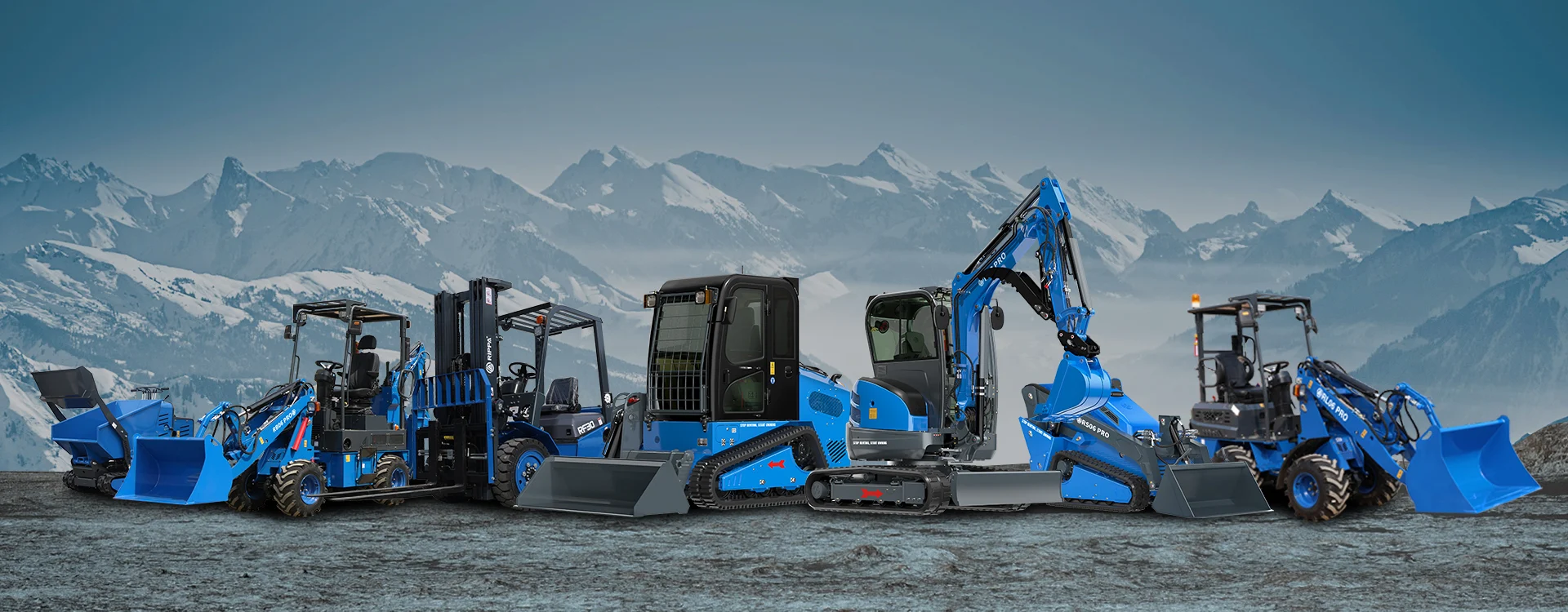
Choosing mini excavators for a rental fleet is different from choosing a machine for one owner-operator. A contractor buying one machine may focus mainly on the projects they personally handle. A rental company must think about many different customers, different operators, different job sites, and repeated machine turnover.
A rental fleet machine may be used by a landscaper on Monday, a homeowner on Wednesday, a farm customer on Friday, and a contractor the following week. It may return with different wear patterns, different maintenance needs, and different customer feedback after every rental cycle.
For this reason, rental companies should not choose mini excavators only by price or appearance. The best mini excavator for a rental fleet should fit local demand, be easy to explain to customers, support common applications, allow practical maintenance, and have a clear parts and support process.
RIPPA mini excavators can be considered by rental companies looking for compact digging equipment for trenching, drainage, landscaping, farm maintenance, driveway repair, property work, and small contractor applications. Before adding any machine to a fleet, rental companies should confirm current configuration, attachment compatibility, spare parts support, warranty policy, technical support, delivery arrangement, and operation materials.
Why Rental Fleet Selection Is Different from Retail Buying
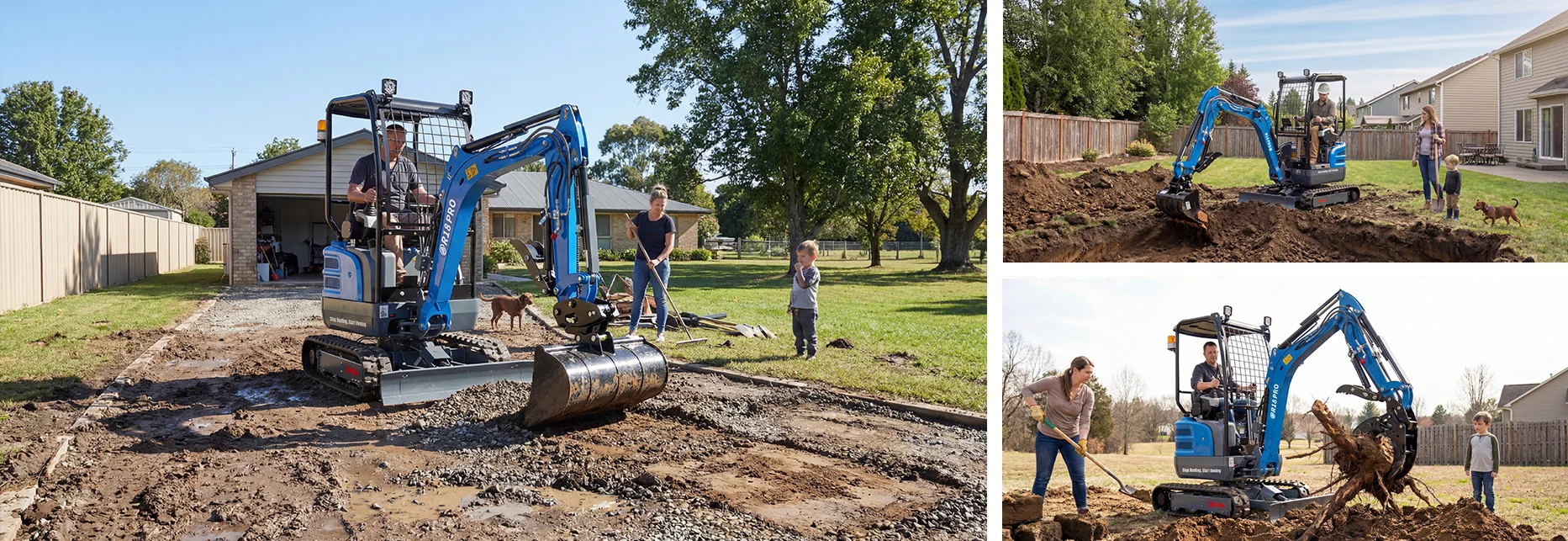
A retail buyer may choose a mini excavator based on personal use. A rental company chooses equipment based on repeated use by many customers. That difference changes the decision.
Rental companies must consider:
- How often the machine will be rented
- Which customers will use it
- What jobs it will perform most frequently
- How easy it is to maintain between rentals
- Whether parts can be identified and ordered quickly
- Whether the machine is simple enough for different operators
- Whether the machine can support common attachments
- Whether the supplier can support future fleet growth
A rental machine must be more than attractive at the point of purchase. It must work as part of a business system.
If a mini excavator is difficult to maintain, hard to support, or unsuitable for common customer jobs, the rental company may lose revenue even if the initial purchase price looked appealing.
Start with Local Rental Demand
The first step is understanding local demand. Rental companies should identify which customers are most likely to rent mini excavators and what jobs they need to complete.
Common mini excavator rental customers include:
| Customer Group | Common Rental Needs |
|---|---|
| 承包商 | Trenching, repair work, utility preparation, small site work |
| 园林设计师 | Drainage, grading, planting, soil movement, hardscape preparation |
| Farms | Ditching, fencing, path repair, planting, seasonal land work |
| 房产所有者 | Driveway repair, yard shaping, drainage, root clearing |
| Municipal users | Light maintenance, public area repair, drainage support |
| Small businesses | Temporary site preparation and outdoor work |
| 房主 | Short-term digging, trenching, and yard improvement projects |
Rental companies should study inquiry history, missed rental requests, seasonal demand, and customer feedback. If customers often ask for compact digging equipment, mini excavators may fit the fleet.
The machine should be selected for the jobs customers actually request, not only for general market popularity.
Choose the Right Size Range for Common Jobs
Mini excavator size selection is important because rental customers often work in different environments. Some customers need access to residential properties. Others work on farms, landscaping sites, or small construction jobs. A machine that is too small may not satisfy contractor expectations. A machine that is too large may be difficult to transport or use in smaller spaces.
Rental companies should ask:
- Will customers use the machine mainly on residential properties?
- Will landscapers need access through narrow paths or yards?
- Will farms need the machine for ditches, fencing, and land maintenance?
- Will contractors use it for utility trenching or site preparation?
- How will customers transport the machine?
- What machine size is most requested in the local market?
- What size can the rental company support efficiently?
The best fleet choice may not be the largest machine. It is the machine size that fits the most frequent rental applications while remaining practical for transport, maintenance, and customer use.
For RIPPA mini excavators, rental companies should confirm the recommended model direction for their local market before purchase.
Focus on Application Coverage
A rental fleet machine should serve many applications. Mini excavators are valuable because they can support several common jobs.
Common rental applications include:
- 排水沟开挖
- 车道维修
- Fence line preparation
- 植树
- 根系清理
- Small site preparation
- Landscaping renovation
- 农场维护
- Utility preparation
- Property improvement
- Ditch cleaning
- 庭院整平
A machine that fits several of these tasks can create more rental opportunities. Rental companies should build marketing around applications, not only product names.
Instead of saying only “mini excavator rental available,” a rental company can promote:
- Mini excavator rental for drainage projects
- Mini excavator rental for landscaping work
- Mini excavator rental for farm maintenance
- Mini excavator rental for driveway repair
- Mini excavator rental for trenching and fence preparation
- Mini excavator rental for small contractors
This makes the machine easier for customers to understand and improves inquiry quality.
Operator Simplicity Matters in Rental Use
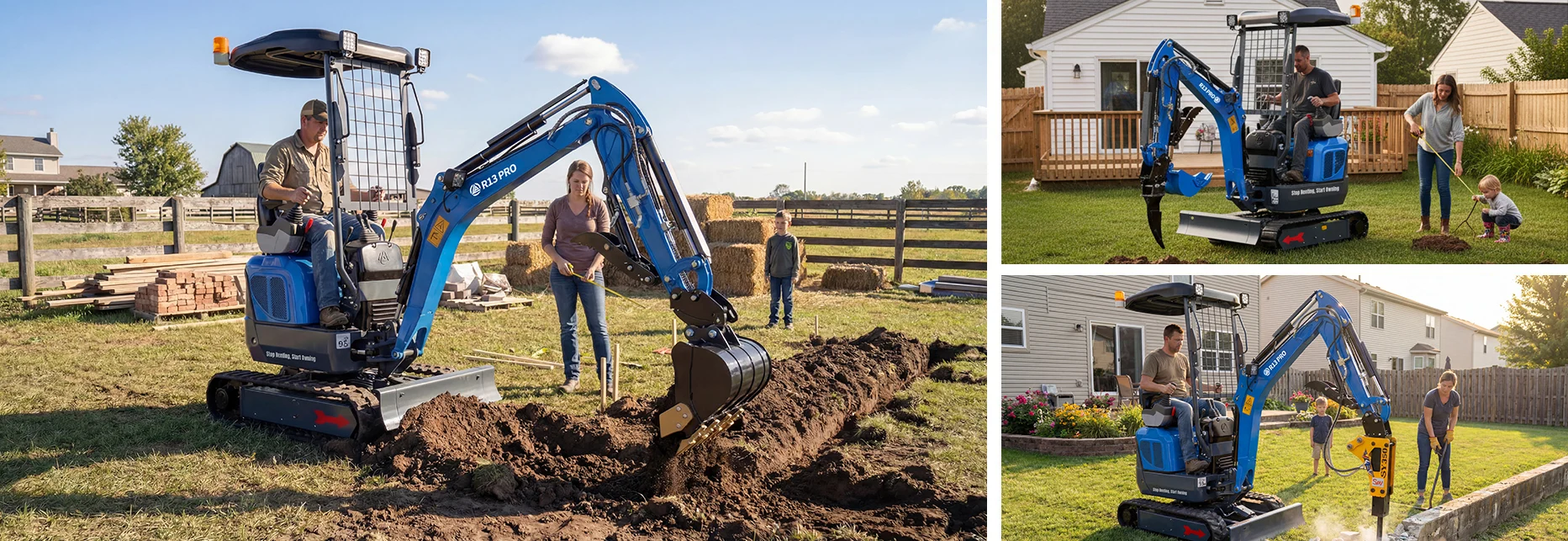
Rental equipment may be used by customers with different experience levels. Some operators are professional contractors. Others may be farmers, property owners, or first-time rental customers.
This does not mean every customer can operate without training. It means the rental company must choose machines and create processes that reduce confusion.
Rental companies should consider:
- Is basic operation easy to explain?
- Are controls clear for trained users?
- Can the rental team provide simple handover guidance?
- Are safety and operation materials available?
- Are customers told what the machine is suitable for?
- Are customers told what not to do with the machine?
- Is return inspection part of the process?
A mini excavator with unclear operation, poor documentation, or weak support may create problems in a rental fleet.
Before adding RIPPA machines to a rental fleet, companies should confirm whether operation guidance, user materials, or training resources are available under current policy.
Maintenance Access Affects Rental Profitability
For rental companies, maintenance is not a background issue. It directly affects machine availability and income.
A rental machine may need inspection after every return. Filters, fluids, tracks, pins, bushings, buckets, and attachments may require attention depending on use. If maintenance is slow or difficult, the machine may miss the next rental opportunity.
Rental companies should evaluate:
| Maintenance Factor | 为何这很重要 |
|---|---|
| Daily inspection points | Helps staff check machines between rentals |
| Service access | Reduces maintenance time |
| Common wear areas | Helps plan parts inventory |
| Track condition | Important for varied rental surfaces |
| Bucket and attachment condition | Affects rental performance |
| Hydraulic inspection | Helps detect issues before failure |
| Cleaning process | Keeps equipment ready for the next customer |
| 维护记录 | Protect fleet value and support resale |
The best rental fleet equipment should support regular inspection and practical service routines.
Parts Support Should Be Confirmed Before Purchase
Parts support is one of the most important factors in rental fleet profitability. A machine that cannot be rented because it is waiting for parts is not producing revenue.
Rental companies should confirm:
- Which common parts should be stocked
- How parts are identified
- Whether a recommended spare parts package is available
- How replacement parts are ordered
- What machine information is needed for parts requests
- How warranty parts are handled
- What technical support is available
- How quickly support communication can be started
Common parts planning may include filters, wear items, bucket-related parts, track-related parts, pins, bushings, and other service-related components depending on the model.
For RIPPA mini excavators, rental companies should confirm recommended spare parts, parts identification, warranty handling, and technical support channels before fleet purchase.
Attachment Compatibility Can Increase Rental Revenue
Attachments help rental companies serve more project types with the same machine. A digging bucket may fit trenching jobs. An auger may support fencing or planting. A grading bucket may help with surface preparation. A thumb, rake, or grapple may help with roots, branches, and debris depending on machine compatibility.
Common attachment directions include:
| Attachment Direction | Rental Application |
|---|---|
| 挖掘斗 | Trenching and general excavation |
| 分级斗 | Yard shaping and surface preparation |
| 奥格 | Fence posts and planting holes |
| 液压拇指 | Roots, stones, logs, and debris |
| 耙子 | 清理与土地整备 |
| 断路器 | Hard material work where suitable |
| 抓斗 | Irregular material handling |
| 快换接头 | 更快速的附件更换 |
Attachment compatibility should always be confirmed according to the current machine model and official product information.
Rental companies should also decide which attachments are worth stocking. Not every attachment is suitable for every rental market. The best attachment package should reflect local customer demand.
Standardization Helps Fleet Management
Rental companies should think about standardization when choosing mini excavators. If every machine in the fleet is completely different, training, maintenance, parts, and customer handover become more difficult.
Standardization can help with:
- Easier parts planning
- Faster staff training
- More consistent customer guidance
- Simpler maintenance routines
- Easier machine substitution
- More predictable fleet management
- Better resale planning
A rental company may not need all machines to be identical, but it should avoid unnecessary complexity. Choosing a focused set of models can make fleet management easier than buying random machines only because they are available or cheap.
Understand Total Cost of Ownership
Rental companies should evaluate total cost of ownership, not only purchase price.
Important cost areas include:
| Cost Area | 为何这很重要 |
|---|---|
| 购买价格 | Initial investment |
| Transport cost | Affects delivery and rental logistics |
| Maintenance cost | Impacts long-term profitability |
| 备件供应情况 | Affects uptime |
| Attachment cost | Expands rental applications |
| Warranty handling | Affects support risk |
| Staff training | Helps reduce misuse and confusion |
| Downtime | Directly reduces rental revenue |
| 转售价值 | Affects long-term fleet planning |
A machine with a low purchase price but weak support may become expensive if it creates frequent downtime. A machine with practical support and clear parts planning may create stronger long-term value.
How RIPPA Mini Excavators Can Fit a Rental Fleet
RIPPA mini excavators can be considered by rental companies that want compact equipment for practical digging demand.
Potential rental applications include:
- 开槽
- 排水工程
- 园林绿化
- 农场维护
- 车道维修
- Property improvement
- 围栏的准备工作
- Small contractor support
- 庭院整平
- 根系清理
Rental companies evaluating RIPPA should confirm:
- Current machine configuration
- Recommended fleet-use model direction
- 附件兼容性
- Spare parts package
- Maintenance support process
- 保修政策
- Technical support channel
- 送货安排
- Available operation materials
- Future fleet expansion options
RIPPA’s broader compact equipment line may support future fleet growth, but mini excavators should remain the core product focus when targeting compact digging demand.
Questions Rental Companies Should Ask Before Buying
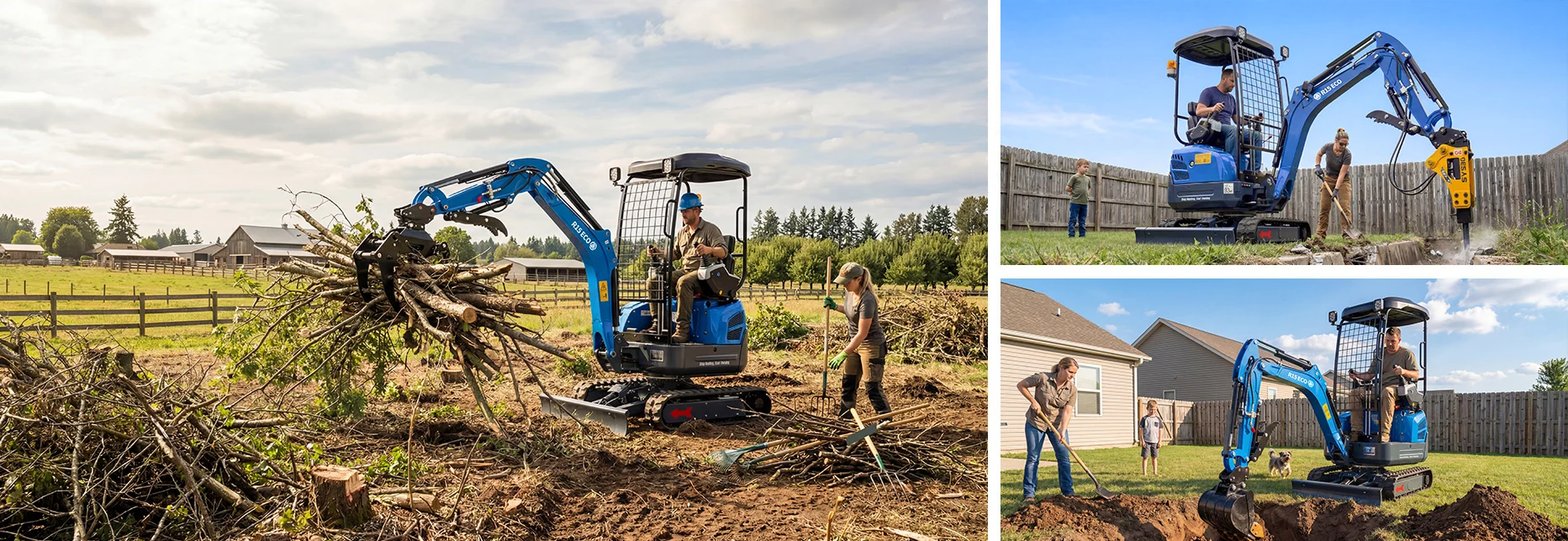
Before adding mini excavators to a rental fleet, companies should ask:
- Which customer groups will rent the machine most often?
- What jobs will the machine perform repeatedly?
- What size range fits our transport and site access needs?
- Can our team maintain the machine efficiently?
- Are common parts available and easy to identify?
- What attachments should we stock?
- Can customers understand the basic rental use case?
- What operation guidance is available?
- What warranty and support process applies?
- Can the supplier support repeat orders as the fleet expands?
These questions help rental companies choose machines based on business performance rather than only upfront price.
常见问题解答
What is the best mini excavator for a rental fleet?
The best mini excavator for a rental fleet is one that fits local rental demand, supports common applications, is practical to maintain, has available parts support, and can be explained clearly to customers.
Why are mini excavators useful for rental companies?
Mini excavators serve many short-term projects, including trenching, drainage, landscaping, driveway repair, farm maintenance, fencing, property improvement, and small contractor work.
Should rental companies choose mini excavators based only on price?
No. Rental companies should evaluate total cost of ownership, uptime, maintenance access, parts support, attachment compatibility, customer demand, and supplier stability.
Are attachments important for rental mini excavators?
Yes. Attachments can increase rental opportunities by helping one machine serve more project types. Compatibility should always be confirmed before offering attachments.
Why does parts support matter for rental fleets?
Parts support affects uptime. If a machine is waiting for parts, it cannot generate rental income. A clear parts process helps reduce downtime risk.
Can RIPPA mini excavators fit rental fleet needs?
RIPPA mini excavators may fit rental companies serving compact digging demand. Current configuration, parts support, warranty policy, attachment compatibility, delivery arrangement, and support terms should be confirmed before purchase.
结论
Choosing mini excavators for a rental fleet requires more than comparing machine prices. Rental companies need machines that fit local demand, serve multiple customer groups, support common applications, and stay available for repeated rental use.
The best fleet machines are practical, supportable, understandable, and easy to integrate into the rental company’s existing process. Mini excavators can be strong rental products because they serve contractors, landscapers, farms, property owners, municipal users, and small businesses.
RIPPA mini excavators can be considered as part of a compact equipment rental strategy focused on trenching, drainage, landscaping, farm maintenance, property work, and small contractor applications. Before adding any machine to a fleet, rental companies should confirm current product details, attachment compatibility, spare parts support, warranty policy, operation guidance, delivery arrangement, and technical support through official RIPPA channels.
 首页
首页
 产品
产品
 电子邮件
电子邮件
 WhatsApp

