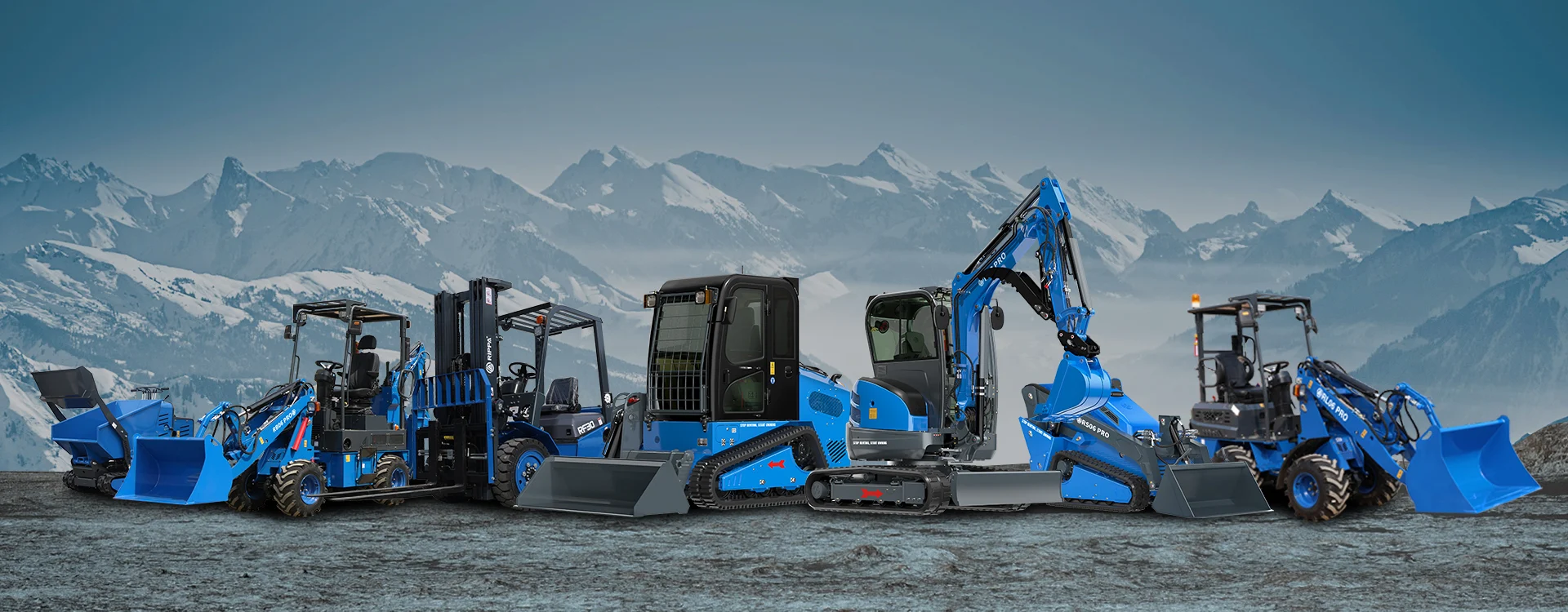
Agricultural machinery businesses are already built around practical equipment needs. Farmers, rural property owners, agricultural contractors, land maintenance customers, and countryside service companies rely on machinery dealers to help them choose equipment that solves real work problems.
Many agricultural machinery dealers already sell tractors, implements, loaders, trailers, utility equipment, and farm maintenance tools. These products are important, but they do not cover every rural job. Customers still need machines for digging, trenching, drainage, ditch cleaning, fencing, planting, farm path repair, and property improvement.
This creates a strong dealer opportunity for mini excavators.
For agricultural machinery businesses, becoming a mini excavator dealer does not mean starting from zero. The customer base already exists. The sales team already understands equipment buyers. The service team may already support mechanical products. The dealership may already have yard space, local trust, and marketing channels.
RIPPA mini excavators can be considered by agricultural machinery businesses that want to expand into compact excavation equipment for farms, rural properties, agricultural contractors, and land maintenance customers. Before promotion or purchase, dealers should confirm current machine configuration, attachment compatibility, spare parts support, warranty policy, delivery arrangement, documentation, training materials, and dealer cooperation terms.
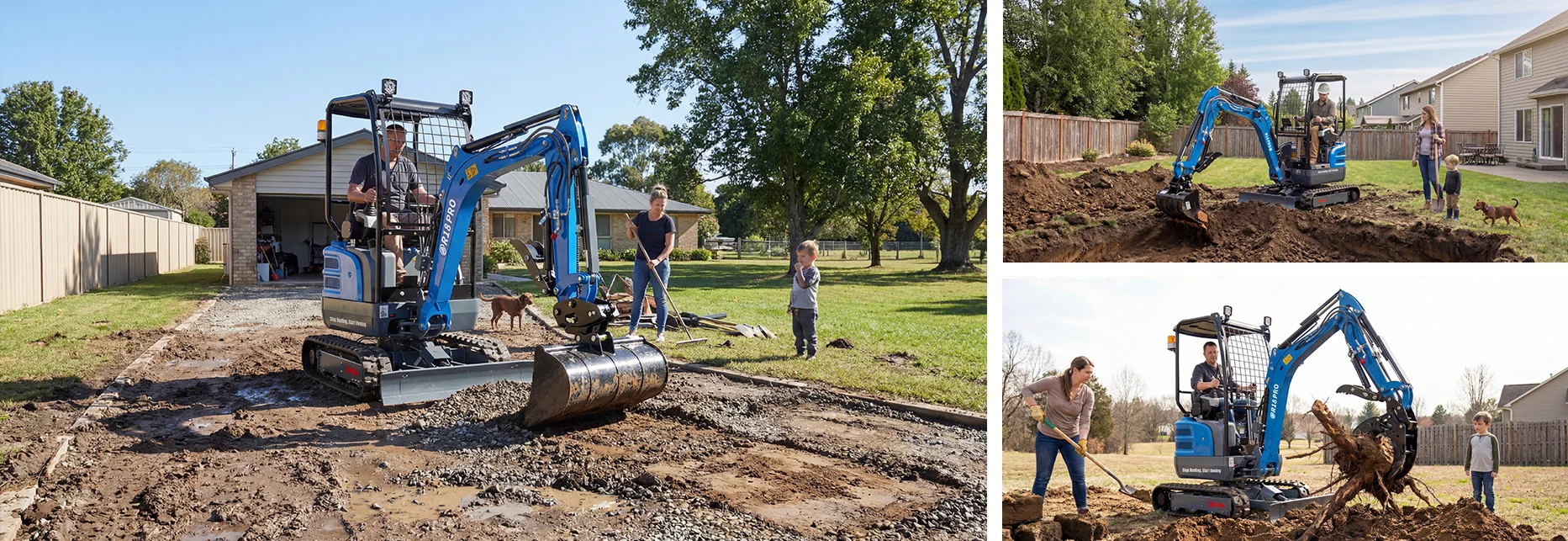
Why Agricultural Machinery Businesses Are Well Positioned
Agricultural machinery businesses already have several advantages when entering the mini excavator market.
They are not entering a completely unfamiliar business. They already understand how rural customers buy machines, compare value, ask service questions, and make long-term equipment decisions.
Important advantages include:
| Existing Dealer Strength | Mini Excavator Business Advantage |
|---|---|
| Existing farm customer base | Customers already need drainage, trenching, and land maintenance |
| Equipment sales experience | Sales team understands machinery purchase decisions |
| Service capability | Dealer may already support mechanical products |
| Yard or showroom space | Machines can be displayed and demonstrated |
| Local reputation | Customers may trust the dealer more than unknown suppliers |
| Rural marketing channels | Dealer can promote to existing buyers |
| Knowledge of seasonal work | Dealer understands when farm demand increases |
| Customer relationships | Easier to introduce a new product line |
For a new business, finding the right customers can be difficult. For an agricultural machinery dealer, many potential mini excavator buyers may already be in the customer database.
Why Mini Excavators Fit Agricultural Markets
Mini excavators fit agricultural markets because rural work often includes digging and land maintenance. Tractors are useful, but they are not designed to perform all excavation tasks efficiently.
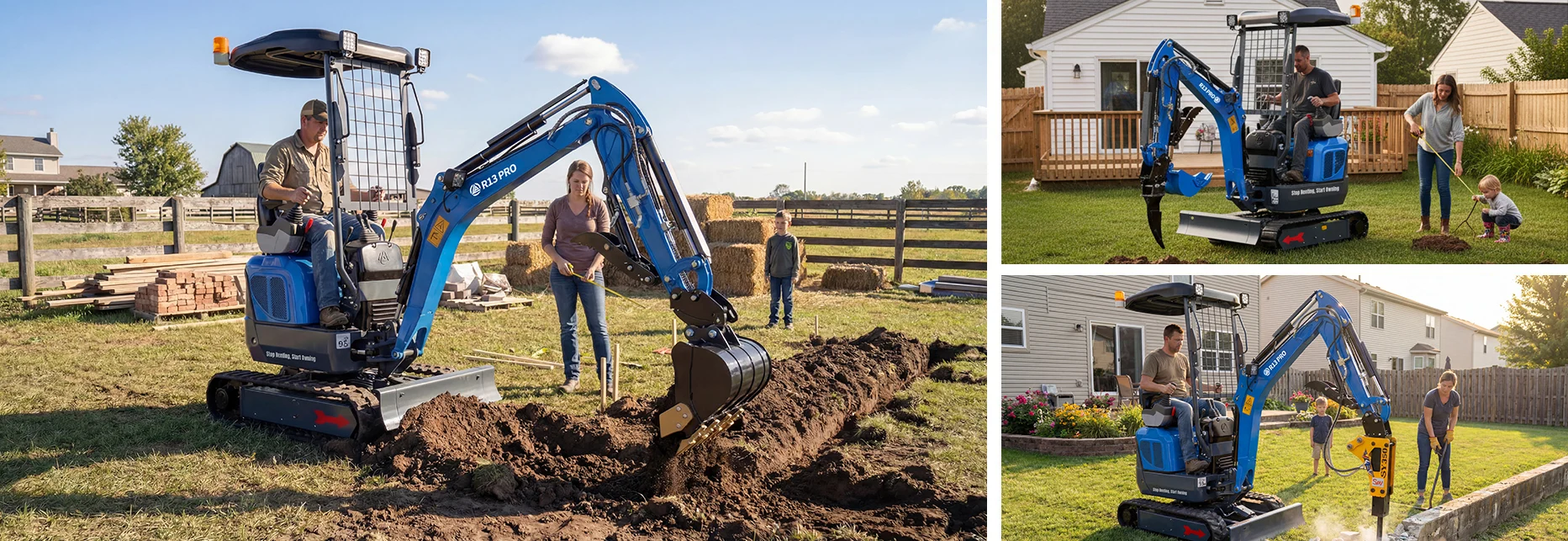
Common agricultural applications include:
- 排水沟开挖
- Ditch cleaning
- Fence line preparation
- Post hole preparation with suitable attachments
- 植树
- 农场小路维修
- Root and debris clearing
- Small trenching
- Rural property maintenance
- Land improvement
- Small building preparation
- Seasonal farm work
These tasks are common enough that many farm customers already rent excavators, hire contractors, or delay projects because they do not have the right machine.
A dealer who offers mini excavators can help customers solve these problems directly.
Mini Excavators Create a Natural Product Extension
A successful product extension should connect to the dealer’s existing customers and business model. Mini excavators do that well for agricultural machinery dealers.
They connect naturally to:
- Farm equipment customers
- Tractor buyers
- Rural landowners
- Fence contractors
- Orchard and tree planting customers
- Agricultural contractors
- Small construction users in rural areas
- Property maintenance businesses
A mini excavator does not replace tractors, implements, or loaders. It expands the dealer’s ability to support more customer jobs.
例如:
| Customer Need | Existing Farm Equipment Role | Mini Excavator Role |
|---|---|---|
| Field work | Tractor and implements | Not primary use |
| Material movement | Loader or tractor attachment | Support role only |
| 排水沟开挖 | Limited | Strong fit |
| 围栏的准备工作 | Limited support | Stronger with suitable tools |
| Ditch cleaning | Limited | Strong fit |
| Planting holes | Manual or specialized equipment | Useful with suitable attachment |
| Rural property maintenance | Multiple tools | Strong for digging-related tasks |
| Small building prep | Limited | Useful for excavation support |
This makes mini excavators a complementary product, not a conflicting category.
The Business Opportunity for Dealers
Mini excavators can create several business opportunities for agricultural machinery dealers.
New Machine Sales
The most direct opportunity is selling mini excavators to farm and rural customers who need compact digging equipment.
Attachment Sales
Attachments can increase machine usefulness and order value. Depending on compatibility, customers may need buckets, augers, thumbs, rakes, grapples, grading tools, or quick couplers.
Spare Parts
Mini excavators require parts and maintenance over time. Dealers can build long-term customer relationships through parts support.
Service Relationships
Customers may return for maintenance, troubleshooting, operation guidance, and future equipment recommendations.
Repeat Purchases
Agricultural contractors, larger farms, and rural service companies may buy additional machines as their business grows.
Referral Business
Rural markets often rely on relationships. One satisfied farm customer can influence neighbors, contractors, and local businesses.
Rental or Demonstration Opportunities
Some dealers may use demonstration units or rental cooperation to help customers experience mini excavators before purchase.
This combination makes mini excavators more than a single-sale product.
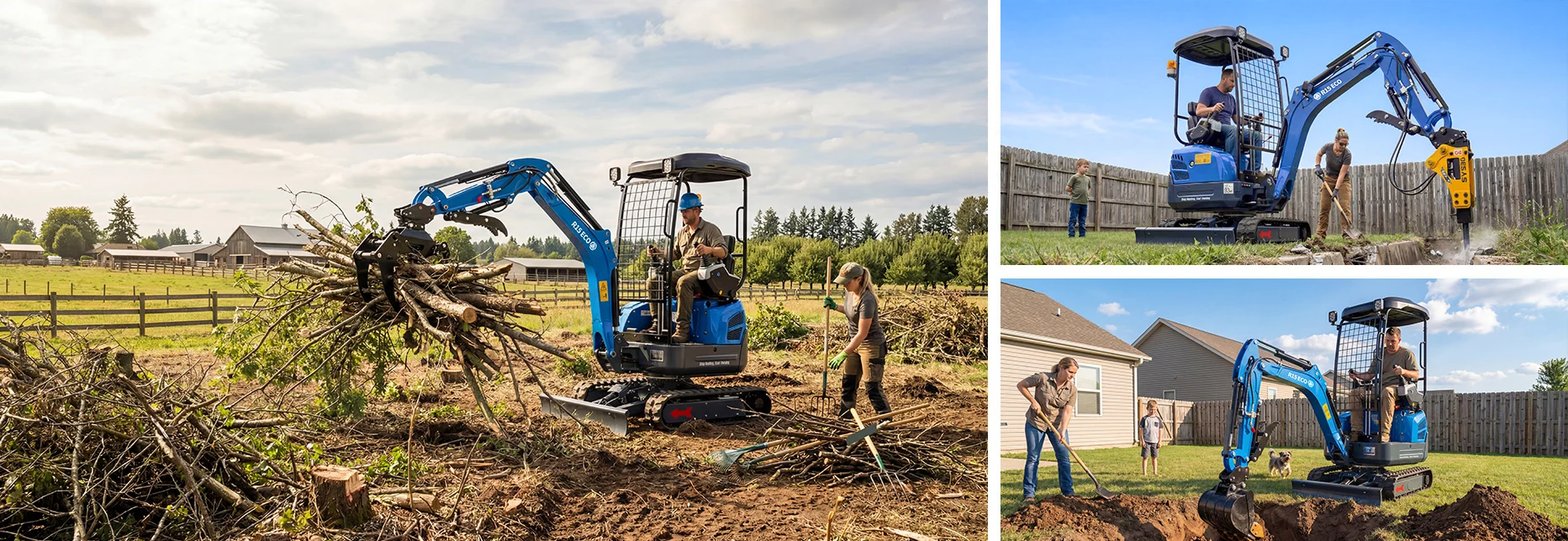
How Agricultural Machinery Dealers Can Start with Lower Risk
Dealers do not need to enter the mini excavator business with a large inventory immediately. A controlled launch can help reduce risk.
Step 1: Study Existing Customer Demand
Start by reviewing current customers. Which farmers complain about drainage? Which customers rent excavators? Which contractors ask about land clearing, trenching, or fencing? Which rural property owners have repeated outdoor projects?
Step 2: Choose a Limited Model Range
The dealer can begin with a small number of practical mini excavator models that match common farm and rural applications. The goal is not to cover every possible size immediately. The goal is to validate demand.
Step 3: Prepare Application-Based Marketing
Marketing should focus on real farm jobs such as drainage, fencing, ditch cleaning, planting, path repair, and land maintenance.
Step 4: Prepare Spare Parts and Support
Before selling machines, the dealer should understand recommended spare parts, warranty policy, technical support, and after-sales responsibilities.
Step 5: Train the Sales Team
Salespeople should learn how to sell by application, not only by specification.
Step 6: Use Existing Customers First
The dealer can promote the new product line to current tractor, implement, and farm equipment customers before spending heavily on broad advertising.
Step 7: Review Data Before Expanding
Track inquiries, objections, sales, customer types, and attachment demand. Use this data to decide whether to expand inventory.
How to Identify Strong Mini Excavator Prospects
Agricultural machinery dealers can identify potential buyers by asking practical questions.
Useful questions include:
- Do you have drainage problems on your land?
- Do you clean ditches or waterways regularly?
- Do you install fences or prepare post lines?
- Do you plant trees or maintain orchards?
- Do you repair farm paths or rural driveways?
- Do you rent mini excavators for seasonal projects?
- Do you outsource small digging jobs?
- Do you own land that requires regular maintenance?
- Do you have customers who ask you for excavation work?
- Would owning a compact excavator help reduce delays?
These questions help dealers connect mini excavators to real customer needs.
What Agricultural Machinery Dealers Should Look for in a Supplier
A mini excavator supplier for agricultural machinery dealers should support more than the first shipment. The dealer needs product information, parts planning, warranty clarity, technical support, documentation, and stable communication.
Important supplier factors include:
| Supplier Factor | 为何这很重要 |
|---|---|
| Product fit for rural work | Ensures machines match farm and property applications |
| Current configuration clarity | Prevents incorrect sales information |
| 附件兼容性 | Supports fencing, planting, drainage, and cleanup |
| Spare parts package | Helps support customers after sale |
| 保修政策 | Clarifies after-sales responsibility |
| Technical support | Helps dealers solve customer issues |
| Dealer training | Helps sales teams enter the category |
| Marketing materials | Supports product launch |
| 送货安排 | Helps inventory planning |
| Repeat supply ability | Supports long-term business growth |
Agricultural machinery dealers should avoid choosing a supplier only because of low price. A supplier with stronger support may create more long-term value.
How RIPPA Mini Excavators Can Fit Agricultural Dealer Opportunities
RIPPA mini excavators can be considered by agricultural machinery businesses that want to expand into compact excavation equipment.
Potential customer applications include:
- Farm drainage
- Ditch cleaning
- 围栏的准备工作
- 植树
- 农场小路维修
- Rural property maintenance
- Agricultural contractor work
- Small trenching
- Land improvement
- Seasonal farm projects
RIPPA may also offer broader compact equipment options, but for agricultural dealer expansion, the main focus should remain mini excavators and excavators.
Before promoting RIPPA machines, dealers should confirm:
- Current machine configuration
- Suitable model direction for rural applications
- 附件兼容性
- 备件支持
- 保修政策
- Technical support process
- 送货安排
- Documentation
- Training or marketing materials
- Dealer cooperation terms
This helps dealers build accurate sales messages and avoid unsupported claims.
How Dealers Can Market Mini Excavators to Rural Customers
Agricultural machinery dealers should use application-based content. Rural customers usually respond better to practical job examples than abstract product descriptions.
Useful content topics include:
- Mini excavator for farm drainage
- Mini excavator for ditch cleaning
- Mini excavator for fence preparation
- Mini excavator for tree planting
- Mini excavator for farm path repair
- Mini excavator for rural property maintenance
- Mini excavator for agricultural contractors
- Mini excavator for small farm projects
Dealers can use photos, videos, demonstration days, customer examples, and website pages to show real applications.
A strong message is:
A mini excavator helps farm customers complete digging-related jobs that tractors alone are not designed to handle efficiently.
常见问题解答
Why should agricultural machinery businesses consider mini excavators?
Agricultural machinery businesses already serve customers who need drainage, trenching, fencing, planting, ditch cleaning, and rural property maintenance. Mini excavators are a natural product extension for these needs.
Are mini excavators suitable for farm equipment dealers?
Yes. Farm equipment dealers often have the customer base, equipment sales experience, service capability, and rural market trust needed to sell mini excavators.
Do mini excavators compete with tractors?
No. Mini excavators complement tractors. Tractors support pulling, mowing, hauling, and implement work, while mini excavators support digging, trenching, and compact excavation tasks.
How can dealers start selling mini excavators with lower risk?
Dealers can begin with a limited model range, target existing customers, prepare application-based marketing, confirm spare parts support, train salespeople, and review inquiry data before expanding.
What should dealers confirm before working with a mini excavator supplier?
Dealers should confirm product configuration, attachment compatibility, parts support, warranty policy, technical support, delivery arrangement, documentation, marketing support, and dealer cooperation terms.
Can RIPPA mini excavators fit agricultural machinery businesses?
RIPPA mini excavators may fit agricultural machinery businesses that serve farms, rural property owners, agricultural contractors, and land maintenance customers. Current product and cooperation details should be confirmed before promotion or purchase.
结论
Agricultural machinery businesses have a strong opportunity to expand into mini excavators because their existing customers already need compact digging equipment. Farmers, rural property owners, agricultural contractors, and land maintenance customers often face jobs involving drainage, trenching, fencing, planting, ditch cleaning, farm path repair, and property improvement.
微型挖掘机 do not replace tractors or traditional farm equipment. They complement them by solving excavation-related problems.
For agricultural machinery dealers, the opportunity is practical: use existing customer relationships, sales experience, service capability, and local trust to introduce a higher-value product category.
RIPPA mini excavators can be considered as a compact excavation product line for agricultural dealer expansion. Before purchase or promotion, dealers should confirm current machine configuration, attachment compatibility, spare parts support, warranty policy, technical support, delivery arrangement, documentation, and dealer cooperation terms through official RIPPA channels.
 首页
首页
 产品
产品
 电子邮件
电子邮件
 WhatsApp

