
Quick Answer: Can a Beginner Learn to Operate a Mini Excavator?
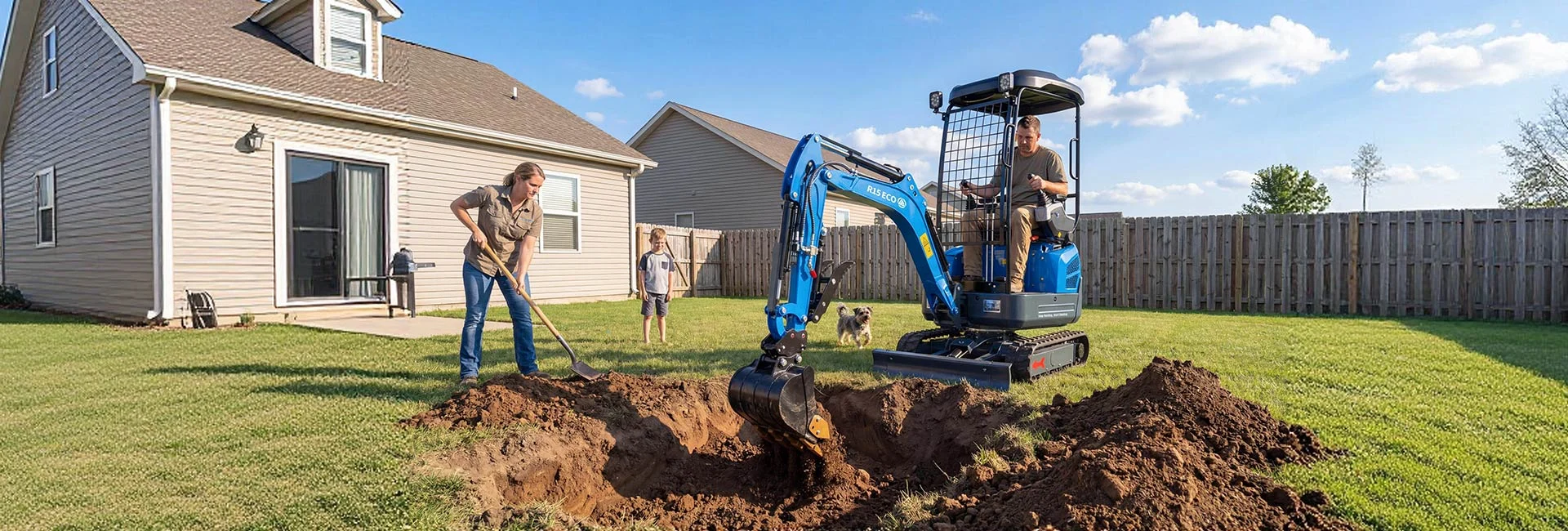
Yes. Most first‑time operators feel comfortable after 2–4 hours of practice. Modern mini excavators feature intuitive pilot‑operated joysticks, an ISO/SAE pattern switch, and excellent visibility. Start in an open area, practice basic movements, then move to simple tasks like digging a hole or trench. Always wear your seatbelt and perform a daily inspection before use.
Learning timeline:
-
First hour: Move machine, basic joystick functions.
-
2–4 hours: Dig a straight trench, simple grading.
-
1–2 days: Most homeowner projects (driveways, planting, light stump removal).
-
1 week: Fine grading, working near obstacles, using attachments confidently.
1. Before You Start – Safety and Inspection
Personal protective equipment (PPE):
-
Hard hat, safety glasses, hearing protection, high‑visibility vest, steel‑toed boots, gloves, and always the seatbelt.
Daily pre‑operation check (5–10 minutes):
-
Visual walk‑around: Check for fluid leaks, damaged hoses, loose bolts, and track condition.
-
Fluid levels: Engine oil, hydraulic oil, coolant, fuel.
-
Grease fittings: Boom, arm, bucket linkage, swing bearing.
-
Function test: Cycle all controls to ensure smooth operation.
Site preparation:
-
Call 811 to mark underground utilities.
-
Clear obstacles and establish a safety zone (no bystanders within swing radius).
-
Identify overhead power lines – keep at least 10 feet distance.
2. Understanding the Controls
Mini excavators use two joysticks for most operations. RIPPA machines feature pilot‑operated joysticks that require 30% less effort than mechanical linkages.
Left joystick:
-
Forward/back = swing left/right.
-
Left/right = dipper (arm) out/in.
Right joystick:
-
Forward/back = boom down/up.
-
Left/right = bucket curl/dump.
Foot pedals:
-
Left pedal = left track forward/back.
-
Right pedal = right track forward/back.
-
Both pedals together = straight travel.
-
One forward, one back = spin turn.
Pattern switch: Most RIPPA models include an ISO/SAE selector. Choose whichever pattern feels natural – there is no “right” pattern, only comfort.

222
3. Basic Digging Technique
The digging cycle:
-
Position the bucket at the start of your cut.
-
Lower the boom and extend the arm.
-
Curl the bucket while pulling the arm back and slightly lowering the boom.
-
Raise the boom and swing to your dump location.
-
Open the bucket to dump material.
-
Swing back and repeat.
Tips for efficient digging:
-
Let the machine do the work – don’t force it.
-
Use the arm (dipper) for most digging power – it has more leverage than the boom.
-
Keep bucket teeth angled slightly down.
-
Dig in layers (4–6 inches at a time) rather than trying to take a full bucket depth.
-
Never dig under the machine – keep tracks level and stable.
4. Trenching and Grading
Trenching:
-
Mark the trench line with stakes and string.
-
Position tracks parallel to the trench.
-
Start at the far end and work toward the machine.
-
Dig to full depth at the starting point, then move back.
-
Maintain consistent depth and slope (1–2% for drainage).
-
Stockpile spoil on one side, leaving room to work.
Grading with a bucket:
-
Open the bucket flat (like a blade).
-
Lower the boom until the bucket rests on the ground.
-
Drive backward slowly, keeping the bucket angle constant.
-
Adjust boom height to control cut depth.
Grading with a blade attachment:
-
Attach the blade using the quick coupler.
-
Set blade angle (10–15° for pushing material sideways).
-
Lower blade to desired height, drive forward or backward.
5. Common Beginner Mistakes and How to Avoid Them
| Mistake | Why It Happens | How to Avoid |
|---|---|---|
| Digging too deep too fast | Trying to take too much material | Take 4‑6 inch bites, not full bucket depth |
| Forgetting to look behind | Focused on bucket | Make a habit: look back before every swing |
| Working on uneven ground | Machine feels unstable | Use blade to level the machine first |
| Gripping joysticks too tight | Nervousness | Relax – pilot controls are sensitive |
| Ignoring the seatbelt | “Just moving a little” | Always wear it – ROPS only works if you’re inside |
6. Frequently Asked Questions
Q: How long does it take to become proficient?
A: Basic competency takes 2–4 hours. Proficiency for complex tasks (fine grading, working near obstacles) takes 20–40 hours of practice.
Q: Do I need a license to operate a mini excavator on my own property?
A: No. For personal use on your land, no license is required. Commercial work may have different rules – check local regulations.
Q: What’s the hardest part for beginners?
A: Coordinating multiple controls simultaneously (e.g., swinging while lowering the boom). Practice each function separately before combining.
7. Conclusion
Operating a mini kotrógép is a skill anyone can learn with practice and patience. Start slowly, focus on safety, and build your skills progressively. Within a few weekends, you will be tackling projects you never thought possible. RIPPA machines are designed with beginners in mind – intuitive controls, safety features, and excellent visibility make learning easier.
Next step: Watch RIPPA’s beginner video series before your first operation, then practice in an open area for 2‑4 hours. You will be surprised how quickly you learn.
 Home
Home
 Termékek
 E-mail
 WhatsApp

